The spark plug gap is the precise distance between the center and ground electrodes, vital for igniting your engine efficiently. This gap plays a crucial role in producing a strong spark that ignites the air-fuel mixture.
If the gap’s too wide, you risk weak sparks and misfires; too narrow, and ignition timing suffers.
You’ll want to measure it accurately using feeler gauges and adjust carefully without damaging electrodes.
Maintaining the correct gap guarantees ideal combustion and engine performance. Understanding how to handle this can greatly improve your vehicle’s reliability and power.
Key Takeaways
- Spark plug gap is the distance between the center and ground electrodes.
- It is critical for proper engine ignition and overall performance.
- The gap size varies by engine type and manufacturer specifications.
- Accurate gap ensures efficient fuel combustion and reduces emissions.
- Measuring and adjusting the gap requires specialized tools and care.
What Exactly Is a Spark Plug Gap: And Why It Matters?
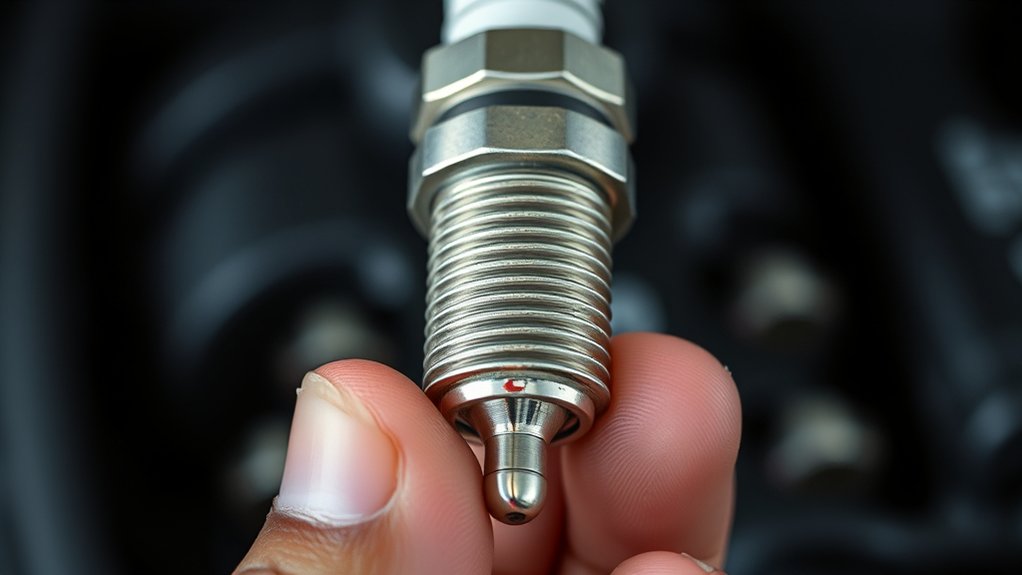
The spark plug gap is the precise distance between the center and ground electrodes of a spark plug, and it plays a vital role in engine performance. You need to understand that spark plug design dictates specific gap specifications to guarantee peak ignition.
These specifications vary depending on the engine type and manufacturer requirements. If you measure the gap incorrectly or ignore the recommended distance, the spark’s effectiveness diminishes. The gap must be set accurately to accommodate the spark’s voltage and combustion chamber conditions.
Modern spark plugs often come pre-gapped, but verifying the gap according to your vehicle’s manual is essential. By maintaining the correct gap, you guarantee consistent ignition, which supports efficient fuel combustion and prevents misfires linked directly to the spark plug design’s intended gap specifications.
How Spark Plug Gap Affects Engine Performance
Understanding how to maintain the correct spark plug gap sets the foundation for enhancing engine performance. The gap directly influences spark plug efficiency and ignition timing, both critical for proper combustion.
If the gap is too wide, the spark may weaken, causing misfires and poor fuel economy. If it’s too narrow, ignition timing suffers, reducing power output and increasing emissions.
| Gap Size | Impact on Efficiency | Emotional Response |
|---|---|---|
| Too Wide | Weak spark, misfires | Frustration |
| Ideal | Max spark plug efficiency | Confidence |
| Too Narrow | Poor ignition timing | Concern |
| Varied | Inconsistent performance | Uncertainty |
Adjusting the gap carefully guarantees your engine runs smoothly, maximizing performance and longevity.
How to Measure Your Spark Plug Gap at Home
Measuring your spark plug gap at home requires just a few specialized tools and a careful approach to guarantee accuracy. Start by selecting the appropriate spark plug tools, such as a feeler gauge or a spark plug gap tool designed for precise measurement.
Clean the spark plug’s electrodes to confirm no debris affects the reading. Insert the gauge between the center and ground electrodes gently; the tool should slide in with slight resistance.
Avoid forcing the gauge, as this can damage the electrodes or yield inaccurate results. Note the measurement indicated by the tool, comparing it to the manufacturer’s recommended gap.
Employing proper measurement techniques confirms your spark plug gap is accurate, which is essential for peak engine performance and combustion efficiency.
Adjust Spark Plug Gap the Right Way
Once you’ve determined the correct spark plug gap, you’ll need to adjust it carefully to secure peak engine performance. Start by selecting the appropriate gap tool. Feeler gauges, wire-type, or coin-style tools work well depending on your spark plug types.
Insert the tool gently between the electrodes to measure the gap. If the gap is too wide, carefully tap the ground electrode against a hard surface or use a specialized tool to bend it inward. If too narrow, use the gap tool to pry the electrode outward incrementally.
Always re-measure after each adjustment to confirm accuracy. Avoid excessive force, as it can damage the electrode or insulator. Following these precise steps guarantees your spark plug gap aligns with manufacturer specifications, optimizing combustion efficiency and engine reliability.
Common Spark Plug Gap Mistakes to Avoid
Although adjusting the spark plug gap might seem straightforward, many people make errors that compromise engine performance. One common mistake is ignoring the manufacturer’s gap specifications, which vary based on engine design and spark plug materials. Using incorrect gap sizes can cause misfires or inefficient combustion.
Another error is applying excessive force when adjusting the gap, especially with fragile spark plug materials like iridium or platinum, which can damage the electrode and affect longevity. Also, failing to recheck the gap after installation leads to improper spacing due to electrode movement.
Always use a precise gap tool designed for your spark plug type to guarantee accuracy. Avoid these mistakes to maintain peak ignition, improve fuel efficiency, and prolong spark plug life.
Frequently Asked Questions
How Often Should I Replace My Spark Plugs?
You should replace your spark plugs every 30,000 to 100,000 miles, depending on their lifespan.
Watch for signs like engine misfires, poor fuel economy, or rough idling, which indicate it’s time for replacement.
Can the Wrong Spark Plug Gap Cause Engine Misfires?
Like a key fitting a lock, the wrong spark plug gap disrupts spark plug function, causing weak ignition. This misalignment leads to engine misfires, directly impairing engine performance and efficiency.
Do Spark Plug Gaps Vary by Vehicle Make and Model?
Yes, spark plug gaps vary based on spark plug specifications and vehicle compatibility. You should always refer to your vehicle’s manual or manufacturer guidelines to guarantee the correct gap for ideal engine performance and efficiency.
What Tools Are Best for Adjusting Spark Plug Gaps?
You’ll want spark plug gauges. They’re like the maestros of precision, guiding your adjusting techniques to perfect harmony. Use wire or coin-type gauges for accuracy, bending gently to avoid damage. This ensures consistent, reliable engine performance every time.
Can Spark Plug Gap Affect Fuel Efficiency?
Yes, your spark plug gap directly affects fuel efficiency by influencing ignition performance. Incorrect gap size disrupts spark plug design function, causing incomplete combustion and reducing engine efficiency.
Precise adjustment guarantees ideal fuel use and power output.
Conclusion
Understanding and maintaining the correct spark plug gap is essential for peak engine performance and fuel efficiency. While some believe a wider gap always means better sparks, the truth is that an improper gap can cause misfires or poor combustion.
By precisely measuring and adjusting the gap to your engine’s specifications, you guarantee reliable ignition and smoother operation. Don’t underestimate this small detail—it’s vital to your engine’s health and longevity.
In conclusion, paying close attention to the spark plug gap ensures your engine runs efficiently and lasts longer.