To apply spark plug boot protector, first clean the boots thoroughly with a lint-free cloth and a compatible solvent, avoiding harsh chemicals.
Inspect the boots for any damage and verify they are completely dry before proceeding.
Next, evenly coat the boot surface using a small brush or applicator. Spread the protector uniformly without allowing excess buildup to ensure effective protection.
Let the coating cure for 15–30 minutes to achieve proper bonding.
Finally, press the boot securely in place, confirming proper alignment and heat resistance.
For detailed guidance on fit and maintenance, keep exploring these essential steps.
Key Takeaways
- Clean spark plug boots thoroughly with a lint-free cloth and compatible solvent before applying the protector.
- Apply an even layer of spark plug boot protector using a small brush or applicator for full coverage.
- Spread the protector uniformly without excess buildup to ensure effective bonding.
- Allow the protector to cure for 15 to 30 minutes before handling or installation.
- Inspect the coated boots for complete coverage and reapply if any areas are missed.
What’s a Spark Plug Boot Protector and Why You Need One
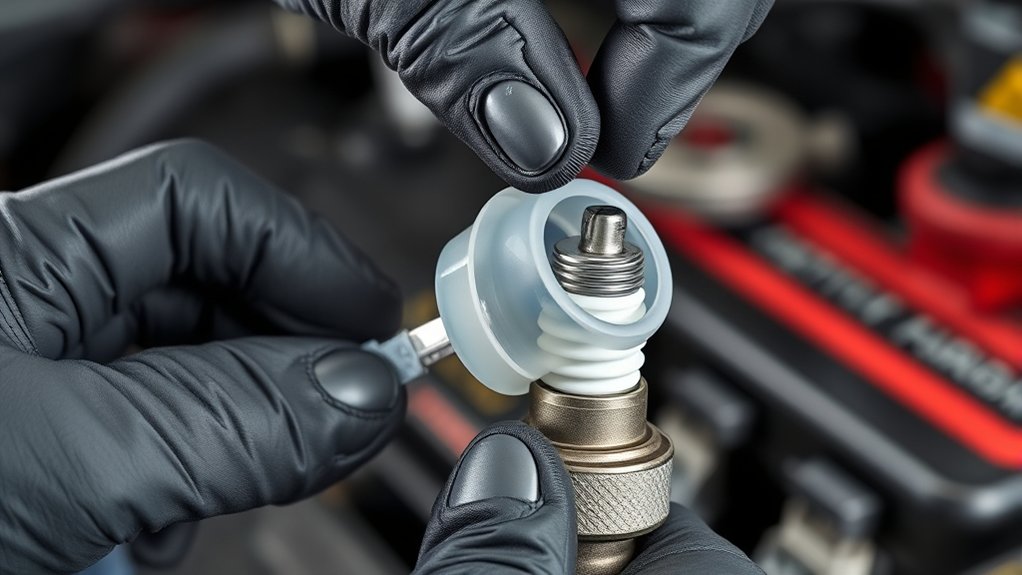
A spark plug boot protector is a durable insulating sleeve designed to shield the spark plug boot from heat, moisture, and physical damage. You need one because the spark plug operates in a high-temperature environment that can degrade the boot’s material over time.
This protector provides essential heat resistance, preventing the boot from cracking or melting due to engine heat. By maintaining the boot’s integrity, you guarantee a secure electrical connection to the spark plug, which optimizes engine performance and prevents misfires.
Additionally, the protector guards against moisture intrusion and abrasion, both of which can compromise the spark plug’s function. Installing a boot protector helps you prolong the lifespan of your ignition components while maintaining consistent engine efficiency and reliability.
Preparing Spark Plug Boots for Protector Application
Before applying the spark plug boot protector, you must thoroughly clean and inspect the boots to assure proper adhesion and performance. Begin by removing any dirt, oil, or debris from the spark plug boots using a lint-free cloth and a suitable solvent compatible with the boot materials, such as isopropyl alcohol. Avoid harsh chemicals that could degrade rubber or silicone boots.
Once clean, examine the boots for cracks, brittleness, or other damage that could compromise the protector’s effectiveness. If defects are present, replace the boots before proceeding. Also, confirm the boots are completely dry to prevent trapping moisture under the protector.
Proper surface preparation tailored to the spark plug boot materials is essential for maximizing the durability and protective qualities of the boot protector.
Step-by-Step Guide to Applying a Spark Plug Boot Protector
Start by applying an even layer of the spark plug boot protector directly onto the cleaned and dried boot surface. Use a small brush or applicator to guarantee full coverage without excess buildup.
Next, gently spread the protector all around the boot to create a uniform protective film. Avoid applying too thickly, as it may interfere with proper seating.
Once coated, allow the protector to cure for the recommended time, typically 15–30 minutes, making sure it bonds effectively. This step is essential in spark plug maintenance to prevent moisture and heat damage, directly supporting consistent engine performance.
Allow the protector to cure for 15–30 minutes to ensure effective bonding and protect against moisture and heat damage.
After curing, inspect the coating for complete coverage and reapply if necessary. Following these precise steps helps extend boot life and maintain peak engine function.
How to Ensure a Secure and Lasting Spark Plug Boot Protector Fit
After allowing the protector to cure and confirming full coverage, focus on securing the boot firmly to the spark plug. Verify the spark plug materials are compatible with the protector to maximize heat resistance and durability.
Press the boot evenly to avoid gaps that could compromise the fit. Check for proper alignment to prevent electrical misfires.
| Concern | Impact | Feeling |
|---|---|---|
| Loose Fit | Reduced protection | Worry |
| Incompatible Materials | Heat damage risk | Anxiety |
| Uneven Coverage | Electrical failure | Frustration |
| Poor Alignment | Performance issues | Disappointment |
Maintaining Spark Plug Boots After Applying Protector
Though the protector enhances durability, you must regularly inspect spark plug boots for signs of wear, cracks, or dirt buildup to maintain peak performance. Clean the boots using a non-abrasive cloth and avoid harsh chemicals that could degrade the protector’s heat resistance.
Check the boots for any loss of flexibility, which signals aging and reduced spark plug longevity. Replace any damaged boots promptly to prevent misfires and engine inefficiency.
Additionally, monitor the boots after extended exposure to high temperatures, as excessive heat can compromise the protector’s integrity. By performing routine maintenance, you guarantee that the spark plug boots retain their protective properties, support ideal electrical insulation, and extend overall spark plug service life.
Consistent care directly contributes to reliable ignition and efficient engine operation.
Frequently Asked Questions
Can a Spark Plug Boot Protector Improve Engine Performance?
Yes, a spark plug boot protector can improve engine efficiency by preventing misfires caused by moisture and debris.
You’ll maintain consistent spark plug performance, which supports ideal combustion and enhances overall engine efficiency.
Are Spark Plug Boot Protectors Compatible With All Vehicle Models?
You won’t find a spark plug boot protector that fits every spark plug type perfectly! You’ll need to check compatibility carefully.
Follow precise installation tips to avoid damage, ensuring the protector suits your specific vehicle model’s spark plugs.
How Long Does a Spark Plug Boot Protector Typically Last?
A spark plug boot protector typically lasts as long as the spark plug lifespan, around 30,000 to 100,000 miles.
You’ll benefit from enhanced insulation and protection against heat, extending boot durability and overall ignition system reliability.
Can I Reuse a Spark Plug Boot Protector After Removal?
Don’t beat around the bush; you generally shouldn’t reuse a spark plug boot protector. For ideal spark plug longevity, inspect the boot protector carefully during maintenance.
Any wear or damage compromises its effectiveness. Boot protector maintenance guarantees reliable performance.
Are There Any Safety Precautions When Handling Spark Plug Boot Protectors?
You should wear gloves to avoid skin contact with spark plug materials, which can irritate. Confirm the boot protector’s heat resistance matches engine specs to prevent damage.
Work only when the engine is cool for safety.
Conclusion
Now that you’ve applied the spark plug boot protector, you’re not just adding a layer—you’re building a shield.
Think of it as armor for your engine’s essential connection, guarding against heat, moisture, and wear. With proper prep and secure fitting, your boots will last longer and perform better.
Keep them clean and inspected, and you’ll extend your engine’s life with ease. Protect smart, drive confident, and always maintain your spark plug boot protector for the best results.