When a spark plug goes bad, your engine struggles to ignite the air-fuel mixture efficiently, causing misfires, rough idling, and difficulty starting.
Spark plug issues lead to decreased power and fuel efficiency as combustion becomes incomplete. This often leaves carbon deposits that further impair performance.
Faulty spark plugs also increase emissions and engine wear over time. Ensuring timely inspection and replacement helps maintain ideal engine function, fuel economy, and longevity.
Understanding these effects reveals why spark plugs are essential for your vehicle’s health.
Proper maintenance of spark plugs keeps your engine running smoothly and efficiently.
Key Takeaways
- A bad spark plug causes engine misfires, leading to rough idling and difficulty starting the vehicle.
- Decreased fuel efficiency occurs due to incomplete combustion and increased fuel consumption.
- Worn or damaged electrodes result in poor ignition and increased hydrocarbon emissions.
- Carbon buildup and electrode erosion on plugs indicate the need for replacement to restore performance.
- Ignoring bad spark plugs can cause engine performance issues and potential long-term engine damage.
What Spark Plugs Do in Your Engine
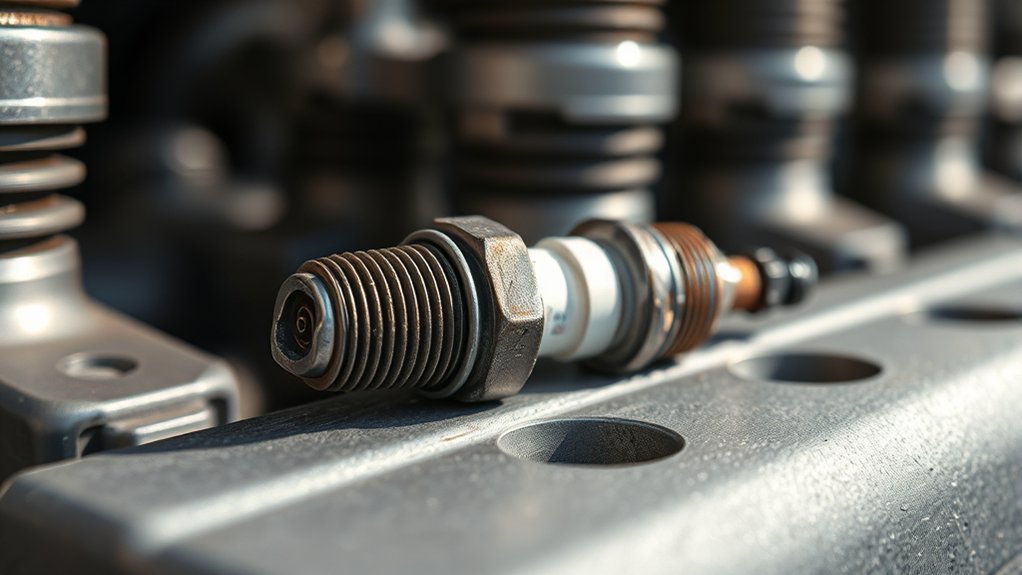
Spark plugs play an essential role in your engine’s combustion process by igniting the air-fuel mixture inside the cylinders. As part of the ignition system, they generate a high-voltage spark at the precise moment needed for ideal combustion.
You’ll find various spark plug types, like copper, platinum, and iridium, each designed to suit different engine specifications and performance requirements. Your ignition system relies on these plugs to initiate combustion consistently, which directly affects engine efficiency and emissions.
If a spark plug fails to produce a strong, timely spark, the combustion process weakens, leading to reduced power and increased fuel consumption. Understanding how spark plugs function helps you appreciate their critical role in maintaining your engine’s performance and longevity.
Signs Your Spark Plugs Are Failing
When your engine’s ignition system doesn’t deliver consistent sparks, you’ll notice specific symptoms that indicate worn or failing plugs. The spark plug lifespan varies, but as they degrade, ignition reliability decreases. Watch for these signs:
- Engine misfires or rough idling due to incomplete combustion.
- Difficulty starting the engine as spark strength weakens.
- Decreased fuel efficiency caused by inefficient ignition.
- Unusual engine noises or backfiring linked to delayed combustion.
These symptoms signal that your spark plugs are no longer functioning effectively within the ignition system. Regular inspection and replacement based on manufacturer recommendations help maintain engine performance and avoid further complications.
Monitoring these signs guarantees you address spark plug issues promptly, preserving the ignition system’s effectiveness and prolonging overall engine health.
How Faulty Spark Plugs Hurt Engine Performance
Although engine components work together seamlessly, faulty spark plugs can disrupt this balance and considerably reduce performance. When spark plugs malfunction, they fail to ignite the air-fuel mixture efficiently, causing incomplete combustion.
This leads to misfires, which directly impact engine efficiency by reducing power output and causing rough idling. You’ll notice a clear performance degradation as acceleration becomes sluggish and the engine struggles under load.
Faulty spark plugs also increase combustion chamber deposits, further hindering spark delivery and combustion consistency. Additionally, inconsistent ignition timing from bad spark plugs causes uneven engine operation, amplifying vibration and noise.
Addressing spark plug issues promptly helps maintain peak engine efficiency and prevents long-term damage, ensuring your vehicle runs smoothly and reliably.
Why Spark Plug Problems Lower Your Fuel Efficiency
When your spark plugs malfunction, incomplete combustion occurs, reducing the engine’s efficiency. This leads to increased misfires, forcing your engine to burn more fuel to maintain power.
As a result, you’ll notice higher fuel consumption and decreased mileage.
Incomplete Combustion Effects
Since spark plugs ignite the air-fuel mixture in the combustion chamber, any malfunction disrupts this critical process. When a spark plug fails to fire correctly, incomplete combustion occurs, leaving fuel residue unburned.
This not only lowers your engine’s efficiency but also causes emission increases, contributing to environmental pollution. You might notice:
- Black carbon deposits on spark plugs and valves
- A noticeable drop in engine power output
- A rougher engine idle due to inconsistent fuel burning
- Increased hydrocarbon emissions detected during inspections
Incomplete combustion forces your engine to burn more fuel to maintain performance, reducing fuel economy. Addressing spark plug issues promptly guarantees peak combustion, minimizes fuel residue buildup, and keeps emissions within regulatory limits, preserving both engine health and fuel efficiency.
Increased Engine Misfires
Because spark plugs play an essential role in igniting the air-fuel mixture, any deterioration directly increases engine misfires. When a spark plug fouls or wears out, it fails to deliver a consistent spark, causing incomplete combustion in one or more cylinders.
This failure results in engine vibration and rough idling, as the engine struggles to maintain smooth operation. You’ll notice the vehicle jolting or hesitating during acceleration, which is a direct consequence of these misfires.
Additionally, misfires disrupt the timing and balance of the engine’s firing sequence, reducing overall performance. Ignoring this issue can lead to more severe mechanical problems, but addressing spark plug issues promptly helps restore engine stability and prevents further damage associated with persistent misfires.
Higher Fuel Consumption
Although spark plugs may seem like a small component, their condition directly impacts your engine’s fuel efficiency. When spark plugs degrade, incomplete combustion occurs, forcing your engine to burn more fuel to maintain power. This inefficiency compromises precise engine tuning, leading to higher fuel consumption.
You might notice:
- Rough idling as unburned fuel accumulates
- Reduced acceleration due to inconsistent ignition
- Increased emissions from fuel-rich exhaust
- Frequent misfires disrupting ideal combustion cycles
Maintaining clean, properly gapped spark plugs guarantees efficient combustion, preserving your vehicle’s fuel efficiency. Neglecting this crucial part causes your engine to work harder and consume more fuel, driving up costs and emissions.
Timely spark plug replacement is essential for sustaining precise engine tuning and maximizing fuel economy.
Why You Shouldn’t Ignore Faulty Spark Plugs
When faulty spark plugs go unnoticed, they compromise your engine’s performance and fuel efficiency. Ignoring their condition shortens spark plug longevity and strains the entire ignition system.
Malfunctioning spark plugs cause incomplete combustion, leading to misfires that reduce power output and increase emissions. As the ignition system works harder to compensate, it risks further damage, escalating repair costs.
Over time, poor ignition affects engine smoothness and can trigger costly issues like catalytic converter failure. Promptly addressing spark plug faults guarantees peak combustion, maintains ignition system integrity, and preserves fuel economy.
How to Diagnose Spark Plug Issues Yourself
How can you tell if your spark plugs are failing without professional tools? Effective spark plug maintenance relies on DIY diagnostics you can perform with minimal equipment. Start by inspecting the spark plugs for physical wear or damage.
Next, listen for engine misfires or rough idling, which often indicate ignition issues. Check fuel efficiency; a sudden drop can signal spark plug problems. Finally, observe any difficulty starting the vehicle.
Listen for misfires or rough idling, watch for fuel efficiency drops, and note any starting difficulties.
Remove the spark plug and examine the electrode for erosion or deposits. Note any inconsistent engine sounds during acceleration. Monitor changes in miles per gallon (MPG). Test engine startup responsiveness.
These steps provide a practical approach to diagnosing spark plug issues yourself before consulting a mechanic.
When to Replace Spark Plugs for Best Results
Since spark plugs directly impact engine performance and fuel efficiency, replacing them at the right intervals is crucial. You should follow the manufacturer’s recommended replacement intervals, typically ranging from 30,000 to 100,000 miles, depending on the spark plug type and vehicle specifications.
The spark plug lifespan varies with factors like driving conditions and fuel quality, so sticking to these intervals guarantees peak combustion and prevents misfires. Ignoring replacement intervals can cause decreased acceleration, rough idling, and increased emissions.
Regular inspection helps you identify premature wear, such as electrode erosion or carbon buildup, signaling the need for earlier replacement. By adhering to precise replacement intervals based on your spark plug lifespan, you maintain engine efficiency, avoid costly repairs, and extend your vehicle’s overall durability.
Tips for Choosing the Best Spark Plugs for Your Vehicle
When choosing spark plugs, you should compare material types like copper, platinum, and iridium for durability and performance. Make certain the spark plug matches your engine’s specifications to guarantee ideal combustion and avoid damage.
Selecting the right plug improves efficiency and prolongs engine life.
Material Types Comparison
Choosing the right spark plug material greatly impacts your engine’s performance and longevity. Different materials affect heat ratings, durability factors, and performance variations. Ceramic materials serve as excellent insulators, maintaining ideal temperatures.
Copper cores offer superior conductivity but wear faster. Platinum coatings enhance longevity and resist corrosion, while iridium tips provide the highest durability with a finer electrode, improving ignition precision. Electrode designs also influence spark efficiency and wear resistance.
- Copper core spark plugs: great conductivity, moderate durability
- Platinum-coated electrodes: balanced durability and performance
- Iridium-tipped plugs: superior longevity, precise ignition
- Ceramic insulators: maintain heat ratings, prevent fouling
Understanding these differences helps you select spark plugs that best suit your engine’s needs.
Compatibility With Engine
Although spark plug materials play an essential role, selecting plugs that match your engine’s specifications guarantees peak performance and prevents damage. Different engines require specific spark plug types based on heat range, thread size, and electrode design. Ignoring these can cause misfires or engine wear.
Always consult your vehicle’s manual or manufacturer recommendations.
| Engine Specification | Recommended Spark Plug Type |
|---|---|
| High-performance | Iridium or Platinum |
| Standard combustion | Copper or Nickel |
| Turbocharged | Heat-resistant Iridium |
| Older models | Conventional Copper |
Matching spark plug types to engine specifications guarantees ideal ignition timing, fuel efficiency, and longevity. Don’t compromise compatibility when choosing spark plugs.
Frequently Asked Questions
Can Bad Spark Plugs Damage the Catalytic Converter?
Yes, bad spark plugs can cause catalytic converter damage. When you ignore spark plug symptoms like misfires, unburned fuel reaches the converter, overheating and damaging it.
You should replace faulty plugs promptly to prevent costly repairs.
How Do Spark Plug Gaps Affect Engine Performance?
If you want your engine to cough like a Shakespearean actor, ignore spark plug maintenance and gap adjustment. Properly set gaps guarantee ideal combustion, improve fuel efficiency, and prevent misfires. Keeping your engine purring smoothly, not theatrically wheezing.
Are Iridium Spark Plugs Better Than Platinum Ones?
You’ll find iridium spark plugs offer superior ignition and longer lifespan thanks to iridium benefits, while platinum spark plugs provide excellent durability.
Choosing depends on your engine’s needs and budget for ideal performance and maintenance intervals.
Can Spark Plug Issues Cause the Check Engine Light to Flash?
Oh, sure, your check engine light loves to throw a party and flash wildly when spark plug symptoms like engine misfire show up. You’ll catch it signaling trouble, so don’t ignore that urgent, flickering warning!
How Often Should Spark Plug Wires Be Replaced?
You should replace spark plug wires every 30,000 to 50,000 miles to guarantee ideal spark plug lifespan.
Regular spark plug maintenance, including wire inspection, prevents misfires and maintains engine performance effectively.
Conclusion
You might overlook spark plugs as small engine parts, but their impact is massive. While a single faulty plug can cause rough idling and poor fuel economy, fresh ones restore smooth performance and efficiency.
Ignoring worn spark plugs risks costly repairs and reduced engine life. By diagnosing early and choosing the right replacements, you guarantee your engine runs at peak power.
This proves that even tiny components hold the key to your vehicle’s health and reliability. Understanding what happens when a spark plug goes bad is essential to maintaining your engine’s performance.