To calibrate a spark plug, first check your vehicle’s manual for the precise gap specifications. This step ensures you have the correct measurements for optimal performance.
Use a feeler gauge to measure the distance between the electrodes, sliding the correct blade with slight resistance.
If adjustment is needed, gently bend the ground electrode using a gap tool. Be careful not to over-bend, as this can damage the spark plug. Always verify the gap after making any adjustments to ensure accuracy.
When removing and reinstalling spark plugs, handle them carefully. Use proper tools and torque settings to avoid damage.
Keep following this guide to master spark plug maintenance techniques.
Key Takeaways
- Consult the vehicle manual for the correct spark plug gap specification before starting calibration.
- Use a feeler gauge to measure the gap between the center and ground electrode accurately.
- Adjust the gap by gently bending the ground electrode with a spark plug gap tool until the correct size is reached.
- Recheck the gap after adjustment to ensure it meets manufacturer specifications without over-bending electrodes.
- Always use proper tools and follow safe removal and reinstall procedures to maintain spark plug performance and engine health.
Finding the Right Spark Plug Gap for Your Engine
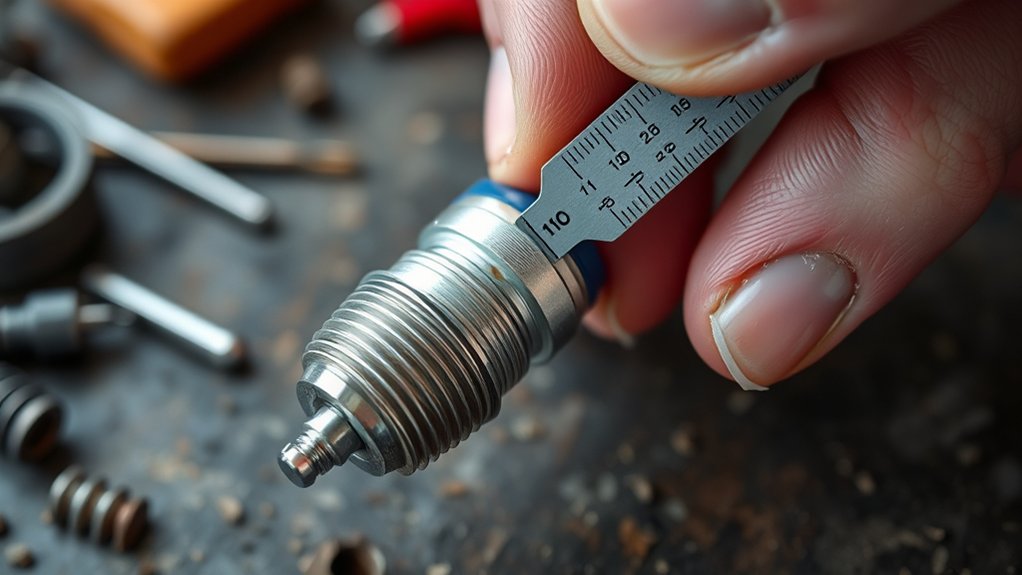
Before you start adjusting your spark plug, you need to determine the correct gap for your engine. The gap specification varies depending on the spark plug types and the engine design. Consult your vehicle’s service manual or the spark plug manufacturer’s guidelines to find the precise gap measurement, usually expressed in thousandths of an inch or millimeters.
Using the right gap guarantees ideal combustion and engine performance. Different spark plug types, such as copper, platinum, or iridium, might have distinct gap requirements due to their material properties and heat ranges.
Once you have the correct gap specification, you can proceed to measure and adjust the gap accurately with a feeler gauge. This step is essential to maintain efficient ignition and prevent misfires.
Recognizing When Your Spark Plug Gap Needs Recalibration
Although spark plugs are designed to maintain their gap over time, various factors can cause the gap to widen or narrow, affecting engine performance. You need to recognize signs like misfires, rough idling, or decreased fuel efficiency, which often indicate improper spark plug gap.
To confirm, use precise gap measurement techniques such as feeler gauges or gap tools to check the electrode spacing against manufacturer specifications. If the gap deviates beyond the recommended range, recalibration is necessary to restore ideal spark plug performance.
Regular inspection after certain mileage intervals or engine hours guarantees you catch gap inconsistencies early. By promptly identifying and correcting gap issues, you maintain efficient combustion and prevent engine damage.
Tools You Need to Calibrate Spark Plugs at Home
Three essential tools help you accurately calibrate spark plugs at home: a feeler gauge, a spark plug gap tool, and a wire gauge. Each tool plays a specific role in guaranteeing your calibration techniques match the requirements of various spark plug types.
Three key tools ensure precise spark plug calibration tailored to different plug types and specifications.
- Feeler Gauge: Measures the gap precisely between the center and ground electrode. Select the correct thickness based on your spark plug specifications.
- Spark Plug Gap Tool: Adjusts the electrode spacing by bending it gently. Ideal for fine-tuning the gap without damaging the plug.
- Wire Gauge: Verifies the gap size by sliding the correct wire diameter through the electrode gap, confirming accuracy.
Using these tools guarantees your spark plug calibration aligns with manufacturer standards, optimizing engine performance.
How to Remove Spark Plugs Safely
To remove spark plugs safely, start by ensuring you have the correct socket and a ratchet with an extension for proper access.
Always let the engine cool completely to prevent damage to the threads and avoid burns. Using the right tools and working on a cooled engine reduces the risk of stripping or breaking the spark plug.
Proper Tools Needed
A reliable spark plug socket and a compatible ratchet are essential for removing spark plugs safely and efficiently. Using the right tools prevents damage during spark plug maintenance and guarantees accurate gap testing later. Here are the proper tools you’ll need:
- Spark Plug Socket: Use a deep well socket with a rubber insert to grip the plug securely without damaging the porcelain insulator.
- Ratchet Wrench: A ratchet with a suitable extension lets you reach recessed spark plugs and apply controlled torque.
- Torque Wrench: Essential for reinstalling plugs to manufacturer specifications, preventing over-tightening or loosening.
Having these tools ready helps you perform removal and gap testing precisely, maintaining engine performance and longevity.
Engine Cooling Tips
Having the right tools ready guarantees you can remove spark plugs without causing damage, but it’s equally important to address engine temperature before starting. To guarantee safe spark plug removal, perform engine maintenance by verifying the cooling systems are functioning properly.
Check coolant types and levels to maintain peak thermal efficiency and prevent overheating. Inspect radiator care routines, ensuring no blockages impede airflow management. Allow the engine to cool fully. Never remove spark plugs from a hot engine, as this risks warping the cylinder head or damaging threads.
Consistent attention to cooling system performance supports overheating prevention and enhances engine longevity. By integrating these engine cooling tips into your routine, you reduce the risk of damage during spark plug removal and promote overall vehicle reliability.
How to Measure Your Spark Plug Gap Accurately
Three essential tools will help you measure your spark plug gap accurately: a feeler gauge, a gap tool, and a magnifying glass. First, consult your spark plug specifications to know the exact gap size required. Then, use the gap measuring tools to check the distance between the center and ground electrodes.
Use a feeler gauge, gap tool, and magnifying glass to accurately measure your spark plug gap.
- Insert the appropriate feeler gauge blade between the electrodes; it should slide in with slight resistance.
- If using a gap tool, place it between the electrodes and note the measurement.
- Use the magnifying glass to inspect the electrodes for wear or irregularities that could affect the gap.
Following these steps guarantees your spark plug gap matches manufacturer specifications for peak engine performance.
How to Adjust the Spark Plug Gap Without Damage
To adjust the spark plug gap without causing damage, you need the right tool, typically a gap gauge or feeler gauge designed for this purpose. Start by gently bending the ground electrode, applying steady, controlled pressure to avoid snapping or deforming it.
Follow a step-by-step process: measure, adjust, and re-measure until the gap matches the specified value precisely.
Proper Tool Selection
Selecting the right tool is essential when adjusting the spark plug gap to prevent damage. Different spark plug types require specific tools to maintain gap specifications accurately without deforming electrodes. Using improper tools risks bending or cracking the electrode, compromising performance.
To choose correctly, focus on:
- Gap gauge selection – Use a feeler gauge or a wire-type gap tool calibrated for your spark plug type.
- Adjusting tool design – Opt for a tool with smooth, non-marring surfaces to avoid electrode damage.
- Compatibility – Confirm the tool suits the precise gap specifications recommended by the manufacturer for your specific spark plug type.
Proper tool selection guarantees precise calibration, preserving the integrity of the spark plug while achieving peak engine performance.
Step-by-Step Gap Adjustment
With the right tool in hand, you can begin adjusting the spark plug gap carefully to avoid damage. Start by measuring the initial gap with a feeler gauge, noting any gap variation from the specification.
Use a gap tool designed for the specific spark plug materials. Ceramic or metal electrodes require different handling. Gently bend the ground electrode to increase or decrease the gap, avoiding excessive force that could crack ceramic insulators or deform metal parts.
| Step | Action |
|---|---|
| 1 | Measure initial gap |
| 2 | Select appropriate gap tool |
| 3 | Adjust electrode angle gently |
| 4 | Re-measure and confirm gap |
Repeat until the gap matches specifications precisely.
How to Reinstall Spark Plugs and Check the Fit
Before reinstalling the spark plugs, verify each one is clean, properly gapped, and free of damage. Different spark plug types require specific handling during reinstallation to guarantee peak performance.
Follow these reinstallation tips for a secure fit and engine efficiency:
- Hand-thread each spark plug to avoid cross-threading, ensuring smooth engagement with the cylinder head.
- Use a torque wrench to tighten plugs to the manufacturer’s specified torque, preventing over-tightening or under-tightening.
- After installation, inspect the spark plug fit by checking for uniform seating and proper gap clearance, confirming no damage occurred during reinstallation.
Avoid Common Spark Plug Gap Calibration Mistakes
Although calibrating spark plug gaps may seem straightforward, several common mistakes can compromise engine performance and longevity. Avoid gap misconceptions like assuming factory settings are always perfect.
Neglecting calibration frequency or using improper calibration techniques can lead to adjustment mistakes. Measuring pitfalls, such as using worn tools or applying uneven pressure during gap measurement, cause inaccurate results.
Beware of spark plug myths that suggest gaps don’t need checking regularly.
| Common Errors | Solutions |
|---|---|
| Using wrong tool | Use a precise feeler gauge |
| Ignoring calibration frequency | Check gaps with every service |
| Over-bending electrodes | Adjust gently to avoid damage |
Stay precise and consistent to guarantee peak spark plug function and engine reliability.
Frequently Asked Questions
How Does Spark Plug Gap Affect Fuel Efficiency?
You’ll find that an incorrect spark plug gap disrupts spark plug design, causing incomplete fuel combustion. This reduces fuel efficiency by wasting fuel and lowering engine performance.
Always set the gap precisely for ideal combustion and efficiency.
Can Incorrect Spark Plug Gaps Damage the Engine?
Yes, incorrect spark plug gaps can damage your engine by reducing spark plug longevity and impairing engine performance. Maintaining the proper gap guarantees ideal combustion, prevents misfires, and extends both engine and spark plug lifespan effectively.
How Often Should Spark Plug Gaps Be Checked?
Think of spark plug gaps as the heartbeat of your engine; you should check them every 12,000 to 15,000 miles using precise gap measurement tools during routine spark plug maintenance. This helps guarantee peak performance and prevent misfires.
Are There Different Gap Settings for Cold vs. Hot Engines?
You don’t adjust spark plug gaps between cold engine settings and hot engine adjustments. Set the gap according to manufacturer specs when the engine is cold, ensuring peak performance and preventing misfires during operation.
Can Aftermarket Spark Plugs Require Different Gap Settings?
Yes, aftermarket spark plug types often require different gap settings due to performance differences. You should always check the manufacturer’s specifications and adjust the gap precisely to guarantee maximum engine efficiency and prevent misfires.
Conclusion
Calibrating your spark plug gap is like tuning a finely crafted instrument—precision guarantees harmony in your engine’s performance. By using the right tools and techniques, you’ll keep the spark strong and consistent, avoiding misfires and inefficiency.
Remember, a well-gapped spark plug is the heartbeat of your engine, so handle it carefully, measure accurately, and adjust thoughtfully. This small calibration keeps your machine running smoothly, like a perfectly timed symphony.
Mastering how to calibrate a spark plug ensures your engine runs efficiently and reliably, making it an essential skill for any vehicle maintenance routine.