Spark plug indexing means orienting your spark plug’s open electrode in a specific direction inside the combustion chamber. This is done by tightening it to the exact torque and using indexing washers if needed.
Spark plug indexing guarantees the spark gap faces away from metal surfaces like the intake valve, reducing flame kernel quenching and improving ignition efficiency.
Indexing helps your engine burn fuel more completely, enhancing power, fuel economy, and emissions.
Keep exploring to uncover how to do it correctly and avoid common errors.
Key Takeaways
- Spark plug indexing involves orienting the spark plug’s open electrode in a specific direction for optimal ignition.
- It is done by tightening the plug to precise torque and using indexed washers to adjust electrode position.
- The electrode gap is aligned to face away from the intake valve or toward the combustion chamber center.
- Proper indexing reduces flame kernel quenching from nearby metal surfaces, improving ignition efficiency.
- This technique enhances combustion, leading to better power output, fuel economy, and reduced emissions.
What Spark Plug Indexing Is and How It Works
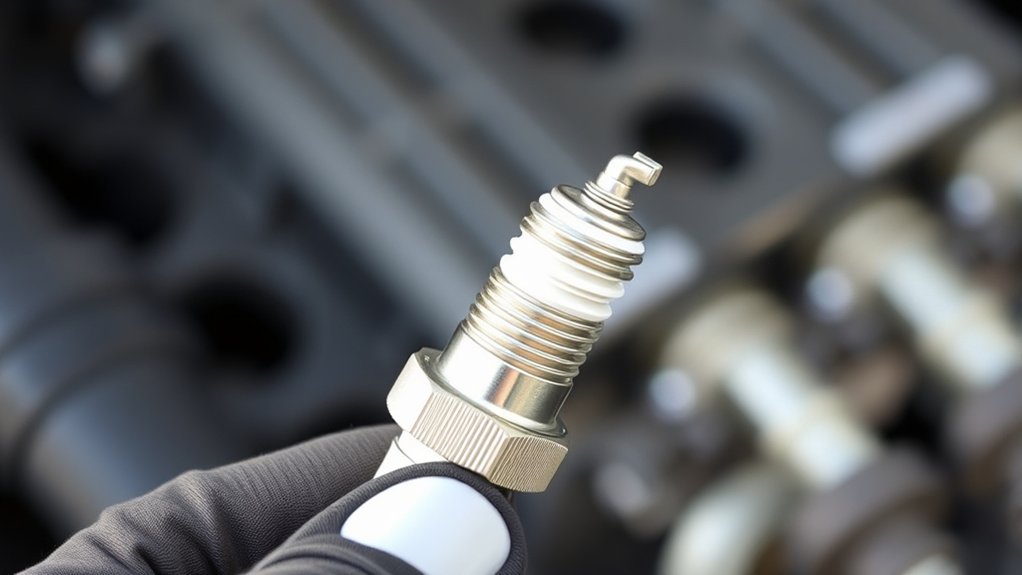
Spark plug indexing involves orienting the spark plug so that its open electrode faces a specific direction within the combustion chamber. When you install a spark plug, you control the spark plug alignment by tightening it to a precise torque, then adjusting the electrode’s position using indexed washers if necessary.
This precise orientation guarantees the spark gap faces away from the intake valve or toward the center of the combustion chamber, optimizing the spark’s exposure to the air-fuel mixture. By achieving accurate spark plug alignment, you reduce flame kernel quenching caused by nearby metal surfaces, which enhances ignition efficiency.
Proper indexing requires careful measurement and sometimes custom hardware, but it’s essential to maximize the spark’s effectiveness without altering plug fitment or thread engagement.
Why Spark Plug Indexing Boosts Engine Performance
Because the orientation of the spark plug’s electrode directly influences the initial flame kernel development, indexing guarantees the spark ignites the air-fuel mixture in the most efficient manner possible. When you index spark plugs properly, you enhance spark efficiency by aligning the electrode gap toward the ideal combustion chamber area, where the mixture is most homogeneous.
This precise positioning reduces flame kernel quenching caused by electrode shielding or proximity to the cylinder walls, promoting faster and more complete combustion. As a result, you achieve combustion optimization that improves power output, fuel economy, and reduces emissions.
Proper spark plug indexing minimizes cycle-to-cycle variation in ignition timing, enabling your engine to run smoother and more consistently under varying loads and speeds. This technical adjustment directly elevates overall engine performance.
How to Index Your Spark Plugs Step-by-Step
Achieving ideal combustion requires careful alignment of your spark plug’s electrode within the combustion chamber. First, gather essential spark plug tools: a gap gauge, a torque wrench, a spark plug socket, and a plug indexing tool or washer kit. Remove the old plugs, noting their orientation.
Next, inspect each plug’s electrode and determine the best position to face the combustion chamber’s center, maximizing the indexing benefits. Use the indexing washers or rotate the plug carefully with the indexing tool to align the electrode correctly.
Finally, reinstall the plugs, applying the manufacturer’s torque specifications to avoid damage. Properly indexing guarantees a consistent spark pattern, improving combustion efficiency and engine performance. Double-check alignment after installation to confirm accurate electrode positioning.
Signs Your Engine Benefits From Spark Plug Indexing
If your engine exhibits uneven idling, misfires, or reduced fuel efficiency, it may benefit from spark plug indexing. This technique optimizes the orientation of the spark plug’s electrode, promoting consistent ignition and enhancing engine efficiency.
Look for these signs to determine if indexing suits your performance tuning needs:
- Noticeable drop in throttle response or acceleration smoothness.
- Persistent engine misfires despite proper spark plug gap and condition.
- Uneven combustion patterns detected during a diagnostic scan.
- Increased fuel consumption without mechanical faults elsewhere.
Addressing these issues with precise spark plug indexing can improve combustion uniformity, reduce emissions, and elevate overall engine performance. If you aim to maximize your engine’s potential, indexing is a critical step in your performance tuning regimen.
Common Mistakes When Indexing Spark Plugs
Optimizing spark plug orientation can greatly enhance engine performance, but improper indexing can negate these benefits or even cause engine issues. One common mistake is spark plug misalignment, where the electrode faces away from the ideal direction, reducing combustion efficiency. This often occurs when you don’t use proper indexing tools or fail to verify the plug’s position after installation.
Another error is overtightening the plug, which can distort the electrode’s orientation and damage threads. Additionally, neglecting to clean the seating surface before indexing can prevent correct plug alignment.
To avoid these pitfalls, always use precise indexing tools designed for your plug type, double-check electrode orientation post-tightening, and make certain surfaces are clean. This disciplined approach minimizes spark plug misalignment and maximizes engine performance.
Frequently Asked Questions
Can Spark Plug Indexing Damage My Engine?
No, spark plug indexing won’t damage your engine; it actually optimizes spark plug performance by aligning the electrode for better ignition. This improves engine efficiency and combustion consistency, enhancing overall power and fuel economy.
Are Indexed Spark Plugs More Expensive to Buy?
Think of indexed spark plugs like custom-tailored shoes; they usually cost a bit more. While indexed spark plugs might have a slightly higher price, their precise orientation can deliver subtle performance benefits.
These benefits are worth the investment for enthusiasts focused on optimization.
Does Spark Plug Material Affect Indexing Benefits?
Yes, spark plug types affect indexing benefits; different materials like copper, iridium, or platinum influence heat transfer and electrode wear. This can alter the performance impact you get from precise spark plug orientation in your engine.
Is Spark Plug Indexing Necessary for All Engine Types?
You don’t always need spark plug indexing for every engine type, but precise spark plug alignment can boost engine performance in high-compression or racing engines.
In standard engines, the benefits are often minimal or negligible.
How Often Should Spark Plug Indexing Be Checked?
You should check spark plug indexing each time you replace plugs to guarantee performance optimization and maximize spark plug longevity.
Regular inspection prevents misalignment issues that can reduce engine efficiency and increase wear over time.
Conclusion
By carefully considering spark plug indexing, you can consistently create combustion chamber conditions that contribute to cleaner, more controlled ignitions. This precision practice promotes peak performance, prevents power problems, and protects your engine’s potential.
Avoid common careless errors by following step-by-step instructions, ensuring your engine enjoys efficient, effective energy bursts. Embrace spark plug indexing to boost your bike or car’s combustion chamber chemistry and capture consistent, confident combustion every time you start.
Incorporating spark plug indexing into your maintenance routine is a smart way to optimize engine performance and reliability. Understanding and applying spark plug indexing can make a noticeable difference in how your engine runs and feels on the road.