You’ll find the Jeep Wrangler’s firm seats and solid axle suspension deliver a rugged, less cushioned ride that transmits road feedback and noticeable wind noise, especially on highways.
When considering if the Jeep Wrangler is comfortable for long drives, it’s important to note that its seat support prioritizes stability but offers limited lumbar adjustment, which can lead to discomfort on extended trips.
Storage is versatile with up to 72.4 cubic feet of cargo space, while climate control and modular interiors help improve comfort.
If you want to understand how these factors impact your driving experience, keep exploring the details.
Key Takeaways
- Jeep Wrangler’s firm seats prioritize durability over plush comfort, which may cause discomfort on extended drives without advanced lumbar support.
- Stiffer suspension and solid axles result in a rougher ride with more road feedback and body roll at highway speeds.
- Increased noise and vibration from open-air design and body-on-frame construction can affect cabin quietness during long trips.
- Dual-zone climate control and modular cargo space enhance comfort and convenience for extended road journeys.
- Aftermarket cushions and suspension upgrades can significantly improve lumbar support and ride smoothness for long-distance comfort.
How Does Jeep Wrangler Ride Quality Hold Up on Highways?
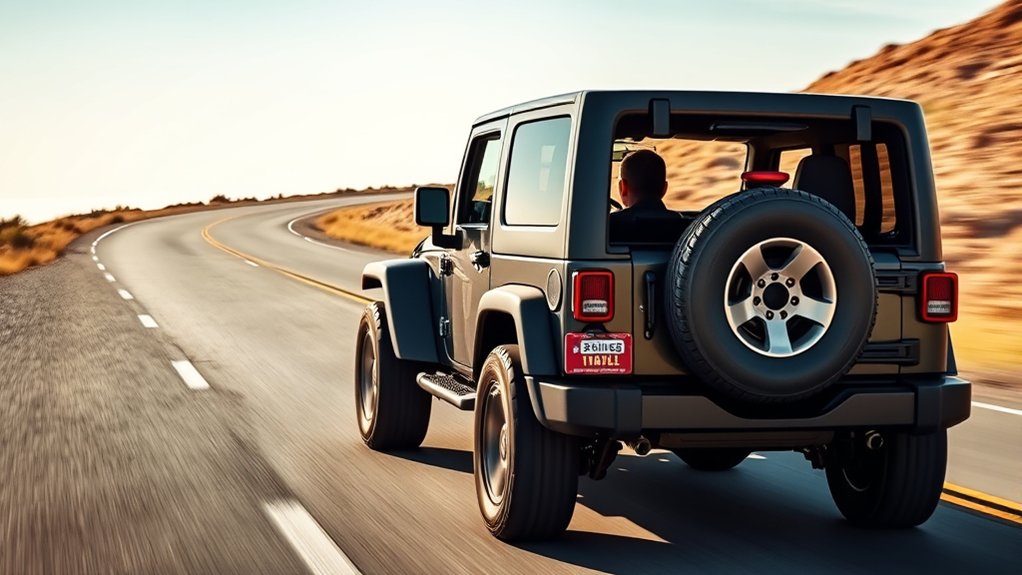
Although the Jeep Wrangler is renowned for its off-road prowess, its ride quality on highways presents a different set of characteristics you should consider. The Wrangler’s suspension tuning prioritizes articulation and durability over smoothness, which affects highway performance.
You’ll notice a stiffer ride compared to conventional SUVs, as the solid axles and coil spring setup transmit more road feedback. At higher speeds, body roll can be more pronounced due to the Wrangler’s higher center of gravity, impacting cornering stability.
Wind and road noise also tend to be more noticeable, partly because of the removable doors and roof options. While the Wrangler handles well on uneven terrain, its highway dynamics reflect a compromise in suspension tuning, making it less refined for extended highway cruising.
Are Jeep Wrangler Seats Supportive Enough for Long Drives?
You’ll notice the Jeep Wrangler’s seat cushioning is firm, designed to balance comfort and durability over rough terrain. Its lumbar support varies by trim, with higher models offering adjustable settings to reduce lower back strain.
Additionally, the seats provide multiple adjustability options, allowing you to customize your driving position for extended periods on the road.
Seat Cushioning Quality
When evaluating the Jeep Wrangler’s seat cushioning quality, you’ll find that its seats offer a firm support structure designed to withstand rugged terrain rather than prioritize plush comfort. The seat materials combine durable fabrics or leather with advanced cushioning technology that resists compression over time.
This setup guarantees that while you won’t experience a soft, cushy ride, the seats maintain stability and support during long drives.
| Feature | Description | Impact on Comfort |
|---|---|---|
| Seat Materials | High-density foam with durable fabric/leather | Provides durability and moderate softness |
| Cushioning Technology | Multi-layer foam design | Balances firmness with shock absorption |
| Design Focus | Rugged terrain support | Prioritizes stability over plushness |
This configuration suits those valuing resilience and support over luxury in long-distance driving.
Lumbar Support Features
While the Jeep Wrangler’s seat cushioning emphasizes firmness and durability, lumbar support plays a significant role in determining overall seating comfort during extended drives. The Wrangler’s seats provide moderate back support, but the lumbar adjustment is somewhat limited compared to other vehicles designed for long-distance comfort.
Most Wrangler trims offer manual lumbar adjustment, allowing you to slightly modify the curve in the lower back area, which can help reduce fatigue. However, the range of adjustment is narrow, providing only basic support rather than fully customizable contouring.
If you plan extended drives, you might find the lumbar support insufficient for prolonged spinal alignment, potentially leading to discomfort. Understanding these lumbar support limitations is essential when evaluating the Wrangler’s suitability for long-haul travel.
Adjustability Options Available
Although the Jeep Wrangler offers a range of seat adjustability options, these controls focus primarily on basic positioning rather than advanced ergonomic support. When you settle in for a long drive, the seat’s adjustability can impact your comfort considerably. Here are the key features you’ll find:
- Manual seat height adjustment allows you to raise or lower the seat, helping you find an ideal driving posture relative to the steering wheel.
- Fore-aft seat slide lets you position yourself closer or farther from the pedals and steering wheel, accommodating different leg lengths.
- Recline adjustment enables you to tilt the seatback, though it lacks fine-tuned support for prolonged lumbar comfort.
While these options help with basic fit, the Wrangler doesn’t offer advanced ergonomic adjustments needed for extended driving comfort.
How Does Noise and Vibration Affect Comfort in the Jeep Wrangler?
Because the Jeep Wrangler’s design prioritizes off-road capability, you’ll notice higher levels of noise and vibration compared to typical passenger vehicles. The Wrangler’s open-air options and rugged build contribute to increased road noise, which can become fatiguing on long drives.
Its body-on-frame construction and solid axles inherently transmit more vibration to the cabin, challenging vibration dampening efforts. While Jeep incorporates insulation and mounts to reduce harshness, these measures have limits due to the vehicle’s off-road focus.
You’ll feel more engine and tire noise, especially at highway speeds, impacting overall comfort. Understanding these factors helps set realistic expectations for noise and vibration levels, which are significantly higher than in sedans or SUVs designed primarily for on-road use.
What Comfort Features Does the Jeep Wrangler Offer for Road Trips?
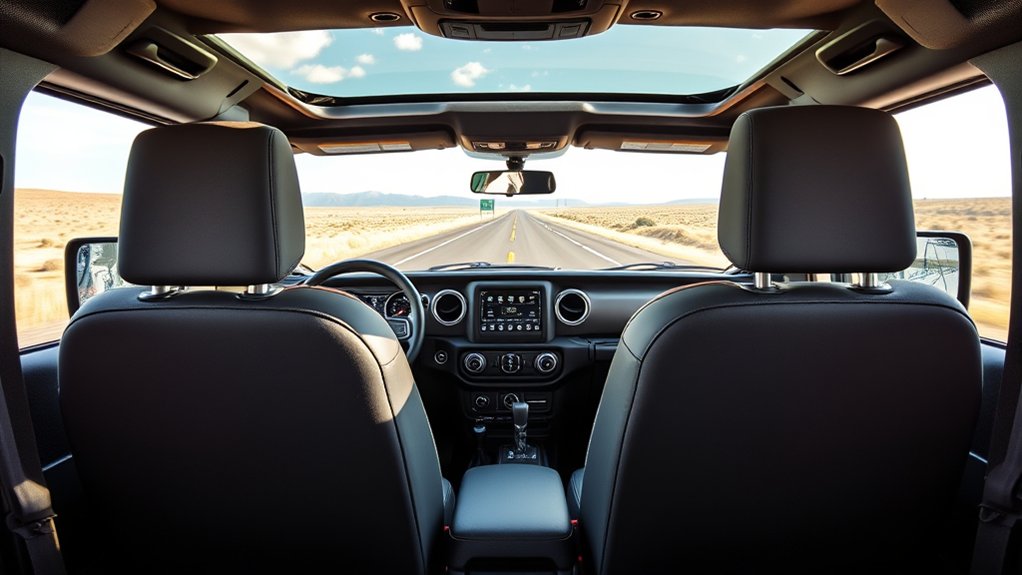
You’ll find the Jeep Wrangler equipped with durable seating and upholstery designed to balance comfort and rugged use on long drives. Its climate control system maintains a consistent cabin temperature, adapting to changing weather conditions efficiently.
Additionally, the Wrangler offers versatile storage and cargo space to accommodate your gear without compromising passenger room.
Seating and Upholstery Quality
The Jeep Wrangler offers seating designed to balance ruggedness with comfort, featuring high-quality materials that support extended periods behind the wheel. You’ll find that upholstery durability is a key focus, using premium cloth or leather options that resist wear and tear from frequent use.
The seating configuration adapts to your needs, allowing you to optimize space for passengers or cargo efficiently. Specifically, the Wrangler provides:
- Firm yet supportive cushions that reduce fatigue on long drives.
- Adjustable headrests and seatbacks to enhance ergonomic positioning.
- Available heated front seats that add comfort without compromising durability.
These features guarantee you remain comfortable while maintaining the Wrangler’s trademark toughness, making it well-suited for prolonged road trips.
Climate Control Systems
While enduring long drives, maintaining an ideal cabin temperature considerably enhances your comfort and focus. The Jeep Wrangler’s climate control system offers precise temperature management through its automatic dual-zone feature, allowing you and your front passenger to set individual preferences.
This system optimizes climate efficiency by utilizing advanced sensors that adjust airflow and cooling or heating output based on external conditions and cabin occupancy. The Wrangler also provides rapid temperature adjustment, minimizing the time it takes to reach your desired climate.
Additionally, the system integrates seamlessly with the vehicle’s ventilation, heating, and cooling components to maintain consistent temperature levels. By effectively balancing energy consumption and cabin comfort, the Wrangler’s climate control system guarantees you stay comfortable and alert throughout extended road trips.
Storage and Cargo Space
Ample storage and cargo space greatly contribute to the Jeep Wrangler’s suitability for long road trips. When you’re on the road, efficient cargo organization and versatile storage solutions guarantee your gear stays secure and accessible. Here are three key features:
- Modular Cargo Area: The rear cargo space offers configurable storage with fold-flat rear seats, allowing you to maximize volume when needed.
- Integrated Storage Compartments: Multiple compartments throughout the cabin provide secure spots for smaller items, preventing clutter during the drive.
- Durable Cargo Mat and Tie-Downs: These protect the cargo floor and secure larger items, helping you maintain order and safety.
These technical storage features combine to enhance your comfort by keeping essentials organized and within reach during extended drives.
How Much Space and Storage Does the Jeep Wrangler Have for Long Journeys?
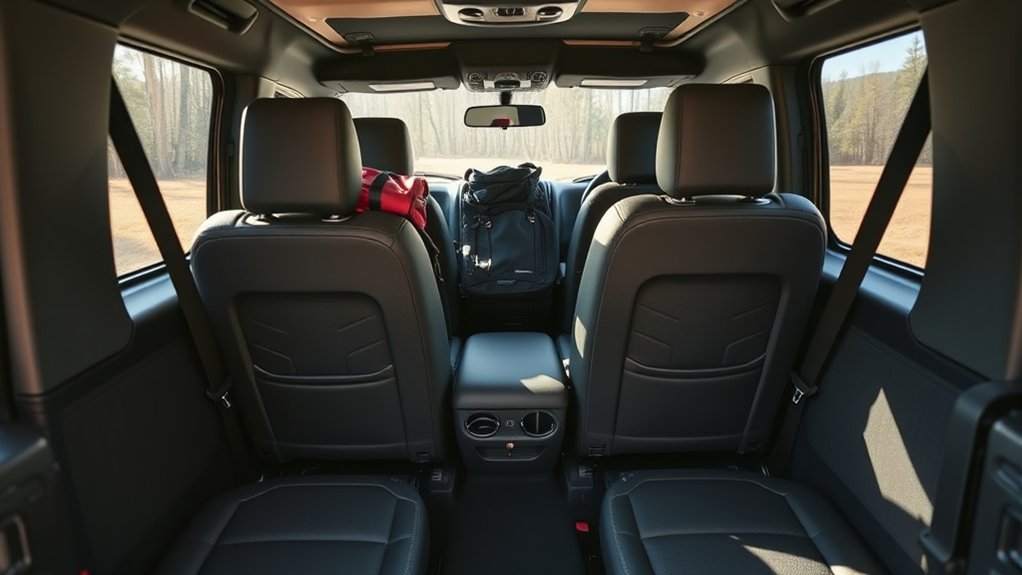
Jeep Wrangler offers a practical balance of passenger space and cargo capacity designed to accommodate your essentials on long journeys. With approximately 31.7 cubic feet of cargo space behind the rear seats and up to 72.4 cubic feet with seats folded, you can efficiently pack essentials for extended trips.
The rear cargo area is flat and wide, allowing adaptable storage configurations. For better cargo organization, consider using modular storage bins or cargo nets to secure loose items and optimize space utilization. The rear seats split 60/40, enabling flexible passenger and cargo arrangements.
While the cabin is compact compared to larger SUVs, it provides enough room for comfortable storage of gear and luggage, ensuring you can carry what you need without compromising passenger comfort on long drives.
How Can You Improve Comfort in a Jeep Wrangler for Extended Trips?
Although the Wrangler’s rugged design prioritizes off-road capability, you can considerably enhance comfort for extended trips through targeted modifications and accessories. First, consider suspension upgrades; installing high-quality shocks and springs improves ride smoothness on highways and rough terrain, reducing driver fatigue.
Second, invest in ergonomic seating solutions, such as aftermarket cushions or custom seats with enhanced lumbar support, to alleviate discomfort during long hours behind the wheel. Third, equip your Wrangler with travel accessories designed for convenience and comfort. Items like portable organizers, window sunshades, and climate control aids help maintain an ideal environment.
Frequently Asked Questions
What Is the Fuel Efficiency of the Jeep Wrangler on Long Drives?
You’ll get around 17-25 MPG on long drives, depending on the model and terrain. With a fuel capacity of about 17.5 gallons, your driving range typically falls between 297 and 437 miles before refueling.
How Reliable Is the Jeep Wrangler for Cross-Country Road Trips?
You’ll find Jeep performance dependable for cross-country road trips, especially with proper maintenance.
Equipping your Wrangler with travel accessories like roof racks and all-weather mats enhances functionality and guarantees you’re ready for diverse terrains and conditions.
Are There Any Recommended Tire Types for Better Long-Distance Comfort?
You’ll want tires with gentler tread patterns and proper tire pressure to smooth the ride. Touring or all-season tires reduce road noise and vibrations, enhancing comfort on long drives.
They also maintain traction and durability for your Jeep Wrangler.
How Does the Jeep Wrangler Handle Extreme Weather Conditions on Long Drives?
You’ll find the Jeep Wrangler offers strong weather resilience and driving stability in extreme conditions, thanks to its advanced 4×4 system, durable body sealing, and traction control. This ensures reliable performance on long drives regardless of weather challenges.
What Are Common Maintenance Issues During Extended Jeep Wrangler Trips?
You expect off-road readiness but face frequent tire wear and suspension strain. You appreciate interior space yet encounter electrical glitches and brake issues.
Regular checks on fluids, bolts, and seals keep your Jeep Wrangler reliable during extended trips.
Conclusion
If you value rugged off-road capability, expect a firm ride, and can tolerate road noise, the Jeep Wrangler can handle long drives. It offers a unique driving experience that emphasizes adventure over luxury.
The seats provide moderate support, and storage space is available but limited compared to other vehicles. Advanced comfort features are present but not as comprehensive as in more road-focused SUVs.
To enhance your journey, consider adding seat cushions, noise dampening materials, and storage organizers. Ultimately, when considering if the Jeep Wrangler is comfortable for long drives, you balance its adventurous spirit with practical comfort—embracing its strengths while mitigating its limitations for extended travel.