To reset the traction control light on your Jeep Wrangler, start by turning the ignition to ON without starting the engine.
Then, press and hold the brake pedal firmly.
Next, turn the ignition off and back to ON while still holding the brake for about 10 seconds to recalibrate the system.
Alternatively, you can use the traction control button on the dashboard by holding it until the light blinks or goes off.
If the light persists, inspecting sensors and wiring or performing a diagnostic scan may be necessary for deeper troubleshooting.
Key Takeaways
- Turn the ignition to ON without starting the engine to begin the reset process.
- Press and hold the brake pedal firmly while turning the ignition off and then back to ON.
- Maintain brake pressure for about 10 seconds to allow the traction control module to recalibrate.
- Alternatively, press and hold the traction control button until the light blinks or turns off.
- Restart the Jeep Wrangler to confirm the traction control light remains off after the reset.
Why Is My Jeep Wrangler’s Traction Control Light On?

Why is your Jeep Wrangler’s traction control light on? This warning sign typically signals a system issue affecting vehicle stability. Common causes include faulty wheel speed sensors, which provide incorrect data to the traction control module.
Another cause might be a malfunctioning ABS sensor, as traction control relies on ABS inputs. Dirty or damaged wiring can disrupt sensor signals, triggering the light. Additionally, low brake fluid levels or worn brake components can cause the system to activate the warning.
Sometimes, the light appears during slippery conditions. This is normal and indicates system engagement. If the light remains on consistently, it suggests a persistent fault requiring diagnostic scanning with an OBD-II tool to identify specific error codes and address the root cause promptly to maintain safe operation.
How to Reset the Traction Control Light on Your Jeep Wrangler
To reset the traction control light on your Jeep Wrangler, start by turning the ignition to the ON position without starting the engine. This powers the vehicle’s onboard systems, including traction control features and Jeep safety systems.
Next, press and hold the brake pedal firmly. While holding the brake, turn the ignition off completely, then back to ON. Keep the brake pressed for about 10 seconds to allow the system to recalibrate.
Press and hold the brake, turn ignition off and back on, then keep brake pressed for 10 seconds to recalibrate.
This process resets the traction control module and clears minor faults causing the warning light. If the light remains on after this, inspect the traction control sensors and wiring for damage.
Resetting the light manually helps guarantee your Jeep safety systems function properly after addressing any issues.
Resetting Traction Control Using Dashboard Controls

Although traction control systems often reset automatically, you can manually reset the traction control light using your vehicle’s dashboard controls. This approach allows you to recalibrate the traction system without external tools. Follow these steps:
- Turn on your ignition without starting the engine to access the dashboard settings.
- Locate the traction control button or menu option on the dashboard or steering wheel controls.
- Press and hold the traction control button until the light on the dashboard either blinks or turns off, indicating the system reset.
- Release the button and turn off the ignition, then restart your vehicle to confirm the traction control light remains off.
This method guarantees your traction system resets accurately via the integrated dashboard controls, maintaining peak vehicle performance.
Inspecting Sensors and Electrical Connections for Traction Control Issues
Three key components often cause traction control issues: sensors, wiring, and connectors. Start by visually inspecting each sensor for damage or dirt, as improper sensor calibration can trigger the traction control light.
Next, perform electrical diagnostics using a multimeter or scan tool to check wiring continuity and connector integrity. Loose or corroded connectors often disrupt signal transmission, causing system errors.
| Component | Inspection Tip |
|---|---|
| Wheel Speed Sensor | Check for debris or damage |
| Wiring Harness | Test for continuity |
| Connectors | Look for corrosion or looseness |
| Sensor Calibration | Verify through diagnostic tool |
| Ground Points | Confirm secure and clean connection |
Following these steps helps you identify faults affecting traction control accuracy and enables precise sensor calibration.
Troubleshooting When the Traction Control Light Won’t Reset
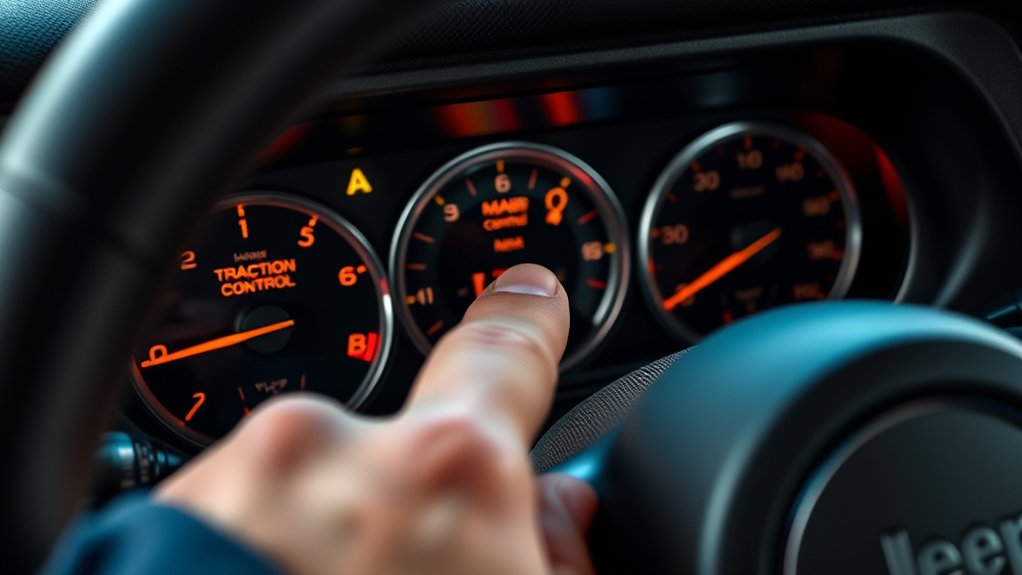
When the traction control light won’t reset after addressing sensor and connection issues, you need to methodically verify system components and software status. Use diagnostic tools to scan for persistent fault codes or warning signals not cleared by previous interventions. Follow these steps:
- Reconnect your diagnostic tool and perform a full system scan to identify hidden errors.
- Inspect the ABS module and wheel speed sensors for mechanical damage or corrosion.
- Check for software updates or recalls affecting traction control functionality via OEM service portals.
- Reset the vehicle’s ECU by disconnecting the battery for 15 minutes, then reconnect and re-scan for codes.
This approach guarantees you isolate underlying faults preventing the traction control light from resetting properly.
Frequently Asked Questions
Can a Faulty Tire Pressure Sensor Trigger the Traction Control Light?
Yes, a faulty tire pressure sensor can trigger the traction control light. You need to perform proper tire maintenance and guarantee sensor calibration to prevent false alerts and maintain accurate system performance.
Check and recalibrate as necessary.
Does Weather Affect the Traction Control System Performance?
Just like a knight adjusting his armor, you must know weather conditions impact traction performance. Rain, snow, or ice reduce tire grip, so your traction control system adapts to maintain stability and prevent wheel slip effectively.
How Often Should I Service the Traction Control System?
You should perform traction control maintenance annually or every 12,000 miles. Regularly inspect sensors and wiring for faults.
If the warning light activates, prioritize troubleshooting to prevent system failure and guarantee ideal vehicle safety and performance.
Can Off-Roading Damage the Traction Control System?
Off-road impact can indeed damage your traction system if debris or rough terrain affects sensors or wiring. You should regularly inspect and clean components to maintain peak function and prevent costly repairs after heavy off-roading.
Is It Safe to Drive With the Traction Control Light On?
You shouldn’t drive with the traction control light on because it compromises braking performance and electronic stability.
Address the issue promptly to maintain vehicle safety and avoid increased risk of skidding or loss of control during braking.
Conclusion
If you ignore that traction control light on your Jeep Wrangler, it might as well be a flashing neon sign screaming danger! Resetting it is essential—not just for peace of mind but for your safety.
By following the steps to reset via the dashboard and inspecting sensors carefully, you’ll keep your system sharp and responsive. Don’t let a stubborn light fool you; take control now before small issues turn into costly repairs.
To ensure your Jeep runs smoothly, learning how to reset traction control light Jeep Wrangler is a crucial skill every owner should know.