You get your Jeep Wrangler primarily built at the advanced Toledo Assembly Plant in Ohio, where skilled labor and automation work together for precision and durability.
This facility uses real-time quality control and rigorous off-road testing to guarantee every vehicle meets strict standards.
With roots in American manufacturing, Toledo supports tight supply chains and high performance.
If you want to understand how this location shapes reliability and future innovations, there’s more to uncover about the Wrangler’s production legacy and evolution.
Key Takeaways
- The Jeep Wrangler is primarily manufactured at the Jeep Assembly Plant in Toledo, Ohio.
- Toledo has been the main production site for Jeep Wranglers since the early 1980s.
- The facility uses advanced automation and real-time quality control to ensure durability and efficiency.
- Localized production strategies minimize supply chain disruptions and optimize parts sourcing.
- The American build location reinforces brand loyalty and buyer confidence in reliability and safety.
Where Is the Jeep Wrangler Built Today?
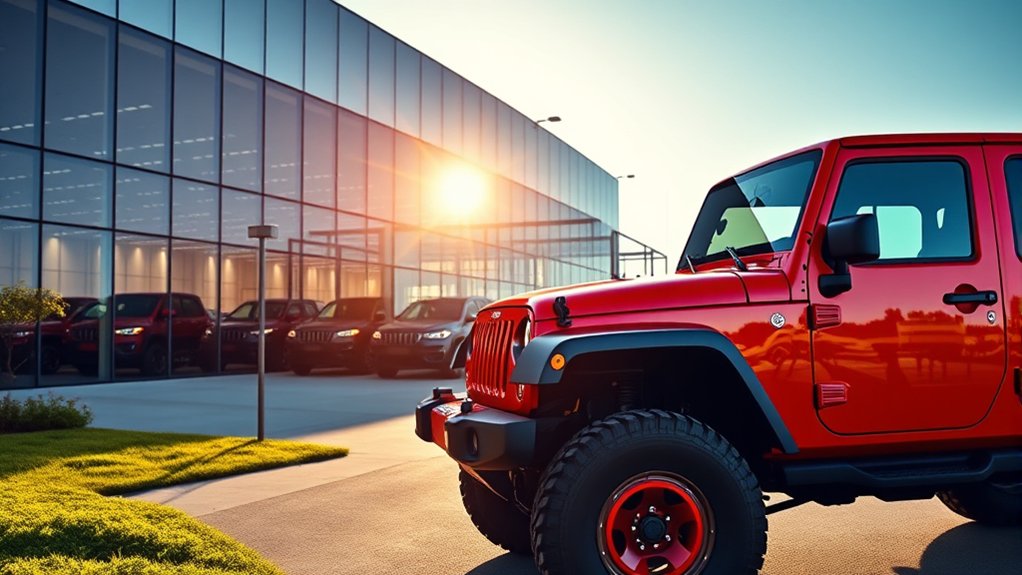
Although the Jeep Wrangler has a storied history, you’ll find that it’s currently manufactured primarily at the Jeep Assembly Plant in Toledo, Ohio. This facility integrates advanced factory innovations, such as automated assembly lines and real-time quality control systems, to enhance production efficiency and vehicle durability.
You’ll notice that localization strategies play an essential role here, allowing the plant to source components regionally, minimizing supply chain disruptions, and adapting models to meet North American market standards. These strategies also help reduce costs and improve responsiveness to demand fluctuations.
Evolution of Jeep Wrangler Production Over Time
You’ll find that Jeep Wrangler production began in a few select U.S. locations focused on military and civilian demand. Over time, manufacturing shifted to modern facilities designed for higher volume and advanced assembly techniques.
Understanding these changes helps clarify how production efficiency and global strategy evolved.
Early Manufacturing Locations
The Jeep Wrangler’s production began in the early 1980s, with manufacturing initially centered in Toledo, Ohio. This site played an essential role in the vehicle’s early factories and manufacturing history, setting standards for durability and off-road capability.
As you explore the Wrangler’s origins, keep in mind:
- Toledo South Assembly Plant, the primary early factory, handled most initial production.
- The facility’s layout optimized assembly line efficiency, supporting high-quality output.
- Early manufacturing techniques focused on rugged construction suitable for diverse terrains.
Understanding these early manufacturing locations gives you insight into the Wrangler’s foundational build quality. These factories not only produced vehicles but also established a legacy of robust engineering that continues to influence Jeep’s design philosophy today.
Modern Production Shifts
Following the strong manufacturing foundation in Toledo, Jeep Wrangler production has evolved to meet changing demands and incorporate advanced technologies. You’ll notice that modern production shifts focus heavily on optimizing the supply chain, ensuring timely delivery of parts from global suppliers to maintain assembly line efficiency.
Labor dynamics have also transformed; automation complements skilled labor, increasing precision while reducing human error. As you follow the production timeline, you’ll see that Toledo remains central, but integration of robotics and data analytics streamlines quality control and inventory management.
These shifts respond directly to market pressures and regulatory standards, enabling Jeep Wrangler to maintain its rugged character while improving manufacturing agility. Understanding these changes helps you appreciate how production adapts without compromising the vehicle’s iconic design and functionality.
Why Toledo, Ohio Is Key to Building Jeep Wranglers
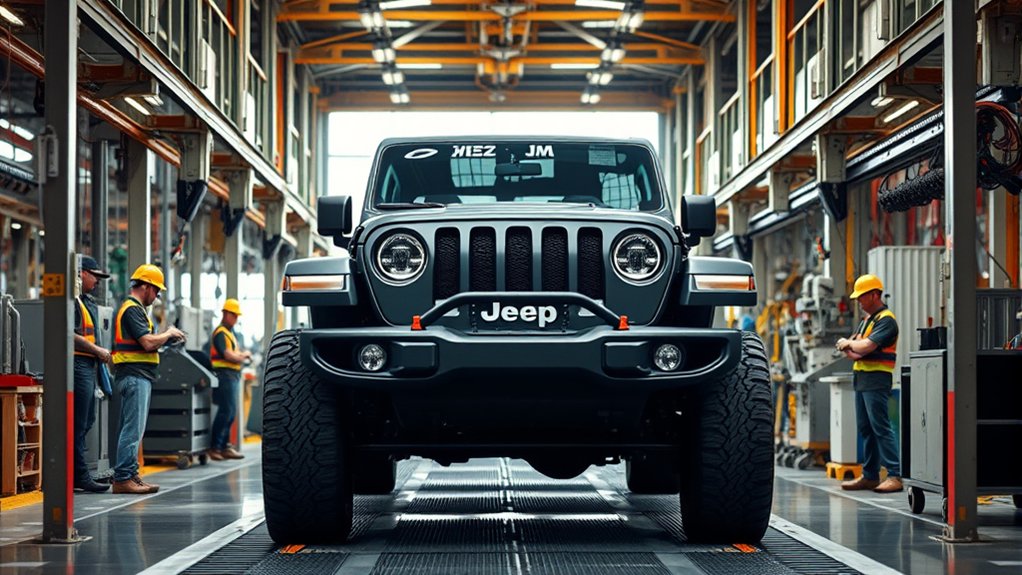
Three decades of automotive expertise have made Toledo, Ohio, a critical hub for Jeep Wrangler production. You’ll find that Toledo’s heritage deeply influences the Wrangler community, shaping both design and manufacturing.
When you look at why Toledo is essential, consider these factors:
- Skilled workforce: Toledo’s experienced technicians specialize in Wrangler-specific assembly techniques.
- Strategic location: Proximity to suppliers guarantees efficient parts delivery and streamlined production.
- Strong community ties: Local support fosters innovation and quality control tailored to Wrangler enthusiasts.
This combination of technical skill, logistics, and cultural connection assures that every Wrangler built in Toledo meets rigorous standards. As you explore Jeep’s manufacturing story, you’ll see that Toledo’s unique role goes beyond just being a factory. It’s the heart of Wrangler craftsmanship.
What Makes Jeep’s Toledo Assembly Plant Unique
Jeep’s Toledo Assembly Plant stands out due to its integration of advanced manufacturing technologies with specialized craftsmanship tailored for the Wrangler. You’ll find that Toledo heritage plays an essential role here, as decades of expertise have honed processes unique to this facility.
The plant employs cutting-edge assembly technology, including robotic welding and precision body alignment systems, ensuring each Wrangler maintains exceptional build quality and durability. You benefit from this blend of automation and skilled labor, as the plant’s workforce applies detailed hand-assembly techniques to vital components.
This hybrid approach optimizes efficiency without compromising the rugged character Jeep Wranglers are known for. The Toledo Assembly Plant’s commitment to innovation and tradition makes it a singular hub where heritage meets state-of-the-art production.
Other Jeep Wrangler Assembly and Supplier Locations
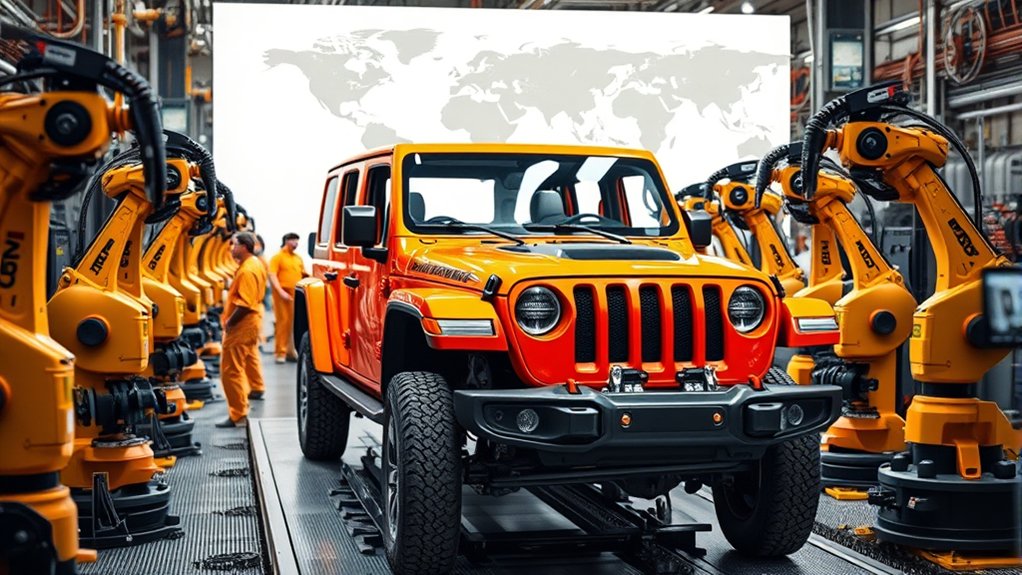
Beyond the Toledo Assembly Plant, the production of Jeep Wranglers involves a network of additional assembly sites and suppliers that contribute specialized components and expertise. This global supply chain guarantees assembly diversity, allowing Jeep to maintain efficiency and high standards.
Jeep Wrangler production extends beyond Toledo, utilizing a global network for specialized components and assembly expertise.
You’ll find key contributions from:
- Sterling Heights, Michigan: Engine assembly and powertrain components.
- Detroit, Michigan: Transmission manufacturing and testing facilities.
- Mexico and Canada: Supply of chassis parts and subassemblies to support overall production.
This dispersed network leverages global supply strengths, optimizing production flow and component quality. By integrating multiple assembly and supplier locations, Jeep enhances flexibility and responsiveness in manufacturing, assuring each Wrangler meets rigorous specifications regardless of its final assembly site.
Jeep Wrangler Quality and Durability Assurance
You’ll find that every Jeep Wrangler undergoes rigorous testing procedures to guarantee performance under extreme conditions. The use of durable materials is carefully selected to withstand off-road stresses and long-term wear.
This quality and durability assurance process certifies the vehicle meets high standards before it reaches you.
Rigorous Testing Procedures
Although many vehicles undergo standard testing, the Jeep Wrangler faces a more demanding regimen to verify its reliability under extreme conditions. You’ll find that quality control and durability testing are integral to this process. Each Wrangler must pass rigorous assessments designed to simulate real-world stresses.
These tests include:
- Off-road simulation: Replicates harsh terrain to evaluate suspension and chassis strength.
- Corrosion resistance: Confirms components withstand prolonged exposure to elements.
- Thermal cycling: Subjects the vehicle to extreme temperature variations to test material resilience.
Durable Materials Selection
Since the Jeep Wrangler endures some of the toughest conditions imaginable, selecting durable materials is essential to its quality and longevity. You’ll find that every component undergoes strict evaluation to confirm material durability meets or exceeds rigorous manufacturing standards.
High-strength steel and corrosion-resistant alloys form the frame and body, providing exceptional resistance to stress and environmental wear. Advanced polymers and composites are chosen for interior and exterior parts to maintain functionality under extreme temperatures and impacts.
Manufacturing Jeep Wrangler for Off-Road Performance
When Jeep engineers design the Wrangler, they focus on optimizing every component for rugged off-road performance. Their off-road engineering integrates advanced performance features that enhance durability, traction, and control. You’ll find that each Wrangler undergoes precise manufacturing steps to guarantee it meets high standards for challenging terrain.
Key performance features include:
- Heavy-duty suspension systems designed for maximum articulation and shock absorption
- Robust skid plates that protect critical underbody components from rough obstacles
- Advanced 4×4 drivetrain technology allowing you to switch between modes for varied off-road conditions
Why Jeep Wrangler’s Build Location Matters to Buyers
Because the Jeep Wrangler’s build location directly influences quality control, supply chain efficiency, and regulatory compliance, it plays a critical role in buyers’ decision-making. You’ll find that knowing where your Wrangler is made affects your confidence in its reliability and adherence to safety standards.
Buyer preferences often hinge on production origin, as some regions have stricter manufacturing protocols and access to higher-quality components. Additionally, supply chain logistics impact delivery times and part availability, influencing your ownership experience.
Brand loyalty also ties closely to build location; customers who trust Jeep’s American manufacturing legacy may prioritize Wranglers assembled domestically. Understanding these technical factors helps you make an informed choice, ensuring that your Wrangler meets performance expectations and regulatory requirements tailored to your market.
Future Changes That Could Impact Jeep Wrangler Production
Understanding the current impact of build locations sets the stage for examining upcoming shifts in Jeep Wrangler production. You should be aware that future changes will likely revolve around technological and environmental advancements.
Key factors include:
Key factors shaping Jeep Wrangler production include EV integration, automation, and sustainability mandates.
- Electric vehicle integration: Jeep is expected to incorporate EV technology into Wranglers, requiring adaptation in assembly lines and supply chains.
- Automated manufacturing: Increased automation will enhance precision and efficiency, potentially altering workforce composition and plant layouts.
- Sustainability mandates: Stricter regulations will push for greener materials and processes, influencing where and how Wranglers are built.
Frequently Asked Questions
What Engine Options Are Available for the Jeep Wrangler?
You’ll find Jeep Wrangler engine specifications including a 2.0L turbocharged inline-4, 3.6L V6, and 3.0L EcoDiesel V6. Performance ratings vary, with horsepower from 270 to 285 and torque up to 470 lb-ft.
How Does Jeep Wrangler Fuel Efficiency Compare to Other SUVS?
You’ll find the Jeep Wrangler’s fuel economy generally lower than many SUVs, especially crossovers, due to its off-road design and heavier build.
In SUV comparison, it prioritizes capability over peak fuel efficiency, impacting overall mileage.
What Are the Most Popular Jeep Wrangler Color Choices?
You’ll find Jeep Wrangler aesthetics shine in popular colors like Firecracker Red, Bright White, and Black. Jeep color trends favor bold, rugged hues that enhance the vehicle’s off-road appeal and distinctive design features.
How Customizable Is the Jeep Wrangler Interior?
You’ll find the Jeep Wrangler interior highly customizable, with numerous interior upgrades available. From upgraded upholstery to advanced tech features, customization options let you tailor the cabin’s comfort, style, and functionality to fit your exact needs.
What Safety Features Come Standard on the Jeep Wrangler?
You get standard safety features like airbags, electronic stability control, and a rearview camera, all contributing to strong safety ratings.
Jeep also integrates advanced technology like blind-spot monitoring to keep you secure on every drive.
Conclusion
You’ll find the Jeep Wrangler built primarily in Toledo, Ohio, where precision, durability, and innovation converge. You’ll see its evolution reflected in advanced manufacturing techniques, rigorous quality checks, and strategic supplier partnerships.
You’ll appreciate how Toledo’s unique assembly plant drives off-road excellence and guarantees reliability. Whether you value performance, heritage, or craftsmanship, knowing where your Jeep Wrangler is made helps you understand its strength, quality, and enduring appeal.
In the end, understanding where the Jeep Wrangler is made gives you deeper insight into the vehicle’s renowned toughness and lasting value.