Did you know that resetting the oil life indicator on your Honda Accord is essential for maintaining optimal engine performance? Resetting the oil after a change ensures the system accurately tracks when your next oil change is due. If you’ve recently changed your oil but the indicator light remains on, a specific reset procedure is necessary.
This process can vary slightly depending on your Honda Accord model and the type of controls you have. Missing a step during the reset can lead to confusion or incorrect readings. Understanding the exact method will help you keep your vehicle running smoothly.
By performing the reset correctly, you can avoid unnecessary trips to the mechanic and ensure timely maintenance. This simple step helps extend your engine’s life and maintains your vehicle’s efficiency.
Key Takeaways
- Turn the ignition to ON without starting the engine to access the dashboard or reset button for oil light reset.
- Use steering wheel buttons to navigate to Vehicle Settings, select Oil Life, and hold Enter/Select to reset to 100%.
- Alternatively, press and hold the ignition or start/stop button for about 10 seconds until the oil light blinks and turns off.
- Reset the oil light only immediately after an oil change and oil filter replacement to reflect accurate oil life monitoring.
- If the oil light stays on, repeat the reset correctly or inspect the oil pressure sensor and electrical connections for faults.
When to Reset Your Honda Accord Oil Light
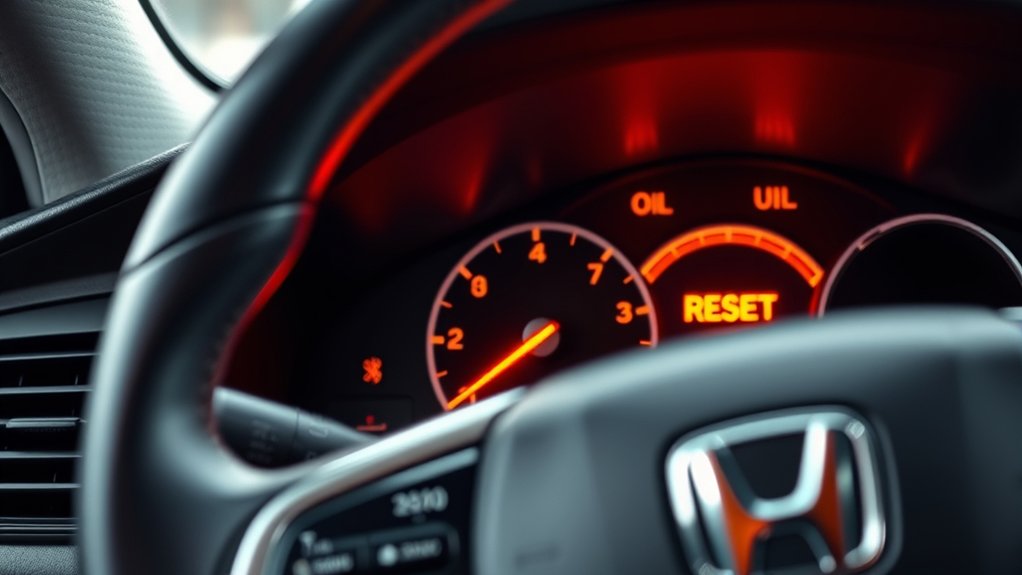
When should you reset your Honda Accord oil light? You should reset it immediately after changing the engine oil and replacing the oil filter. This step guarantees the oil life monitoring system accurately reflects the new oil’s condition.
Resetting the oil light too soon or without changing the oil can mislead you about the oil viscosity and degrade engine performance. Proper oil viscosity is essential for maintaining superior lubrication and preventing engine wear.
If the oil light remains on after an oil change, it can indicate an error in resetting or a mechanical issue affecting engine performance. Always reset the oil light only after using the recommended oil viscosity to maintain accurate monitoring and protect your Honda Accord’s engine efficiency.
What You Need Before Resetting the Oil Light
Before resetting the oil light, gather the necessary tools like your key fob or ignition key and ensure your vehicle is parked on a level surface with the engine off.
Follow basic safety precautions, such as engaging the parking brake and wearing gloves if needed. Preparing these elements will streamline the reset process and prevent errors.
Required Tools Checklist
A few essential tools help you efficiently reset the oil light on your Honda Accord. Before starting, ensure you have the right equipment to avoid complications. You’ll also want to confirm the correct oil viscosity and whether synthetic oil was used during the oil change, as this affects maintenance intervals.
Gather these tools:
- Owner’s manual for specific reset instructions
- OBD-II scanner or reset tool compatible with Honda
- Clean rag to wipe the dashboard and buttons
- Digital multimeter to verify electrical connections (optional)
- Funnel and correct synthetic oil matching recommended oil viscosity
Having these tools ready streamlines the reset process, ensuring accuracy and preventing errors. Proper preparation reduces downtime and safeguards your vehicle’s maintenance system.
Vehicle Preparation Steps
How exactly do you prepare your Honda Accord to guarantee a successful oil light reset? First, ensure the engine is off and the vehicle is parked on a flat, stable surface. This stabilizes the onboard computer, essential for accurate system resets.
Next, check that the engine has cooled down to avoid inaccurate readings. Confirm that your vehicle’s battery is sufficiently charged to prevent interruptions during the reset process.
Proper vehicle preparation supports optimal engine maintenance and preserves fuel efficiency by ensuring the oil light reset functions correctly. Finally, consult your owner’s manual for any model-specific instructions before proceeding.
These steps establish a controlled environment, preventing errors and enhancing the reliability of your Accord’s oil life monitoring system.
Safety Precautions Overview
Why must you prioritize safety precautions when resetting your Honda Accord’s oil light? Ensuring your safety prevents injury and protects your vehicle’s systems.
Before starting, equip yourself with the proper safety gear to avoid contact with hot engine parts or oil spills. Confirm that the engine is cool to prevent burns. Also, check the oil viscosity and use the manufacturer-recommended grade to maintain optimal performance.
Follow these essentials:
- Wear gloves and safety goggles to protect skin and eyes
- Ensure the vehicle is parked on a level surface with the parking brake engaged
- Verify the engine is off and cooled down
- Use the correct oil viscosity specified in the owner’s manual
- Keep a clean rag or absorbent pad handy for spills
Adhering to these precautions ensures a safe and effective oil light reset.
How to Reset the Oil Light on Your Honda Accord
First, locate the oil reset button, usually found on the dashboard or near the steering wheel.
Next, follow the specific reset procedure by pressing and holding the button as instructed in your owner’s manual.
Finally, confirm the oil light has turned off to ensure the reset was successful.
Locate The Oil Reset Button
Where exactly is the oil reset button located on your Honda Accord? Finding this button is essential for completing proper engine maintenance and ensuring your hobby projects run smoothly. Typically, the oil reset button is integrated with the instrument panel or dashboard controls.
Look for these common locations:
- On the dashboard near the speedometer or tachometer
- As part of the trip meter or odometer button cluster
- Close to the steering column on the instrument cluster
- Within the menu accessed by buttons on the steering wheel
- Beneath the dashboard, near the fuse box or driver’s side panel
Identifying the correct button allows you to reset the oil light accurately after an oil change, maintaining your vehicle’s engine health and performance.
Follow The Reset Procedure
Once you’ve located the oil reset button on your Honda Accord, you’re ready to proceed with the reset process. First, turn the ignition to the “ON” position without starting the engine. Press and hold the oil reset button firmly.
After about 10 seconds, the oil maintenance light will blink and then go off, indicating the system has reset. Release the button. This procedure resets the oil life monitor, ensuring accurate maintenance tracking.
Think of it as a simple marketing strategy for your car’s internal dashboard, keeping you informed without complex diagnostics. While it’s straightforward, a little non technical humor helps: resetting your oil light isn’t rocket science, but it’s crucial for engine health.
Follow these steps precisely to keep your Accord running smoothly.
Confirm The Oil Light
How can you verify that the oil light reset was successful on your Honda Accord? After completing the reset procedure, you need to confirm the oil light status to ensure accurate monitoring of oil pressure and overall battery health. Follow these steps:
Turn the ignition to the ON position without starting the engine. Check that the oil maintenance required light remains off.
Start the engine and observe the oil pressure warning; it should extinguish within seconds. Verify the instrument cluster shows no oil-related alerts.
Monitor battery health indicators to confirm no electrical issues affect the reset.
If the oil light remains illuminated, repeat the reset process or inspect the oil pressure sensor and battery health to prevent false warnings. This ensures your vehicle’s oil system and electrical components function properly.
Resetting the Oil Light on Different Honda Accord Models
Why does the procedure for resetting the oil light vary across Honda Accord models? It’s due to differences in design and onboard systems tailored to different production years. Early models, for instance, use a manual reset via the odometer button, while newer models incorporate digital interfaces requiring specific button sequences.
Understanding these distinctions is essential, especially if you want to align your maintenance instructions with a clear marketing strategy that targets the right audience engagement. By providing precise, model-specific instructions, you guarantee users follow the correct procedure, reducing errors.
For example, a 2010 Accord requires holding the trip meter button until the light blinks, whereas a 2018 model may need a combination of ignition and button presses. Always confirm your model year before proceeding.
How to Reset the Oil Light Using Steering Wheel Controls

Different Honda Accord models may require varied approaches to reset the oil light, and newer versions often utilize the steering wheel controls for this task. To reset the oil light via steering wheel controls, follow these steps precisely to ensure accurate engine maintenance and proper dashboard indicators function:
Turn the ignition to the ON position without starting the engine. Use the steering wheel buttons to navigate to the “Vehicle Settings” or “Maintenance Info” menu on the driver information display. Scroll to “Oil Life” or “Oil Maintenance” using the arrow keys.
Press and hold the “Enter” or “Select” button until the oil life resets to 100%. Confirm the reset by exiting the menu and verifying the dashboard indicators no longer show the oil light.
This method guarantees proper oil light reset without ignition button use.
How to Reset the Oil Light Using the Ignition Button
When do you use the ignition button to reset the oil light on your Honda Accord? You’ll want to do this immediately after performing an oil change to ensure the system accurately tracks your maintenance schedule.
Start by turning the ignition to the ON position without starting the engine. Press the ignition button twice if your model has a start/stop button. Next, press and hold the ignition button for about 10 seconds until the oil light blinks and then goes off. This confirms the reset.
If your Accord uses a traditional key, turn it to the ON position and follow the same timing. Regularly resetting the oil light after an oil change is a crucial maintenance tip to avoid false alerts and keep your vehicle’s monitoring system precise.
Common Mistakes When Resetting the Oil Light

After resetting the oil light using the ignition button, it’s important to avoid common errors that can prevent the system from properly recognizing the reset. Failing to reset correctly can cause incorrect oil pressure readings and may lead to unnoticed engine wear.
Here are key mistakes to avoid:
- Not fully turning the ignition to the “On” position without starting the engine.
- Releasing the button too soon before the oil light flashes or resets.
- Resetting the light without performing an actual oil change.
- Ignoring dashboard warnings after reset, assuming the system is flawless.
- Using improper sequences or timing during the reset process.
Troubleshooting When the Oil Light Won’t Reset
Why won’t the oil light reset even after following the proper procedure? First, confirm you used the correct oil viscosity recommended for your Honda Accord. Using oil with improper viscosity can affect sensor readings and prevent the light from resetting.
Next, check if the oil change interval was properly completed; the system may not reset if the previous interval wasn’t recorded or if the oil change was done prematurely. Also, ensure the ignition cycle during reset was executed precisely—turning the key to ON without starting the engine and pressing the reset button as required.
If the light persists, inspect the oil life sensor and wiring for faults or corrosion. Addressing these elements systematically should resolve the issue and allow the oil light to reset correctly.
Why Resetting the Oil Light Helps Maintain Your Honda Accord
If the oil light won’t reset despite troubleshooting, it signals the need to understand how resetting this indicator supports your Honda Accord’s maintenance. Resetting the oil light after oil changes ensures the onboard computer accurately tracks maintenance intervals. This prevents premature or delayed alerts, optimizing engine performance and longevity.
Additionally, it helps preserve battery health by avoiding unnecessary dashboard illumination that strains electrical systems.
Resetting the oil light helps you:
- Maintain precise oil change schedules recommended by Honda
- Prevent engine wear caused by overdue oil changes
- Ensure proper function of the oil life monitoring system
- Avoid battery drain from persistent warning lights
- Keep diagnostic systems calibrated for accurate maintenance alerts
When to See a Mechanic Instead of Resetting the Oil Light
If your oil light stays on after a reset, don’t ignore it. This signals a deeper issue.
Pay close attention to any unusual engine noises or visible oil leaks, as these require immediate professional diagnosis. In these cases, you should see a mechanic instead of just resetting the oil light.
Persistent Oil Light Issues
When should you consider seeing a mechanic instead of simply resetting the oil light? If the oil light persists after an oil change and resetting the system, it’s a clear sign that dashboard indicators are detecting an underlying issue. Ignoring this can lead to severe engine damage.
You should consult a mechanic if you notice:
- Oil light remains on shortly after an oil change
- Frequent flickering of dashboard oil indicators
- Unusual oil pressure readings on the gauge
- Visible oil leaks or burning oil smell
- Warning lights alongside the oil light, such as check engine
These symptoms indicate potential sensor malfunctions, oil pump problems, or actual low oil pressure. A professional diagnostic ensures accurate identification and prevents costly repairs. Don’t just reset the oil light—address the root cause promptly.
Unusual Engine Noises
How can you tell whether unusual engine noises warrant a mechanic’s attention instead of just resetting the oil light? If you hear knocking, ticking, or grinding sounds, stop resetting the oil light and schedule a professional inspection immediately.
These noises often signal critical oil management failures, such as insufficient lubrication or oil pump malfunction, which simple resets won’t fix. Ignoring them risks severe engine damage.
Regular maintenance scheduling is essential to prevent these issues, but unexpected noises require prompt action. Don’t rely solely on the oil light indicator; listen carefully to your engine’s behavior.
If abnormal sounds persist after an oil reset and fresh oil change, consult a mechanic to diagnose underlying problems. Early intervention ensures proper oil flow and protects engine longevity.
Visible Oil Leaks
Why should you pay close attention to visible oil leaks rather than simply resetting the oil light? Because oil leaks indicate potential engine damage that a reset won’t fix. Ignoring leaks risks severe mechanical failure despite routine maintenance like oil change or tire rotation.
You should see a mechanic immediately if you notice:
- Dark stains under your Honda Accord after parking
- A burning oil smell while driving
- Smoke emitting from the engine bay
- Oil level dropping rapidly between oil changes
- Warning lights alongside or after the oil light
Visible leaks usually mean gasket, seal, or oil pan issues requiring professional inspection. Resetting the oil light without addressing leaks can lead to insufficient lubrication, escalating repair costs. Prioritize diagnosing leaks before performing routine services to maintain your Accord’s engine integrity.
Frequently Asked Questions
How Often Should I Change the Oil in My Honda Accord?
You should change your Honda Accord’s driving oil every 5,000 to 7,500 miles, depending on driving conditions.
Regular oil changes maintain fuel economy and engine performance, ensuring your vehicle runs efficiently and lasts longer.
What Type of Oil Is Best for My Honda Accord?
You should use synthetic oil with the recommended oil viscosity, typically 0W-20, for ideal engine performance and protection in your Honda Accord.
Always check your owner’s manual to confirm the exact specifications.
Can I Drive With the Oil Light on Without Resetting It?
You shouldn’t drive with the oil light on because low oil pressure can cause severe engine wear.
Address the issue immediately, check oil levels, and reset the oil maintenance light only after resolving the underlying problem.
Does Resetting the Oil Light Affect My Car’s Warranty?
Resetting the oil light won’t void your warranty. It’s a standard maintenance step. The warranty impact only occurs if you ignore actual oil changes or cause damage. Always follow Honda’s guidelines to keep everything covered and your car safe.
How Do I Check My Honda Accord’s Oil Level Manually?
You’ll check your Honda Accord’s oil level by pulling the dipstick, wiping it clean, reinserting it fully, then removing it again to read the oil mark.
Conclusion
Congratulations, you’ve mastered the sacred art of oil light reset—because clearly, your Accord’s oil magically changes itself. Now that you’ve pressed buttons and held dials like a tech wizard, remember: resetting isn’t a substitute for actual maintenance.
Don’t treat your dashboard like a video game high score—if the light persists, get under the hood or see a mechanic. Otherwise, enjoy that 100% oil life illusion until your next oil change ritual.
Knowing how to reset oil on Honda Accord is useful, but always prioritize real oil changes to keep your vehicle running smoothly.