Your Honda’s TPMS, which stands for Tire Pressure Monitoring System, might seem like just another dashboard light, yet it plays a crucial role in maintaining tire safety and performance.
This system constantly monitors tire pressure through sensors, alerting you when levels fall outside the ideal range.
Understanding how TPMS functions and how to respond when the light activates can prevent costly damage and enhance driving safety.
It’s worth exploring the specifics behind this feature to keep your vehicle running smoothly and safely.
Key Takeaways
- TPMS on a Honda stands for Tire Pressure Monitoring System, which tracks tire pressure levels in real time.
- Sensors inside each tire send pressure data to the vehicle’s computer for safety and performance monitoring.
- The TPMS light on the dashboard alerts when tire pressure is too high, too low, or fluctuates outside recommended ranges.
- Regular tire pressure checks and proper inflation help keep the Honda’s TPMS functioning accurately.
- Resetting the TPMS after tire changes or rotations ensures sensor recalibration and reliable system alerts.
What Is TPMS and How Does It Work on Your Honda
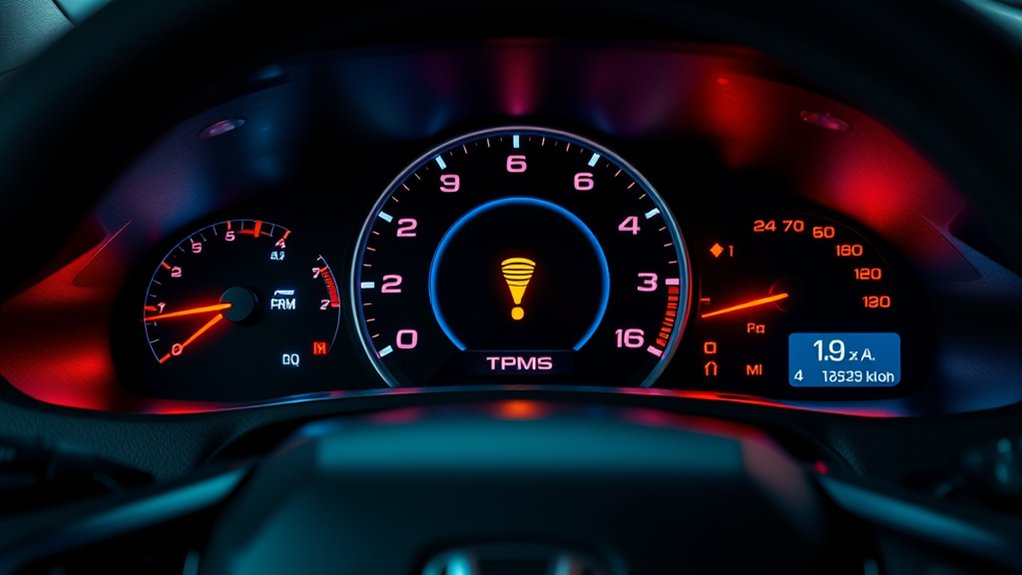
How does TPMS work on your Honda? The Tire Pressure Monitoring System (TPMS) continuously tracks tire pressure levels using sensors mounted inside each tire. These sensors measure real-time pressure data, which the vehicle’s onboard computer analyzes to maintain optimal tire performance.
Proper tire design and wheel alignment directly affect the accuracy of TPMS readings, as irregularities can cause sensor errors or inaccurate pressure reports. When your Honda’s TPMS detects pressure deviating from manufacturer specifications, it alerts you immediately via the dashboard indicator.
This system ensures your tires maintain correct inflation, improving safety, fuel efficiency, and tire longevity. By integrating sensor technology with precise wheel alignment and tire design considerations, TPMS provides reliable, continuous monitoring tailored to your Honda’s specifications.
Why Does the TPMS Light Come On?
When your Honda’s TPMS detects tire pressure outside the recommended range, it triggers the warning light on your dashboard. This alert helps you stay proactive about tires maintenance and ensures tire safety.
The TPMS light can come on for several reasons you should never ignore:
- A tire has lost pressure due to a slow leak or puncture
- Rapid temperature changes causing pressure fluctuations
- Incorrect tire inflation during routine tires maintenance
- Faulty or aging TPMS sensors needing replacement
- Swapping tires without resetting the TPMS system
How to Check and Reset the TPMS on Your Honda

To check the TPMS on your Honda, start by inspecting the warning light on the dashboard and verifying your tire pressures with a gauge. If the light remains on after adjusting pressures, you’ll need to reset the system using your vehicle’s specific procedure, often involving a button or the infotainment menu.
Following these steps ensures accurate tire pressure monitoring and maintains your vehicle’s safety features.
Checking TPMS Light
Why does the TPMS light illuminate on your Honda’s dashboard? It signals an issue with your tire pressure monitoring system. To check it, start by inspecting each tire’s pressure with a gauge.
Low pressure or uneven pressure can be due to a slow leak, improper tire rotation, or poor wheel alignment. Addressing these ensures your TPMS functions correctly.
Here’s what to do when the TPMS light comes on:
- Measure tire pressure on all four tires
- Compare readings against manufacturer specifications
- Inspect tires for punctures or damage
- Confirm proper tire rotation schedule
- Verify wheel alignment hasn’t shifted
Resetting TPMS System
How do you check and reset the TPMS on your Honda? Begin by ensuring all tires are inflated to the manufacturer’s recommended pressure, essential for optimal fuel economy and tire maintenance.
Turn the ignition to the ON position without starting the engine, then locate the TPMS reset button, typically under the steering wheel. Press and hold the button until the TPMS indicator blinks three times, then release.
Drive the vehicle at speeds above 30 mph for about 10 minutes to complete the reset process. If the light persists, inspect tire sensors or battery life, as depleted sensor batteries can cause errors.
Regular TPMS resets help prevent uneven brake wear and maintain overall vehicle safety, ensuring your Honda operates efficiently and reliably.
Common TPMS Problems and When to See a Mechanic
You might notice the TPMS warning light frequently due to low tire pressure or sensor malfunctions. Tire pressure sensor issues can stem from battery failure or damaged components.
If the warning persists despite proper tire inflation, you should have a mechanic inspect the system.
Frequent TPMS Warning Causes
When does the TPMS warning light frequently appear on your Honda? It often signals underlying issues beyond simple tire pressure. Common triggers include:
- Uneven tire wear due to neglected tire rotation
- Misalignment affecting wheel alignment sensors
- Rapid temperature or altitude changes impacting sensor readings
- Damaged or corroded sensor batteries
- Slow leaks causing gradual pressure drops
Each of these can cause the system to alert you repeatedly. Addressing tire rotation and wheel alignment regularly helps maintain sensor accuracy and prevents false warnings.
If you notice persistent alerts despite correct tire pressure, it’s wise to consult a mechanic. They can diagnose sensor or system faults precisely, ensuring your Honda’s TPMS functions reliably for safe driving.
Tire Pressure Sensor Issues
Why does your TPMS light stay on even after adjusting tire pressure? Often, tire pressure sensor issues cause this. Sensors can fail due to battery depletion, damage during tire rotation, or interference from improper wheel alignment.
Faulty sensors send incorrect data, keeping the warning light active.
| Issue | Cause | Impact |
|---|---|---|
| Dead sensor battery | Age, power drain | No signal, persistent warning |
| Sensor damage | Tire rotation, impact | Erroneous readings |
| Signal interference | Wheel alignment misalignment | False alerts |
| Calibration error | Improper reset after maintenance | Inaccurate pressure data |
| Sensor corrosion | Moisture ingress | Communication failure |
Regular maintenance and sensor checks prevent these problems, ensuring accurate TPMS function.
Signs To Visit Mechanic
How can you tell if your TPMS requires professional attention? Ignoring warning signs can risk your safety and lead to costly repairs. While some issues might seem unrelated, they directly impact your vehicle’s performance.
Visit a mechanic if you notice:
- Persistent TPMS warning light despite correct tire pressure
- Sudden or frequent low-pressure alerts without visible leaks
- Inconsistent or fluctuating tire pressure readings
- Difficulty resetting the TPMS after tire rotation or replacement
- Damage or corrosion on tire pressure sensors
Addressing these signs promptly ensures accurate monitoring and prevents tire damage. Don’t dismiss TPMS alerts as unrelated; they’re critical for optimal driving safety and efficiency.
How Low Tire Pressure Affects Your Honda’s Performance
What happens to your Honda’s performance if tire pressure drops below the recommended level? Low tire pressure negatively affects tire design functionality, causing increased rolling resistance and uneven tire wear. This reduces fuel efficiency and compromises handling precision.
Low tire pressure increases rolling resistance and uneven wear, reducing fuel efficiency and handling precision.
Additionally, underinflated tires can adversely impact wheel alignment by causing uneven stress distribution, leading to premature suspension and steering component wear. You’ll notice diminished cornering stability and longer braking distances, which directly affect vehicle safety.
The reduced tire pressure also alters the contact patch with the road, decreasing traction and increasing the risk of hydroplaning on wet surfaces. Maintaining optimal tire pressure ensures your Honda operates within its engineered parameters, preserving tire integrity, wheel alignment accuracy, and overall driving performance.
Ignoring low pressure can accelerate component degradation and impair your vehicle’s responsiveness.
Tips to Keep Your Honda’s Tires and TPMS in Good Shape
When should you check your Honda’s tire pressure and TPMS functionality to ensure optimal safety and performance? Regular monitoring is key to crafting auto care rituals that prevent unexpected issues and maintain efficiency.
To keep your tires and TPMS in top condition, follow these precise tips:
- Check tire pressure monthly and before long trips.
- Inspect tires for wear, damage, and uneven tread.
- Replace TPMS batteries promptly to avoid nosedive battery health.
- Reset TPMS sensors after tire rotation or replacement.
- Use a reliable pressure gauge for accurate readings.
Frequently Asked Questions
Can TPMS Sensors Be Upgraded or Replaced With Aftermarket Options?
Yes, you can upgrade TPMS sensors with aftermarket options, but ensure aftermarket compatibility with your Honda model. Possible TPMS upgrade requires proper programming and calibration to maintain accurate tire pressure monitoring and system functionality.
How Does TPMS Impact Honda’s Fuel Efficiency?
You can boost fuel efficiency by up to 3% through proper tire maintenance, guided by TPMS. Keeping sensors calibrated guarantees accurate pressure readings, reducing rolling resistance and improving Honda’s gas mileage effectively and consistently.
Are TPMS Sensors Compatible Across Different Honda Models?
You won’t find full option interoperability among Honda TPMS sensors; compatibility varies by model year and design.
Aftermarket compatibility exists but requires careful matching to guarantee sensor functionality and avoid system errors or malfunctions.
What Is the Typical Lifespan of a TPMS Sensor in a Honda?
You’ll expect a TPMS sensor lifespan of 5 to 10 years, balancing tire maintenance and sensor reliability. Regular checks and timely replacements ensure accurate pressure readings, enhancing safety and performance in your Honda’s tire system.
Does TPMS Function Differently in Electric Honda Vehicles?
Yes, TPMS functions similarly in electric Hondas, but you should consider TPMS sensor longevity due to different usage patterns. Aftermarket compatibility varies, so always verify sensor specs to ensure proper integration and accurate tire pressure monitoring.
Conclusion
When the TPMS light flickers on your Honda’s dashboard, imagine it as a vigilant guardian whispering warnings about your tires’ health. By regularly checking pressures and resetting the system after maintenance, you keep this guardian alert and accurate.
Maintaining proper tire pressure not only extends tire life but sharpens your Honda’s performance and safety. Stay proactive, and your TPMS will continue guiding you smoothly down every road with precision and reliability.
Understanding what TPMS means on a Honda helps you appreciate its role in keeping your vehicle safe and efficient.