If you’re considering a Honda Odyssey, you might wonder, “Does Honda Odyssey have AWD?” Many drivers look for all-wheel drive to handle diverse road conditions and improve traction. However, the Odyssey comes exclusively with front-wheel drive.
This choice affects fuel efficiency, maintenance, and safety in various ways. Front-wheel drive typically offers better fuel economy compared to AWD systems. It also means fewer components that require upkeep, potentially lowering maintenance costs.
Understanding why Honda opted for front-wheel drive and what this means for your driving experience can help you make an informed decision. The Odyssey remains a popular minivan choice, even without AWD, thanks to its reliability and family-friendly features.
Key Takeaways
- The Honda Odyssey is exclusively equipped with front-wheel drive (FWD) and does not offer an all-wheel drive (AWD) option.
- Power is delivered solely to the front wheels, with no AWD hardware or transfer case installed.
- FWD in the Odyssey improves fuel economy and reduces drivetrain complexity compared to AWD.
- Unlike AWD-equipped rivals like Toyota Sienna, the Odyssey relies on tire management for traction in adverse conditions.
- Safe driving and proper load distribution are essential to optimize performance without AWD in the Odyssey.
Does the Honda Odyssey Have All-Wheel Drive (AWD)?
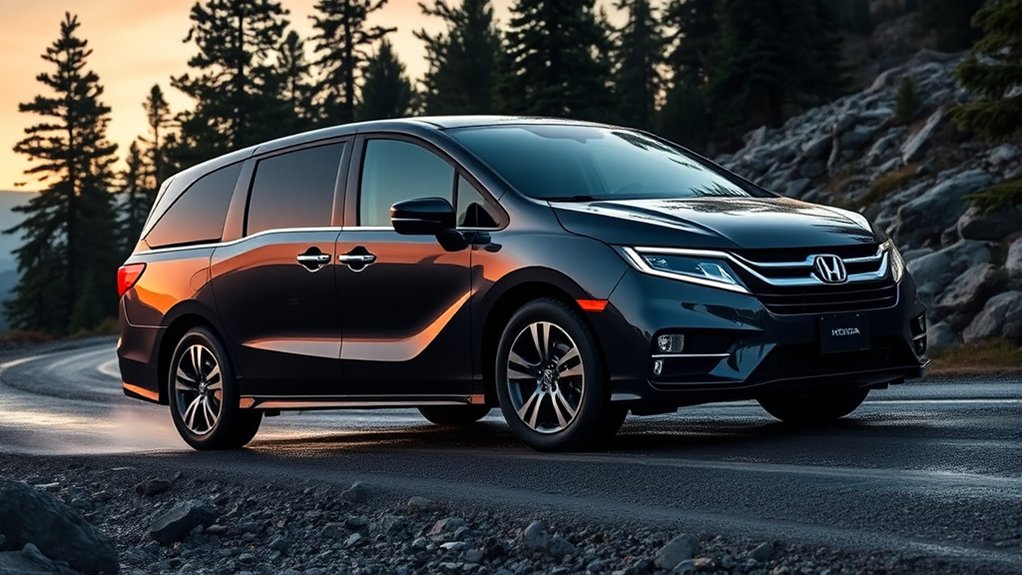
Wondering if the Honda Odyssey offers all-wheel drive (AWD)? The answer is no. The Odyssey is equipped solely with front-wheel drive (FWD), which means power is delivered to the front wheels only.
This configuration handles most driving scenarios efficiently, but you won’t find AWD available, regardless of wind condition or cargo load. When you’re driving in strong crosswinds or carrying a heavy cargo load, the FWD system still provides stable traction, although AWD could offer enhanced grip on slippery surfaces.
However, Honda has not introduced AWD for this model, likely focusing on weight reduction and fuel efficiency. So, if you’re seeking an Odyssey, expect reliable front-wheel drive performance but no AWD capability to manage varying road or weather challenges.
Why Does Honda Choose Front-Wheel Drive Over AWD for the Odyssey?
While the Honda Odyssey doesn’t offer all-wheel drive, this choice reflects a deliberate design strategy focused on balancing performance, efficiency, and cost. Honda prioritizes front-wheel drive in the Odyssey design because it meets most family driving needs without the complexity of AWD. Its traction engineering optimizes grip on wet and dry roads, reducing the need for AWD’s added hardware.
Key reasons include:
- Lower vehicle weight improves handling and efficiency
- Simplified drivetrain reduces maintenance complexity
- Cost savings passed on to you as the buyer
- Sufficient traction for typical minivan usage scenarios
- Enhanced interior space due to fewer mechanical components
Front-Wheel Drive vs. AWD: Fuel Economy and Maintenance Impact
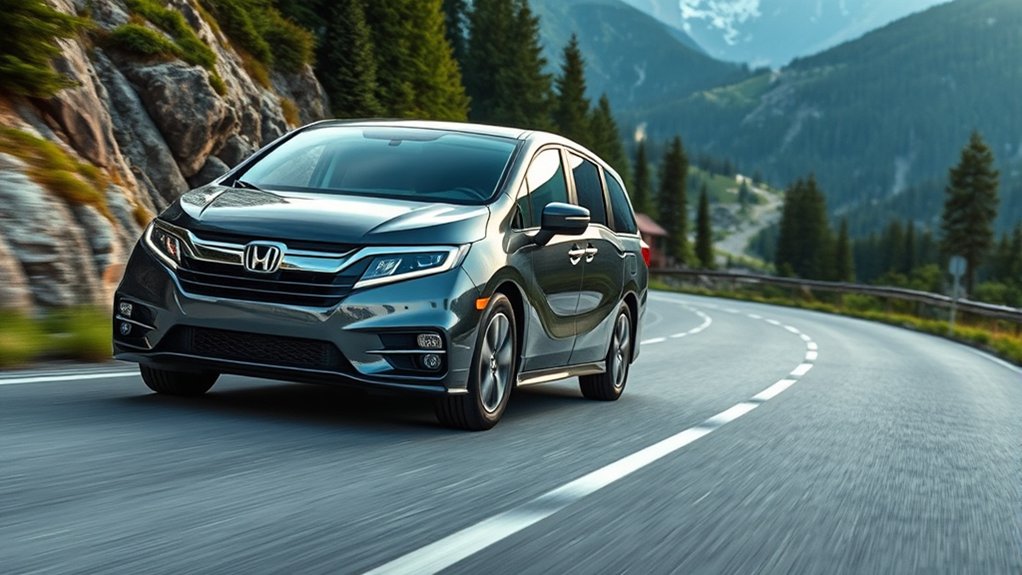
How does choosing front-wheel drive over all-wheel drive affect your Honda Odyssey’s fuel economy and maintenance? Opting for front wheel drive typically improves fuel economy because it reduces drivetrain complexity and weight, allowing your Odyssey to operate more efficiently.
With power delivered only to the front wheels, your engine exerts less effort compared to all-wheel drive systems that distribute power to all wheels, which can increase fuel consumption.
On the maintenance front, front-wheel drive systems generally incur lower costs since they have fewer components like transfer cases or additional differentials that AWD requires. This means you’ll likely face fewer repairs and lower expenses over time.
How No AWD Affects Odyssey’s Traction and Safety in Bad Weather
Choosing front-wheel drive over all-wheel drive in your Honda Odyssey improves fuel economy and reduces maintenance, but it also influences how the vehicle handles traction and safety in adverse weather. Without AWD, you must be more aware of traction relevance and ensure proper weather preparedness.
Front-wheel drive sends power to the front wheels only, which limits grip on slipping surfaces compared to AWD systems.
To manage traction and safety effectively, consider these points:
- Drive cautiously on snow or ice, as front-wheel drive offers less stability.
- Use winter tires to enhance grip and compensate for no AWD.
- Avoid sudden accelerations or sharp turns in bad weather.
- Keep your tires properly inflated for optimal performance.
- Maintain safe following distances to allow more reaction time.
Understanding these factors helps you stay safe despite the lack of AWD.
Do You Really Need AWD for Your Family Minivan?
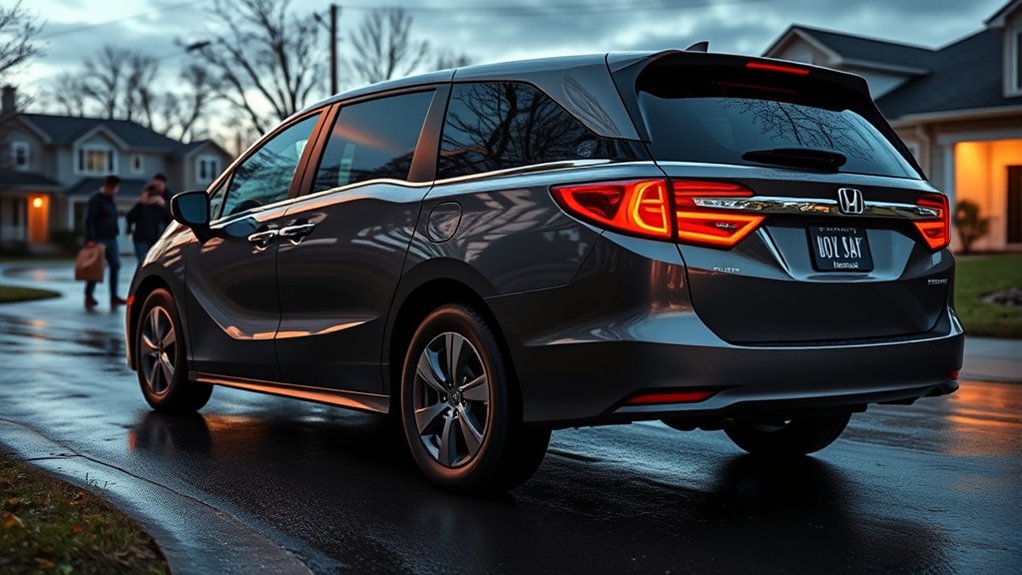
When evaluating whether you really need AWD for your family minivan, consider your typical driving conditions and priorities. If you live in an area with frequent snow or rain, AWD can enhance traction and safety. However, if your driving mainly involves urban or suburban roads with mild weather, front-wheel drive often suffices.
From a frontier economics perspective, investing in AWD might not yield proportional benefits compared to its added cost and maintenance. Additionally, if you’re mindful of environmental impact, the efficiency of your vehicle, akin to the balance found in solar ecosystems, matters.
AWD systems generally consume more fuel, increasing emissions. Ultimately, assess how often you encounter challenging terrain versus how much value you place on fuel economy and carbon footprint before deciding if AWD is essential for your family minivan.
AWD Minivan Alternatives for Odyssey Drivers Seeking Better Traction
Looking for better traction but not set on the Honda Odyssey’s front-wheel-drive setup? While the Odyssey performance is reliable in most conditions, AWD can offer extra confidence in slippery situations. However, it’s important to separate all wheel drive myths from reality. AWD isn’t always necessary for safe driving.
If you want alternatives, consider these minivans with AWD:
- Toyota Sienna: Standard AWD and hybrid efficiency.
- Chrysler Pacifica AWD: Offers AWD on select trims.
- Kia Carnival (though FWD only, known for stability control).
- Subaru Ascent: Larger SUV option with AWD.
- Dodge Grand Caravan (limited AWD availability).
Each offers different AWD capabilities and features. Evaluating these alternatives helps you find the right balance between traction and fuel efficiency without relying solely on the Odyssey’s front-wheel-drive system.
Honda Odyssey AWD vs. Other Minivans: A Comparison
If you’re weighing the Honda Odyssey against other minivans with all-wheel drive options, understanding their key differences can help you make an informed choice. Since the Odyssey doesn’t offer AWD, you’ll want to focus on alternatives like the Toyota Sienna or Chrysler Pacifica, both available with AWD.
This comparison table highlights essential factors without veering into unrelated topics:
| Feature | Honda Odyssey | Toyota Sienna | Chrysler Pacifica | Kia Carnival | Dodge Grand Caravan |
|---|---|---|---|---|---|
| AWD Availability | No | Yes | Yes | No | No |
| Engine Power (hp) | 280 | 245 | 287 | 290 | 283 |
| Fuel Efficiency | 22/28 mpg | 36/36 mpg | 19/28 mpg | 19/26 mpg | 17/25 mpg |
These discussion ideas clarify your AWD options clearly and objectively.
Tips to Maximize Traction and Safety in a Front-Wheel-Drive Odyssey
To maximize traction and safety in your front-wheel-drive Odyssey, focus on choosing the right tires and keeping them well-maintained. You’ll also want to manage weight distribution carefully to maintain balance and control.
Finally, practicing safe driving techniques tailored to front-wheel-drive dynamics can notably improve your handling in various conditions.
Tire Selection And Maintenance
How can you guarantee your front-wheel-drive Honda Odyssey maintains ideal traction and safety throughout the year? Proper tire selection and maintenance are crucial. While some discussion ideas might drift toward unrelated topics like aesthetics or tech upgrades, focusing on tires directly impacts performance.
Consider these key points:
- Choose tires rated for all-season traction, matching your typical driving conditions.
- Regularly check tire pressure to ensure optimal contact with the road.
- Rotate tires every 5,000 to 7,000 miles to promote even wear.
- Inspect tread depth frequently; replace tires before they become dangerously worn.
- Avoid mixing tire brands or types, as inconsistent grip can reduce stability.
Effective Weight Distribution
Why does effective weight distribution matter in a front-wheel-drive Honda Odyssey? Proper weight balance directly impacts traction and safety. Since power goes primarily to the front wheels, placing too much or too little weight over them can cause loss of grip or uneven tire wear.
While some might consider weight distribution an irrelevant topic compared to AWD capabilities, it is a critical variegated subtopic that influences handling, especially in adverse conditions. To maximize traction, keep heavier items low and near the front axle, avoiding excessive rear loading that shifts weight away from the drive wheels.
Balancing the load maintains consistent contact between tires and road, reducing slip risks. Understanding this principle helps you optimize your Odyssey’s performance without relying on all-wheel drive systems.
Safe Driving Techniques
Where should you focus your attention when driving a front-wheel-drive Honda Odyssey to ensure maximum traction and safety? Prioritize controlling traction, especially if you’re a novice driver or engaging in trailer towing. Front-wheel drive naturally pulls the vehicle, but it requires careful handling to prevent slip and maintain stability.
To maximize safety:
- Accelerate gently to avoid wheel spin.
- Maintain steady speeds through turns.
- Avoid sudden braking; use gradual pressure.
- Distribute weight evenly, especially when trailer towing.
- Check tire condition and pressure regularly for optimal grip.
Frequently Asked Questions
What Is the Towing Capacity of the Honda Odyssey?
You’ll find the Honda Odyssey’s towing capacity is 3,500 pounds, balancing driving dynamics with interior comfort. This lets you tow small trailers while enjoying a smooth ride and spacious, comfortable cabin for passengers.
How Much Cargo Space Does the Honda Odyssey Offer?
You get up to 144.9 cubic feet of cargo space in the Honda Odyssey, reflecting its design philosophy focused on maximizing interior room. This spaciousness complements its fuel efficiency, making it practical for both family and cargo needs.
What Are the Engine Options Available for the Honda Odyssey?
The Honda Odyssey offers a single engine option: a 3.5-liter V6 with 280 horsepower. This engine option balances power and efficiency, making it suitable for family driving and cargo hauling with solid horsepower ratings.
Does the Honda Odyssey Come With Advanced Driver-Assistance Features?
You won’t find AWD or advanced suspension in the Odyssey, but you will get Honda Sensing, a suite of advanced driver-assistance features that helps keep you safe. It makes your family trips smarter and less stressful.
What Is the Starting Price of the Honda Odyssey?
You’ll find the Honda Odyssey starts around $35,000. For two word discussion ideas, think about “price comparison.” Avoid unrelated topic detours to stay focused on analyzing its value and features objectively.
Conclusion
Think of your Honda Odyssey like a steady ship charting varied seas. Though it lacks AWD’s extra anchors, its front-wheel drive is designed for efficiency and reliability. With the right tires and cautious handling, you can confidently steer through slippery conditions.
You don’t always need every tool on deck—sometimes, skillful navigation and preparation keep your family safe just as well. Understanding this helps you make informed choices for your minivan’s performance and your peace of mind.
While the Honda Odyssey does not have AWD, its front-wheel-drive system is well-equipped to handle many driving situations safely and effectively.