Choosing between the Honda CR-V and Toyota RAV4 for reliability is like picking a trusted watch—you want one that keeps time with minimal fuss.
When it comes to reliability, both models have strong followings but offer different strengths.
The CR-V often shines with lower repair costs and decent maintenance.
Meanwhile, the RAV4 boasts a reputation for long-term durability and strong resale value.
But which one truly stands out when you weigh everyday performance against unexpected issues?
Let’s explore the details that might influence your decision.
Key Takeaways
- Both Honda CR-V and Toyota RAV4 offer solid reliability, with some variability across model years.
- Toyota RAV4’s hybrid transmission generally demonstrates smoother, more durable operation than the CR-V’s CVT.
- The CR-V tends to have lower maintenance and repair costs, contributing to better long-term cost-effectiveness.
- Common issues in the CR-V include transmission hesitation and occasional air conditioning failures, while RAV4 owners report fewer unexpected repairs.
- Both vehicles experience similar electrical system glitches, like infotainment malfunctions and false dashboard alerts, requiring model-specific diagnosis.
Key Metrics for Assessing Compact SUV Reliability
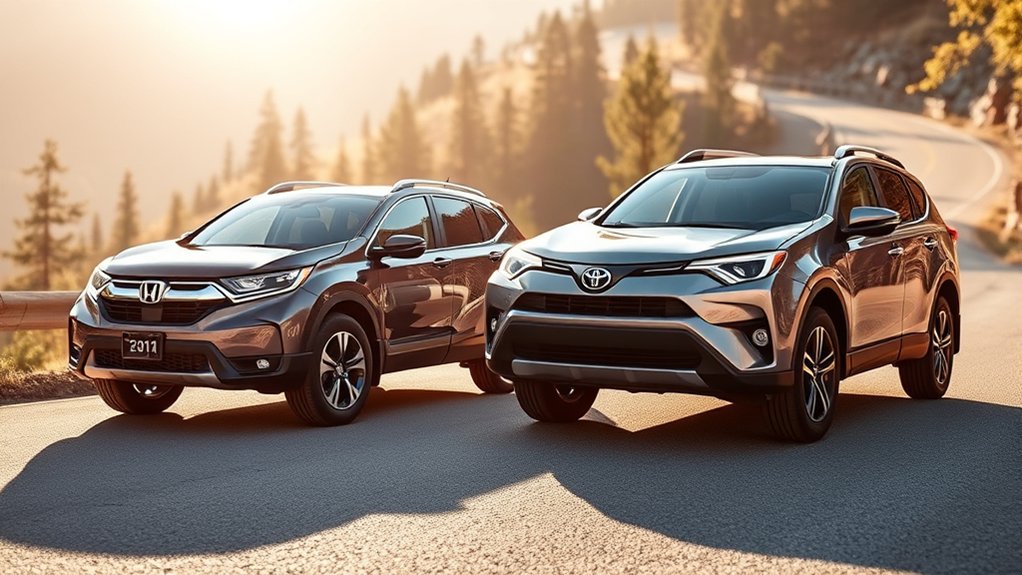
How do you determine the reliability of compact SUVs like the Honda CR-V and Toyota RAV4? Start by examining key metrics such as frequency of repairs, cost of maintenance, and durability over time. Look at data from consumer reports and independent studies that track these factors.
Consider how often owners need to invest in budget accessories or replacements, which can indicate ongoing wear or design flaws. Additionally, check the availability and terms of aftermarket warranties, as these often reflect manufacturer confidence and can provide financial protection against unexpected failures.
Pay attention to common issues reported by users and the vehicle’s ability to maintain performance under various conditions. By focusing on these quantifiable aspects, you can objectively assess which SUV offers better long-term reliability.
Honda CR-V Reliability Record
You’ll want to contemplate common mechanical issues that have affected the Honda CR-V over the years, such as transmission concerns and engine performance. Understanding these problems helps you anticipate potential repairs and their frequency.
Additionally, comparing maintenance and repair costs can give you a clearer picture of long-term ownership expenses.
Common Mechanical Issues
Why do some Honda CR-V owners report recurring mechanical problems despite the model’s overall strong reputation? While many praise its reliability, certain issues frequently surface.
You might encounter problems with the transmission, such as hesitation or rough shifting, especially in earlier models. Additionally, some CR-Vs have experienced excessive oil consumption, which can lead to engine wear if ignored.
Another common concern involves the air conditioning system failing prematurely. These mechanical issues are more than unrelated topics or random chatter; they reflect real user experiences and documented recalls.
Understanding these common problems helps you make informed decisions about ownership and maintenance. Staying aware allows you to address concerns early, preserving your CR-V’s performance and overall reliability.
Maintenance and Repair Costs
When considering the Honda CR-V’s reliability, examining its maintenance and repair costs offers valuable insight. You’ll find that the CR-V generally incurs moderate expenses compared to other compact SUVs, thanks to its efficient design and durable components.
Routine maintenance, such as oil changes and brake inspections, aligns with industry averages. Repairs related to the engine, which delivers competitive horsepower ratings, tend to be infrequent and affordable.
Additionally, the CR-V’s thoughtful cargo organization reduces wear and tear on interior parts, potentially lowering repair needs in that area. While some components may occasionally require attention, the overall cost to keep the vehicle running smoothly remains reasonable.
Understanding these factors can help you make an informed decision about the CR-V’s long-term ownership expenses.
Toyota RAV4 Dependability Track Record
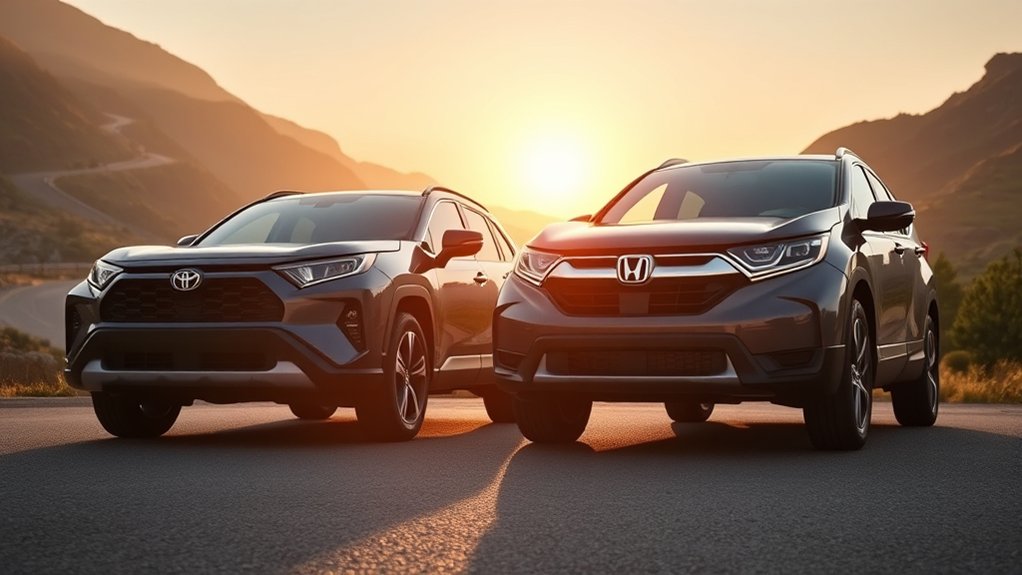
How has the Toyota RAV4 built its reputation for dependability over the years? Unlike fleeting diet trends or fashion fads, the RAV4’s reliability has proven consistent. Toyota’s commitment to quality engineering and rigorous testing has resulted in a vehicle that withstands time and use with minimal issues.
Owners often report fewer unexpected repairs and longer intervals between services.
Key factors contributing to the RAV4’s dependability include:
- Robust drivetrain components designed for durability
- High-quality materials that resist wear and tear
- An extensive network of service centers ensuring proper maintenance
How Performance Influences Long-Term Reliability
What role does a vehicle’s performance play in its long-term reliability? When you evaluate cars like the Honda CR-V and Toyota RAV4, performance directly affects durability. A well-tuned engine running smoothly under normal conditions reduces stress on components, extending lifespan.
Conversely, pushing a vehicle beyond its design limits can cause premature wear. It’s important not to confuse this with unrelated topics like aesthetics or infotainment features, which don’t impact reliability. Avoid random speculation about performance without data; instead, focus on measurable factors such as engine efficiency, transmission quality, and suspension durability.
Honda CR-V vs Toyota RAV4 Reliability and Maintenance Costs
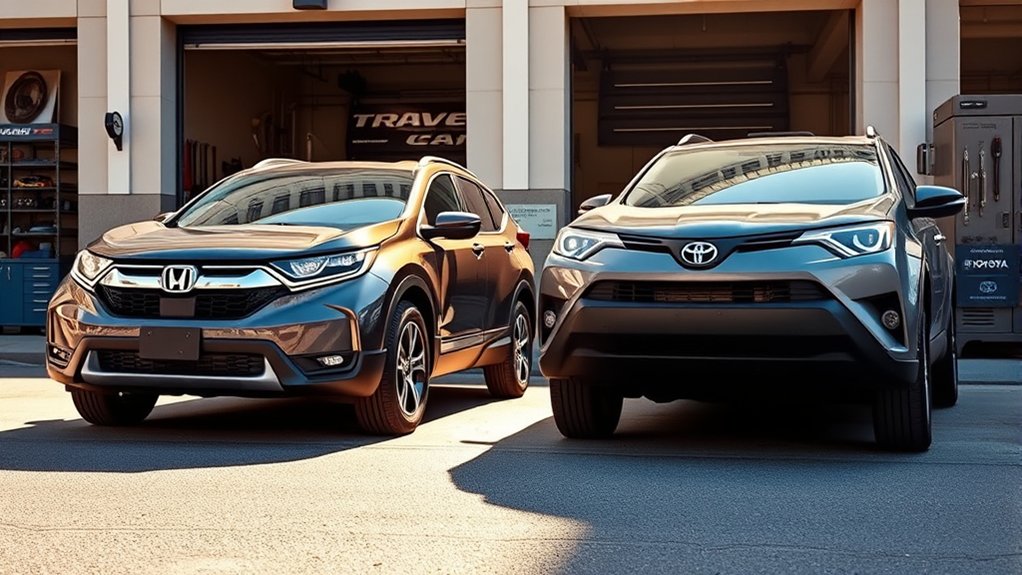
Understanding the link between performance and reliability sets the stage for examining maintenance costs, which directly impact a vehicle’s long-term ownership experience. When comparing the Honda CR-V and Toyota RAV4, you’ll notice both offer solid reliability, but their maintenance expenses can vary.
Performance and reliability shape maintenance costs, influencing the overall long-term ownership experience of the Honda CR-V and Toyota RAV4.
The CR-V tends to have slightly lower scheduled service costs, while the RAV4’s parts sometimes cost more due to design aspects like enhanced wind resistance features. Additionally, the CR-V’s broader color choices might influence resale value, indirectly affecting ownership costs.
Consider these factors:
- Routine service intervals and associated costs
- Impact of aerodynamic design on wear and fuel efficiency
- Availability and pricing of replacement parts based on model specifics
Both vehicles maintain strong reliability, but your choice depends on your budget and preferences.
Owner Satisfaction With Honda CR-V and Toyota RAV4 Reliability
When evaluating owner satisfaction with the Honda CR-V and Toyota RAV4’s reliability, you’ll find that real-world experiences often provide the clearest insights. Owners frequently praise both models for dependable performance, though subtle differences emerge.
Many appreciate the CR-V’s smooth ride and well-thought-out interior design, which enhances daily comfort. Meanwhile, the RAV4’s rugged appeal and diverse color options appeal to those seeking a bit more personalization.
In terms of reliability, both SUVs score highly, with users reporting minimal unexpected repairs. However, your satisfaction may hinge on preferences for cabin features or exterior style.
Common Reliability Issues in Honda CR-V and Toyota RAV4
You might notice engine performance concerns in both the Honda CR-V and Toyota RAV4, affecting smooth acceleration and fuel efficiency. Transmission problems can also arise, causing shifting delays or hesitation during driving.
Additionally, electrical system glitches, such as issues with sensors or infotainment, are reported in both models and impact daily use.
Engine Performance Concerns
How do the engines of the Honda CR-V and Toyota RAV4 hold up under real-world conditions? Both models deliver reliable performance, but each has some engine concerns you should know before deciding.
Honda CR-V engines occasionally face issues like excessive oil consumption, which can feel as unexpected as forgetting your favorite muffin recipes during a busy morning. Meanwhile, some Toyota RAV4 engines have shown early signs of carbon buildup, somewhat akin to challenges in space exploration that require precise engineering fixes.
Key points to consider:
- Honda CR-V: Occasional oil leaks and consumption concerns
- Toyota RAV4: Carbon buildup affecting fuel efficiency
- Both: Minor rough idling reported in specific model years
Understanding these helps you choose the engine better suited to your driving needs.
Transmission Problems Overview
After examining engine performance concerns, it’s important to turn attention to another critical area: transmission reliability. Both the Honda CR-V and Toyota RAV4 use advanced drivetrain architecture, especially in their hybrid powertrains, which can impact transmission longevity.
The CR-V’s traditional transmissions have occasionally shown issues like delayed shifts or rough engagement, often linked to its continuously variable transmission (CVT) design. Conversely, the RAV4’s transmission system, particularly in hybrid models, generally demonstrates smoother operation, benefiting from Toyota’s well-established hybrid drivetrain.
However, some owners report occasional hesitation during acceleration. Understanding these nuances helps you gauge which model aligns better with your expectations for drivetrain durability. Overall, while both vehicles have solid reputations, the RAV4’s hybrid powertrains tend to edge out slightly in transmission reliability.
Electrical System Glitches
Although both the Honda CR-V and Toyota RAV4 boast advanced electrical systems designed to enhance driving experience and safety, they are not immune to glitches. You might encounter issues like malfunctioning infotainment screens or erratic dashboard warning lights.
It’s important to avoid random speculation or blaming unrelated topics when diagnosing these problems. Instead, focus on known electrical concerns specific to each model.
Common electrical system glitches include:
- Intermittent connectivity problems with Bluetooth or navigation systems
- Faulty sensors triggering false alerts on the dashboard
- Battery drain caused by software bugs or control module errors
Understanding these typical issues can help you address them promptly and maintain your vehicle’s reliability without falling into unrelated topic distractions or unfounded assumptions.
Deciding Which SUV Offers the Best Reliability and Value
When choosing between the Honda CR-V and Toyota RAV4, you’ll want to carefully evaluate which SUV delivers the best combination of reliability and value. Both models boast strong reputations, but your decision should avoid unrelated topics or off topic comparisons, such as unrelated features or brand loyalty.
Focus on key reliability metrics like maintenance costs, frequency of repairs, and resale value. The CR-V generally offers lower repair bills and slightly better fuel efficiency, while the RAV4 shines with advanced safety features and a robust warranty.
Consider your priorities: if long-term cost-effectiveness matters most, the CR-V may edge out. If you want cutting-edge tech with solid reliability, the RAV4 holds appeal. By concentrating on relevant factors, you’ll choose the SUV that truly fits your needs.
Frequently Asked Questions
Which SUV Has Better Resale Value After Five Years?
You’ll find the Toyota RAV4 holds better resale value after five years, thanks to fewer reliability concerns and strong demand.
While the Honda CR-V is reliable, the RAV4’s reputation helps it retain value more effectively.
How Do Honda CR-V and Toyota RAV4 Compare in Fuel Efficiency?
You’ll find the Toyota RAV4 offers about 28 mpg city and 35 mpg highway, slightly edging the Honda CR-V. This fuel economy advantage can boost its resale value, making it a smart choice for efficiency-conscious buyers.
Are There Significant Differences in Safety Features Between the Two Models?
You’ll find both models excel in crash testing and include advanced seatbelt safety features. However, subtle differences in driver assistance tech might influence your choice.
Which Compact SUV Offers More Advanced Technology Options?
You’ll find the Toyota RAV4 offers more advanced technology options, aligning with current technology trends. It also excels in interior ergonomics, providing intuitive controls and enhanced connectivity for a smoother, more user-friendly driving experience.
How Do Honda CR-V and Toyota RAV4 Perform in Off-Road Conditions?
You’ll find the Toyota RAV4 offers better off-road stamina with rugged suspension tuning, while the Honda CR-V handles light trails well but favors comfort over aggressive off-road performance.
Both suit different off-road needs effectively.
Conclusion
When choosing between the Honda CR-V and Toyota RAV4, you’ll find both offer dependable rides with their own strengths. The CR-V may keep your short-term expenses pleasantly manageable and deliver solid fuel efficiency, while the RAV4 tends to shine in long-term reliability and drivetrain resilience.
Ultimately, your choice hinges on whether you favor immediate savings or enduring confidence. But either SUV stands as a wise, well-rounded companion for your journeys ahead.
In terms of reliability, the Toyota RAV4 generally has the edge, making it a top choice if long-term dependability is your priority.