Changing the oil in your Honda lawn mower is like giving its engine a much-needed renewal of life. Performing an oil change on your Honda lawn mower ensures the engine runs smoothly and efficiently. You’ll want to start with a cool engine on a flat surface and disconnect the spark plug wire for safety.
Knowing the correct steps to drain old oil and add fresh oil efficiently can save you time and prevent costly damage. Let’s break down the essential process to keep your mower running smoothly. Following these steps will help extend the life of your mower and maintain its performance.
Key Takeaways
- Warm the engine for 3-5 minutes, then disconnect the spark plug wire before draining old oil into a clean pan.
- Remove the oil drain plug using a wrench, let the oil fully drain, and replace the drain plug with proper torque.
- Use the recommended oil type from the Honda manual, shake the container, and pour oil with a clean funnel to avoid contamination.
- Check oil level with the dipstick on a flat surface, ensuring it is within the safe zone without overfilling.
- Replace the oil filter if applicable, dispose of used oil responsibly, and maintain regular oil change intervals every 25-50 hours.
Preparing Your Honda Lawn Mower for a Safe Oil Change
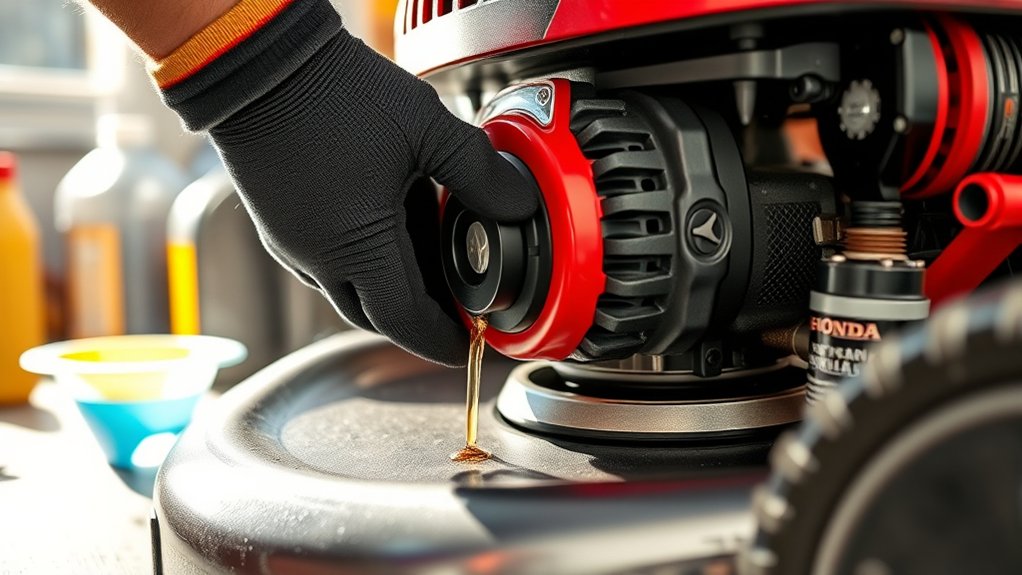
Before you begin changing the oil in your Honda lawn mower, have you made sure the engine is completely cool? This prevents burns and guarantees safety. Next, position the mower on a flat, stable surface to avoid spills during the oil drain.
Use scheduling tips to plan your maintenance regularly, ideally after every 25 hours of use or at the start of each mowing season. Staying consistent helps extend engine life.
While media literacy might seem unrelated, it’s essential here: rely on credible sources for maintenance information to avoid damaging your mower with incorrect procedures.
Finally, disconnect the spark plug wire to prevent accidental starts. These preparatory steps set the stage for a smooth, safe oil change, minimizing risks and optimizing your mower’s performance.
Tools and Supplies Needed for Changing Honda Lawn Mower Oil
You’ll need a few essential tools like a wrench and an oil drain pan to get started. Make sure to use the recommended oil type specified in your Honda mower’s manual for optimal performance.
Additionally, have rags and a funnel handy to handle spills and make pouring easier.
Essential Tools Checklist
What tools do you need to change the oil in your Honda lawn mower effectively? Start with a socket wrench set to remove the oil drain plug and air filter cover.
A torque wrench is essential to tighten the drain plug to the correct gasket torque specification, preventing leaks. You’ll also need a clean oil drain pan to catch used oil and disposable gloves to protect your hands.
Use a funnel for precise oil refilling without spills. Additionally, have a clean rag handy to wipe away excess oil and check oil color indicators; fresh oil is amber, while dark or gritty oil signals it’s time for a change.
Finally, gather replacement oil and a new oil filter if your model requires one. These tools ensure a smooth, professional oil change.
Recommended Oil Types
Which oil type suits your Honda lawn mower best? Selecting the right oil hinges on the engine’s requirements and ambient temperature. Use oil with the correct viscosity to ensure smooth flow through the drain plug during changes and optimal lubrication. Honda typically recommends SAE 10W-30 for general use, but check your manual.
| Temperature Range (°F) | Recommended Oil Viscosity |
|---|---|
| Below 32 | SAE 5W-30 |
| 32 to 77 | SAE 10W-30 |
| Above 77 | SAE 30 |
| High Performance | Synthetic SAE 10W-30 |
| Cold Start | Synthetic SAE 5W-30 |
Choose oil that matches your climate and usage to protect the engine and maintain proper flow through the drain plug during oil changes.
Additional Supplies Needed
Selecting the right oil viscosity sets the foundation for effective maintenance, but having the proper tools and supplies guarantees a smooth oil change process. You’ll need a clean oil drain pan to catch used oil, a funnel for precise pouring, and a wrench or socket set to remove the drain plug.
Don’t forget a clean rag to wipe spills and disposable gloves to protect your hands. While discussing this unrelated topic, consider that using incorrect tools can lead to messes or damage, much like how a poor noise comparison in engine sound analysis can mislead diagnostics.
Ensuring you have these supplies ready minimizes downtime and prevents contamination, keeping your Honda lawn mower running efficiently after the oil change. Preparation is key for safe, effective maintenance.
How to Drain Old Oil From Your Honda Lawn Mower
First, position your mower on a flat surface and ensure the engine is cool to prevent burns.
Next, locate the drain plug, usually found beneath the engine, and prepare a container to catch the old oil.
After draining, make sure to dispose of the used oil at a designated recycling facility to protect the environment.
Preparing The Mower
Before you start draining the old oil from your Honda lawn mower, make sure the engine is warm but not hot. This ensures the oil flows smoothly without risking burns.
Next, disconnect the spark plug wire to prevent accidental starts. Position a container beneath the mower to catch the draining oil.
Avoid distractions or unrelated topics, like fuel system maintenance, which are irrelevant concepts at this stage.
| Step | Action |
|---|---|
| Warm Engine | Run mower for 3-5 minutes |
| Safety Precaution | Disconnect spark plug wire |
| Position Container | Place under oil drain area |
| Prepare Tools | Gather wrench, oil pan, rags |
These steps prepare your mower efficiently for safe and clean oil removal.
Locating The Drain Plug
To drain the old oil from your Honda lawn mower, start by locating the drain plug, which is typically found at the base of the engine oil pan. The drain plug location is usually on the underside of the mower engine, near the bottom edge of the oil reservoir.
You may need to tilt the mower slightly or access it from underneath to see it clearly. Use a wrench to loosen the plug for oil drainage.
While locating the drain plug, also identify the oil filter access point, if your model includes an oil filter. This access is often adjacent to the drain plug, allowing for efficient oil and filter changes.
Knowing these specific locations will streamline the oil change process and prevent spills during maintenance.
Proper Oil Disposal
Where should you dispose of the old oil after draining it from your Honda lawn mower? Proper oil disposal is critical for environmental safety and lifecycle maintenance of your mower. Never pour used oil into drains, soil, or trash.
Instead, collect the oil in a sealed container and take it to a local recycling center or an authorized hazardous waste facility. Many auto shops and municipal centers accept used oil for free.
Following these disposal guidelines helps prevent contamination and supports regulatory compliance, which can affect warranty impacts if neglected. Maintaining responsible disposal practices ensures your mower’s performance and longevity while adhering to Honda’s warranty terms.
Always consult your owner’s manual for specific instructions and local regulations to keep your lifecycle maintenance on track.
How to Add the Right Oil to Your Honda Lawn Mower
Choose the correct oil type and grade specified in your Honda lawn mower’s owner manual to ensure optimal engine performance and longevity. Typically, SAE 30 or 10W-30 oil works best for most models. Before adding, shake the oil container to mix additives evenly, supporting engine protection and efficient lubrication.
Use a clean funnel to avoid contamination during the fill process. Pour the oil slowly to prevent spills and allow the engine to receive the fluid correctly. Focus on precision during the fill stage, as this two word discussion idea1 minimizes mess and waste.
How to Check Oil Levels and Avoid Overfilling

After adding the right oil to your Honda lawn mower, you’ll need to verify the level to prevent engine damage caused by overfilling. Start by placing the mower on a flat surface and removing the dipstick.
Wipe it clean, reinsert it fully, then remove it again to check the oil level. Ensure the oil stays within the marked safe zone, which corresponds to the mower’s specified oil capacity.
Overfilling can cause excessive pressure and leaks, so only add small amounts if needed. Remember, using oil with proper fuel compatibility is essential for optimal engine performance.
If the oil level appears too high, drain excess oil carefully to maintain the recommended capacity. Accurate checking ensures your mower runs efficiently without risking mechanical issues.
How Often to Change Oil in Your Honda Lawn Mower
Regularly changing the oil in your Honda lawn mower is essential to maintain engine efficiency and extend its lifespan. Typically, you should change the oil after the first 5 hours of use for a new mower, then every 25 to 50 hours of operation, or at least once per mowing season.
Always use the recommended oil type specified in your owner’s manual to ensure optimal performance. If your model includes an oil filter, replace it simultaneously during oil changes to prevent contaminants from damaging the engine.
Consistent oil changes help prevent sludge buildup and maintain proper lubrication. Tracking your usage hours and adhering to these intervals keeps your mower running smoothly and reduces the risk of costly repairs.
Avoid Common Oil Change Mistakes on Your Honda Lawn Mower

Maintaining the right oil change schedule is only part of proper engine care; avoiding common mistakes during the process can prevent damage and improve performance. First, don’t use the wrong oil type. Refer to your Honda mower’s manual, just as you would for bike maintenance or car detailing, where specific products matter.
Avoid overfilling or underfilling the oil reservoir; use a clean dipstick to measure precisely. Always drain the old oil completely to prevent contamination. Keep the area clean to stop dirt from entering the engine, similar to how you’d ensure cleanliness in car detailing.
Finally, properly dispose of used oil to protect the environment. Skipping these steps can lead to poor engine function and costly repairs, so stay methodical and attentive throughout the oil change process.
Frequently Asked Questions
What Type of Oil Is Best for Honda Lawn Mowers in Cold Weather?
You should use a cold weather oil with a lower viscosity, like SAE 5W-30, for ideal snow season lubrication. This guarantees your Honda lawn mower operates smoothly and prevents engine wear during freezing temperatures.
Can Synthetic Oil Be Used in a Honda Lawn Mower?
Picture smooth, clean oil flowing through your engine; yes, you can use synthetic oil in your Honda mower.
Just guarantee oil compatibility by checking your manual, as synthetic oils offer better protection and performance under various conditions.
How Do I Dispose of Used Lawn Mower Oil Properly?
You should follow disposal ethics by never pouring used oil down drains or soil. Collect it in a sealed container and take it to a recycling center or hazardous waste facility, adhering to local recycling guidelines for safe handling.
What Are Signs of Engine Problems Unrelated to Oil Changes?
Think of your engine as a heartbeat; signs of engine wear like sputtering, unusual noises, or stalling reveal non-oil issues. Use diagnostics for spark plugs, air filters, and fuel systems to pinpoint engine problems efficiently.
Can I Change the Oil Without Tilting the Mower?
You can’t skip mower tilt requirements during the changing oil technique; tilting ensures proper oil drainage and prevents fuel leaks.
Always tilt the mower as specified to avoid damage and ensure a thorough oil change.
Conclusion
Changing your Honda lawn mower’s oil regularly ensures peak performance and longevity. Imagine John, who skipped oil changes and faced costly engine repairs—don’t let that be you.
By following the proper steps—warming the engine, draining old oil, and refilling with the right type—you protect your mower and save money. Stay consistent, check levels carefully, and avoid common mistakes to keep your mower running smoothly season after season.
Regular maintenance, including timely oil changes, is key to extending the life of your equipment. Make changing the oil in your Honda lawn mower a routine to enjoy reliable and efficient mowing every time.