To open your Honda Civic bonnet safely, you’ll first need to locate and pull the interior release lever, typically found near the driver’s footwell. Pull it firmly but carefully to avoid damage.
Once the bonnet pops up slightly, you’ll need to find and release the secondary catch under the hood before lifting it fully. Properly securing the bonnet is essential to work safely.
Understanding this process ensures you can access the engine bay without complications.
Key Takeaways
- Locate the interior bonnet release lever on the lower left side of the driver’s footwell near the door sill.
- Pull the bonnet release handle firmly but gently until the bonnet pops up slightly.
- Reach under the front edge of the bonnet to find and release the secondary safety catch.
- Lift the bonnet carefully and secure it with the prop rod clipped into the underside hole.
- Perform routine checks and ensure the bonnet latch operates smoothly before closing.
Locate the Interior Bonnet Release Lever
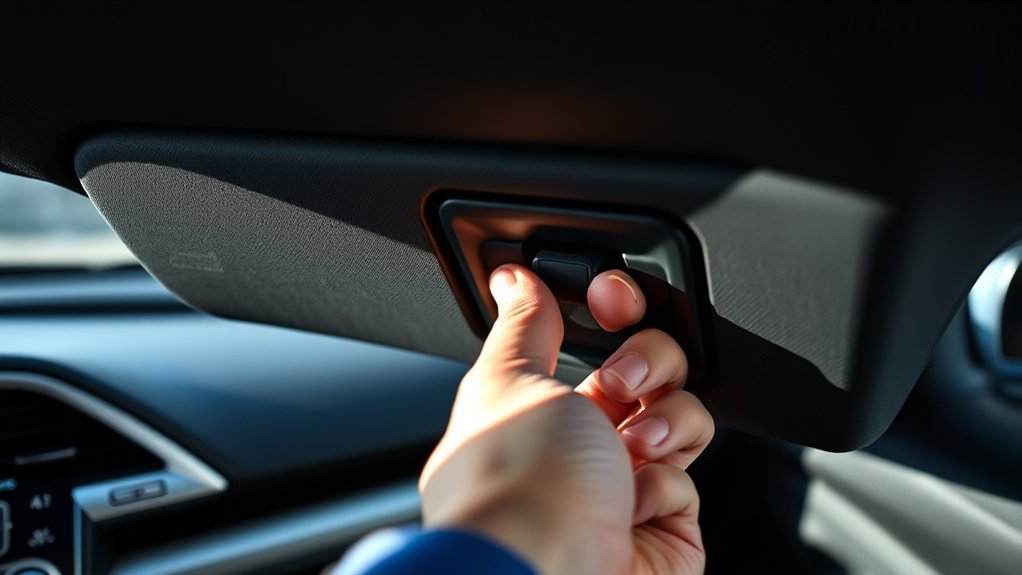
Where exactly do you find the interior bonnet release lever in a Honda Civic? You’ll locate it on the lower left side of the driver’s footwell, near the door sill. It’s a small, typically black lever marked with a bonnet icon.
Before you reach for it, ensure the interior lighting is adequate; this helps you identify the lever clearly, especially in low-light conditions. The lever’s position is designed for easy access without obstructing your driving posture.
Understanding its location is essential for timely inspection or maintenance related to engine emissions. Locating this lever precisely enables you to address any engine emissions concerns promptly by accessing the engine compartment efficiently.
This step is fundamental before you proceed to pull the bonnet release handle safely.
Pull the Bonnet Release Handle Safely
You’ll find the bonnet release handle near the driver’s side footwell, usually marked with a clear icon. Grasp the handle firmly but pull it gently to avoid damaging the mechanism. This careful action will disengage the bonnet latch smoothly and safely.
Locate Release Handle
How do you safely locate the bonnet release handle in your Honda Civic? First, ensure the engine noise has ceased by turning off the ignition, preventing distractions or injury.
The release handle is typically found below the dashboard on the driver’s side. Identifying it accurately helps avoid unnecessary force that could affect tire balance if you lean improperly while inside the car.
| Location | Appearance | Precautions |
|---|---|---|
| Lower dashboard | Small lever, labeled | Avoid sudden pulls |
| Driver’s side footwell | Black plastic handle | Ensure vehicle is stationary |
| Near steering column | Curved handle | Confirm engine is off |
This methodical approach ensures you locate the handle without causing damage or risking safety.
Pull With Caution
After identifying the bonnet release handle beneath the dashboard, prepare to pull it carefully. Use a steady, controlled motion to avoid sudden jerks that could damage the cable or surrounding components.
Pulling with caution ensures the release mechanism functions properly, preventing issues during engine maintenance. Once you pull the handle, you’ll hear the bonnet pop up slightly, signaling that the latch has disengaged.
Avoid excessive force to maintain the integrity of the release system, which is essential for safe and efficient access to the engine bay. Proper bonnet operation supports timely engine maintenance, which directly impacts your Honda Civic’s fuel efficiency and overall performance.
Always check that the bonnet is securely latched after closing to prevent accidental openings while driving.
Find the Secondary Bonnet Catch Under the Hood
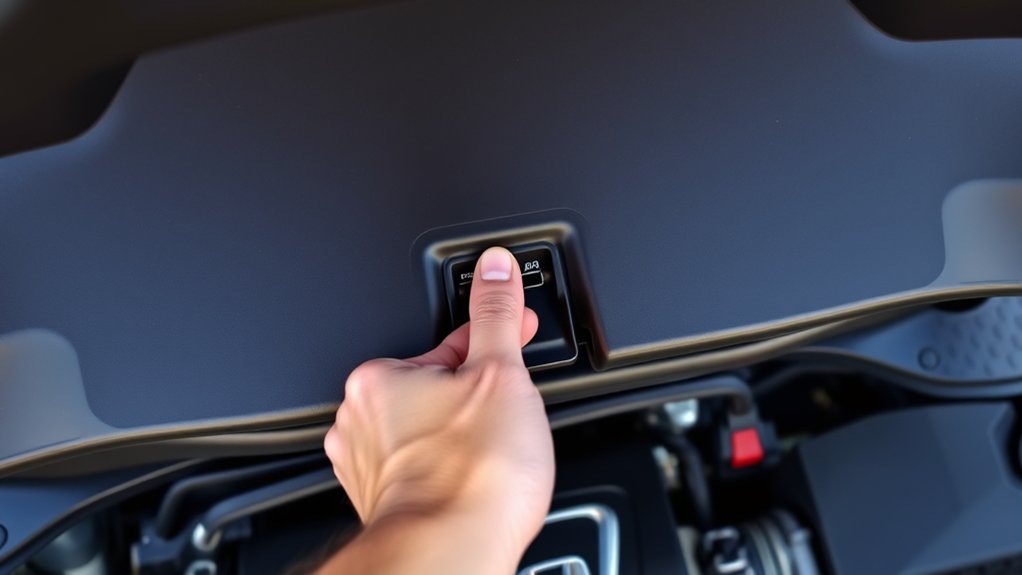
After pulling the bonnet release handle inside the car, open the hood slightly to access the secondary catch. Locate the safety latch, typically centered under the front edge of the bonnet. Use your fingers to push or lift the latch to fully release the hood.
Locating The Secondary Catch
Where exactly is the secondary bonnet catch located once you’ve released the interior lever? This safety mechanism is positioned beneath the front edge of the bonnet, designed to prevent accidental opening.
To locate it, carefully slide your fingers along the bonnet’s edge after pulling the interior bonnet latch. The secondary catch typically resides near the center or slightly offset to one side.
Visualize the area by noting these features:
- A small metal tab or lever attached to the bonnet latch assembly
- Positioned under the bonnet lip, accessible only by hand
- Often coated or marked to distinguish it from surrounding parts
- Engine components nearby, requiring cautious reach to avoid contact
Identifying this secondary catch is vital for safely opening the bonnet without damage.
Releasing The Safety Latch
How do you release the safety latch once you’ve located the secondary bonnet catch? First, position yourself directly in front of the Honda Civic with the primary latch already disengaged inside the cabin. Slide your fingers under the hood’s front edge to feel the secondary catch, a small lever or tab centered beneath the bonnet.
Apply firm pressure, typically pushing the catch sideways or upwards, depending on the model year, to unlock the bonnet fully. Avoid distractions or subtopic irrelevance by focusing solely on this two word idea: “safety latch.” Once disengaged, lift the bonnet carefully, using the support prop if necessary.
Mastering this step ensures safe, effective bonnet access, eliminating guesswork and preventing damage to the catch mechanism or bonnet alignment.
Lift the Honda Civic Bonnet and Secure It With the Prop Rod
What’s the best way to lift the Honda Civic bonnet safely? After releasing the bonnet latch and pulling the hood release inside, gently raise the bonnet while supporting it. Follow these steps for a controlled lift:
- Place one hand under the bonnet front edge near the bonnet latch.
- Lift the bonnet steadily until it reaches its fully open position.
- Locate the prop rod, usually clipped near the bonnet latch or side frame.
- Secure the prop rod by inserting its end into the designated hole or slot on the bonnet’s underside.
This method ensures the bonnet remains stable, preventing accidental closure. Always double-check that the prop rod is firmly seated before letting go to avoid injury or damage. Handling the bonnet with care after releasing the bonnet latch and hood release is vital for your safety.
Routine Engine Checks to Perform Once the Bonnet Is Open

When should you perform routine engine checks after opening your Honda Civic bonnet? Ideally, conduct these checks before long trips or at regular intervals, such as every month. First, inspect the engine oil level using the dipstick; ensure the oil is between the minimum and maximum marks and appears clean.
Next, examine the coolant reservoir for adequate fluid levels to prevent overheating. Check the battery terminals for corrosion and tight connections. While under the bonnet, don’t forget to verify tire pressure using a gauge on all four tires, including the spare.
Proper tire pressure improves fuel efficiency and handling. Finally, scan for visible leaks or damaged hoses. Performing these methodical checks ensures optimal engine performance and safety before you close the bonnet.
How Opening the Bonnet Varies by Honda Civic Model
Why does opening the bonnet differ across Honda Civic models? Variations arise due to model year, design updates, and engineering enhancements. Each iteration may feature distinct hood latches, bonnet insulation placement, and release mechanisms tailored for safety and convenience.
You’ll notice differences such as:
- Location and type of the interior bonnet release lever.
- Presence and style of secondary safety catches on the hood latch.
- Variations in bonnet insulation affecting access and visibility.
- Changes in hood latch tension requiring different force to unlatch.
Understanding these distinctions ensures you apply the correct method without causing damage. Always consult your specific model’s manual to identify the exact bonnet release procedure and inspect bonnet insulation carefully to avoid interference with hood latches during opening.
What to Do If the Bonnet Release Is Stuck or Jammed
How can you safely free a bonnet release that’s stuck or jammed? First, locate the release lever inside the vehicle and apply steady, moderate pressure to avoid breaking it.
Begin by finding the release lever inside and gently applying steady pressure to avoid damage.
If it doesn’t budge, inspect the cable for visible damage or disconnection. For novice maintenance, use tool recommendations such as a flashlight to examine tight spaces, and needle-nose pliers to gently manipulate the cable or latch mechanism.
Avoid forcing the lever, which may cause further damage. If accessible, apply a penetrating lubricant to the latch area to loosen corrosion or debris. After lubrication, try the release again.
If these steps fail, consult a professional mechanic to prevent worsening the issue. Methodical troubleshooting ensures safe bonnet access without causing costly repairs.
How to Close the Honda Civic Bonnet Properly
After ensuring the bonnet release operates smoothly, you can proceed to close the Honda Civic bonnet correctly. Proper closure is essential for car maintenance and engine safety, preventing damage and ensuring secure sealing. Follow these steps methodically:
Lower the bonnet gently until it’s about 12 inches from the latch. Release the bonnet to let it drop and engage the primary latch. Apply firm, even pressure on the front center to secure the secondary catch.
Check the bonnet edges for tight alignment and absence of gaps.
Frequently Asked Questions
How Often Should I Check My Honda Civic Bonnet Latch?
You should check your bonnet latch every six months to ensure it functions properly. Also, test the remote access system regularly to confirm it reliably releases the latch, preventing unexpected failures or safety issues during use.
Can I Open the Bonnet Remotely With a Key Fob?
You can’t open the Honda Civic bonnet using the remote key fob since it only controls the trunk release.
To open the bonnet, you’ll need to use the interior latch located under the dashboard manually.
What Tools Do I Need to Repair a Broken Bonnet Release?
You’ll need a flathead screwdriver and pliers for this repair. Start with a two word discussion idea1: “cable inspection,” then proceed to two word discussion idea2: “latch adjustment,” ensuring precise alignment and smooth operation.
Is It Safe to Open the Bonnet Immediately After Driving?
You shouldn’t open the bonnet immediately after driving due to heat risks; wait briefly for cooling. Also, consider brief safety checks to prevent injuries and guarantee your car’s remote access hacking defenses are active before handling any electronic components.
How Do I Clean and Maintain the Bonnet Hinges?
Regular cleaning routines reduce hinge wear by 40%. You’ll want to wipe hinges with a degreaser, remove debris, then apply lubricant.
Follow these maintenance tips monthly to ensure smooth, rust-free bonnet operation and prolong hinge lifespan.
Conclusion
Now that you know how to open your Honda Civic bonnet, remember that 85% of routine maintenance starts with this simple step. Pull the interior lever firmly but smoothly, release the secondary catch, then lift and secure the bonnet with the prop rod. This methodical approach ensures safety and prevents damage.
Mastering these precise steps not only protects your vehicle but also makes regular engine checks quicker and more efficient every time you need them. By following this guide on how to open your Honda Civic bonnet, you will keep your car in top condition with ease.