You can top off coolant in your Honda Civic, but it’s essential to do it safely and correctly to avoid engine damage. Only add coolant when the engine is completely cool, and use the manufacturer-recommended type to maintain proper system balance.
Knowing how and when to check the levels, and understanding the risks of overfilling or mixing fluids, will help keep your Civic running smoothly.
But what exact steps should you follow to do this properly?
Key Takeaways
- You can top off coolant in a Honda Civic only when the engine is completely cool to avoid burns and pressure injuries.
- Always use the manufacturer-recommended coolant type specific to your Civic’s model year to prevent damage.
- Check the coolant reservoir level against MIN and MAX marks before adding coolant to avoid overfilling.
- Never remove the radiator cap when the engine is hot; wait for it to cool and release pressure slowly.
- Topping off is safe if the coolant level is below MIN; if above MAX, drain excess coolant instead.
How To Check Coolant Levels In Your Honda Civic
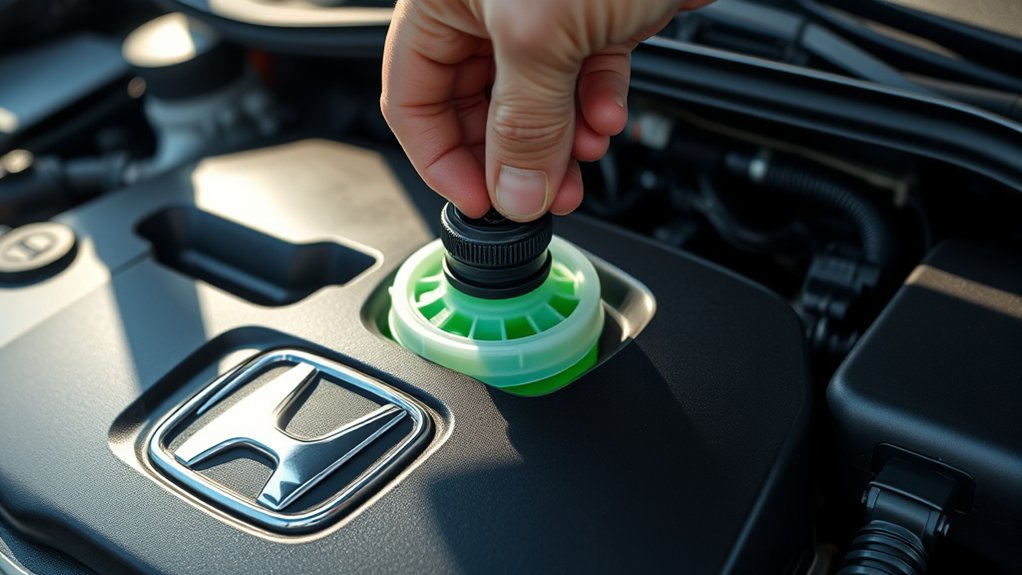
How do you accurately check the coolant level in your Honda Civic? First, ensure the engine is cool to avoid inaccurate readings caused by fluctuating coolant temperatures. Open the hood and locate the translucent coolant reservoir.
Ensure the engine is cool, then open the hood and find the translucent coolant reservoir to check the level accurately.
Check the fluid level against the marked “Full” and “Low” indicators on the side. Avoid opening the radiator cap when the engine is hot, as pressure could cause coolant to spray.
Additionally, monitor your vehicle’s engine indicators, such as the temperature gauge on the dashboard, for abnormal readings that may suggest coolant issues.
Maintaining proper coolant levels is critical since it regulates engine temperature and prevents overheating. Regularly checking ensures your Civic operates efficiently and helps you detect potential leaks or system failures early.
When Is It Safe To Top Off Coolant In Your Civic?
You should only top off the coolant in your Civic when the engine is completely cool to avoid burns or pressure-related injuries.
First, check the coolant level by inspecting the reservoir, ensuring it’s below the maximum mark. Always remove the radiator cap slowly and carefully once the engine has cooled to release any residual pressure safely.
Engine Temperature Check
When is it safe to top off the coolant in your Honda Civic? You should only add coolant when the engine is completely cool to avoid burns and ensure accurate level readings. After driving, engines overheating cause coolant to expand and increase system pressure, making opening the reservoir unsafe.
Monitor the engine temperature gauge; wait until it reads well below the normal operating range before proceeding. Understanding coolant chemistry is critical. Mixing coolants with different chemical compositions can reduce effectiveness and cause corrosion. Always use the manufacturer-recommended coolant type.
Checking the temperature ensures you don’t compromise the integrity of your cooling system or risk injury. By waiting for the engine to cool, you maintain system pressure balance and prevent damage caused by thermal expansion and pressure spikes.
Coolant Level Inspection
Why is inspecting the coolant level essential before topping off your Honda Civic’s coolant system? Without a proper check, you risk overfilling or ignoring leaks, which can lead to engine damage. Avoid treating this step as an irrelevant topic or a random idea; it’s critical for safe maintenance.
Use the reservoir’s markings to determine the coolant level:
| Condition | Action Needed |
|---|---|
| Below “MIN” | Top off coolant |
| Between “MIN” & “MAX” | No immediate action |
| Above “MAX” | Drain excess coolant |
| No visible level | Check for leaks |
| Cloudy or dirty coolant | Flush system |
Inspect only when the engine is cool to prevent burns. This precise check ensures topping off is safe and effective.
Radiator Cap Safety
How can you guarantee safety while topping off the coolant in your Honda Civic? First, never remove the radiator cap when the engine is hot; the system is pressurized and can cause scalding coolant to spray out, risking severe burns.
Wait until the engine cools completely before opening the cap. Use a cloth or gloves to protect your hands and turn the cap slowly to release any residual pressure. Only then should you add coolant or distilled water to the reservoir.
Remember, this step is critical and unrelated to other topic ideas like coolant type selection or engine diagnostics. Prioritizing radiator cap safety prevents injury and ensures the cooling system maintains proper pressure, preventing leaks and overheating.
Always follow manufacturer guidelines for safe coolant maintenance in your Civic.
What Type Of Coolant Does A Honda Civic Need?
Which type of coolant suits your Honda Civic best depends on its model year and engine specifications. Using the wrong coolant can lead to corrosion, overheating, or poor performance. To ensure optimal cooling system function, follow these guidelines:
Choosing the right coolant for your Honda Civic prevents corrosion, overheating, and ensures peak engine performance.
- For Civics manufactured before 2001, use a traditional green ethylene glycol-based coolant, typically Honda Type 2 antifreeze.
- Models from 2001 onward often require Honda’s long-life, blue or sometimes pink, phosphate-free coolant formulated for aluminum engines.
- Always check your owner’s manual to confirm the exact coolant specification, as mixing types can cause chemical reactions harmful to your engine.
While scrolling through funny memes or planning your next vacation, don’t forget this crucial maintenance step to keep your Civic running smoothly.
How To Top Off Coolant In Your Honda Civic
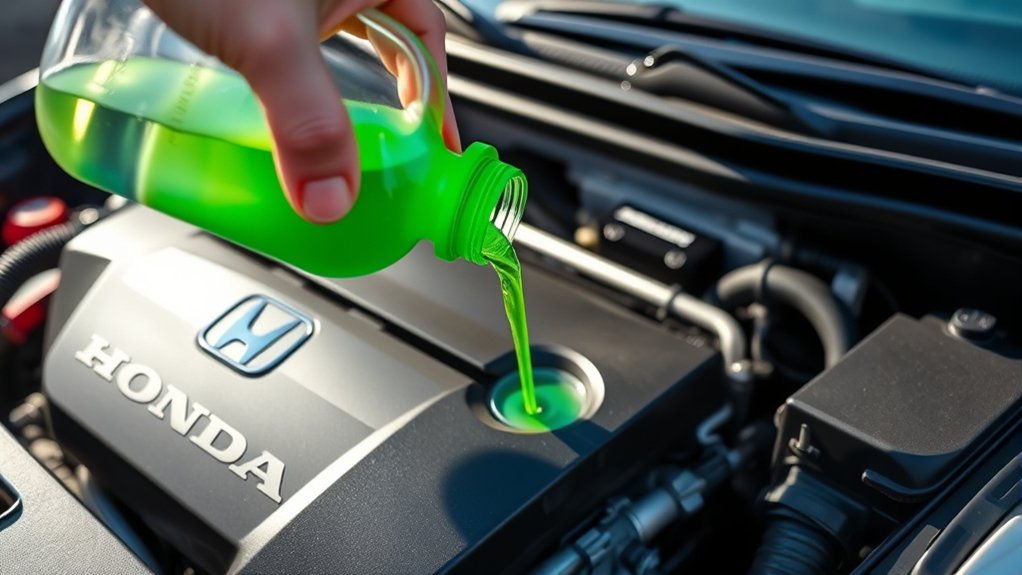
First, find the coolant reservoir under the hood, usually a translucent plastic tank with level markings.
Next, check the coolant level against the minimum and maximum indicators to determine if topping off is necessary.
Finally, add the correct type of coolant slowly to avoid overfilling and ensure proper engine performance.
Locate The Coolant Reservoir
Where exactly do you find the coolant reservoir in your Honda Civic? Locating it is straightforward once you know what to look for. The coolant reservoir is a translucent plastic tank connected to the radiator by a hose.
To find it:
- Open the hood using the release lever inside the car, usually near the driver’s side footwell.
- Look toward the front or side of the engine bay for a semi-transparent container marked with “coolant” or warning labels.
- Identify the reservoir cap, often colored (yellow, white, or red), and labeled for coolant.
Keep in mind, unrelated to other sections, that recognizing the reservoir’s position is crucial for safe coolant management. This step sets the foundation before you check coolant levels or top off your Honda Civic’s system.
Check Coolant Level
How do you accurately check the coolant level in your Honda Civic? First, ensure the engine is cool to avoid pressure-related hazards. Park your car on a level surface; uneven parking can give false readings due to coolant settling unevenly.
Locate the translucent coolant reservoir, which should have “MIN” and “MAX” markings. Visually inspect the coolant level between these marks. Maintaining it near the “MAX” line optimizes engine performance by preventing overheating.
Avoid opening the reservoir cap if the engine is hot to prevent injury. Checking the coolant level regularly ensures your Civic’s cooling system functions efficiently, supporting consistent engine performance and longevity.
This simple step, combined with proper parking considerations, helps you monitor your vehicle’s cooling system accurately.
Add Coolant Properly
When topping off the coolant in your Honda Civic, you need to ensure the engine is completely cool to prevent pressure-related injuries. Proper scene planning enhances safety and audience engagement by demonstrating clear, precise steps.
Follow this process:
- Slowly remove the radiator cap or coolant reservoir cap to release any residual pressure.
- Use a 50/50 mixture of antifreeze and distilled water, filling the reservoir up to the “Full” mark without overfilling.
- Securely replace the cap, then start the engine and let it run for a few minutes to circulate the coolant; check for leaks and recheck levels after the engine cools.
How Often Should You Check And Refill Your Honda Civic’s Coolant?
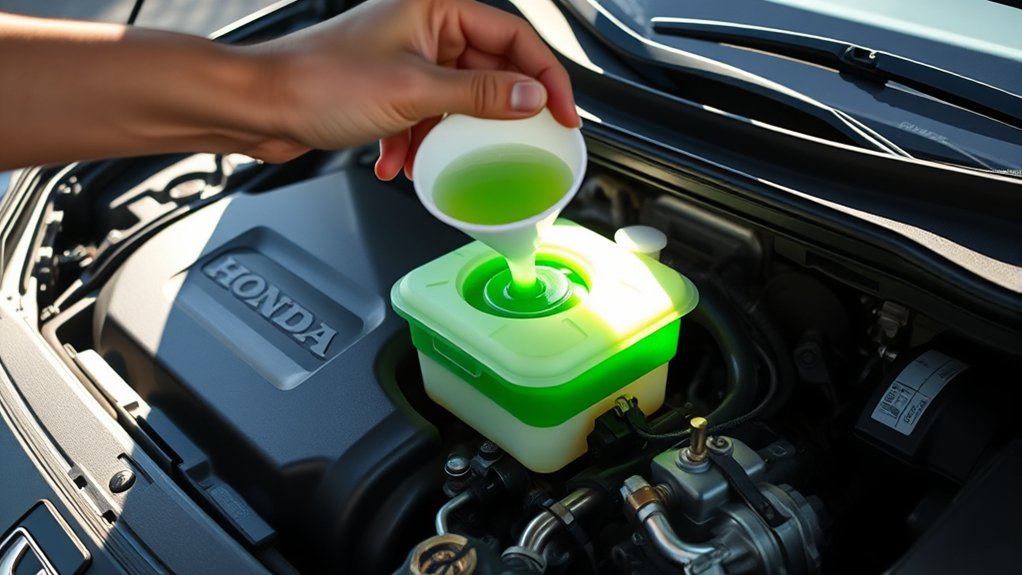
Why should you regularly monitor your Honda Civic’s coolant levels? Maintaining optimal coolant levels prevents engine overheating and protects key components like the turbocharger. Low coolant can lead to excessive turbocharger noise due to overheating, signaling potential damage.
You should check coolant at least once a month, especially before long trips or in extreme temperatures. During inspection, also note any unusual in car aromatics. Sweet or chemical odors might indicate leaks.
When refilling, ensure you use the manufacturer-recommended coolant type and avoid overfilling, which can cause pressure issues. Regular monitoring helps you catch minor issues early, ensuring your Civic’s cooling system operates efficiently and prolongs engine life.
Consistency in checking coolant levels is essential for reliable performance and avoiding costly repairs.
Why Your Honda Civic’s Coolant Keeps Dropping (And What To Do)
If your Honda Civic’s coolant level keeps dropping, it’s usually due to leaks, a faulty radiator cap, or a malfunctioning thermostat. You’ll want to inspect these components regularly to catch issues early.
Following a strict preventive maintenance schedule helps you avoid costly repairs and keeps your cooling system running efficiently.
Common Causes Coolant Loss
How does your Honda Civic lose coolant despite regular maintenance? It’s crucial to avoid unrelated topic distractions or random speculation when diagnosing coolant loss. The most common causes are:
- Radiator leaks. Small cracks or corrosion can cause coolant to seep out unnoticed.
- Faulty radiator cap. If the cap doesn’t maintain proper pressure, coolant can evaporate or overflow.
- Hose deterioration. Old or damaged hoses may develop leaks, leading to gradual coolant loss.
Addressing these issues promptly prevents engine overheating and costly repairs. Keep in mind, pinpointing the exact cause requires systematic inspection rather than guessing. Avoid assuming unrelated topic causes such as unrelated engine components or random speculation about external factors. Focus on these core areas to understand why your Honda Civic’s coolant keeps dropping.
Preventive Maintenance Tips
When should you perform preventive maintenance to keep your Honda Civic’s coolant levels stable? Ideally, check your coolant every 3,000 to 5,000 miles or during routine oil changes. Regular inspections help identify leaks, cracks, or worn hoses before they cause significant coolant loss.
Avoid getting distracted by irrelevant topic discussions unrelated to coolant systems, such as off topic discussions about unrelated engine components. Focus strictly on coolant reservoir condition, radiator cap integrity, and thermostat function.
Flush and replace coolant according to your Civic’s maintenance schedule, typically every 30,000 to 50,000 miles. This prevents corrosion and buildup that can reduce cooling efficiency. By adhering to precise, scheduled maintenance, you minimize coolant drops and extend your engine’s lifespan, ensuring optimal performance without unnecessary off topic distractions.
Signs Your Honda Civic Might Have A Coolant Leak
What indicators should you watch for to detect a coolant leak in your Honda Civic? Staying ahead of issues aligns with tech trends that emphasize vehicle diagnostics and maintenance precision. Here are three key signs:
- Visible Coolant Puddles: Check under your car for green, orange, or pink fluid spots, signs of a leak.
- Engine Overheating: Your temperature gauge rising above normal signals coolant loss, risking engine damage.
- Sweet Smell or Steam: A distinctive sweet odor or steam near the engine bay suggests escaping coolant.
Recognizing these signs early respects race etiquette by preventing unexpected breakdowns and maintaining optimal engine performance. Regularly inspect your Civic to catch leaks before they escalate.
Why Mixing Different Coolants Can Damage Your Honda Civic’s Engine
Why does mixing different types of coolant pose a serious risk to your Honda Civic’s engine? When you combine incompatible coolants, their chemical formulations can react adversely, leading to corrosion, sludge buildup, and reduced heat transfer efficiency.
Mixing incompatible coolants can cause corrosion, sludge buildup, and reduced cooling efficiency in your Honda Civic’s engine.
This compromises the cooling system’s performance and may cause engine overheating or damage. Additionally, using the wrong coolant mixture can void your vehicle’s warranty, as some manufacturers consider it a misuse. This is where misleading warranties come into play.
If you attempt DIY coolant top-offs without verifying compatibility, you increase the risk of contamination and system failure. To protect your engine and maintain warranty coverage, always use the coolant specified in your Honda Civic’s manual and avoid mixing different types.
Staying precise here prevents costly engine repairs and safeguards system integrity.
How To Flush And Replace Coolant In Your Honda Civic
Although flushing and replacing the coolant in your Honda Civic requires careful attention, performing this maintenance yourself can ensure optimal engine temperature regulation. To avoid topic drift or veering into unrelated subject matter, focus strictly on the procedure:
- Drain the old coolant: Warm up the engine, then open the radiator drain valve and allow coolant to fully drain into a container.
- Flush the system: Close the valve, fill with distilled water, run the engine until it reaches operating temperature, then drain again to remove residue.
- Refill with proper coolant: Close the drain valve, pour in the recommended Honda coolant mixture, and bleed air from the system via the bleed screw.
Following these steps precisely maintains your engine’s cooling efficiency and prevents contamination or damage.
Cooling System Maintenance Tips For Your Honda Civic
Performing a coolant flush and replacement sets a solid foundation for maintaining your Honda Civic’s cooling system. To ensure optimal performance, regularly inspect hoses and clamps for wear or leaks. Check the radiator cap for proper sealing to maintain system pressure.
Monitor coolant levels consistently, topping off only with the recommended Honda coolant to avoid mixing unrelated fluids that could cause damage. Use two word discussion ideas like “pressure testing” to diagnose hidden leaks and “thermostat inspection” to verify temperature regulation.
Additionally, clean debris from the radiator fins to prevent airflow restrictions. Staying proactive with these maintenance tips helps prevent overheating, prolongs component life, and ensures your Civic runs efficiently under all conditions.
Frequently Asked Questions
Can Topping off Coolant Affect My Honda Civic’s Warranty?
Topping off coolant typically doesn’t void your Honda Civic’s warranty, but improper topping off or using incorrect coolant can cause issues.
Always follow manufacturer guidelines to avoid affecting warranty coverage and guarantee your engine stays protected.
What Are the Costs Associated With Coolant Topping Services?
Think of topping off coolant like refilling ink in a printer. Costs vary from $30 to $100, factoring in coolant disposal and labor.
Make sure your service aligns with warranty coverage to avoid unexpected expenses or voiding protection.
Are There Environmental Concerns With Disposing Old Coolant?
Yes, improper environmental disposal of old coolant can harm ecosystems. You should use authorized coolant recycling programs to safely handle and recycle used coolant, minimizing toxic chemical release and protecting water and soil quality effectively.
Can I Use Water Instead of Coolant in Emergencies?
You shouldn’t rely solely on water as an emergency lubrication coolant refill alternative; though it cools temporarily, it lacks antifreeze properties, risking overheating and corrosion. Use water only briefly before replacing with proper coolant to protect your engine effectively.
How Does Coolant Quality Affect Honda Civic Performance?
Coolant chemistry directly impacts your Honda Civic’s engine efficiency and longevity. Using the correct coolant ensures optimal heat transfer, preventing corrosion and overheating.
Regular cooling system maintenance preserves performance and avoids costly repairs.
Conclusion
When you open your Honda Civic’s transparent coolant reservoir, imagine a clear pool reflecting your care for the engine’s health. Always top off only when cool, adding the exact coolant type slowly to avoid overfill. Regular checks keep your Civic running smoothly, preventing leaks or damage from improper coolant mixing.
Treat your cooling system like a well-tuned instrument—precise maintenance ensures your engine stays cool under pressure, ready to perform every drive. Remember, you can top off coolant in your Honda Civic, but doing so carefully and correctly is key to maintaining optimal engine performance.