Picture your Honda Civic’s dashboard lighting up with a low tire pressure warning just as you’re about to hit the road. Knowing how to reset low tire pressure on a Honda Civic is essential to maintain safety and vehicle performance.
You’ll want to address this promptly to avoid any driving issues. Resetting the tire pressure monitoring system (TPMS) isn’t complicated, but it requires precise steps to ensure the alert clears correctly.
Understanding how to verify tire pressure and initiate the reset can save you time and prevent further problems. Follow these steps carefully to keep your Civic running smoothly.
Key Takeaways
- Ensure all tires, including the spare, are inflated to the recommended pressure using a calibrated gauge.
- Turn the ignition ON and press the TPMS reset button until the tire pressure light blinks three times.
- Release the reset button and start the engine to reinitialize the TPMS sensors.
- Drive the vehicle above 30 mph for 10–15 minutes to allow automatic sensor recalibration.
- If the light persists, check sensor batteries, tire valves, or consult a technician for further diagnosis.
Why Does the Low Tire Pressure Light Come On?
Why does the low tire pressure light come on? It activates when your Honda Civic’s tire pressure monitoring system detects one or more tires below the recommended PSI. This warning uses color psychology, typically a yellow or amber light, to signal caution without causing panic, aligning with universal safety color codes.
Social media trends highlight how drivers often misunderstand this light, confusing it with more critical alerts. Recognizing the light’s meaning is essential for timely maintenance and safety.
The sensor continuously monitors tire pressure, alerting you to leaks, temperature changes, or gradual deflation. Ignoring it risks compromised handling, increased wear, and reduced fuel efficiency.
Understanding this alert helps you respond promptly to maintain optimal vehicle performance.
How to Check Tire Pressure on a Honda Civic
To check your Honda Civic’s tire pressure, first locate the tire valve stem on each wheel. Remove the valve cap and press a tire pressure gauge firmly onto the valve to get an accurate reading.
Compare the measured pressure to the recommended PSI listed in your owner’s manual or on the driver’s side door jamb.
Locating The Tire Valve
Where exactly do you find the tire valve on your Honda Civic? The tire valve is located on the rim of each wheel, typically near the outer edge for easy access. It’s a small rubber or metal stem protruding from the wheel, capped to protect it from dirt and debris.
Identifying this valve is essential for accurately checking tire pressure and ensuring proper sensor calibration. Before you begin, remove the valve cap carefully to avoid damaging the valve core.
Since your Civic uses a Tire Pressure Monitoring System (TPMS), locating the valve helps in resetting or calibrating the sensors after adjusting pressure. Precise access to the valve allows you to connect a tire gauge or air compressor securely, ensuring accurate measurement and correct pressure adjustments.
Using A Tire Gauge
How do you accurately measure the tire pressure on your Honda Civic? First, ensure the tires are cold for an exact reading. Remove the cap from the tire valve, then firmly press the tire gauge onto the valve stem.
Avoid any leaks by maintaining a tight seal. The gauge will display the tire pressure in PSI. Compare this reading with the recommended PSI found on your vehicle’s placard or owner’s manual.
If the pressure is below specification, inflate accordingly. Avoid distractions like unrelated topics or random ideas during this process to maintain accuracy.
Using a digital or analog tire gauge yields precise results; however, digital gauges often provide quicker readings. Regularly checking tire pressure helps maintain optimal performance and safety on your Honda Civic.
How to Inflate Tires to the Correct Pressure
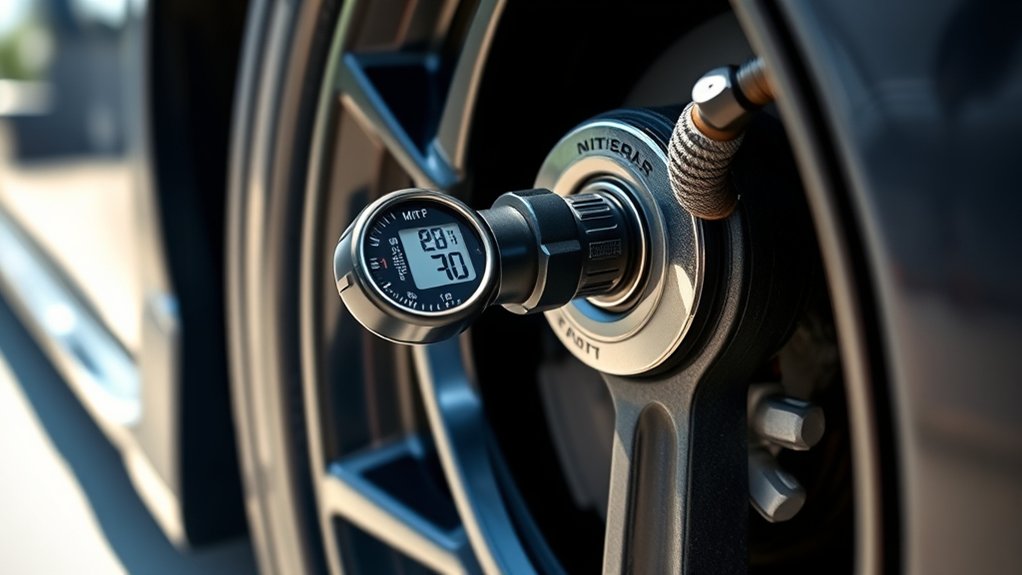
A properly inflated tire ensures peak performance and safety for your Honda Civic. Begin by checking the recommended tire pressure on the driver’s door placard. Use a reliable air compressor to inflate the tire, attaching the hose securely to the valve stem to avoid air leaks.
Inflate gradually, frequently checking pressure with your tire gauge. Overinflation can cause uneven wear and increase risk of blowouts, while underinflation can accelerate paint oxidation on rims and contribute to rust formation on metal components, similar to issues addressed in rust removal.
After reaching the correct pressure, remove the air hose carefully to prevent sudden pressure loss. Repeat for all tires, including the spare. Proper inflation maintains tire integrity, prevents premature damage, and supports your vehicle’s handling and fuel efficiency.
How to Reset Your Honda Civic’s TPMS Warning Light
Why does your Honda Civic’s TPMS warning light stay on even after inflating your tires correctly? This often happens because the system needs a manual reset, not due to an irrelevant topic like unrelated dashboard alerts or concepts.
To reset the TPMS warning light, follow the precise steps below:
| Step Number | Action |
|---|---|
| 1 | Turn ignition to ON (engine off) |
| 2 | Press and hold TPMS button until light blinks 3 times |
| 3 | Release button and start the engine |
This process reinitializes the TPMS sensors, clearing the warning light. Avoid confusing this with unrelated concepts like tire rotation or unrelated dashboard indicators. If the light persists, check sensor batteries or consult a technician.
When Does Driving Automatically Reset the TPMS?
When does driving reset your Honda Civic’s TPMS automatically? Typically, once you inflate your tires to the recommended pressure, the system recalibrates after you drive at speeds above 30 mph for about 10 to 15 minutes.
The TPMS sensors need consistent wheel rotation to detect normalized pressure, so maintaining steady driving conditions is essential. Keep in mind, this automatic reset doesn’t happen instantly; it relies on real-time data transmission from each tire sensor.
If the pressure remains low or a sensor malfunctions, the warning light will persist. This subtopic unrelated to others clarifies that simply starting your Civic or short trips won’t trigger the reset. Understanding these two-word ideas, “steady driving” and “sensor recalibration,” helps you know when the TPMS updates without manual input.
How Temperature Changes Affect Tire Pressure Warnings
You’ll notice tire pressure drops as temperatures fall because cold air contracts, lowering PSI. This often triggers warning lights even if your tires were properly inflated before.
Adjusting pressure seasonally helps maintain accurate TPMS readings and safe driving conditions.
Temperature Impact On PSI
How does temperature influence your Honda Civic’s tire pressure readings? Temperature fluctuations directly affect the air pressure inside your tires; as the temperature rises, air expands, increasing PSI, while cooler temperatures cause contraction and lower PSI. This dynamic can trigger false low tire pressure warnings, especially if you don’t adjust for ambient conditions.
During tire rotation, uneven temperature exposure may cause inconsistent PSI among tires, so always check and equalize pressure afterward. To maintain accurate readings, measure tire pressure when the tires are cold, preferably before driving.
Regularly monitoring and adjusting your tire pressure in response to temperature shifts helps prevent warning alerts and optimizes tire performance, safety, and longevity on your Honda Civic.
Cold Weather Pressure Drops
Why does your Honda Civic’s tire pressure warning light often come on during cold weather? Cold air contracts, lowering tire pressure and triggering the warning system. This drop isn’t a tire defect but a physical response to temperature.
Your tire pressure sensors detect this change and alert you. If the warning persists despite proper inflation, consider sensor replacement due to potential malfunctions.
| Temperature Change | Effect on Tire Pressure | Resulting Action |
|---|---|---|
| Decrease (Cold) | Pressure drops | Warning light activates |
| Stable/Increase | Pressure normalizes | Warning light turns off |
| Sensor Fault | False readings | Sensor replacement needed |
Understanding these dynamics helps you address warnings efficiently and maintain optimal tire performance.
Seasonal Tire Pressure Tips
When do temperature fluctuations most impact your Honda Civic’s tire pressure warnings? Rapid shifts, especially between seasons, cause air to contract or expand inside tires, triggering the TPMS alerts. You should monitor tire pressure more frequently during these transitions to maintain optimal performance and safety.
Remember, tire aesthetic and rim color can influence heat absorption, subtly affecting pressure changes. Darker rims may heat up faster under sun exposure, slightly increasing tire pressure, while lighter rims reflect heat, potentially leading to lower pressure readings.
Always check tire pressure when tires are cold for accurate measurement. Adjusting pressure seasonally not only prevents low-pressure warnings but also preserves tire aesthetic integrity by minimizing uneven wear and maintaining rim color appeal. Consistent seasonal checks ensure your Honda Civic runs efficiently and safely.
Troubleshooting Common Honda Civic TPMS Reset Problems
Where should you start if your Honda Civic’s TPMS light won’t reset after following the standard procedure? First, verify that all tires, including the spare if applicable, have the correct pressure. Use a calibrated gauge to ensure accuracy.
Next, inspect the tire valves for leaks or damage, as faulty valves can prevent proper sensor readings. Remember, TPMS sensors rely on stable battery power; a dead sensor battery might cause persistent warnings.
Also, consider environmental factors. Extreme temperatures can affect sensor functionality. Similar to how creative writing adapts to evolving fashion trends, your approach to troubleshooting must adjust to conditions.
Finally, perform the reset sequence precisely as specified in your owner’s manual, since slight deviations can lead to failure. If issues persist, a diagnostic scan tool may identify sensor faults.
How to Replace a Faulty Tire Pressure Sensor on Your Civic
You’ll first need to identify which tire pressure sensor is faulty using a diagnostic tool. Next, safely remove the old sensor by deflating the tire and detaching the sensor from the valve stem.
Finally, install the new sensor, ensuring it’s properly secured and calibrated to your Civic’s system.
Identifying Faulty Sensors
How can you determine if a tire pressure sensor on your Honda Civic is faulty? Start by observing the TPMS warning light; if it stays on despite correct tire pressures, a sensor may be malfunctioning.
Use a diagnostic scanner to read sensor IDs and pressure data for each wheel. Inconsistent or missing readings indicate a faulty sensor.
During sensor maintenance, check for physical damage or corrosion on the sensor valve stem. Also, improper wheel balancing can cause sensor signal issues, so inspect wheel and tire balance carefully.
If uneven wear or vibration accompanies the warning light, suspect both wheel balance problems and sensor faults. Identifying the exact faulty sensor ensures you replace only the necessary unit, maintaining accurate tire pressure monitoring and optimal vehicle safety.
Removing The Old Sensor
When is the best time to remove the old tire pressure sensor on your Honda Civic? You should do it immediately after confirming the sensor is faulty. Begin by safely lifting the vehicle and removing the tire.
Deflate the tire completely to prevent damage while handling the sensor. Avoid distractions by ignoring irrelevant topics or unrelated concepts like general tire maintenance at this stage.
Next, carefully detach the sensor from the valve stem, ensuring you don’t damage the sensor’s mounting components. Use appropriate tools to unscrew and remove the sensor assembly.
Keep track of small parts, as losing them complicates installation. Removing the old sensor promptly and correctly prevents further TPMS errors and ensures a smooth transition to the next step, installing the new tire sensor.
Installing New Tire Sensor
Where should you begin when installing a new tire pressure sensor on your Honda Civic? Start by ensuring the replacement sensor matches your vehicle’s specifications. Follow these steps for proper installation and sensor calibration:
- Mount the Sensor: Attach the new sensor securely to the wheel rim, ensuring the valve stem is properly seated to prevent air leaks.
- Inflate the Tire: Inflate the tire to the manufacturer’s recommended tire pressure to maintain accuracy.
- Calibrate the Sensor: Use a diagnostic tool to reset and calibrate the tire pressure monitoring system (TPMS). This step confirms the sensor communicates correctly with your vehicle’s onboard computer.
Completing these steps guarantees accurate tire pressure readings and prevents false low-pressure warnings on your Honda Civic.
Tips to Prevent Low Tire Pressure Warnings in the Future
Although occasional low tire pressure warnings are common, you can minimize their occurrence by maintaining proper tire care routines. Regularly inspect your tires for pressure using a reliable gauge, ideally once a month and before long trips.
When installing new tires, ensure they meet Honda Civic specifications to maintain optimal pressure retention and wear. Additionally, schedule wheel alignment checks annually or when you notice uneven tire wear or handling issues; misalignment can cause premature pressure loss.
Keep tire valves clean and replace valve caps to prevent air leaks. Avoid overloading your vehicle, as excess weight stresses tires and lowers pressure.
Understanding Your Honda Civic’s Tire Pressure Monitoring System
How does your Honda Civic detect low tire pressure? It uses a Tire Pressure Monitoring System (TPMS) that constantly monitors each tire’s pressure through sensors located inside the tires. These sensors transmit real-time data to your car’s onboard computer. When pressure drops below the recommended level, the system triggers a warning light.
Here’s how it works:
- Pressure Sensors: Measure tire pressure continuously.
- Onboard Computer: Analyzes sensor data to detect abnormalities.
- Warning Indicator: Alerts you instantly when pressure is low.
Regular tire maintenance is crucial to keep the TPMS functioning correctly. If a sensor fails or battery dies, sensor replacement is necessary to ensure accurate readings. Understanding this system helps you maintain optimal tire pressure, improving safety and performance.
Frequently Asked Questions
How Often Should I Rotate Tires on My Honda Civic?
You should rotate your Honda Civic’s tires every 5,000 to 7,500 miles to ensure even wear. Avoid unused topic ideas or unrelated concepts; focus strictly on tire maintenance for optimal performance and safety.
Can Low Tire Pressure Affect My Car’s Fuel Efficiency?
Yes, low tire pressure negatively affects your car’s fuel efficiency by increasing rolling resistance. Proper tire pressure optimizes tire effects, reducing energy loss and improving fuel economy. You shouldn’t ignore low tire pressure warnings.
What Type of Tire Pressure Sensor Does a Honda Civic Use?
Your Honda Civic uses direct tire pressure sensors located inside each tire’s valve stem. These sensors provide real-time pressure data, unlike indirect sensor types that estimate pressure via ABS wheel speed sensors.
Are There Any Apps to Monitor Tire Pressure Remotely?
Yes, you can use tire apps like TireMinder or PressurePro for remote monitoring. These apps connect via Bluetooth or cellular, providing real-time tire pressure data, alerts, and diagnostics. They enhance your vehicle’s safety and maintenance efficiency remotely.
How Do Seasonal Tire Changes Impact TPMS Calibration?
Seasonal tire changes impact sensor calibration because temperature fluctuations affect tire pressure readings. You’ll need to recalibrate your TPMS after switching tires to ensure accurate monitoring and avoid false low-pressure warnings during different seasons.
Conclusion
Resetting your Honda Civic’s low tire pressure light is like tuning a musical instrument—precise adjustments guarantee harmony. Just as a violinist checks each string’s tension, you must verify all tires match the recommended pressure.
Press the TPMS reset button with the ignition on, and if the alert persists, inspect for leaks or sensor faults. Staying vigilant keeps your Civic’s performance smooth and safe.
Regularly checking and resetting the low tire pressure on your Honda Civic prevents surprises on the road before they strike a discordant note.