When you operate the fuel door latch on your Honda Passport, you’re engaging a carefully engineered spring-loaded mechanism designed to secure the door tightly. The Honda Passport fuel door latch works through either a mechanical linkage or, in newer models, an electronic actuator, ensuring reliable release from inside the cabin.
Understanding how this system functions can help you identify issues early and maintain optimal performance. But what specific signs indicate a failing latch, and how can you address them effectively?
Key Takeaways
- The Honda Passport fuel door latch is spring-loaded, holding the door securely closed under normal conditions.
- Pressing the fuel door or using the interior release lever disengages the latch, allowing the door to pop open slightly.
- The latch mechanism engages with a catch inside the fuel door compartment to maintain secure closure.
- An interior release lever activates a cable connected to the latch for manual opening.
- Post-2019 models may feature electronic locking mechanisms, while earlier models typically use mechanical latches.
How the Honda Passport Fuel Door Latch Works
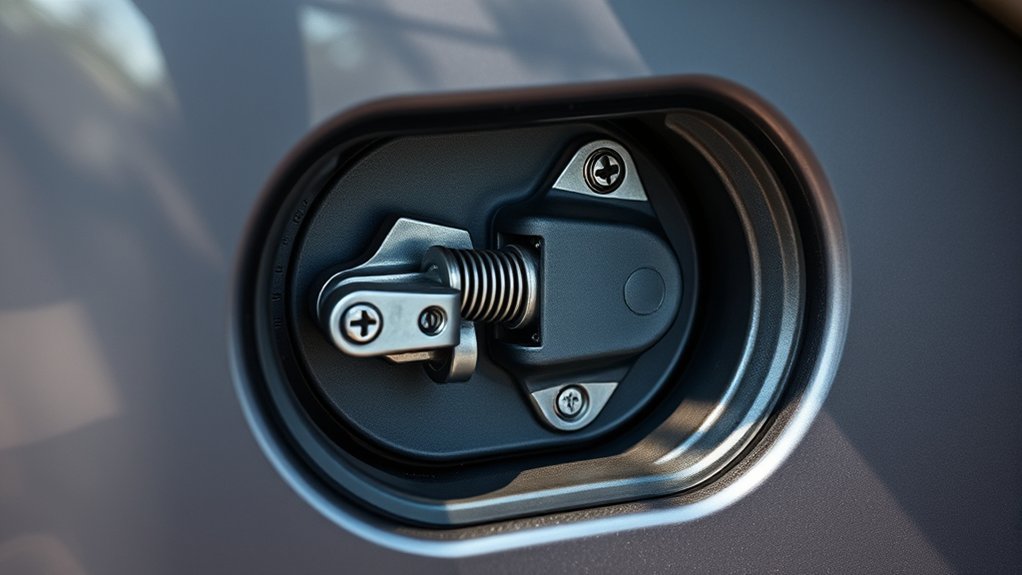
How exactly does the Honda Passport fuel door latch operate? When you press the fuel door, the latch mechanism releases, allowing the door to open smoothly.
Pressing the fuel door releases the latch mechanism, enabling the door to open smoothly and easily.
This latch mechanism is a spring-loaded component designed to hold the fuel door securely closed under normal conditions. It engages with a catch inside the fuel door compartment, preventing accidental openings.
When you pull the fuel door release lever inside the vehicle, a cable connected to the latch mechanism activates, triggering the spring to release tension. This precise action disengages the latch, letting the fuel door pop open slightly for easy access.
The entire system relies on a balance of tension and alignment, ensuring the fuel door stays closed tight yet opens effortlessly when you need to refuel.
Common Signs Your Honda Passport Fuel Door Latch Is Faulty
Why might your Honda Passport’s fuel door latch fail to function properly? Common signs include difficulty opening or closing the fuel door, a loose or wobbly latch, and failure to lock securely. You may notice the fuel door pops open unexpectedly or won’t release despite pulling the interior release lever.
Inspecting these symptoms requires precise disassembly techniques to avoid damaging the door panel or latch mechanism. If you’ve replaced the original latch with aftermarket latches, compatibility issues could cause improper engagement or fitment problems.
Additionally, a worn or corroded latch may exhibit sluggish movement or complete failure. Recognizing these signs early helps you decide if you need to perform repairs or install a reliable aftermarket latch to restore proper function efficiently.
Common Causes of Fuel Door Latch Problems in Your Honda Passport
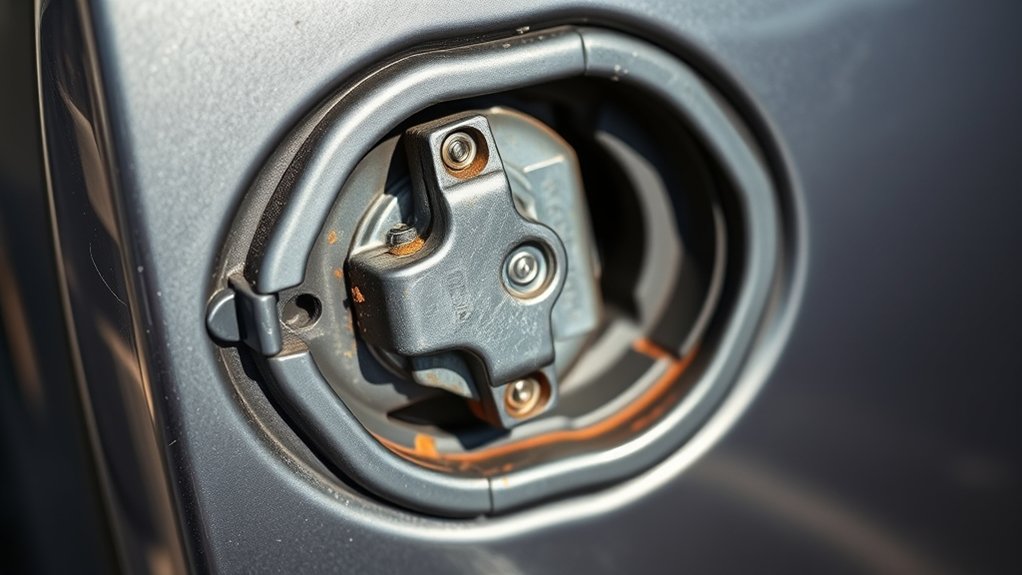
You’ll often encounter fuel door latch problems in your Honda Passport due to mechanical wear and tear, which affects the latch’s ability to engage or release properly.
Electrical malfunctions, such as faulty wiring or a defective actuator, can also prevent the latch from operating as designed. Understanding these causes helps you diagnose and address the issue efficiently.
Mechanical Wear And Tear
When does mechanical wear start affecting your Honda Passport’s fuel door latch? Typically, repeated use and exposure to environmental elements cause gradual degradation of the latch components. This impacts smooth operation and compromises your fuel system’s integrity, restricting proper engine access during refueling.
| Component | Common Wear Signs | Impact on Fuel Door Latch |
|---|---|---|
| Latch Mechanism | Rust, corrosion, stiffness | Difficulty in opening/closing |
| Springs | Loss of tension | Incomplete latch engagement |
| Hinges | Wear, bending | Misalignment causing jamming |
| Connecting Rods | Looseness, breakage | Failure to transmit latch release |
Addressing these mechanical wear factors promptly ensures reliable fuel door function. It also protects your Honda Passport’s fuel system and engine access points.
Electrical Malfunction Issues
While mechanical wear often contributes to fuel door latch issues, electrical malfunctions can equally disrupt its operation in your Honda Passport. Faulty wiring, blown fuses, or a malfunctioning latch actuator can prevent the door from unlocking or locking properly.
These electrical failures hinder your ability to access the fuel tank, which can indirectly affect fuel efficiency if you delay refueling. Diagnosing such issues requires checking circuit continuity and actuator response with specialized tools.
Since these problems often involve complex electrical components, addressing them promptly is crucial to maintain optimal vehicle performance. Always review your vehicle’s warranty coverage, as some electrical repairs may be covered, saving you costs.
Ignoring electronic faults could lead to further damage, impacting both convenience and fuel economy.
How to Manually Open a Stuck Fuel Door Latch on Your Honda Passport
How can you effectively open a stuck fuel door latch on your Honda Passport without causing damage? First, avoid any unrelated topic or off topic discussion that might confuse the troubleshooting process. Focus on manual methods to access the latch mechanism safely. Use these precise steps:
- Gently press around the fuel door to check for partial release.
- Insert a thin, non-metallic tool between the door and body to carefully pry it open.
- Access the interior panel near the fuel door to manually trigger the latch release cable.
These actions require patience and care to prevent paint scratches or latch breakage. Avoid forcing the door, as that may worsen the issue. By concentrating on the exact latch mechanism, you ensure a controlled, damage-free manual override.
Step-by-Step Fixes for a Jammed Honda Passport Fuel Door Latch
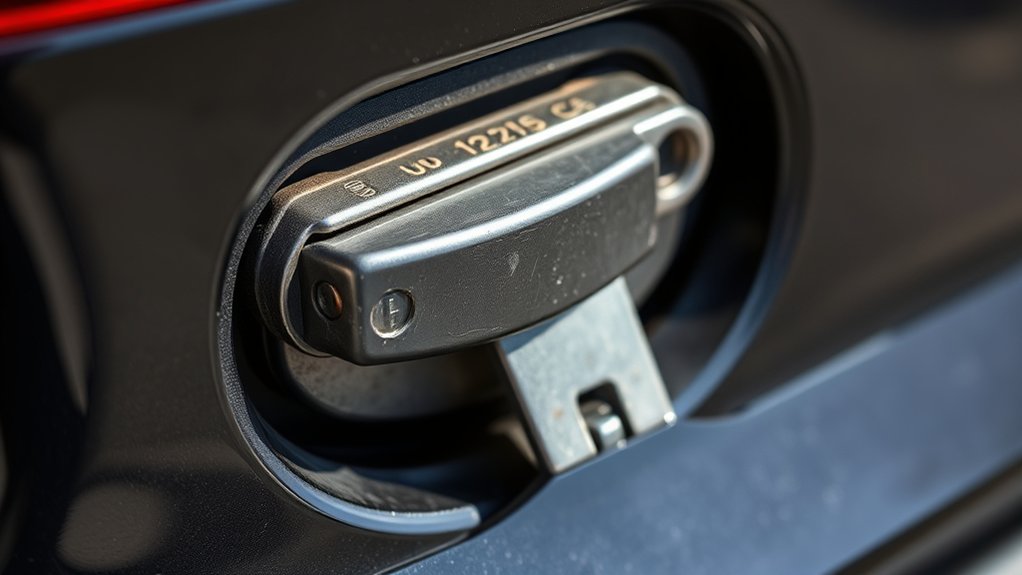
Why does your Honda Passport’s fuel door latch jam, and what precise steps can you take to fix it? Typically, dirt buildup, faulty springs, or misaligned components cause the issue, not some unrelated topic or random idea. Here’s a clear, technical approach:
| Step | Action |
|---|---|
| 1. Inspect | Check latch and surrounding for debris. |
| 2. Clean | Use a lubricant spray to free stuck parts. |
| 3. Adjust & Test | Realign latch if needed; test operation. |
Start by removing any grime obstructing the latch. Apply a penetrating lubricant to dissolve corrosion. If the latch misaligns, carefully reposition it for smooth engagement.
Avoid distractions by unrelated topics or random ideas. Focus strictly on mechanical function. Following these precise steps ensures your fuel door latch operates reliably without needing complex interventions.
Knowing When to Replace Your Honda Passport Fuel Door Latch
When should you consider replacing your Honda Passport fuel door latch instead of repairing it? Opt for replacement if the latch shows severe wear, corrosion, or mechanical failure that compromises its function. Persistent malfunctioning after multiple repair projects signals that replacement is necessary to maintain proper sealing, which directly affects fuel efficiency.
Look for these signs indicating replacement is due:
- Inability to securely lock the fuel door, risking fuel vapor leaks
- Mechanical damage preventing latch engagement or release
- Rust or corrosion that impairs latch movement or structural integrity
Replacing a compromised latch ensures the fuel door remains airtight, preventing fuel evaporation and preserving your vehicle’s fuel efficiency. Timely replacement also prevents further damage to adjacent components, optimizing your Honda Passport’s overall performance.
Tools and Parts Needed to Repair Your Honda Passport Fuel Door Latch
To repair your Honda Passport fuel door latch, you’ll need specific tools such as a Phillips screwdriver, needle-nose pliers, and a trim removal tool. Make sure to have the correct replacement latch assembly and any necessary fasteners on hand.
Don’t forget safety gear like gloves and eye protection to prevent injury during the repair.
Essential Repair Tools
Which tools and parts are essential for repairing your Honda Passport fuel door latch? To access and service the latch mechanism effectively, you’ll need precise tools that allow you to work within tight spaces near the fuel system and engine bay.
Essential tools include:
- A flathead screwdriver for gently prying open panels without damaging clips.
- A socket wrench set to remove bolts securing the fuel door assembly.
- Needle-nose pliers for manipulating small components and springs within the latch.
These tools ensure you can carefully dismantle and reassemble the fuel door latch without compromising the integrity of the fuel system or adjacent engine bay components. Proper tool selection minimizes the risk of damage and facilitates efficient repair, keeping your Honda Passport’s fuel door functioning smoothly.
Replacement Parts Overview
How do you ensure a successful repair of your Honda Passport fuel door latch? Start by sourcing high-quality replacement parts designed specifically for your model.
You’ll need a new fuel door latch assembly, which integrates with the fuel system and supports emission controls by ensuring a proper seal. Avoid generic components; OEM parts guarantee compatibility and durability.
Additionally, inspect related hardware like the latch spring, hinges, and mounting screws. They often require replacement to maintain function. Don’t forget components such as the cable and actuator if your model uses them.
Having the correct parts ensures the fuel door closes tightly, preventing fuel vapor leaks that could compromise emission controls. Prepare all necessary tools before beginning to avoid interruptions.
Precision in part selection directly affects the longevity and reliability of your fuel system.
Safety Equipment Needed
When preparing to repair your Honda Passport fuel door latch, what specific tools and safety equipment will you need to ensure a smooth and secure process? First, prioritize personal protection and readiness. Equip yourself with a safety harness if working in elevated or awkward positions to prevent falls. Always have an emergency kit nearby for any unexpected injuries.
Essential tools include:
- Precision screwdrivers for removing and installing small latch components
- A panel removal tool to avoid damaging the fuel door trim
- Needle-nose pliers for manipulating springs and clips
Using these tools carefully minimizes damage and ensures proper latch alignment. Don’t overlook the safety harness and emergency kit; they’re critical for protecting yourself during the repair. Proper preparation reduces risk and enhances efficiency throughout the process.
How to Prevent Fuel Door Latch Issues With Regular Maintenance
Why does regular maintenance matter for your Honda Passport’s fuel door latch? Proper upkeep ensures that the latch mechanism operates smoothly, preventing fuel contamination and potential leaks that could compromise fuel efficiency.
Begin by incorporating fuel door inspection into your maintenance scheduling, ideally every oil change or 5,000 miles. Clean the latch and surrounding components with a mild solvent to remove debris and prevent corrosion.
Incorporate fuel door inspections every 5,000 miles, cleaning with mild solvent to prevent debris buildup and corrosion.
Lubricate moving parts using a silicone-based lubricant to maintain seamless engagement. Check the alignment and tension of the latch cable to avoid misfires or sticking.
Address any unusual resistance or looseness promptly, as these can lead to fuel vapor loss or fuel door failure. Following these steps helps maintain optimal functionality, supports fuel efficiency, and extends the lifespan of your fuel door latch system.
Key Differences Between Honda Passport Fuel Door Latch Models and Years
Maintaining your Honda Passport’s fuel door latch requires understanding the variations across different models and production years. These differences impact latch maintenance techniques and replacement compatibility.
For instance, earlier models (pre-2019) often feature a mechanical latch system, while newer models incorporate electronic locking mechanisms integrated with the vehicle’s central locking system. Additionally, materials used in the latch assembly have evolved, affecting durability and maintenance frequency.
Key differences include:
- Mechanical vs. electronic latch types requiring distinct troubleshooting approaches
- Variations in latch mounting points and fuel door design across model years
- Material upgrades influencing wear resistance and maintenance intervals
Knowing these distinctions helps you perform precise latch maintenance and ensures you use compatible parts, preserving your Passport’s fuel door functionality.
Where to Find Reliable Honda Passport Fuel Door Latch Replacement Parts
Where can you source reliable replacement parts for your Honda Passport’s fuel door latch to ensure compatibility and durability? Start by consulting manufacturer-authorized dealers who provide OEM parts designed specifically for your model year. These sources address new owner FAQs, ensuring proper fit for common and uncommon fuel doors alike.
Additionally, specialized online retailers and certified auto part distributors offer genuine or high-quality aftermarket options, often with detailed product specifications to confirm compatibility. Avoid generic parts that may not meet Honda’s standards.
For uncommon fuel doors, verify part numbers against your vehicle’s VIN to prevent errors. Thorough research and selecting verified suppliers reduce installation issues and extend latch lifespan, maintaining your Passport’s fuel system integrity.
Frequently Asked Questions
Can a Faulty Fuel Door Latch Affect My Honda Passport’s Fuel Efficiency?
A faulty fuel door latch can indirectly affect your Honda Passport’s fuel economy by compromising the seal, leading to vapor leaks.
Understanding latch mechanics helps you maintain proper sealing, ensuring prime fuel system efficiency and preventing fuel loss.
Is It Safe to Drive With a Broken Fuel Door Latch?
You shouldn’t drive with a broken fuel door latch. It’s like leaving a gateway ajar, risking fuel evaporation and irreversible ignition hazards.
This flaw can interfere with wireless charging systems, compromising safety and vehicle efficiency. Fix it promptly.
Does the Fuel Door Latch Issue Impact the Vehicle’s Warranty?
No, the fuel door latch issue typically doesn’t impact your vehicle’s warranty, as it’s considered an irrelevant subtopic and unrelated concern to major powertrain or safety components covered under standard Honda warranties.
Are Fuel Door Latches Covered by Honda’s Extended Service Plans?
Honda’s extended service plans typically include fuel door latch coverage, protecting you from repair costs due to mechanical failure.
Check your specific plan details, as coverage may vary based on the plan’s terms and vehicle age.
Can Extreme Weather Cause the Fuel Door Latch to Malfunction?
Yes, extreme weather can cause your fuel door latch to malfunction by freezing components, causing corrosion, or warping plastic parts. Regular maintenance and lubrication help prevent these issues, ensuring smooth fuel door operation in harsh conditions.
Conclusion
Now that you understand how your Honda Passport’s fuel door latch clicks and clicks back into place, you’re equipped to spot signs of wear before they jam your fuel stop. Picture the smooth release of the latch, a simple press freeing your fuel door like clockwork.
With precise maintenance and timely fixes, you’ll keep that mechanism humming, avoiding sticky springs or misaligned catches. Stay proactive, and your fuel door will open flawlessly every time.
By paying close attention to how the Honda Passport fuel door latch operates, you ensure reliable performance and prevent frustrating issues down the road.