Imagine driving through a sudden rainstorm where roads quickly become slick and unpredictable—your vehicle’s grip can make all the difference. If you’re considering a Honda CR-V all wheel drive option, you might wonder whether it offers AWD to handle such conditions effectively.
Understanding which CR-V models come with all wheel drive, how it impacts performance and fuel economy, and if it suits your driving needs can help you make an informed choice about your next vehicle.
Key Takeaways
- The Honda CR-V offers both front-wheel drive (FWD) and all-wheel drive (AWD) options across multiple trims.
- AWD is commonly available on mid to upper trims like EX, EX-L, and Touring in recent models.
- AWD improves traction and stability by distributing power to all four wheels automatically.
- Choosing AWD is ideal for driving in snowy, rainy, or rough terrain conditions.
- AWD slightly reduces fuel efficiency and requires additional maintenance compared to FWD.
Is the Honda CR-V All-Wheel Drive?
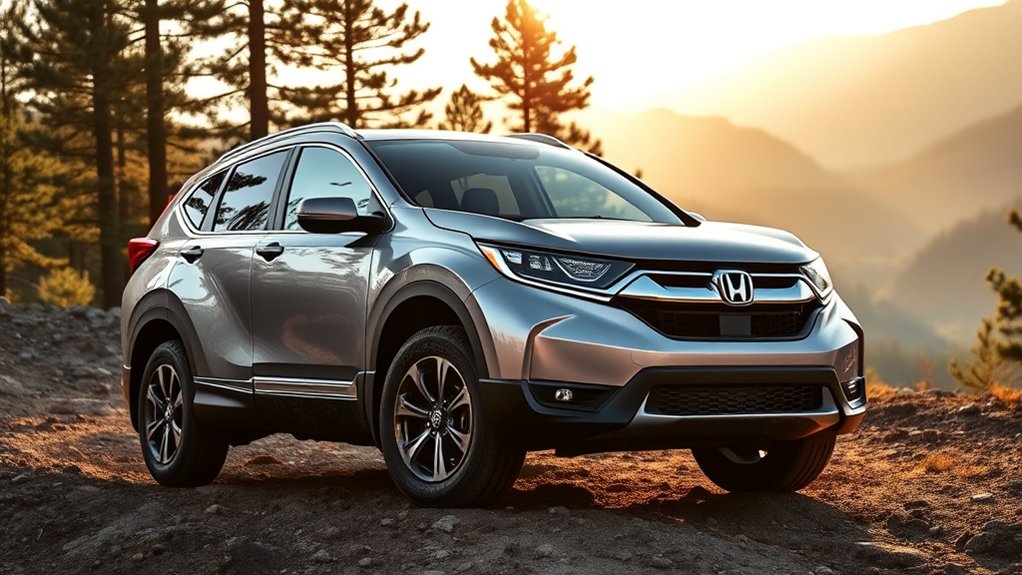
How does the Honda CR-V handle different driving conditions? The Honda CR-V offers both front-wheel drive (FWD) and all-wheel drive (AWD) options, providing versatility for various terrains. When considering new vs used models, you’ll find AWD is often available across several trims, enhancing traction in slippery or uneven conditions.
Choosing AWD can improve stability, but it may affect fuel economy slightly compared to FWD. Additionally, the availability of AWD does not limit your choices in color options. You can select your preferred shade regardless of drivetrain.
Whether you opt for a new or used CR-V, understanding the drivetrain helps you match the vehicle to your driving needs without sacrificing aesthetic preferences or overall functionality.
Which Honda CR-V Models Offer AWD?
Which Honda CR-V models come equipped with all-wheel drive depends largely on the trim level and model year. Typically, AWD is available as an option or standard on mid to upper trims, such as EX, EX-L, and Touring, across recent model years.
When selecting an AWD CR-V, consider that it retains the same cargo space as its front-wheel-drive counterparts, ensuring you don’t sacrifice storage capacity. Additionally, if you switch to summer tires, be mindful that AWD can help maintain traction during varying road conditions, but tire choice still impacts performance.
How Does AWD Affect CR-V Performance and Safety?
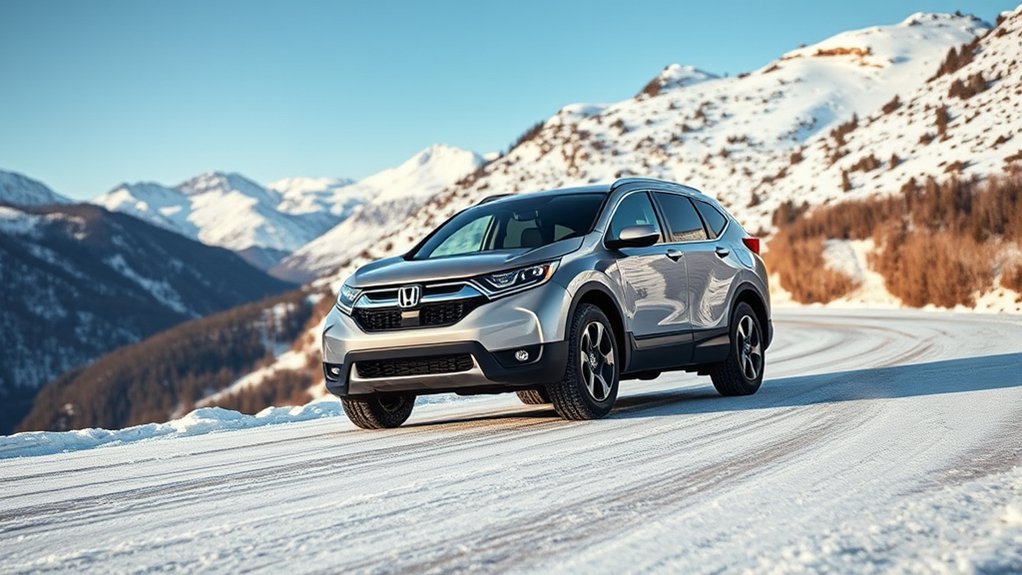
Why choose all-wheel drive for your Honda CR-V? AWD improves traction by distributing power to all four wheels, enhancing stability on slippery or uneven surfaces. This dynamic power delivery helps you maintain control during acceleration, cornering, and braking, directly impacting performance and safety.
Unlike a random topic or irrelevant concept, AWD is specifically designed to optimize grip, reducing the risk of skidding or loss of control in adverse conditions. Additionally, AWD systems respond automatically to changing road conditions, requiring no driver intervention.
While AWD can slightly increase fuel consumption due to added drivetrain components, the trade-off offers superior handling and confidence, especially in rain, snow, or gravel. Understanding these benefits helps you appreciate how AWD elevates your CR-V’s overall driving dynamics and safety profile.
When Should You Choose AWD Over FWD?
You should consider AWD if you frequently drive in challenging weather conditions like snow or heavy rain, as it provides better traction. AWD also performs well on rough or uneven terrain, improving stability and control.
However, keep in mind that FWD typically offers better fuel efficiency, so weigh your driving needs carefully.
Weather Conditions Impact
How do weather conditions influence your choice between AWD and FWD in a Honda CR-V? When deciding, consider how different weather impacts traction and control. AWD systems offer enhanced grip on slippery surfaces, which can be likened to the texture contrast in fabric design, where varied surfaces create stability.
Similarly, in driving, AWD adapts to changing conditions, much like how color palettes shift in design to suit moods.
Here are four key weather factors to guide your choice:
- Snow and ice: AWD provides better stability and control.
- Heavy rain: AWD reduces hydroplaning risk.
- Dry conditions: FWD is usually sufficient and more fuel-efficient.
- Mixed weather: AWD offers versatility without sacrificing performance.
Matching your drive system to conditions enhances safety and confidence.
Terrain Challenges Consideration
When maneuvering rough or uneven terrain, which drivetrain suits your Honda CR-V best depends on the specific challenges you face. If you frequently encounter loose gravel, mud, or steep inclines, choosing AWD enhances terrain adaptability by distributing power to all four wheels, improving grip and control.
AWD systems actively engage traction control to prevent wheel slip, maintaining stability on unpredictable surfaces. Conversely, if your driving mainly involves paved roads with occasional light off-roading, FWD can suffice, offering simpler mechanics and adequate traction.
However, for consistent exposure to challenging terrain, AWD provides superior performance by adjusting torque dynamically, reducing the risk of getting stuck or losing control. Understanding these factors helps you select the drivetrain that matches your terrain demands effectively.
Fuel Efficiency Comparison
Why does fuel efficiency differ between AWD and FWD in the Honda CR-V? The AWD system adds weight and complexity, which impacts fuel consumption. When deciding between AWD and FWD, consider these technical factors:
- AWD’s added drivetrain components increase mechanical drag, reducing miles per gallon (mpg).
- FWD’s lighter setup benefits from less rotational mass, improving fuel economy.
- Marketing strategy often highlights AWD’s capability over fuel savings, influencing buyer perception.
- Aesthetic design tweaks for AWD models may add slight aerodynamic drag, marginally affecting efficiency.
You should choose AWD if you regularly face slippery or rough terrain where traction is crucial. If fuel efficiency is your priority and you drive mostly on paved roads, FWD offers better mileage without compromising the CR-V’s core functionality.
How Does AWD Impact Fuel Economy and Maintenance?
In what ways does all-wheel drive (AWD) influence your Honda CR-V’s fuel efficiency and maintenance requirements? AWD systems add mechanical complexity, which typically reduces fuel efficiency due to increased drivetrain resistance and weight. You may notice a slight drop in miles per gallon compared to front-wheel-drive models.
Additionally, AWD components can generate more drivetrain noise, especially during low-speed maneuvers or uneven terrain.
Regarding maintenance cost, AWD demands more frequent inspections and servicing of additional parts like the transfer case, differentials, and extra drive shafts. These components require fluid changes and can lead to higher repair expenses over time.
While AWD enhances traction and stability, you should factor in these fuel economy impacts and increased maintenance cost when evaluating your Honda CR-V’s drivetrain options.
Is AWD Right for Your Honda CR-V?
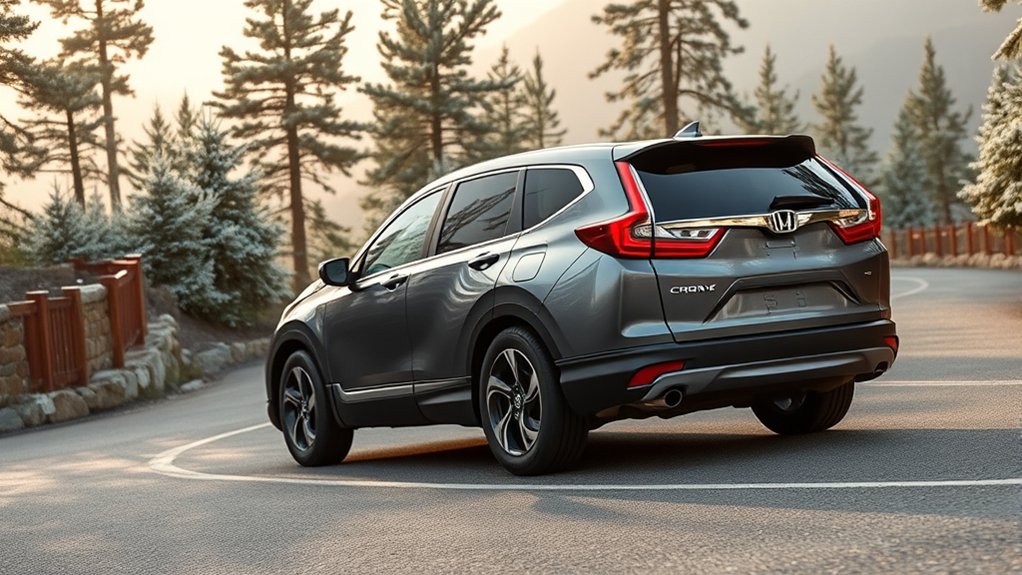
How do you determine if AWD suits your Honda CR-V? Start by assessing your driving environment and needs. AWD improves traction on slippery roads but doesn’t boost horsepower, debunking common horsepower myths.
Assess your driving needs—AWD enhances traction on slippery roads but doesn’t increase horsepower.
Consider these factors:
- Road Conditions: Frequent rain, snow, or off-road driving favors AWD.
- Fuel Efficiency: AWD models typically consume more fuel; weigh this against benefits.
- Car Maintenance: AWD systems add complexity, potentially increasing maintenance costs.
- Performance Needs: If you prioritize handling over raw power, AWD is beneficial.
Frequently Asked Questions
How Much Does AWD Add to the Honda Cr-V’s Purchase Price?
You’ll pay about $1,500 to $2,000 more for AWD on a Honda CR-V. This addition slightly impacts fuel economy and may increase maintenance costs, but it improves traction and handling in various driving conditions.
Can AWD Be Added Later to a CR-V That Originally Has FWD?
You can’t feasibly add AWD later to a CR-V originally equipped with FWD. Aftermarket conversions are complex, costly, and unreliable due to drivetrain integration challenges.
It’s better to choose a factory AWD model from the start.
Does AWD Affect Honda Cr-V’s Resale Value?
You’ll find that AWD Honda CR-Vs can boost resale dynamics by up to 10% due to enhanced safety perceptions, especially in regions with harsh weather. This technical advantage often attracts buyers prioritizing stability and control.
Are There Different AWD Systems Used in Various CR-V Model Years?
Yes, you’ll find different AWD systems across CR-V model years, each affecting front wheel drive and all wheel drive differences. Newer models use more advanced AWD tech, improving traction and efficiency compared to older versions.
How Does AWD Impact Tire Wear on the Honda CR-V?
You might notice your Honda CR-V’s tires aging gracefully but unevenly due to AWD’s torque distribution. Regular tire rotation helps even out wear patterns, extending tire life and maintaining balanced handling on various surfaces.
Conclusion
Choosing AWD for your Honda CR-V is like adding traction control to slippery roads—it enhances stability, handling, and safety in challenging conditions. You’ll find AWD available on several trims, offering better performance on wet or uneven surfaces. While it may slightly reduce fuel economy and increase maintenance, AWD is a practical choice if you often face poor weather or rough terrain.
Consider your driving needs carefully to decide if AWD fits your lifestyle. If you prioritize improved control and safety in diverse conditions, then Honda CR-V all wheel drive is definitely worth considering.