You want to know where the Honda Passport is made, how it’s built, and why location matters. The Honda Passport is assembled entirely at Honda’s Alabama plant, a site chosen for its strategic advantages and skilled workforce.
But there’s more to the story—local suppliers, production techniques, and regional factors all shape the final product. Understanding these elements reveals why this plant is vital to the Passport’s success. The collaboration with nearby suppliers ensures high-quality parts and supports the local economy.
Production methods at the Alabama facility focus on efficiency and precision, contributing to the Passport’s reliability. Regional factors, such as logistics and workforce expertise, further enhance the manufacturing process, making the Alabama plant central to the Honda Passport’s quality and reputation.
Key Takeaways
- The Honda Passport is manufactured at Honda’s facility in Lincoln, Alabama.
- The Alabama plant handles the entire assembly process, including key component installation like door hinges.
- The facility features a sophisticated multi-layer paint process in controlled environments.
- Proximity to suppliers and major markets in Alabama improves production efficiency and delivery speed.
- Local labor expertise and stable workforce conditions support consistent manufacturing quality and output.
Where Is the Honda Passport Made Today?
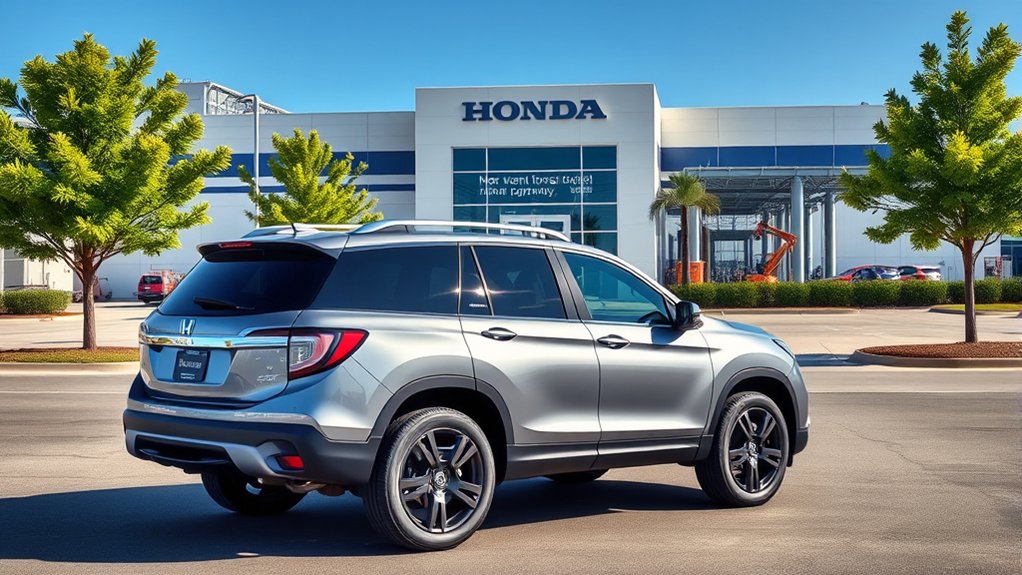
Where is the Honda Passport made today? The current Honda Passport is manufactured at Honda’s facility in Lincoln, Alabama. This plant handles the entire assembly process, including installing key components like the door hinge, which must meet strict quality standards to ensure durability and smooth operation.
After the body assembly, the vehicle undergoes a sophisticated paint process designed to provide a flawless finish and protect against corrosion. The paint process incorporates multiple layers, including a primer and clear coat, applied in controlled environments to maintain consistency.
Why Honda Chooses These Manufacturing Plants
You’ll find Honda selects its manufacturing plants based on strategic location benefits that streamline distribution and reduce costs. These plants also offer a skilled workforce trained to meet Honda’s quality standards.
Plus, Honda invests in advanced manufacturing technology to enhance efficiency and maintain consistent production.
Strategic Location Benefits
Why does Honda select specific manufacturing plants for the Passport? You’ll find that Honda’s choices hinge on strategic location benefits closely tied to world economics and labor stability. By situating plants in economically advantageous regions, Honda minimizes logistics costs and optimizes supply chain efficiency.
These locations often offer proximity to key suppliers and major markets, reducing transportation time and expenses. Additionally, Honda carefully evaluates the risk of labor disputes; choosing sites with stable labor relations helps avoid costly production interruptions.
This strategic approach ensures Honda maintains competitive pricing and reliable output. So, when you consider where the Passport is made, understand that Honda’s plant locations aren’t random. They’re deliberate decisions balancing global economic trends and labor harmony to sustain consistent manufacturing performance.
Skilled Workforce Availability
How does Honda guarantee high-quality production at its Passport manufacturing plants? It’s all about skilled workforce availability. Honda strategically locates its plants where labor economics favor access to experienced workers trained in automotive manufacturing.
These regions often have educational institutions and training programs that bridge innovation gaps, ensuring employees stay updated with industry advancements. By investing in workforce development, Honda minimizes errors and enhances efficiency.
This focus on human capital allows the company to maintain consistent quality standards and adapt to evolving production demands. When you consider why Honda chooses specific plants, you see that a skilled, well-supported workforce is crucial.
It’s not just about machines; it’s about people who combine expertise and innovation to drive the Passport’s superior build quality.
Advanced Manufacturing Technology
Where does Honda find the cutting-edge technology that sets its Passport manufacturing plants apart? Honda strategically invests in advanced manufacturing technology to ensure efficiency and quality.
Their plants embrace automation trends, integrating robotics and AI-driven systems that enhance precision and speed. You’ll notice that Honda applies dual sourcing to mitigate supply chain risks, sourcing critical components from multiple suppliers to maintain steady production.
This approach not only boosts reliability but also allows flexibility in responding to market demands. By choosing plants equipped with these technologies, Honda guarantees consistent vehicle quality while optimizing costs.
When you look at Honda’s manufacturing decisions, it’s clear they prioritize facilities that combine innovative automation with robust supply strategies, ensuring the Passport is built with cutting-edge efficiency and resilience.
How Factory Locations Affect Honda Passport Quality
You’ll find that the location of a Honda Passport factory directly impacts the vehicle’s quality through strict adherence to production standards. Each plant follows consistent quality control measures to ensure every Passport meets Honda’s specifications.
Understanding these factors helps explain why factory location matters for the final product you drive.
Factory Location Impact
Why does the factory location matter when it comes to the quality of the Honda Passport? The answer lies in how factory economics and labor relations directly influence production outcomes. When you consider factory economics, factors like local costs for materials, energy, and transportation shape how efficiently a plant can operate.
Efficient economics often translate to better resource allocation, ensuring higher quality components. Labor relations also play a crucial role. You’ll find that strong collaboration between management and workers fosters a motivated workforce, reducing errors and improving craftsmanship.
Conversely, strained labor relations can cause disruptions that affect quality. So, where the Passport is built isn’t just about geography; it reflects economic conditions and workforce dynamics that shape the overall quality you experience in the finished vehicle.
Production Standards Consistency
How do different factory locations maintain consistent production standards for the Honda Passport? They achieve this through standardized manufacturing protocols and rigorous training programs that ensure every plant operates with the same level of precision.
By focusing on production efficiency, Honda minimizes variations between facilities, streamlining assembly processes to meet exact specifications. Supplier diversification also plays a key role; sourcing components from multiple trusted suppliers reduces dependency risks and guarantees uniform quality across all parts.
This approach allows each factory to uphold Honda’s global quality benchmarks regardless of location. When you consider these factors, you see how Honda’s strategic coordination across its manufacturing network keeps the Passport’s build quality consistent, providing you with a reliable vehicle no matter where it’s assembled.
Quality Control Measures
Where do factory locations make the biggest impact on the quality of the Honda Passport? The answer lies in how each facility manages quality control measures. You’ll find that geographic factors can influence the consistency and reliability of the final product.
Some locations face challenges such as production delays or labor disputes, which can disrupt workflows and affect quality. However, Honda implements strict protocols to minimize these issues.
Key factors include:
- Rigorous inspection processes at every production stage
- Training programs tailored to local workforce skills
- Swift response systems to address production delays or labor disputes
What Materials and Parts Does Honda Source Locally?
Which parts of the Honda Passport come from local sources? Honda relies heavily on local sourcing to support regional economies and reduce shipping costs. Many key components, such as engine parts and seating materials, are procured from suppliers within the manufacturing region.
This local sourcing complements Honda’s global supply chain, ensuring quality and timely delivery while maintaining cost efficiency. You’ll find that while some specialized electronics and advanced materials come from global suppliers, a significant portion of the vehicle’s parts originates nearby.
| Component | Source Location | Supplier Type |
|---|---|---|
| Engine parts | Regional factories | Automotive OEMs |
| Seating materials | Local textile mills | Textile manufacturers |
| Tires | Domestic plants | Tire manufacturers |
| Exhaust systems | Nearby metalworks | Metal fabricators |
| Batteries | Regional suppliers | Battery producers |
How Manufacturing Location Influences Passport Availability
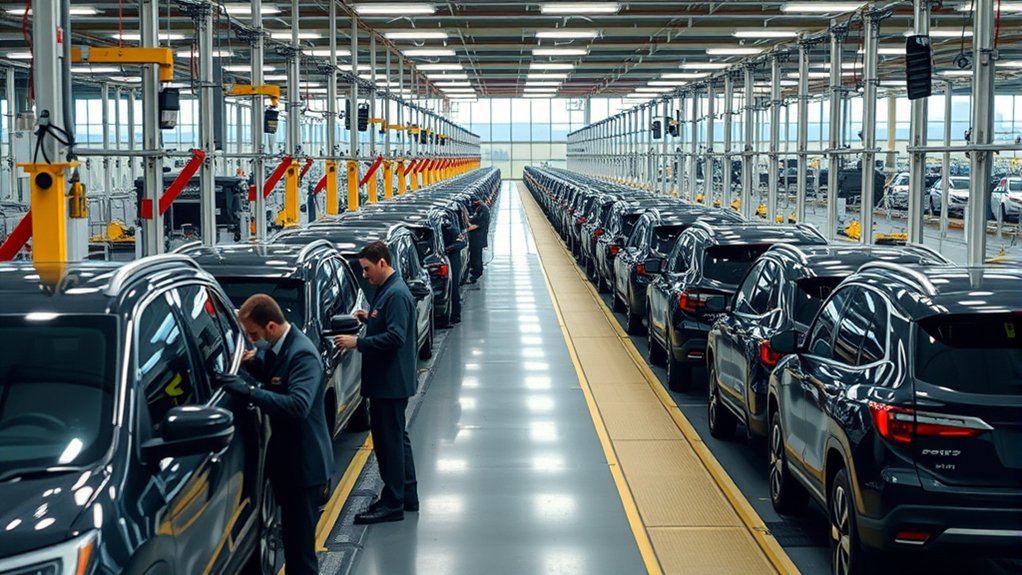
Yes, manufacturing location plays a crucial role. When production shifts happen between plants, it can impact how quickly vehicles reach dealerships near you. Labor costs at the manufacturing site also influence production volume and scheduling, affecting supply levels.
Manufacturing location impacts vehicle delivery speed and production capacity due to labor costs and plant shifts.
Several factors tied to manufacturing location influence Passport availability:
- Proximity to major markets reduces shipping time and costs, speeding up delivery.
- Local labor costs determine production capacity and flexibility during demand changes.
- Regional production shifts may temporarily limit the number of units allocated to certain areas.
Understanding these elements helps explain why availability can vary depending on where the Passport is made.
Comparing Honda Passport Production by Plant Location
How do different Honda manufacturing plants impact the production of the Passport? Each plant’s location affects production logistics and the efficiency of supplier networks.
For example, the Alabama plant benefits from proximity to key suppliers, reducing transportation time and costs, which enhances workflow and output consistency. In contrast, plants farther from major supplier hubs might face more complex logistics, potentially affecting delivery schedules.
You’ll find that production volumes can vary by plant, influenced by local workforce expertise and automation levels. These differences directly affect how quickly Passport models reach dealerships.
The History of Honda Passport Manufacturing Sites
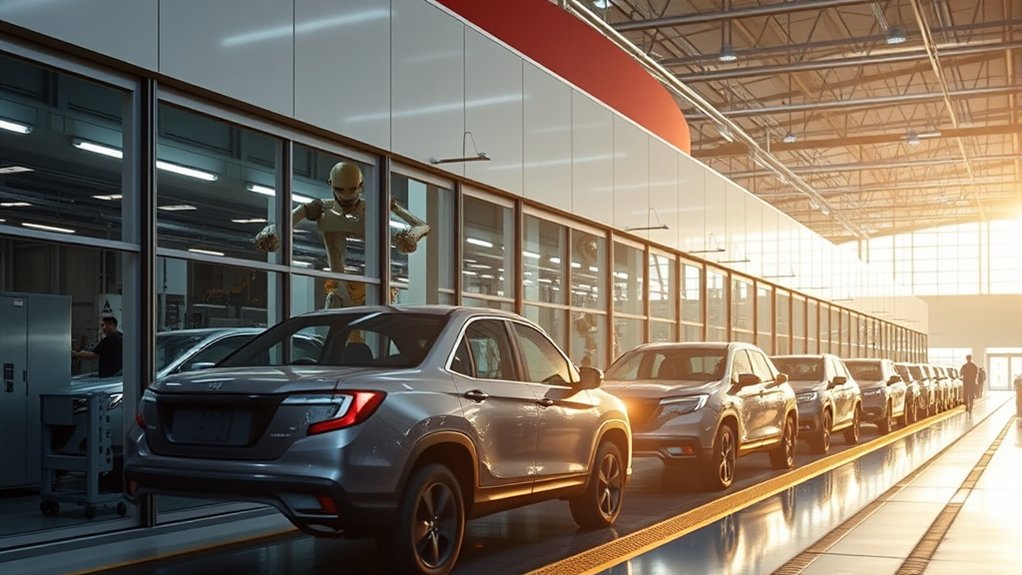
Although the Honda Passport is a relatively recent addition to Honda’s SUV lineup, its manufacturing history reflects strategic shifts in production locations to meet evolving market demands. You’ll notice that Honda’s decisions often balance production costs with customer preferences across regions.
Initially, Passport production began in plants optimized for compact SUVs, but rising market demand for midsize SUVs led to adjustments.
Passport production started in compact SUV plants, evolving as midsize SUV demand increased.
Key points in its manufacturing history include:
- Early production focused on minimizing costs by utilizing existing facilities.
- Expansion to North American plants to better serve local demand and reduce logistics.
- Recent shifts emphasize flexibility to adapt to fluctuating market demand and control production costs efficiently.
What’s Next for Honda Passport Production?
Where will Honda take Passport production in the coming years? You can expect Honda to focus on strengthening its global branding by refining the Passport’s design and technology to appeal to diverse markets.
The company will likely enhance its export strategy, optimizing production sites to meet increasing demand worldwide while maintaining quality standards. You’ll see Honda possibly expanding manufacturing beyond current locations to reduce logistical costs and respond faster to regional market trends.
Additionally, Honda could integrate more sustainable practices and advanced manufacturing technologies to improve efficiency. By aligning Passport production with global market shifts, Honda aims to keep this model competitive and relevant, ensuring you benefit from a vehicle that meets both your expectations and evolving international standards.
Frequently Asked Questions
What Are the Key Features of the Honda Passport?
You’ll appreciate the Honda Passport design’s spacious interior and advanced tech. It offers excellent off-road performance with intelligent traction management, robust V6 power, and durable suspension, ensuring confident handling on and off the pavement.
How Does the Honda Passport Compare to Other SUVS?
You’ll find the Honda Passport offers strong performance and spacious comfort compared to other SUVs. While made in specific countries, its features and reliability often stand out in country comparisons, even if some details remain N/A.
What Is the Fuel Efficiency of the Honda Passport?
You might find the Honda Passport’s fuel economy pleasantly reasonable, offering around 20 mpg city and 25 mpg highway mileage. It balances power with efficiency, making it a smart choice for both daily drives and longer trips.
What Safety Ratings Does the Honda Passport Have?
You’ll find the Honda Passport has excellent safety ratings from both IIHS and NHTSA, ensuring top protection.
Plus, its low maintenance costs mean you can keep it safe and reliable without breaking the bank.
What Are Common Maintenance Costs for the Honda Passport?
It’s no coincidence that your Honda Passport’s maintenance costs stay reasonable, matching its overall low ownership costs. Regular oil changes, brake checks, and tire rotations keep it running smoothly without surprising expenses.
Conclusion
You might be amazed to learn that the Honda Passport’s entire assembly happens right in Lincoln, Alabama, where precision meets efficiency like nowhere else. This plant isn’t just a factory—it’s a powerhouse driving quality, speed, and reliability straight to your driveway.
Thanks to its strategic location and skilled local teams, the Passport’s production is finely tuned to meet your demand. Knowing this, you can appreciate the incredible effort behind every Passport on the road today.
In conclusion, understanding where the Honda Passport is made adds a new level of appreciation for this vehicle’s craftsmanship and performance.