You might assume that a small bike like the Honda Grom is automatically street legal, yet the reality depends on several specific requirements.
To legally ride a Grom on public roads, you’ll need to meet safety, registration, and licensing standards that vary by state.
Understanding these nuances is essential, especially when modifications come into play.
There’s more to contemplate before you take it out on the street.
Key Takeaways
- Stock Honda Groms meet most state requirements for street use, including lighting and emissions compliance.
- Street legality depends on local laws; verify with your state DMV before riding.
- Essential equipment includes functioning headlights, taillights, turn signals, mirrors, and a horn.
- Registration, insurance, and a valid motorcycle license or endorsement are typically required.
- Aftermarket modifications like exhaust or lighting can affect legality and may violate noise or emissions rules.
Is the Honda Grom Street Legal? What You Need to Know
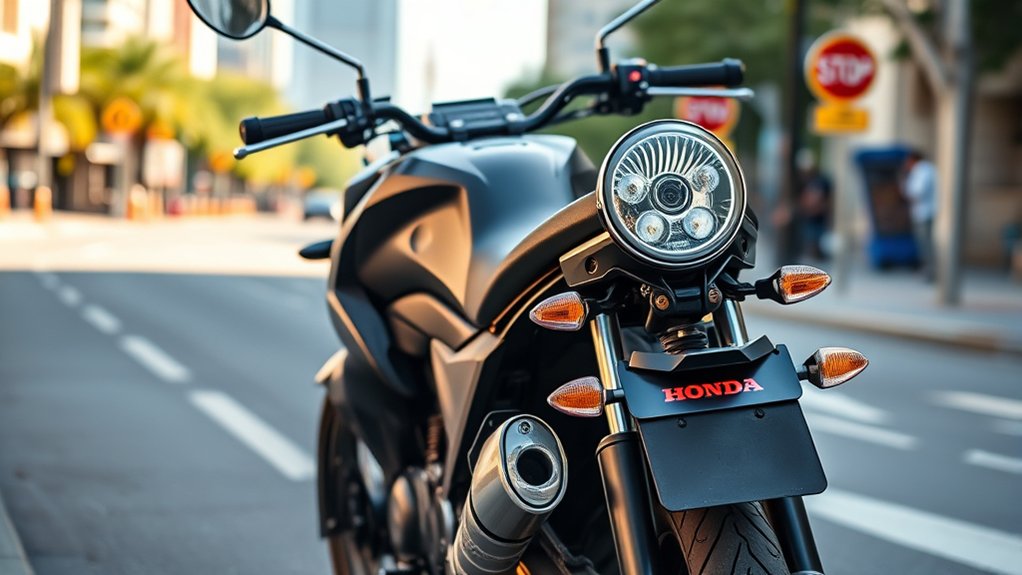
Wondering if the Honda Grom is street legal? You’ll be glad to know that the stock Grom meets most state requirements, making it street legal in many areas. Its compliance with safety standards, including lighting and emissions, reflects the integration of new technology designed to meet evolving regulations.
However, legality can vary depending on local laws, so you should verify with your state’s DMV. Social media communities dedicated to Grom enthusiasts often share up-to-date insights and regional legality experiences, helping you navigate any uncertainties.
Modifications, such as aftermarket exhausts or lighting, might affect its legal status, so you need to be cautious. Understanding these factors ensures your Grom stays compliant and safe on public roads.
What ‘Street Legal’ Means for Your Honda Grom
How do you determine if your Honda Grom qualifies as street legal? Essentially, being street legal means your Grom meets all state and local regulations required for on-road use. This includes proper registration, insurance, and compliance with equipment standards.
While exploring topic ideas around your Grom, it’s important to separate those unrelated to street legality concepts, such as customization aesthetics or performance upgrades, which don’t affect legal status. Instead, focus on whether your bike has necessary features like functioning lights and mirrors, a valid license plate, and emissions compliance.
Understanding what ‘street legal’ means helps you avoid fines and ensures safe riding. So, before hitting the road, verify your Grom adheres to these official criteria, not just topic ideas that don’t impact legal authorization.
Which Safety Features Make a Honda Grom Street Legal?
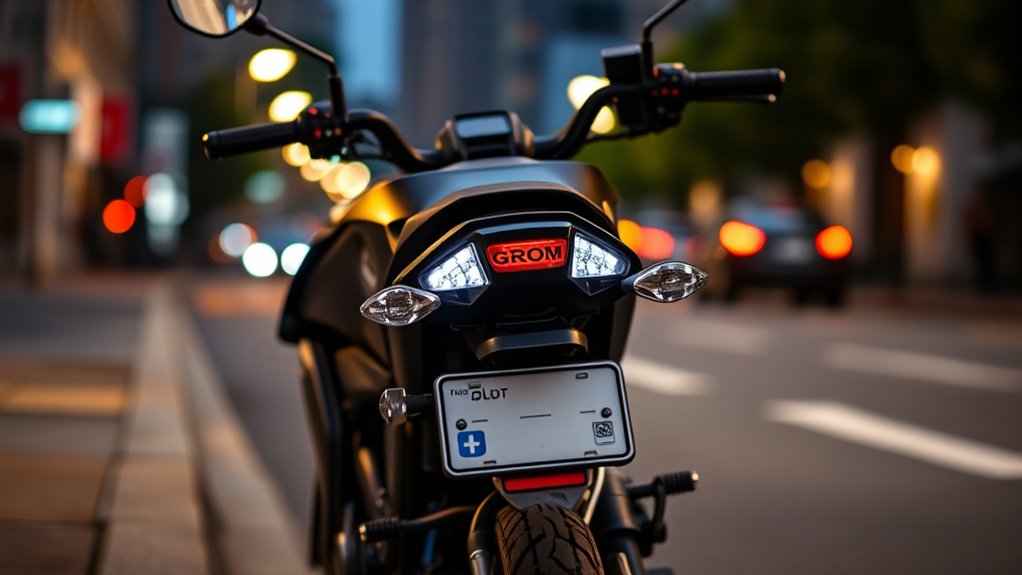
To make your Honda Grom street legal, it must have specific lighting equipment like headlights, taillights, and turn signals that meet safety standards. You’ll also need essential safety components such as mirrors, brakes, and a horn to comply with regulations.
Ensuring your bike meets these requirements helps keep you safe and legal on public roads.
Required Lighting Equipment
What lighting equipment does a Honda Grom need to be street legal? To comply with regulations, your Grom must have a functioning headlight, taillight, brake light, and turn signals. These lights ensure visibility and communication with other drivers, enhancing safety.
While the Grom’s standard lighting is designed with fuel economy in mind, opting for LED bulbs can improve energy efficiency further without sacrificing brightness. If you’re considering a vintage restoration style, be sure any retro modifications still meet current lighting standards.
Properly installed, eco-friendly LED lighting not only supports fuel economy but also keeps your bike street legal. Remember, neglecting required lighting can lead to fines or unsafe riding conditions, so double-check all lights before hitting the road.
Essential Safety Components
Along with proper lighting, your Honda Grom must include several safety components to meet street-legal requirements. Key features include a functional horn, mirrors on both sides, and reliable braking systems.
You’ll want to ensure the front and rear brakes operate smoothly and respond promptly. Additionally, tires play a crucial role; while aftermarket tires can enhance performance, choose ones that meet safety standards and fit your Grom properly.
Regular maintenance tips should include checking tire pressure and tread depth to maintain optimal grip and control. Don’t overlook the importance of secure handlebars and a compliant exhaust system to avoid safety hazards.
Keeping these components in top condition not only ensures legality but also boosts your confidence and safety on the road.
Compliance With Regulations
How do you guarantee your Honda Grom meets all street-legal requirements? You’ll want to ensure it includes specific safety features that comply with local regulations. These features not only keep you safe but also align with standards much like childhood nutrition supports healthy development, and space exploration demands rigorous compliance.
Below is a quick guide to the essential components:
| Safety Feature | Purpose |
|---|---|
| Headlights | Visibility during night rides |
| Turn Signals | Indicate direction changes |
| Rearview Mirrors | Monitor traffic behind you |
| Brake Lights | Alert others when stopping |
Checking off these items helps confirm your Honda Grom stays street legal, ensuring you ride confidently while adhering to the law’s strict requirements.
How Registration and Licensing Work for Honda Grom Riders
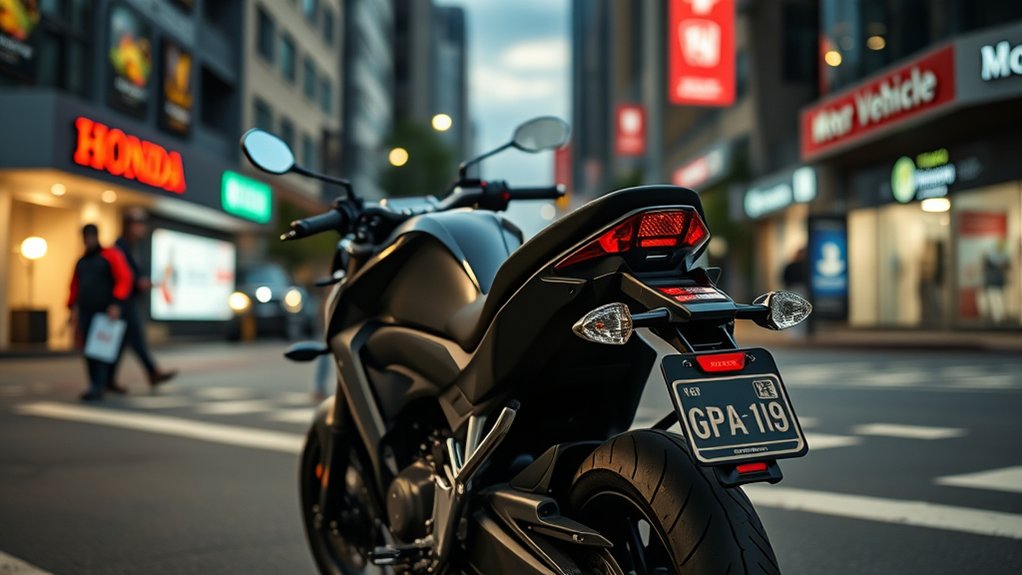
You’ll need to understand the registration requirements for your Honda Grom, which can vary by state. The licensing process usually involves obtaining a motorcycle endorsement or license, but specifics depend on where you live.
It’s important to check your state’s regulations to ensure you meet all legal obligations before hitting the road.
Registration Requirements Overview
What steps do you need to take to make your Honda Grom street legal? First, you must register it with your local Department of Motor Vehicles (DMV) or equivalent agency. This process typically requires providing proof of ownership, such as a bill of sale or title, and ensuring your Grom has all the necessary rideable accessories like mirrors, turn signals, and headlights.
Keep in mind that aftermarket cosmetics, while popular for customization, must not interfere with safety standards or visibility. You’ll also need to pay registration fees and obtain a license plate. Registration confirms your bike meets legal requirements for street use and helps you avoid fines.
Staying informed about your state’s specific requirements ensures your Honda Grom remains compliant and road-ready.
Licensing Process Explained
Once your Honda Grom is registered with the DMV, obtaining the proper license to operate it on public roads becomes the next step. This process ensures you meet legal requirements and enhances safety. Here’s what you need to do:
- Apply for a motorcycle endorsement or license: Depending on your state, you may need to pass a written test and a skills exam.
- Complete a motorcycle safety course: Many states offer or require this, which improves your riding skills and knowledge.
- Provide proof of identity and residency: This often includes your driver’s license, social security number, and proof of address.
- Pay applicable fees: Fees vary but are necessary for official licensing.
Even if riding your Grom feels like an unrelated hobby or unrelated travel, following this process keeps you compliant and safe.
State-Specific Regulations
How do state-specific regulations impact your ability to register and license a Honda Grom? Each state sets unique rules affecting registration fees, required documentation, and licensing prerequisites. Understanding these variations ensures you comply with local biking etiquette and maximize your Grom’s fuel efficiency benefits legally.
| State | Licensing Requirement |
|---|---|
| California | Motorcycle endorsement needed |
| Texas | Moped license may suffice |
| Florida | Full motorcycle license required |
In states like California, you need a motorcycle endorsement due to the Grom’s engine size. Texas may allow a moped license, easing access but limiting road use. Florida requires a full motorcycle license, reflecting stricter regulations.
Checking your state’s DMV guidelines guarantees you meet all legal standards and respect local biking etiquette on the road.
What Lighting and Insurance Rules Apply to Honda Groms?
When considering whether your Honda Grom is street legal, lighting and insurance requirements play an essential role. Proper lighting ensures visibility, while insurance protects you and others on the road. You’ll want to pay attention to these key points:
- Headlights, tail lights, and turn signals must meet DOT standards to be street legal. Modifications to Grom cosmetics or aftermarket exhausts should not interfere with these lights.
- Your Grom needs a functioning brake light activated by the rear brake.
- Insurance coverage is mandatory in most states, typically requiring liability insurance at minimum.
- Keep your registration and insurance documents accessible to avoid legal issues during stops.
Following these rules helps you ride confidently and legally.
How Emissions and Noise Rules Affect Your Honda Grom
You need to ensure your Honda Grom meets local emissions compliance standards to remain street legal. Additionally, noise regulation requirements can affect modifications to your exhaust system or engine.
Understanding these rules helps you avoid fines and keeps your bike running within legal limits.
Emissions Compliance Standards
Why do emissions and noise regulations matter for your Honda Grom? These rules ensure your bike meets environmental standards, minimizing harmful pollutants and maintaining community health. Emissions compliance affects your Grom’s legality and performance.
To stay compliant, consider these factors:
- Engine tuning must align with government emissions limits.
- Use approved alternative fuels to reduce pollutants without voiding warranties.
- Maintain tire design specifications, as improper tires can impact emissions testing outcomes.
- Ensure the exhaust system meets regulatory standards to limit harmful gas output.
Noise Regulation Requirements
How loud is too loud for your Honda Grom? Street regulations set specific noise limits to control urban noise, guaranteeing vehicles don’t disrupt public peace. Your Grom must comply with these standards, which vary by location but typically restrict decibel levels during operation.
Aftermarket exhausts can push noise beyond legal limits, so you’ll need to verify that any modifications meet local requirements. Authorities often use sound meters to measure noise at a set distance, and exceeding limits can result in fines or your bike being deemed unfit for road use.
Staying within noise regulation requirements not only keeps you legal but also respects your community’s comfort. Always check your area’s specific street regulations to ensure your Honda Grom remains compliant and street legal.
Are There Age or Licensing Limits for Riding a Honda Grom?
When considering riding a Honda Grom, age and licensing requirements vary by location but generally play a pivotal role in legal compliance. You must understand these factors to avoid availability constraints linked to licensing categories in your area. Here are key points to consider:
- Minimum age requirements typically range from 14 to 16 years, depending on state or country laws.
- You usually need a motorcycle endorsement or a specific license class, separate from a regular driver’s license.
- Some regions impose graduated licensing systems, requiring you to follow certain safety gear and riding restrictions.
- Learner permits may limit your riding times or passenger carrying ability until you gain full licensure.
Checking local regulations ensures you meet all legal criteria before hitting the road on your Grom.
How Can You Modify Your Honda Grom to Meet Legal Standards?
To ensure your Honda Grom complies with street-legal standards, you need to address specific modifications that align with local traffic laws. Start by installing DOT-approved headlights, taillights, and turn signals, as these are essential for visibility and safety.
Adding a functional horn and mirrors is also required to meet legal criteria. You should equip your Grom with a muffler that meets noise regulations, avoiding aftermarket parts that exceed limits. Registering your bike and displaying a valid license plate are crucial steps.
While tuning your Grom reminds you of precision from hobbyist drone racing, maintaining legal specs is key. Interestingly, the careful planning in tips for urban gardening reflects the attention you must give to these modifications. Each element must fit perfectly within the regulatory framework to ensure your bike is road-ready.
Common Mistakes That Cause Honda Groms to Fail Street Legal Checks
Why do some Honda Groms fail street legal inspections despite owners’ best efforts? Often, it’s due to overlooked details or improper modifications. To avoid common pitfalls, consider these frequent mistakes:
1. Ignoring Grom Radar Requirements
Some regions mandate radar detectors or specific radar signatures; neglecting this can cause failure.
Certain areas require radar detectors or unique radar signatures, and missing these leads to inspection failure.
2. Inadequate Lighting and Reflectors
Insufficient or non-compliant lights and reflectors often lead to rejection.
3. Excessive Bike Camouflage
Overusing bike camouflage to alter appearance may hide required markings or signals, triggering rejection.
4. Faulty Emission Controls
Modifications that compromise the exhaust system or emissions components risk failing environmental standards.
Where Else Can You Legally Ride Your Honda Grom Besides Roads?
Beyond public roads, you can legally ride your Honda Grom in several controlled environments that cater to both recreational and training purposes. Designated off-road parks and private tracks offer safe spaces where you can enjoy your bike without risking illegal streetcraft violations.
These venues are designed to accommodate various skill levels and often have clear rules to ensure safety. Additionally, some training facilities provide courses that help you improve handling while adhering to legal requirements.
Keep in mind, weather patterns can affect these locations’ accessibility and safety, so always check conditions before heading out. Avoid riding in unauthorized areas to prevent fines or legal trouble.
Frequently Asked Questions
What Is the Fuel Efficiency of a Honda Grom?
You’ll enjoy a fuel economy of around 134 miles per gallon with the Honda Grom, thanks to its efficient 125cc engine. Its engine reliability ensures consistent performance, making it an economical choice for daily commuting.
How Much Does a Honda Grom Typically Cost?
You’ll typically pay around $3,500 to $4,000 for a new Honda Grom. While discussing fuel economy and highway speeds, remember these aren’t just numbers. They reflect real-world performance and cost considerations for your budget.
What Are the Maintenance Requirements for a Honda Grom?
You’ll follow the Honda Grom maintenance schedule, including oil changes every 3,000 miles and regular brake checks.
Keep an eye on tire wear, adjusting pressure and replacing tires to ensure safe, smooth riding performance.
Can a Honda Grom Be Used for Commuting in Heavy Traffic?
You’ll find commuting feasibility surprisingly solid with the Honda Grom, especially in heavy traffic. Its compact size and nimble handling let you weave through congestion easily, making traffic handling efficient and less stressful during your daily rides.
What Are the Common Aftermarket Upgrades for Honda Groms?
You’ll often upgrade your Honda Grom with aftermarket exhausts for better sound and performance, plus performance tuners to optimize fuel delivery and ignition timing, enhancing power and throttle response for a more dynamic ride experience.
Conclusion
If you want your Honda Grom to be street legal, you’ll need to ensure it meets all local requirements, including proper registration, insurance, and safety features like DOT-compliant lighting and mirrors.
Did you know that nearly 30% of Grom owners face registration issues due to non-compliant aftermarket parts? Staying informed and following state-specific rules helps you avoid fines and enjoy your ride safely on public roads.
Always check your DMV for exact guidelines. Ensuring your Honda Grom is street legal is key to a hassle-free and enjoyable riding experience.