When it comes to how often to change transmission fluid in your Honda, timing is everything.
You might assume that changing it is a simple routine, but the reality depends heavily on your model, year, and driving conditions.
Ignoring proper intervals can lead to serious issues, yet the ideal schedule isn’t always straightforward.
Understanding the specific recommendations and signs for your vehicle can save you from costly repairs down the line.
Key Takeaways
- Honda generally recommends changing transmission fluid every 60,000 to 100,000 miles depending on model and driving conditions.
- Newer Civics and Accords typically require fluid changes around 60,000 miles, while some CR-Vs may extend to 100,000 miles.
- Inspect fluid color and smell regularly; dark, burnt, or milky fluid signals the need for earlier replacement.
- Heavy city driving, towing, and stop-and-go conditions accelerate fluid degradation, requiring more frequent changes.
- Always follow the owner’s manual guidelines and use Honda-approved transmission fluid for optimal transmission health.
When to Change Your Honda’s Transmission Fluid
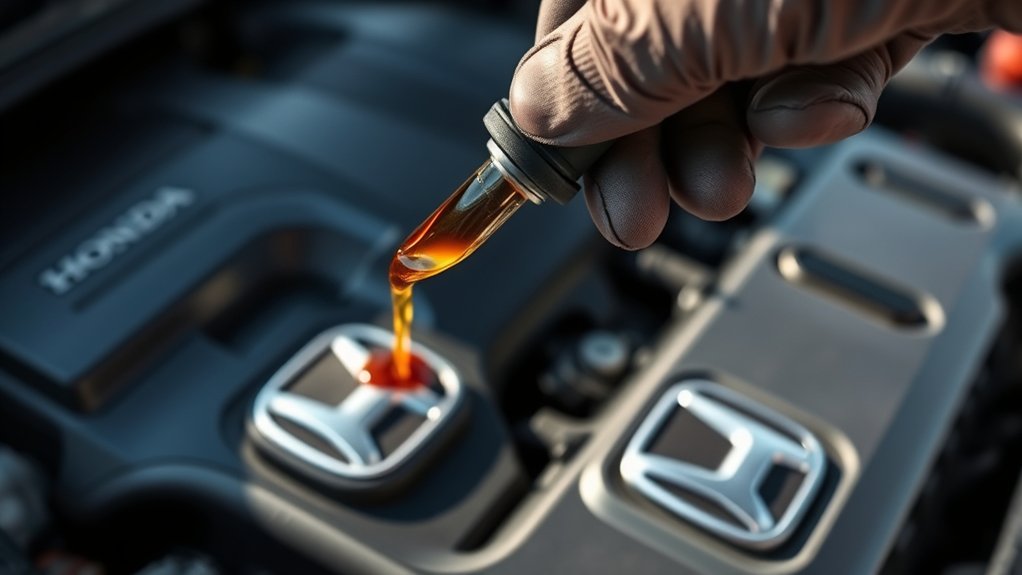
When should you change your Honda’s transmission fluid? You should focus on your vehicle’s specific usage and operating conditions rather than extra features or unrelated topics that often confuse maintenance schedules.
Transmission fluid degrades due to heat and friction, affecting performance and longevity. Change it before you notice slipping or rough shifting to avoid costly repairs.
Transmission fluid breaks down from heat and friction; replace it before slipping or rough shifts occur.
While some Hondas have sealed transmissions claiming “lifetime” fluid, it’s prudent to inspect fluid condition periodically. Look for discoloration or a burnt smell, signaling the need for replacement.
Don’t rely on extra features like transmission temperature sensors alone; these supplement but don’t replace routine fluid maintenance. Staying precise with your fluid changes ensures optimal transmission function and prevents premature wear without getting distracted by unrelated topics or unnecessary add-ons.
Recommended Transmission Fluid Change Intervals for Honda Models
How often should you replace the transmission fluid in your Honda to maintain ideal performance? Honda generally recommends changing the transmission fluid every 60,000 to 100,000 miles, depending on the model and driving conditions.
For example, newer Civics and Accords often have intervals closer to 60,000 miles, while some CR-Vs may extend to 100,000 miles under normal use. It’s crucial to consult your owner’s manual since intervals vary by model year and transmission type.
Avoid off topic discussion or unrelated topic suggestions when seeking maintenance advice to ensure you follow manufacturer guidelines precisely. Staying within these intervals helps prevent transmission wear and maintains optimal shifting performance, ensuring your Honda operates smoothly without risking damage from expired fluid.
Signs Your Honda’s Transmission Fluid Needs Changing
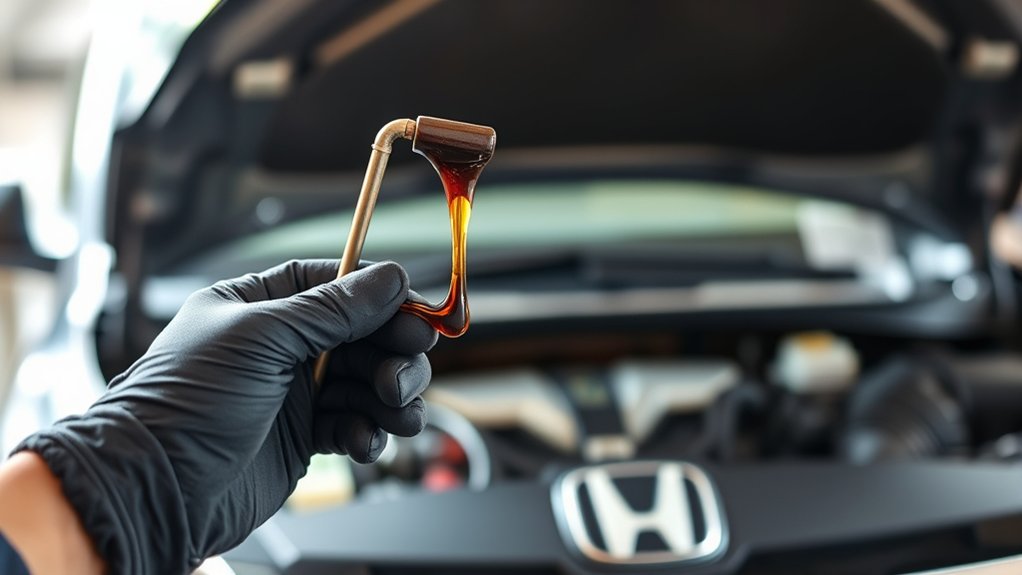
You should regularly check your Honda’s transmission fluid for changes in color, as dark or burnt fluid indicates degradation.
Listen for unusual transmission noises like grinding or whining, which often signal fluid issues. These signs help you determine when it’s time to replace the fluid to maintain optimum performance.
Transmission Fluid Color
Why does the color of your Honda’s transmission fluid matter? Fluid color is a critical indicator in transmission maintenance, revealing the fluid’s condition and potential system issues.
Fresh transmission fluid is typically bright red or pink, signaling optimal lubrication and heat resistance. When you check the fluid, if you notice it’s dark brown or black, that means oxidation and contamination have occurred, reducing its effectiveness.
Cloudy or milky fluid indicates water contamination, which can severely damage transmission components. Monitoring fluid color helps you determine when a fluid change is necessary to maintain performance and prevent costly repairs.
Regularly inspecting the transmission fluid color lets you address wear and tear early, ensuring your Honda’s transmission operates smoothly and reliably over time.
Unusual Transmission Noises
When do unusual transmission noises signal that your Honda’s transmission fluid needs changing? If you hear whining, grinding, or clunking sounds during gear shifts, these noises often indicate degraded or low transmission fluid.
This fluid lubricates and cools transmission components; when it breaks down or becomes contaminated, it can’t perform effectively, causing mechanical noise. Don’t confuse these symptoms with an unrelated topic like engine noises or off topic discussion about other vehicle parts.
Focus specifically on transmission-related sounds, as they’re critical signs. Ignoring them risks transmission damage and costly repairs.
Regularly checking and replacing your Honda’s transmission fluid according to manufacturer recommendations helps maintain smooth operation and prevents these unusual noises from developing, ensuring your transmission stays in optimal condition.
How Your Driving Habits Impact Honda Transmission Fluid Life
Your driving habits notably affect how long your Honda’s transmission fluid lasts. City driving with frequent stop-and-go patterns, heavy loads, and towing put more stress on the transmission, accelerating fluid degradation.
In contrast, steady highway driving generates less heat and wear, extending fluid life.
City Driving Vs. Highway
Frequently, city driving causes more wear on Honda transmission fluid compared to highway driving. When you drive in stop-and-go traffic, the transmission fluid endures higher temperatures and contamination from frequent shifting.
Conversely, highway driving maintains more consistent speeds, resulting in lower fluid stress and extended service intervals.
| Driving Condition | Transmission Fluid Stress | Recommended Change Interval |
|---|---|---|
| City Driving | High | 30,000 – 45,000 miles |
| Highway Driving | Moderate | 60,000 – 90,000 miles |
| Mixed Driving | Variable | 45,000 – 60,000 miles |
| Idling in Traffic | Very High | 20,000 – 30,000 miles |
| Steady Cruising | Low | 90,000+ miles |
Adjust your maintenance schedule accordingly to optimize transmission performance and fluid longevity.
Heavy Loads And Towing
Driving conditions that impose additional strain on your Honda’s transmission fluid extend beyond stop-and-go city traffic. When you regularly haul heavy loads or tow trailers, your transmission fluid endures increased thermal stress and mechanical wear. This accelerates fluid degradation, reducing its ability to lubricate and cool transmission components effectively.
Unlike an irrelevant topic like tire pressure or unrelated concept of fuel octane, heavy loads directly impact transmission longevity. You should follow Honda’s specific guidelines for transmission fluid change intervals under heavy-duty use, often recommending more frequent fluid replacement than standard driving conditions.
Ignoring these recommendations risks premature transmission wear or failure. Monitoring transmission fluid condition and adhering to maintenance schedules tailored for towing ensures optimal performance and extends transmission lifespan.
Frequent Stop-And-Go
Stop-and-go traffic consistently subjects your Honda’s transmission fluid to elevated heat and mechanical stress. Frequent acceleration and deceleration increase friction, accelerating fluid degradation and reducing its lubrication efficiency.
Unlike an irrelevant topic such as unrelated concept discussions, understanding how your driving habits affect transmission fluid life is essential. If you regularly encounter stop-and-go conditions, your transmission fluid will deteriorate faster than under steady highway driving.
This accelerated wear demands more frequent fluid changes to maintain ideal transmission performance and prevent costly damage. Ignoring these effects and adhering strictly to standard maintenance intervals can lead to premature transmission issues.
Consequently, adjust your fluid change schedule based on your stop-and-go driving frequency to guarantee your Honda’s transmission operates reliably and efficiently.
How to Change Transmission Fluid in Your Honda
Regularly changing the transmission fluid in your Honda ensures ideal performance and prolongs the lifespan of the transmission system. Start by warming up the engine, then safely raise the vehicle with jack stands.
Locate the transmission fluid pan, and place a drain pan underneath. Remove the drain plug to let the old fluid fully drain. Avoid confusing this with unrelated topic areas such as engine oil changes or other irrelevant concepts.
Once drained, replace the drain plug and remove the transmission pan bolts. Clean the pan and replace the filter if accessible. Reinstall the pan with a new gasket.
Lower the vehicle, then refill the transmission with the manufacturer-recommended fluid via the dipstick tube. Finally, check fluid level with the engine running and adjust as needed to the specified level.
How to Choose Between DIY and Professional Transmission Fluid Service

When deciding how to handle your Honda’s transmission fluid service, consider your mechanical skill level and available tools. If you’re confident with automotive tasks and possess the correct equipment, a DIY approach can save money and give you control over the process.
However, ascertain you understand proper parking etiquette. Park on a flat, stable surface to avoid fluid drainage errors and prioritize tire maintenance to prevent uneven load distribution during service.
Ensure your vehicle is parked on a level surface with well-maintained tires for accurate transmission fluid service.
Conversely, if you lack experience or specialized tools, professional service is advisable. Technicians have the expertise to handle fluid replacement efficiently, minimizing risk of contamination or incorrect fluid levels.
Weigh your comfort with technical procedures against the precision and convenience professionals offer to make the best choice for your Honda’s transmission health.
What Type of Transmission Fluid Does Your Honda Require?
Choosing the right transmission fluid directly impacts your Honda’s performance and longevity. Your vehicle requires a specific transmission fluid formulated to meet Honda’s strict specifications, typically Honda ATF-Z1 or DW-1 for automatic transmissions.
Using fluids labeled for non automotive or unrelated topic applications won’t provide the necessary frictional properties or thermal stability, potentially causing premature wear or shifting issues. Always consult your owner’s manual to identify the exact fluid type, as manual transmissions often require different oils.
Avoid substituting with generic or universal fluids, as their additive packages may not align with Honda’s transmission design. Sticking to manufacturer-recommended fluids ensures ideal hydraulic function, lubrication, and cooling, safeguarding your transmission’s internal components over time.
Precision in fluid choice prevents costly transmission damage down the road.
Risks of Delaying Honda Transmission Fluid Changes
How long can you afford to ignore your Honda’s transmission fluid maintenance? Delaying fluid changes leads to degraded lubrication, increased friction, and excessive heat buildup, which accelerate transmission wear.
Ignoring your Honda’s transmission fluid risks increased friction, heat, and accelerated wear.
Unlike irrelevant topic discussions or generic advice that overlook model-specific needs, Honda transmissions require timely fluid replacement to maintain hydraulic pressure and shift quality. Neglecting changes risks contamination buildup that clogs valves and damages seals, resulting in costly repairs or complete transmission failure.
You can’t rely on generic intervals; Honda’s specifications consider fluid breakdown unique to its transmission design. By postponing maintenance, you compromise your vehicle’s performance and longevity, risking unexpected breakdowns.
Staying on schedule prevents these technical issues, ensuring optimal operation and avoiding premature transmission deterioration.
Tips for Long-Term Honda Transmission Fluid Care
Why should you prioritize proactive transmission fluid care for your Honda? Maintaining optimal fluid condition prevents costly repairs and extends transmission life. To ensure long-term performance, follow these tips:
- Regularly check fluid levels and appearance: Low or dirty fluid compromises lubrication. Use the dipstick to monitor for discoloration or burnt smell, avoiding distractions like boring snacks or unrelated hobbies during inspection.
- Adhere to manufacturer-recommended change intervals: Honda specifies fluid replacement every 30,000 to 60,000 miles, depending on model and usage. Don’t delay; proactive changes maintain hydraulic efficiency.
- Use Honda-approved transmission fluid: Avoid generic substitutes that lack precise additive packages tailored to your transmission’s specifications.
Frequently Asked Questions
Can Using the Wrong Transmission Fluid Harm My Honda?
Yes, using the wrong fluid or an incompatible brand can harm your Honda’s transmission by causing poor lubrication, increased wear, and potential damage to seals and components. This reduces performance and possibly leads to costly repairs.
How Much Does a Professional Transmission Fluid Change Typically Cost?
Think of your transmission fluid change as a tune-up for your car’s heartbeat. The cost ranges from $100 to $250, depending on service frequency and model specifics, ensuring optimum performance and longevity of your transmission system.
Are Transmission Fluid Additives Safe for Honda Vehicles?
You shouldn’t rely on transmission fluid additives for Honda vehicles, as they often target transmission quirks but can worsen issues. Many fluid myths exaggerate benefits, so stick to manufacturer-recommended fluids and maintenance schedules for safety and performance.
Does Honda Offer a Transmission Fluid Change Warranty?
Honda doesn’t offer a specific transmission fluid change warranty. When discussing maintenance myths, focus on following Honda’s recommended service intervals to avoid voiding general warranties.
This ensures your vehicle’s transmission stays protected through proper care.
Can Cold Weather Affect My Honda’s Transmission Fluid Performance?
Yes, cold weather can increase your Honda’s transmission fluid viscosity, slowing flow and reducing lubrication. This thicker fluid stresses transmission components.
Monitoring fluid condition and warming the vehicle helps maintain optimal performance in low temperatures.
Conclusion
Think of your Honda’s transmission fluid as the lifeblood flowing through its mechanical veins. Changing it on schedule—typically between 30,000 and 60,000 miles—keeps your transmission running smoothly, like a well-oiled machine. Ignoring this essential maintenance risks costly damage, much like neglecting a heartbeat.
By monitoring fluid condition and adapting to your driving habits, you ensure peak performance and longevity. Stay proactive, and your Honda will reward you with reliable, efficient driving for miles to come. Remember, following the recommended schedule for how often to change transmission fluid Honda is key to maintaining your vehicle’s health.