Before you start your Honda pressure washer, you need to confirm the fuel is fresh and the oil level is correct. Inspect the fuel lines, spark plug, and air filter to ensure everything is in working order. Closing the choke for a cold start is essential.
These preliminary steps set the foundation for a smooth startup, but understanding the precise sequence to follow can make all the difference in performance and longevity.
Key Takeaways
- Verify fuel is fresh unleaded gasoline and oil level matches manufacturer specifications before starting.
- Position the washer on a flat, stable surface and connect the garden and high-pressure hoses securely.
- Open the fuel valve and set the choke to the closed position when starting a cold engine.
- Pull the recoil starter firmly and steadily until the engine fires, then gradually open the choke.
- Allow the engine to warm up before applying load or starting pressure washing tasks.
Prepare Your Honda Pressure Washer: Check Fuel, Oil, and Controls
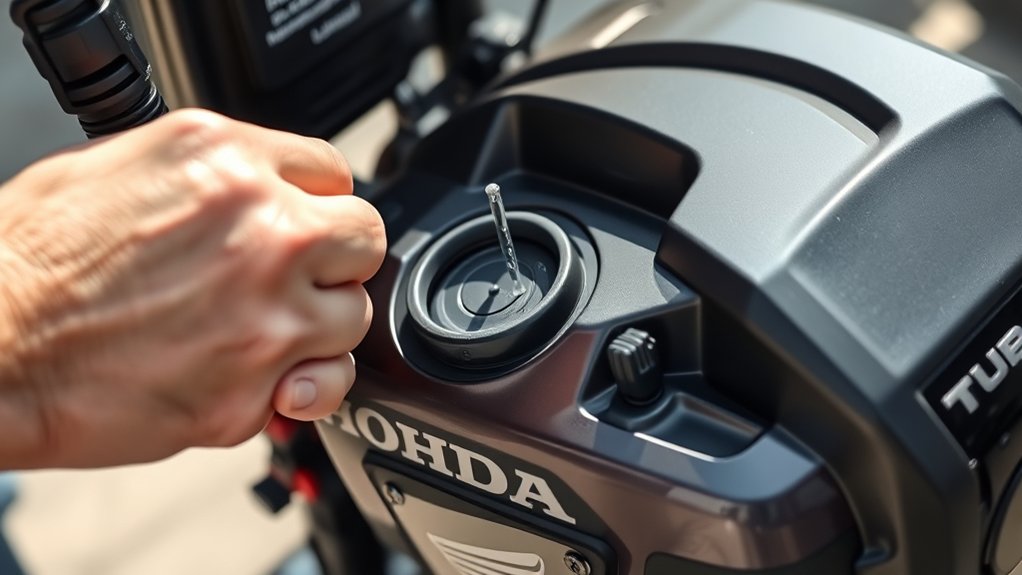
How do you ensure your Honda pressure washer runs smoothly from the start? Begin by verifying the fuel level. Use fresh, unleaded gasoline to avoid engine issues.
Next, check the oil level with the dipstick. Maintain the recommended oil grade to prevent damage and uphold warranty coverage.
Inspect all controls: throttle, choke, and on/off switch should operate smoothly without resistance. Confirm the fuel valve is open, and the spark plug connection is secure.
Proper storage care also plays a role in preparation. If you stored the washer long-term, drain old fuel to avoid clogging.
Taking these precise steps guards your machine’s performance and keeps your warranty valid. By doing these checks before every use, you ensure reliable operation and extend the lifespan of your Honda pressure washer.
How to Start Your Honda Pressure Washer: Step-by-Step Guide
Before starting your Honda pressure washer, make sure it’s properly prepared with the correct fuel and oil levels. Check all controls to ensure they are in the right position.
Then, follow the precise steps to start the engine safely and efficiently.
Prepare The Pressure Washer
What steps should you take to guarantee your Honda pressure washer starts smoothly? First, position the unit on a flat, stable surface to prevent vibrations that can affect performance.
Connect the high-pressure hose securely to the water outlet and the spray gun to avoid leaks. Attach the garden hose to the water inlet, ensuring the water supply is active and free of debris to protect the pump during operation.
Check that all valves, including the unloader valve, are in the correct position for startup. Inspect the spray nozzle for blockages that could impede pressure flow.
These preparation steps mirror the precision required in garden care and vehicle maintenance, emphasizing thorough inspection and proper connections to extend equipment life and ensure optimal function.
Fuel And Oil Check
Where do you begin to ensure your Honda pressure washer runs without interruption? Start by inspecting the fuel and oil levels meticulously. A well-maintained fuel system and proper oil viscosity are critical for optimal performance.
- Check the fuel tank; ensure it contains fresh, unleaded gasoline without contaminants.
- Inspect fuel lines for cracks or leaks that might impair fuel delivery.
- Verify oil level using the dipstick; add oil if below the recommended mark.
- Confirm the oil viscosity matches the manufacturer’s specifications for ambient temperature.
Maintaining the correct oil viscosity protects the engine under load, while a clean fuel system prevents clogging. These steps ensure your Honda pressure washer starts smoothly and operates efficiently.
Starting The Engine
How do you get your Honda pressure washer’s engine running smoothly every time? First, ensure the fuel system is primed and the fuel valve is open. Set the choke to the “closed” position if starting cold.
Pull the recoil starter firmly and steadily. Once the engine fires, gradually move the choke to “open” to maintain optimal ignition timing and prevent stalling. Allow the engine to warm up before applying load.
| Step | Action | Result |
|---|---|---|
| 1 | Open fuel valve | Fuel flows to engine |
| 2 | Set choke to closed | Rich fuel mixture |
| 3 | Pull recoil starter | Engine starts |
| 4 | Open choke gradually | Proper ignition timing |
| 5 | Warm engine | Stable operation |
Troubleshooting Common Starting Problems
If your Honda pressure washer won’t start, first check the fuel and oil levels to ensure they meet the required specifications. Next, inspect the spark plug for signs of wear or fouling that could prevent ignition.
Addressing these basics often resolves the most common starting issues quickly.
Checking Fuel And Oil
Anyone experiencing trouble starting their Honda pressure washer should first inspect the fuel and oil levels. Proper fuel and oil maintenance directly impact fuel efficiency and noise reduction, essential for optimal operation.
- Check the fuel tank for sufficient fresh gasoline; stale fuel can cause starting issues.
- Verify the oil level using the dipstick; low oil triggers automatic shutdowns to protect the engine.
- Use the recommended oil type and grade to maintain lubrication and minimize noise.
- Avoid overfilling the fuel tank to prevent flooding, which reduces fuel efficiency and causes rough operation.
Regularly monitoring these parameters ensures your pressure washer runs smoothly, extending engine life and improving performance.
Inspecting Spark Plug
When did you last inspect your pressure washer’s spark plug? A faulty spark plug can cause starting issues, so check the spark plug condition regularly.
First, remove the spark plug using a wrench and examine the electrode for wear, deposits, or damage. Clean any carbon buildup with a wire brush or replace the plug if it appears worn or cracked.
Next, verify the spark plug gap using a feeler gauge; the correct gap ensures optimal ignition timing and efficient combustion. Improper ignition timing, often caused by a misaligned or fouled spark plug, can prevent the engine from starting or running smoothly.
After inspection and adjustment, reinstall the spark plug securely. Proper spark plug maintenance is essential for reliable starting and overall engine performance in your Honda pressure washer.
Tips for Maintaining Smooth Starts Every Time
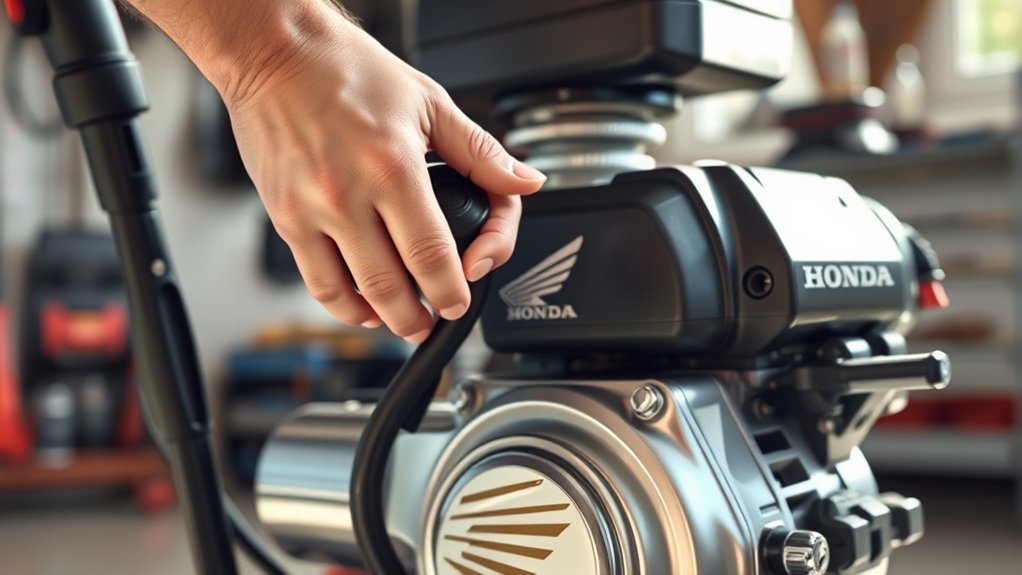
How can you guarantee your Honda pressure washer starts smoothly every time? Consistent upkeep is key, and avoiding quirky maintenance habits ensures reliability. Follow these practical tips:
- Regularly check and replace the spark plug. Old or dirty plugs cause misfires and rough starts.
- Use fresh, clean fuel and add a fuel stabilizer if storing your pressure washer with outdoor accessories.
- Keep the air filter clean and dry. Clogged filters restrict airflow and hinder ignition.
- Inspect and tighten all connections, including fuel lines and ignition wires, to prevent intermittent failures.
Safety Checks Before and After Starting Your Pressure Washer
Why should you perform safety checks before and after starting your Honda pressure washer? These checks ensure safe operation and prevent damage or injury. Before starting, always wear safety gloves and eye protection to shield yourself from high-pressure spray and debris.
Inspect the hose and connections for leaks or cracks, and confirm the fuel and oil levels are adequate. Check the area for obstacles and ensure the nozzle is securely attached.
After use, turn off the engine and release built-up pressure by squeezing the trigger. Examine the hose and nozzle again for damage.
Clean debris from the unit, and store it in a dry, safe place. Maintaining these safety protocols prevents malfunctions and protects you throughout each operation.
When to Call a Professional for Honda Pressure Washer Issues
Performing thorough safety checks helps you catch minor issues early, but some problems require professional expertise to resolve. Knowing when to call a technician ensures proper handling and prevents voiding warranty exclusions.
- If the engine fails to start despite correct start up etiquette, professional diagnosis is necessary to identify fuel or ignition system faults.
- Unusual noises or vibrations during operation may indicate internal mechanical damage requiring expert inspection.
- Persistent water leaks or pressure loss suggest pump seal or valve issues beyond routine maintenance.
- Electrical system malfunctions, such as faulty switches or wiring, demand professional repair to avoid safety hazards.
Addressing these issues promptly with a certified technician protects your investment and maintains optimal performance.
Frequently Asked Questions
What Accessories Are Compatible With My Honda Pressure Washer?
You’ll find accessories compatibility crucial for optimal performance. Use Honda-approved nozzles, hoses, and surface cleaners. Avoid alternative fuels unless specified, as they might void warranties or damage the engine. Always check compatibility before purchase.
Can I Use Alternative Fuels in My Honda Pressure Washer?
You shouldn’t use alternative fuels in your Honda pressure washer, as it’s designed for regular unleaded gasoline. Using alternative fuels can damage the engine and affect compatibility with accessories.
This can void warranties and reduce performance.
How Do I Winterize My Honda Pressure Washer?
You’ll be surprised that 70% of pressure washer damage happens during winter. To winterize washing, drain water, add antifreeze, and follow storage tips: clean filters, store indoors, and cover to prevent freezing and corrosion efficiently.
What Is the Warranty Period for Honda Pressure Washers?
You get a warranty duration of 3 years for Honda pressure washers, covering defects in materials and workmanship. This service coverage ensures repairs or replacements, giving you reliable support if any manufacturing issues arise during that period.
Are There Eco-Friendly Cleaning Solutions for Pressure Washers?
You can use eco-friendly cleaning solutions like Simple Green, which safely breaks down grime without harsh chemicals. These solutions work efficiently with pressure washers, protecting the environment while delivering powerful, practical cleaning results.
Conclusion
Starting your Honda pressure washer is simple when you follow precise steps. However, overlooking small details like fuel freshness or choke position can turn ease into frustration.
By routinely checking fuel, oil, and controls before each use, you ensure reliable performance every time. These small habits can prevent common startup issues and keep your equipment running smoothly.
Remember, a smooth start isn’t just convenient—it’s crucial for longevity and safety. Master these fundamentals, and you’ll transform what seems complex into a straightforward, efficient process when starting your Honda pressure washer.