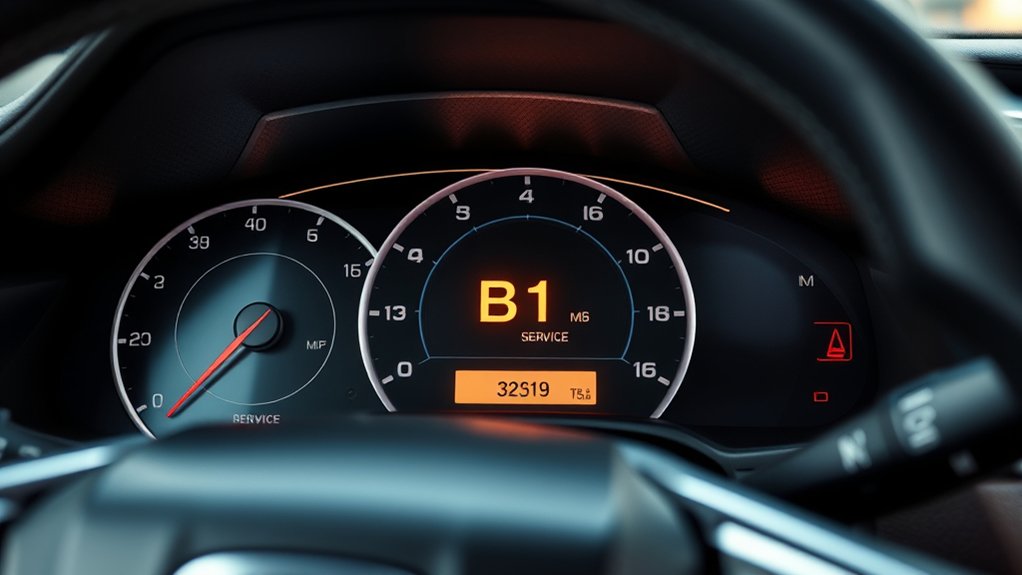
If you see the B1 code on your Honda Civic, it’s signaling more than just an oil change is due. The B1 code is a maintenance reminder that covers essential inspections designed to keep your vehicle running efficiently and safely. Understanding what triggers this code and what service it entails is key to maintaining your car’s performance and warranty.
But what exactly does the B1 code include, and how should you respond when it appears? Knowing this will help you address the necessary maintenance promptly and avoid potential issues down the road.
Key Takeaways
- B1 on a Honda Civic indicates a maintenance reminder for an oil change and general inspection.
- The B1 code triggers roughly every 7,500 miles or when the maintenance minder appears.
- B1 service includes oil and filter change, tire rotation, and checking essential fluids.
- Ignoring the B1 code can lead to engine performance issues and affect warranty coverage.
- After service, the B1 indicator must be reset by holding the trip meter button with ignition ON.
What Does the B1 Code Mean on a Honda Civic?

What exactly does the B1 code mean on a Honda Civic? The B1 meaning refers to a specific maintenance reminder indicating it’s time for an oil change and inspection. When your Honda Civic displays the B1 code, it signals that you’ve reached a mileage or time interval requiring scheduled service.
This code helps you maintain engine health by prompting timely oil replacement and general system checks. Ignoring the B1 meaning can lead to decreased performance or potential engine issues.
The Honda Civic’s onboard computer tracks driving conditions and triggers the B1 code based on preset service intervals. Understanding this code ensures you keep your vehicle running efficiently and avoid costly repairs. Always follow Honda’s recommended maintenance schedule when you see the B1 code.
Why Does the B1 Light Turn On?
The B1 light turns on when your Honda Civic’s onboard system detects that it’s time for scheduled maintenance, specifically an oil change combined with a general inspection. This alert helps you stay proactive by signaling essential service intervals.
When the B1 light activates, it’s not just about oil quality; the system prompts checks on components like battery health and wheel torque. Monitoring battery health ensures your vehicle maintains optimal electrical performance, while inspecting wheel torque confirms proper lug nut tightness, crucial for safety.
The B1 indicator integrates these factors into its maintenance reminder, relying on sensor data and programmed schedules. Ignoring this light can lead to deteriorated engine lubrication and overlooked mechanical issues, so addressing it promptly preserves your Civic’s performance and longevity.
What’s Included in a B1 Service?

When your Honda Civic shows a B1 service indicator, it means you need an oil and filter change combined with a tire rotation.
You’ll also have the vehicle’s essential fluids inspected to ensure optimal performance. This routine service keeps your engine running smoothly and maintains tire health.
Oil And Filter Change
How often you change your oil and filter plays a pivotal role in maintaining your Honda Civic’s engine health. The B1 service specifically includes an oil change and filter replacement to ensure optimal engine lubrication and contaminant removal. Using the correct oil grade and a genuine Honda filter is crucial for performance and longevity.
| Service Component | Description |
|---|---|
| Oil Change | Draining old oil, refilling with fresh oil |
| Filter Replacement | Removing old oil filter, installing new one |
| Oil Type | Honda-approved synthetic or conventional oil |
| Oil Quantity | Manufacturer-specified amount for your model |
| Inspection | Checking for leaks and proper oil pressure |
Regular oil changes prevent engine wear, while filter replacement traps harmful particles, maintaining engine efficiency.
Tire Rotation Included
Maintaining your Honda Civic’s performance goes beyond regular oil and filter changes; it also involves proper tire care. A B1 service includes tire rotation, which means systematically moving each tire to a different wheel position. This process ensures even tread wear, extends tire life, and maintains optimal traction and handling.
By rotating tires, you prevent uneven wear patterns that can compromise safety and fuel efficiency. The procedure follows specific two-word ideas like “front to” or “rear to” rotations, depending on tire type and drivetrain. Tire rotation is a critical part of the B1 service, distinct from an unrelated topic such as engine diagnostics.
Ensuring this step is performed regularly keeps your Honda Civic running smoothly and helps you avoid premature tire replacement.
Inspection Of Fluids
Why is fluid inspection essential during your Honda Civic’s B1 service? Fluids are vital for optimal engine performance and longevity, functioning like unit testing in software, ensuring each component operates correctly.
During a B1 service, technicians check engine oil, transmission fluid, brake fluid, coolant, and windshield washer fluid levels and quality. This process is akin to code optimization, where fluid conditions are assessed and maintained to prevent system failures and enhance efficiency.
Contaminated or low fluids can degrade performance and cause costly damage. By inspecting and topping off or replacing fluids, you maintain your vehicle’s reliability and safety.
This precise evaluation during your B1 service supports smooth operation and extends your Civic’s lifespan, much like optimizing code ensures better software performance.
How Often Should You Get B1 Service on Your Civic?
When should you schedule the B1 service for your Honda Civic to guarantee top performance? Typically, Honda recommends performing the B1 service every 7,500 to 10,000 miles or approximately once a year, whichever comes first.
This interval maintains engine efficiency, replaces the engine oil and oil filter, and inspects essential components like brake pads and fluid levels. Sticking to this schedule prevents wear and tear that might otherwise cause costly repairs.
It’s important to note that factors like driving conditions can affect the timing, so consult your owner’s manual or a certified technician for specifics. Avoid unrelated topic discussions, such as unrelated maintenance tasks, which are not relevant to the B1 service interval.
Staying on schedule ensures your Civic runs smoothly and safely.
What Happens If You Ignore the B1 Light?
What happens if you ignore the B1 light on your Honda Civic? The B1 meaning relates to a scheduled maintenance service that includes an oil change and a thorough system inspection, including critical components like ignition timing.
Ignoring this light can lead to degraded engine performance because ignition timing may drift out of specification, causing inefficient combustion. Over time, this can increase fuel consumption and emissions while accelerating engine wear.
In addition, neglecting the B1 service means you risk missing early detection of issues such as spark plug wear or timing chain problems, potentially resulting in costly repairs. To maintain optimal engine function and longevity, it’s essential to address the B1 light promptly rather than delaying the recommended service intervals.
How Do You Check If Your Honda Civic Needs B1 Service?
You can determine if your Honda Civic needs B1 service by monitoring the dashboard service indicator, which illuminates based on mileage and time intervals.
Additionally, consult the official maintenance schedule in your owner’s manual to verify when the B1 service is due. These two checks help ensure timely and accurate maintenance.
Dashboard Service Indicator
The dashboard service indicator on your Honda Civic provides a clear signal when the B1 service is due, helping you maintain peak vehicle performance. This indicator appears as a code, typically “B1,” on the instrument cluster, signaling the need for an oil change and additional inspections like brake fluid replacement.
To check if your Civic requires this service, turn the ignition to ON without starting the engine and observe the display. If the B1 code is illuminated, the system has detected mileage or time thresholds from unrelated topics such as engine wear and fluid degradation.
This two word ideas code system simplifies maintenance alerts, ensuring you address critical tasks promptly. Ignoring the indicator risks mechanical issues, so respond immediately when the B1 light activates.
Maintenance Schedule Check
How can you determine if your Honda Civic requires the B1 service? The easiest way is to check your maintenance minder system, which calculates service needs based on mileage and engine operating conditions, debunking common maintenance myths that suggest fixed intervals only.
Ignoring the B1 service can affect warranty implications, so timely checks are crucial.
Use this table to track service indicators:
| Indicator | Mileage (miles) | Service Required |
|---|---|---|
| A | 7,500 | Oil and filter change |
| B1 | 15,000 | Oil change + tire rotation |
| A | 22,500 | Oil and filter change |
| B1 | 30,000 | Oil change + comprehensive check |
Follow this schedule to maintain performance and preserve warranty coverage.
What Tools Do You Need for B1 Service on Your Honda Civic?
Which tools are essential for performing the B1 service on your Honda Civic? To complete this Honda maintenance task efficiently, you’ll need a few key tools. First, a socket wrench set is necessary for removing and tightening bolts, especially on the oil drain plug and filter housing.
You’ll also require an oil filter wrench to replace the oil filter correctly. A funnel helps avoid spills when adding new engine oil. Additionally, have a new oil filter and the specified grade and quantity of engine oil ready.
For safety and cleanliness, wear nitrile gloves and keep absorbent pads nearby. Finally, a torque wrench ensures you tighten components to Honda’s precise specifications, preventing leaks or damage during the B1 service.
How Do You Reset the B1 Indicator on a Honda Civic?
After completing the B1 service using the proper tools and procedures, you’ll need to reset the B1 indicator to clear the maintenance alert. Start by turning the ignition to the ON position without starting the engine. Press and hold the trip meter reset button until the maintenance light blinks and then goes off.
This process resets the system and aligns it with your updated maintenance schedule. It’s crucial to perform this reset after routine tasks such as oil changes and tire care, which often accompany the B1 service. Failing to reset the indicator can cause inaccurate reminders and disrupt your vehicle’s maintenance tracking.
Following these steps ensures your Honda Civic’s maintenance system remains precise and alerts you only when necessary, keeping your vehicle in optimal condition.
When Should You Visit a Mechanic for B1 Service?
When do you need to bring your Honda Civic to a mechanic for the B1 service? You should schedule the B1 service roughly every 7,500 miles or when the maintenance minder indicator appears.
This service involves an oil change, oil filter replacement, and a thorough inspection of key components like brakes, tires, and fluid levels. Mechanics wear disposable gloves to prevent contamination during oil changes and inspections.
Proper garage lighting is essential for them to accurately assess wear and tear or leaks that might be missed in poor lighting conditions. If your Civic’s B1 indicator turns on, don’t delay; timely professional maintenance prevents costly repairs and ensures optimal vehicle performance and safety.
How to Keep Your Civic Running Smooth After B1 Service
To keep your Civic running smoothly after a B1 service, you need to stick to regular oil changes that match Honda’s specifications. Make sure you maintain proper tire pressure and tread depth to ensure optimal handling and fuel efficiency.
Additionally, monitor all essential fluid levels frequently to prevent potential engine or transmission issues.
Regular Oil Changes
Regularly changing your oil is essential for maintaining your Honda Civic’s engine performance and longevity, especially following a B1 service. The B1 code signals it’s time for an oil change and tire rotation, both critical for optimal vehicle function.
You must use the manufacturer-recommended oil type and change it at specified intervals, typically every 7,500 miles or as your dashboard indicator advises. Fresh oil reduces engine wear by lubricating moving parts and preventing overheating.
While the tire rotation included in the B1 service balances tire wear, you should not overlook the oil change’s role in preserving engine health. Skipping or delaying oil changes risks sludge buildup and decreased fuel efficiency.
Staying on schedule with oil changes ensures your Civic runs smoothly and reliably between service visits.
Tire Maintenance Tips
Alongside timely oil changes, maintaining proper tire care after your B1 service plays a crucial role in ensuring your Honda Civic’s smooth performance. Regular tire rotation prevents uneven wear, extends tire life, and enhances fuel efficiency.
Check tire pressure monthly to maintain optimal grip and handling. Inspect tread depth and look for damage or punctures, addressing issues promptly to avoid unsafe driving conditions.
Proper tire alignment complements rotation and oil changes by reducing strain on suspension components.
| Maintenance Task | Frequency |
|---|---|
| Tire Rotation | Every 5,000-7,500 miles |
| Tire Pressure Check | Monthly |
| Tread Depth Check | Every oil change |
| Alignment Inspection | Annually or if uneven wear appears |
Consistent attention to these tasks preserves your Civic’s performance and safety.
Monitor Fluid Levels
How often do you check your Honda Civic’s fluid levels after a B1 service? Maintaining essential fluid levels is vital for your vehicle’s performance and longevity. Regularly inspect engine oil, coolant, brake fluid, and transmission fluid to guarantee they meet manufacturer specifications.
Don’t overlook windshield cleaning fluid; a full reservoir ensures clear visibility and safety. Use only recommended fluids to prevent system damage. Additionally, while air fresheners improve cabin comfort, avoid placing them where they may obstruct fluid reservoir caps or dashboard indicators.
After a B1 service, monitoring these fluid levels helps prevent mechanical issues and maintains smooth operation. Make it part of your routine maintenance to detect leaks or consumption irregularities early, keeping your Civic running efficiently and safely on the road.
Frequently Asked Questions
Can I Perform B1 Service Myself Without Professional Help?
You can perform B1 service yourself using the self diagnostic system to identify needed tasks. However, make sure you use proper tools and quality aftermarket maintenance parts to maintain precision and avoid complications without professional help.
Does the B1 Code Affect My Car’s Warranty?
You won’t find any surprises with b1 maintenance affecting your warranty. Honda considers it routine upkeep.
As long as you follow the recommended schedule, the warranty impact remains neutral, keeping your coverage intact and reliable.
Are B1 Services Covered by Honda’s Maintenance Plan?
Yes, b1 maintenance is typically covered under Honda’s maintenance plan. When you schedule a Honda service, it includes the specific inspections and replacements outlined in the b1 maintenance code.
This ensures your vehicle stays properly maintained.
Can the B1 Light Come on Due to Sensor Malfunctions?
Yes, the B1 sensor can trigger the light due to a diagnostic error. You should run a thorough diagnostic to identify sensor malfunctions and address any issues promptly.
This ensures accurate maintenance alerts and optimal vehicle performance.
How Much Does a Typical B1 Service Cost at a Dealership?
Think of the b1 service as an essential heartbeat check for your car. At a dealership, maintenance costs typically range from $200 to $400, covering oil changes, tire rotations, and essential inspections to keep your Civic running smoothly.
Conclusion
When the B1 light glows on your Honda Civic, think of it as a precise signal from your engine’s core—like a heartbeat needing attention. By promptly completing the oil change, fluid checks, and tire rotations, you keep your Civic running with optimal efficiency and safety. Ignoring this reminder risks performance drops and costly repairs.
Stay ahead by resetting the indicator and scheduling timely maintenance. This ensures your car’s mechanical rhythm never skips a beat. Understanding what B1 means on a Honda Civic helps you maintain your vehicle’s health and longevity.