You might not realize that the VTM-4 system on your Honda Pilot isn’t just a standard four-wheel drive; it’s a sophisticated torque management system that actively monitors wheel slip and adjusts power distribution between the front and rear wheels. This dynamic control enhances traction and stability without constant driver input. Understanding exactly when and how it engages can reveal why your Pilot handles diverse road conditions so efficiently. There’s more to uncover about how this technology impacts your driving experience.
Key Takeaways
- VTM-4 stands for Variable Torque Management 4-Wheel Drive system in Honda Pilot for enhanced traction and stability.
- It automatically distributes torque between front and rear wheels upon detecting wheel slippage.
- VTM-4 improves handling on slippery or uneven surfaces without driver intervention.
- The system uses sensors like wheel speed, throttle position, and steering angle for real-time torque adjustment.
- It helps maintain fuel efficiency by engaging only when necessary, avoiding constant 4WD power drain.
What Is VTM-4 on a Honda Pilot?
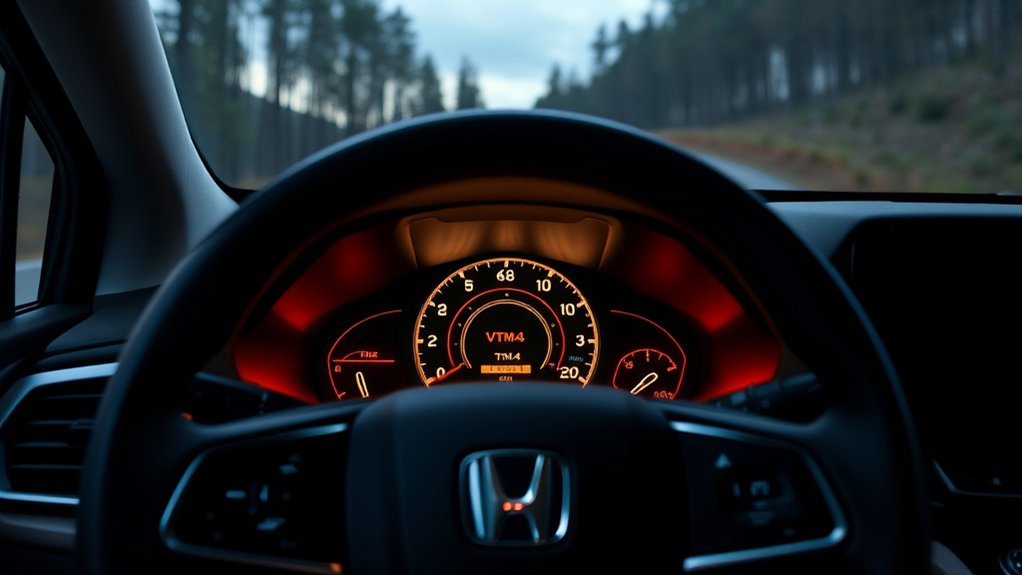
What exactly does VTM-4 mean on your Honda Pilot? VTM-4 stands for Variable Torque Management 4-Wheel Drive, a sophisticated system that dynamically distributes torque between the front and rear wheels for optimal traction.
Unlike traditional all-wheel drives, it engages primarily when sensors detect wheel slippage, enhancing control without constant power drain. This system complements the Pilot’s aerodynamics by optimizing power delivery, minimizing resistance caused by unnecessary wheel spin, and maintaining fuel efficiency.
When considering insurance, you should note that vehicles equipped with VTM-4 may have different risk profiles due to improved handling in adverse conditions, potentially affecting premiums. Understanding VTM-4’s technical role helps you appreciate its contribution to your Honda Pilot’s stability and safety without compromising aerodynamic design or insurance considerations.
When Does the VTM-4 System Activate?
How does the VTM-4 system determine the right moment to engage? It continuously monitors wheel speed sensors, throttle position, and steering angle to detect traction loss. When the system senses slippage, often during conditions like emergency braking or when windshield wipers indicate rain, it activates automatically.
For example, if the front wheels lose grip on wet pavement, the system transfers torque to the rear wheels, improving stability. It also engages during sudden deceleration or sharp turns where wheel slip is likely. The VTM-4’s real-time data processing ensures seamless activation without driver input, enhancing safety precisely when traction is compromised.
How Does VTM-4 Improve Traction and Handling?

Why does the VTM-4 system substantially enhance your Honda Pilot’s traction and handling? It actively monitors wheel slip and redistributes torque to maintain grip, especially when venturing over uneven or slippery terrain. This dynamic torque transfer improves stability without the extra fuel efficiency penalties that heavier, full-time four-wheel-drive systems impose due to increased weight.
Here’s how VTM-4 sharpens your driving experience:
- Selective torque allocation: Engages rear wheels only when front wheel slip is detected, optimizing traction and conserving fuel.
- Automatic differential control: Balances power between rear wheels to prevent loss of grip during tight turns or sudden maneuvers.
- Lightweight design: Minimizes added weight, preserving fuel efficiency while enhancing handling on varied surfaces.
Together, these features give you confident control during travel, regardless of road conditions.
What Are the Benefits of VTM-4 in Your Honda Pilot?
When driving your Honda Pilot, you’ll notice that the VTM-4 system considerably enhances stability and control across diverse road conditions. This system actively monitors wheel slip and redistributes torque to maintain CONTEXTUALLY RELEVANT TRACTION, especially during acceleration or cornering on slippery surfaces.
An interesting fact is that VTM-4 operates seamlessly without driver intervention, unlike traditional 4WD systems requiring manual engagement. It improves your vehicle’s handling precision by balancing power between front and rear wheels, reducing understeer and oversteer tendencies.
While VTM-4 significantly benefits traction and stability, it’s an unrelated feature to other electronic aids like stability control or ABS, which handle braking and slip differently. Overall, VTM-4 ensures safer, more confident driving in adverse conditions, maximizing your Honda Pilot’s performance and responsiveness.
How Does VTM-4 Differ From Traditional 4WD?
You’ll notice that VTM-4 activates automatically based on wheel slippage, unlike traditional 4WD systems that often require manual engagement. It distributes power variably between the front and rear axles using electronic controls, rather than relying on mechanical linkages.
This makes VTM-4 more adaptable to varying terrains by precisely adjusting torque to optimize traction.
System Activation Differences
How exactly does VTM-4 activate differently compared to traditional 4WD systems? Unlike conventional 4WD, which often requires manual engagement and operates in fixed modes, VTM-4 activates automatically based on real-time conditions. It continuously monitors wheel slippage and adjusts torque distribution without driver input. This dynamic response contrasts with the rigid engagement of traditional systems.
Key activation differences include:
- Automatic engagement: VTM-4 activates rear-wheel drive only when front wheels slip, unlike traditional systems that stay fully engaged or disengaged.
- Electronic control: Uses sensors and onboard computers for precise activation, while traditional 4WD relies on mechanical linkages.
- Selective torque application: VTM-4 modulates power per wheel, avoiding driver intervention delays inherent in traditional 4WD.
This ensures smoother, more efficient traction management.
Power Distribution Methods
Power distribution in the VTM-4 system differs fundamentally from traditional 4WD by employing an electronically controlled, variable torque transfer method. Unlike mechanical 4WD systems that lock front and rear axles together, VTM-4 adjusts torque dynamically between wheels using sensors and an electric pump.
This allows torque to shift instantly from front to rear or side to side based on traction needs. When exploring discussion ideas on power distribution methods, you’ll notice this subtopic divergence highlights VTM-4’s ability to optimize grip without driver intervention, enhancing efficiency and control.
Traditional 4WD often delivers fixed torque splits and requires manual engagement, whereas VTM-4 continuously modulates torque, improving responsiveness and reducing drivetrain wear. Understanding this distinction is pivotal for appreciating the sophistication behind Honda Pilot’s VTM-4 system.
Terrain Adaptability Features
What sets the VTM-4 system apart from traditional 4WD is its advanced terrain adaptability, which actively monitors driving conditions to optimize traction. Unlike conventional systems that rely on fixed power distribution, VTM-4 dynamically engages rear wheels only when front-wheel slippage is detected, enhancing both performance and fuel economy.
This selective engagement reduces unnecessary drivetrain stress, contributing to lower car maintenance needs.
Key technical distinctions include:
- Real-time torque vectoring between front and rear axles for precise traction control
- Automatic disengagement at steady speeds to conserve fuel
- Integration with vehicle stability systems for adaptive response on varied terrains
How to Maintain the VTM-4 System in Your Honda Pilot
You need to check the transfer case and differential fluids regularly to ensure best VTM-4 operation. Monitor tire wear and pressure closely, since uneven tires can disrupt the system’s balance and performance.
Additionally, run diagnostic scans to detect any electronic or mechanical issues early and maintain system reliability.
Regular Fluid Checks
How often should you check the fluid levels to keep the VTM-4 system operating ideal? Regular inspections every 7,500 miles or as specified in your owner’s manual ensure the system maintains proper torque distribution, preventing low traction issues. Neglecting fluid maintenance can degrade performance and reduce fuel economy.
Focus on these key points during your fluid checks:
- Inspect differential fluid for contamination or discoloration that signals wear.
- Verify transfer case fluid level to ensure efficient power transfer.
- Use manufacturer-recommended fluid types to maintain viscosity and lubrication standards.
Tire Condition Monitoring
Tire condition plays a critical role in the effectiveness of the VTM-4 system on your Honda Pilot, directly influencing traction and torque distribution. To maintain optimal performance, you should regularly inspect tire tread depth and ensure uniform wear across all tires.
Uneven wear can disrupt the VTM-4’s ability to balance torque between wheels. Implementing a consistent tire rotation schedule, typically every 6,000 to 8,000 miles, helps equalize wear and preserves traction consistency.
Additionally, precise wheel alignment is essential; misalignment causes uneven tire loading, which impairs the system’s traction control. Regularly verify wheel alignment specifications and adjust as needed to prevent undue stress on the drivetrain.
Maintaining proper tire pressure is also crucial, as pressure differences affect the system’s torque distribution accuracy and overall stability.
System Diagnostic Scans
When should you perform system diagnostic scans to maintain your Honda Pilot’s VTM-4 system? Regular scans are essential to detect faults early and ensure optimal performance. Adopting a proactive maintenance philosophy means scheduling system diagnostics:
- During routine service intervals, typically every 12,000 miles or annually
- After encountering warning indicators or unusual driving behavior
- Following any repairs or modifications to the drivetrain or electrical system
System diagnostics involve connecting a specialized scan tool to your vehicle’s OBD-II port to read error codes related to the VTM-4 system. This process identifies sensor malfunctions, actuator issues, or communication errors within the traction control network.
Troubleshooting Common VTM-4 Alerts
Why does the VTM-4 system sometimes trigger alerts on your Honda Pilot? Common causes include vacuum leaks and sensor failures, which disrupt the system’s operation.
To troubleshoot, you’ll first want to inspect vacuum lines for cracks or disconnections and then test sensors for proper function using diagnostic tools.
| Issue | Recommended Action |
|---|---|
| Vacuum leaks | Check and replace damaged vacuum hoses |
| Sensor failures | Use OBD-II scanner to identify and replace faulty sensors |
| Electrical faults | Inspect wiring harness and connectors for damage |
Addressing these issues promptly helps maintain VTM-4 functionality and prevents drivetrain damage. If alerts persist, professional diagnostics are advised to pinpoint complex faults.
Frequently Asked Questions
Can VTM-4 Be Manually Turned off in a Honda Pilot?
You can’t manually deactivate VTM 4 in a Honda Pilot; it engages automatically when sensors detect wheel slippage. This system distributes torque to maintain traction, enhancing stability without requiring driver intervention or manual control.
Does VTM-4 Affect Fuel Efficiency?
VTM-4 meaning relates to Honda’s variable torque management system, which optimizes traction. It can slightly reduce fuel efficiency due to added drivetrain engagement, but its impact is minimal during normal, primarily two-wheel-drive operation.
Is VTM-4 Available on All Honda Pilot Models?
You know what they say, “Don’t put all your eggs in one basket.” VTM-4 isn’t on all Honda Pilot models; it’s specific to certain trims with all-wheel drivetrain systems, enhancing traction and control precisely when needed.
How Does VTM-4 Impact Tire Wear?
VTM-4 can cause uneven tire wear due to variable torque distribution. You’ll need precise maintenance scheduling, including regular tire rotations and inspections, to guarantee balanced wear. This helps extend tire lifespan effectively under varying driving conditions.
Can VTM-4 Be Used on Dry Pavement?
You can use VTM-4 on dry pavement, but avoid prolonged engagement to prevent unnecessary tire wear and interior maintenance issues. Overuse might affect your warranty’s coverage, so follow Honda’s guidelines carefully to maintain optimal system function.
Conclusion
Understanding VTM-4 on your Honda Pilot puts you in powerful control, providing precise power distribution for peak performance. This system seamlessly senses slip, shifts torque, and secures stability, ensuring superior safety and smooth steering on slippery surfaces.
Unlike traditional four-wheel drives, VTM-4 delivers dynamic, demand-driven drive force while defending fuel efficiency. By maintaining your system meticulously, you maximize reliability and responsiveness, readying your ride for rugged roads or routine routes with remarkable reassurance.
In conclusion, knowing what VTM-4 means on a Honda Pilot helps you appreciate the advanced technology working to enhance your driving experience.