You might expect your Honda batteries to last between three to five years under typical conditions, but several factors can shorten that span.
Understanding how your driving habits, climate, and maintenance routines influence battery health is vital.
Before you face unexpected failures, it’s important to recognize the early signs of battery decline and know how to test its condition effectively.
This knowledge can help you avoid inconvenience and costly replacements.
Key Takeaways
- Honda lead-acid batteries typically last about 3-5 years under average driving and environmental conditions.
- Frequent short trips and extreme temperatures accelerate battery degradation and reduce lifespan.
- Proper maintenance, including voltage testing and terminal cleaning, can extend battery service life.
- Replace batteries showing signs of diminished performance, such as slow engine starts or dim lights.
- Recycling programs are important for responsible disposal and environmental sustainability of used batteries.
How Long Do Honda Batteries Last?
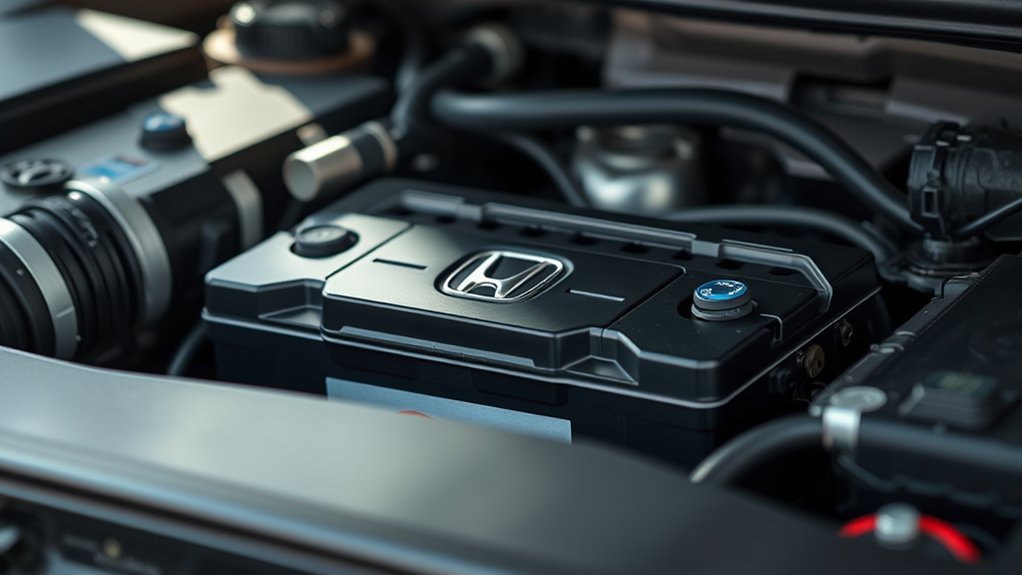
How long you can expect a Honda battery to last depends on several factors, including your driving habits, climate conditions, and maintenance routine. Typically, Honda batteries utilize lead-acid battery chemistry, which balances cost and performance but limits lifespan to around 3-5 years under average conditions.
If you frequently drive short distances or in extreme temperatures, expect accelerated battery degradation. Proper maintenance, like keeping terminals clean and ensuring the battery stays charged, can extend its service life.
When replacing your battery, consider battery recycling programs to responsibly dispose of the old unit, as lead and acid components pose environmental hazards. Recycling recovers valuable materials, supporting sustainability. Understanding these technical aspects helps you anticipate battery replacement timing and promotes environmental responsibility.
What Are the Signs Your Honda Battery Is Failing?
You’ll notice your Honda battery is failing if the engine struggles to start or turns over slowly.
Dim or flickering headlights and interior lights also indicate weakening battery power. Additionally, malfunctioning electrical components signal that your battery may need replacement soon.
Difficulty Starting Engine
Why does your Honda struggle to start on cold mornings or after sitting idle for a while? One key reason is a weakening battery unable to provide sufficient cranking power. Larger engine sizes demand more current to start, so if your battery’s charge drops, the engine may turn over slowly or fail to start altogether.
This issue becomes more apparent in colder temperatures when chemical reactions inside the battery slow down. While tire pressure doesn’t directly affect starting, it’s critical for overall vehicle performance, so don’t overlook it during maintenance.
If you notice your Honda’s engine hesitates or requires multiple attempts to start, it’s a clear sign your battery’s capacity is diminishing. Addressing this early can prevent unexpected breakdowns and maintain reliable engine performance.
Dim or Flickering Lights
When do you notice your Honda’s headlights or interior lights dimming or flickering? This symptom often indicates battery aging. As the battery’s capacity declines, it struggles to provide consistent voltage, causing dim lights. This issue is a clear sign your battery may be nearing the end of its life.
| Symptom | Potential Cause |
|---|---|
| Dim lights | Reduced battery charge |
| Flickering lights | Unstable voltage output |
| Lights fade at idle | Battery unable to sustain load |
If your lights dim noticeably, especially at low engine speeds, it suggests the battery isn’t maintaining adequate charge. Addressing dim or flickering lights early can prevent unexpected battery failure and ensure your Honda maintains electrical system reliability.
Electrical Component Malfunctions
How can you tell if your Honda battery is causing electrical component malfunctions? As the battery chemistry degrades over time and charging cycles accumulate, the battery’s ability to supply consistent voltage diminishes, leading to erratic electrical behavior.
You might notice:
- Intermittent dashboard warning lights
- Malfunctioning power windows or locks
- Inconsistent audio system performance
- Difficulty starting the engine despite a charged battery
These signs indicate the battery struggles to maintain stable electrical current, often due to sulfation or reduced electrolyte efficiency. Monitoring these symptoms helps you identify early battery failure, preventing further electrical system damage.
Understanding how battery chemistry and charging cycles impact performance is key to diagnosing these malfunctions and ensuring timely battery replacement.
How to Test and Maintain Your Honda Battery
You can accurately test your Honda battery using a multimeter to measure voltage or a battery load tester to assess performance under stress.
Regular maintenance, like cleaning terminals and checking electrolyte levels, helps prevent corrosion and extends battery life.
Following precise testing and upkeep routines guarantees your battery operates reliably.
Battery Testing Methods
Why does regular battery testing matter for your Honda? Monitoring battery health ensures optimal performance and prevents unexpected failures. Advances in battery technology require you to follow specific charging standards to avoid damage.
Accurate testing lets you verify that your battery meets these standards.
To test your Honda battery effectively, you should:
- Use a digital multimeter to measure voltage; a healthy battery reads about 12.6 volts when fully charged.
- Perform a load test to assess capacity under operating conditions.
- Check for parasitic drain that may discharge the battery when the vehicle is off.
- Inspect terminals and cables for corrosion or looseness, which can affect electrical flow.
Maintenance Tips and Tricks
When should you perform routine maintenance on your Honda battery to maximize its lifespan? Ideally, check your battery every three months. Begin by inspecting terminals for corrosion, which impairs charging efficiency.
Clean any buildup using a mixture of baking soda and water, applying it carefully to avoid damage. Next, test the battery voltage with a multimeter; a fully charged battery should read about 12.6 volts.
Understanding battery chemistry is essential. Lead-acid batteries require consistent charge levels to prevent sulfation, which reduces capacity. Avoid deep discharges, and ensure your alternator maintains proper voltage output between 13.7 and 14.7 volts during operation.
If you notice slow engine starts or dim lights, test immediately. Following these precise steps helps you preserve battery performance and extend its service life effectively.
When to Replace Your Honda Battery
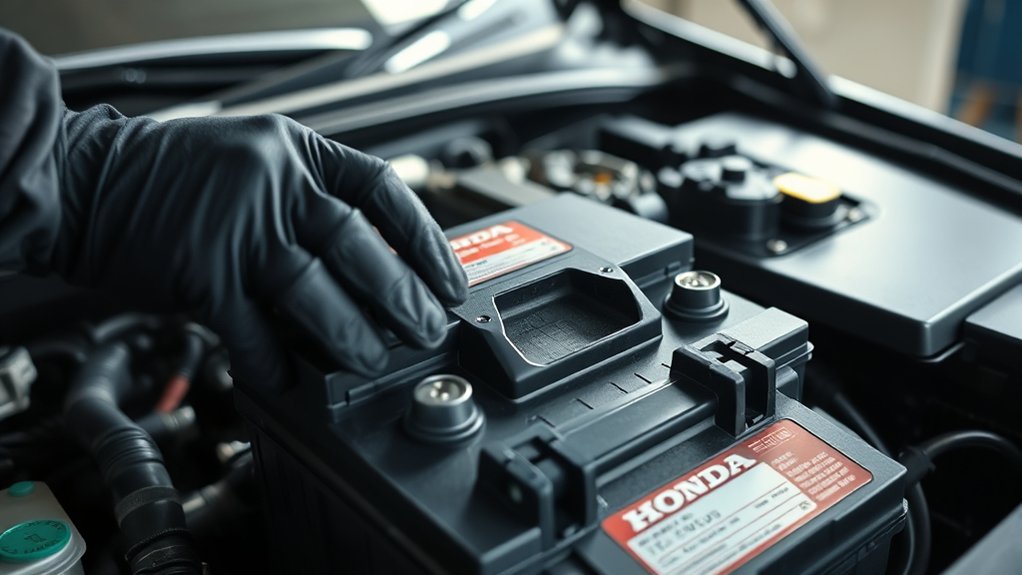
How can you determine the best time to replace your Honda battery? Unlike an unrelated topic in a brainstorm session, this decision relies on clear, measurable indicators. You should replace your battery when it shows signs of diminished performance or failure.
Key indicators include:
- Difficulty starting the engine or slow cranking
- Dimming headlights or electrical component issues
- Battery age exceeding 3 to 5 years, typical for Honda batteries
- Frequent jump-starts or low battery charge warnings
Monitoring these signs helps prevent sudden battery failure, ensuring your Honda operates reliably. Don’t wait for complete failure; proactive replacement maintains your vehicle’s electrical system integrity and prevents inconvenient breakdowns.
Use a battery tester or visit a professional to confirm your battery’s condition accurately, avoiding guesswork often involved in unrelated topics or brainstorm sessions.
What Affects Your Honda Battery’s Lifespan?
Several factors influence your Honda battery’s lifespan, and understanding them helps you maximize its performance and durability. Temperature extremes, charging methods, and maintenance routines all play critical roles. For instance, improper solar charging can degrade battery cells faster.
Also, neglecting timely battery disposal may risk environmental harm and reduce space for new batteries.
| Factor | Impact on Battery Lifespan |
|---|---|
| Temperature | High heat accelerates chemical degradation |
| Charging Method | Inconsistent or incorrect charging reduces efficiency |
| Maintenance & Disposal | Proper disposal prevents damage and environmental issues |
How Driving Habits Affect Your Honda Battery
Although your Honda battery’s overall health depends on multiple factors, your driving habits considerably influence its longevity and performance. Proper driving behavior directly impacts battery charging efficiency, affecting how well your battery maintains its charge.
Frequent short trips limit the battery’s ability to fully recharge, leading to sulfation and reduced capacity. Conversely, longer drives allow the alternator to replenish the battery effectively.
To optimize battery life, consider these key driving behavior points:
- Avoid excessive idling, which drains the battery without sufficient charging.
- Limit short-distance trips that don’t allow full battery charging.
- Use electrical accessories judiciously, especially when the engine is off.
- Regularly drive at highway speeds to support consistent battery charging.
How Climate Impacts Your Honda Battery
Why does climate play such a critical role in your Honda battery’s lifespan? Battery chemistry is highly sensitive to temperature extremes. In hot climates, elevated temperatures accelerate chemical reactions inside the battery, increasing internal corrosion and electrolyte evaporation, which shortens battery life.
Climate extremes accelerate battery wear, with heat causing corrosion and cold reducing performance, impacting your Honda’s lifespan.
Conversely, cold climates slow down battery chemistry, reducing the battery’s ability to deliver sufficient current, especially during engine starts. Both extremes can compromise climate safety by increasing the risk of unexpected battery failure.
Additionally, frequent temperature fluctuations cause expansion and contraction within the battery cells, leading to internal structural damage. Understanding how different climates influence your battery helps you anticipate performance challenges and maintenance needs.
Your Honda battery’s durability directly depends on how well it withstands these environmental stresses inherent in your local climate.
Tips to Extend Honda Battery Life
Understanding how climate affects your Honda battery sets the stage for proactive care. To extend battery life, you need to dispel common battery myths and charging myths that could lead to improper maintenance.
Avoid deep discharges and frequent short trips, as they strain the battery. Monitor battery terminals for corrosion and ensure a secure connection to optimize performance. Employ a battery maintainer during long periods of inactivity to prevent discharge.
- Park in shaded or temperature-controlled areas to reduce thermal stress
- Regularly test voltage to detect early signs of failure
- Use OEM-recommended chargers to avoid overcharging
- Limit use of electrical accessories when the engine is off
These targeted actions will help maintain your Honda battery’s efficiency and longevity.
Frequently Asked Questions
What Type of Battery Does My Honda Use?
Your Honda typically uses a 12-volt lead-acid battery. You should focus on battery maintenance and charging basics to ensure optimal performance.
Avoid deep discharges and use proper chargers to extend the battery’s lifespan efficiently.
Can I Jump-Start a Honda Battery Safely?
Yes, you can jump-start a Honda battery safely. Follow correct procedures, maintain polarity, and avoid sparks.
This two word discussion ideas guide separates connected topics from unconnected topics, ensuring precise, safe, and effective battery revival techniques.
Are Honda Batteries Covered Under Warranty?
Yes, Honda batteries come with a battery warranty that typically covers defects and premature failure. You’ll find service coverage details in your vehicle’s warranty booklet, ensuring repairs or replacements during the specified period at authorized dealers.
How Much Does a Honda Battery Replacement Cost?
You can expect a Honda battery replacement to cost between $100 and $250, depending on model and labor.
Proper battery maintenance and timely replacement prevent unexpected failures and ensure optimal vehicle performance and reliability.
Where Can I Recycle My Old Honda Battery?
Think of your old Honda battery as a treasure chest awaiting renewal. You can drop it off at authorized recycling locations like auto shops or hazardous waste centers. This reduces environmental impact through proper disposal and material recovery.
Conclusion
Your Honda battery’s lifespan is like the steady heartbeat of your vehicle—vital yet vulnerable. By recognizing early signs of fatigue, testing regularly, and adapting your driving habits, you can keep this pulse strong.
Protect it from extreme climates and use proper maintenance to gently extend its life. When the time comes to retire your battery, do so responsibly.
Ensuring your car continues to perform reliably without interruption is key to maximizing how long Honda batteries last.