If your Honda Accord jerks when you accelerate, it’s a clear sign that something in the ignition, fuel, air intake, or transmission system isn’t working smoothly.
Issues like worn spark plugs, clogged fuel injectors, or a slipping transmission can disrupt power delivery and cause those sudden jolts.
Pinpointing the exact cause requires understanding how these components interact under acceleration. Missing the signs could lead to more serious issues down the line.
Key Takeaways
- Jerking during acceleration often results from transmission issues like slipping gears or low fluid causing uneven power delivery.
- Faulty spark plugs or ignition coils cause misfires, leading to engine hesitation and jerking during throttle input.
- Clogged fuel injectors or weak fuel pump pressure disrupt fuel delivery, causing hesitation and jerking under acceleration.
- A malfunctioning throttle position sensor (TPS) can cause inconsistent throttle response and uneven acceleration power.
- Regular maintenance of spark plugs, fuel system, air filters, and transmission fluid helps prevent jerking and ensures smooth acceleration.
Signs Your Honda Accord Jerks When Accelerating

How can you tell if your Honda Accord is jerking when accelerating? You’ll notice abrupt, uneven surges in power rather than smooth acceleration. This two word symptom, engine hesitation, manifests as intermittent stalling or sputtering during throttle input.
Another two word indicator is transmission delay, where the vehicle lags before responding to gas pedal pressure. You might also experience vibration feedback, a physical shaking felt through the steering wheel or seat.
These signs often coincide with fluctuating RPMs, indicating inconsistent fuel delivery or ignition timing. Pay attention to any dashboard warning lights, as they assist in pinpointing electronic control issues.
How Dirty Spark Plugs Cause Jerking and How to Fix Them
Your Honda Accord’s spark plugs ignite the air-fuel mixture for smooth acceleration, but dirty plugs disrupt this process and cause jerking. You’ll notice symptoms like rough idling, misfires, or poor fuel efficiency when the plugs are fouled.
To fix this, you can clean the deposits carefully or replace the plugs following your vehicle’s maintenance schedule.
Spark Plug Function Overview
Why does a dirty spark plug cause your Honda Accord to jerk during acceleration? Spark plugs deliver the crucial spark that ignites the air-fuel mixture in the combustion chamber. When they’re dirty or worn beyond their typical spark plug lifespan, usually around 30,000 to 50,000 miles, the spark weakens or becomes inconsistent.
This disruption causes misfires, leading to jerking during acceleration. To diagnose, you should perform ignition coil testing, as faulty coils can mimic spark plug issues by failing to provide a strong spark. Replacing worn spark plugs restores optimal combustion and smooth engine performance.
Regular inspection and timely replacement prevent jerking and maintain your Accord’s acceleration efficiency. Always check both spark plugs and ignition coils to ensure the ignition system functions properly.
Symptoms of Dirty Plugs
When does your Honda Accord jerk during acceleration, and could dirty spark plugs be the culprit? Dirty spark plugs disrupt the ignition coil’s ability to generate a consistent spark, causing incomplete combustion. This misfire leads to jerking sensations as your engine struggles to maintain power output.
Look for these symptoms indicating dirty spark plugs:
- Engine hesitation or stumbling during throttle input.
- Noticeable drop in acceleration smoothness.
- Increased engine vibrations at low speed.
- Reduced fuel efficiency linked to irregular combustion.
These signs point to fouled spark plugs impairing ignition coil function. Diagnosing this early prevents further strain on your engine and restores smooth acceleration.
Cleaning and Replacement Tips
Frequently, jerking during acceleration stems from dirty spark plugs disrupting ignition timing and combustion efficiency. To address this, follow specific cleaning tips: remove the plugs carefully, inspect for carbon buildup or oil fouling, and use a wire brush or spark plug cleaner to remove deposits.
Avoid abrasive materials that can damage the electrode. Check the gap with a feeler gauge and adjust it if necessary. However, cleaning is a temporary fix; adhering to manufacturer-recommended replacement intervals, typically every 30,000 to 100,000 miles depending on plug type, is crucial.
Worn or damaged plugs degrade performance and cause jerking. Regular inspection during routine maintenance lets you identify issues early. If cleaning doesn’t restore proper function, replace the plugs promptly to ensure smooth acceleration and optimal engine operation.
How Engine Misfires Lead to Jerky Acceleration
How exactly do engine misfires cause your Honda Accord to jerk during acceleration? Misfires disrupt the engine’s combustion process, causing uneven power delivery. This irregularity results in the noticeable jerking sensation when you accelerate.
Engine misfires disrupt combustion, causing uneven power and a jerking sensation during acceleration.
Several factors contribute to misfires:
- Incomplete combustion due to poor fuel-air mixture.
- Worn or contaminated spark plugs failing to ignite properly.
- Engine oil degradation affecting lubrication and sensor performance.
- Imbalanced tire balance amplifying vibrations, making jerks more perceptible.
When engine oil isn’t maintained, it hampers smooth engine operation, increasing misfire risk. Meanwhile, uneven tire balance doesn’t cause misfires but worsens the jerking feel you experience.
Addressing these technical aspects ensures smoother acceleration and eliminates jerks related to engine misfires.
Diagnosing Ignition System Issues Causing Jerking
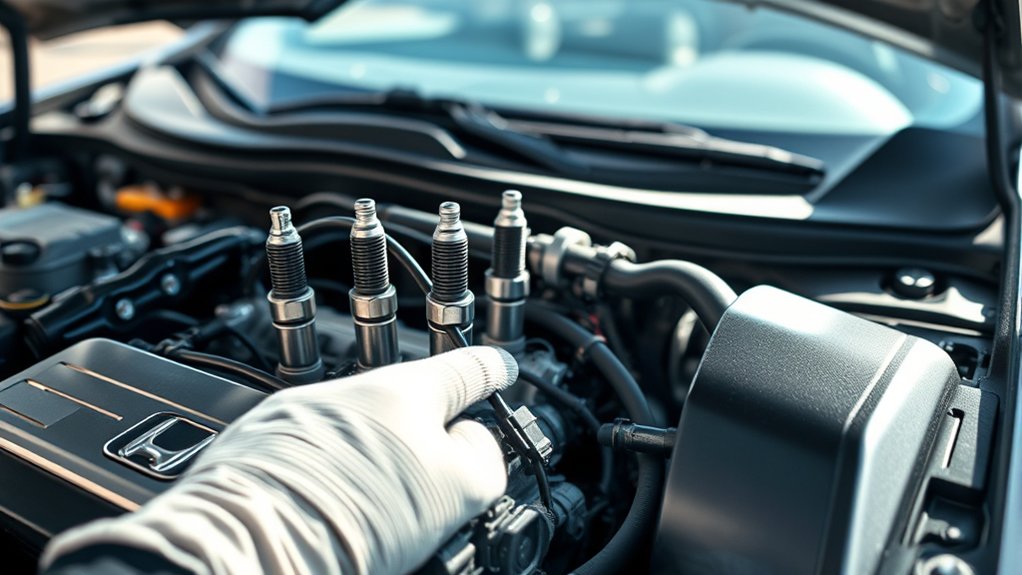
Why does your Honda Accord jerk despite seeming engine health? The issue often lies in the ignition system. Start by inspecting the ignition timing, as incorrect timing disrupts combustion, causing hesitation and jerking. Use a timing light to verify the spark occurs precisely when the piston reaches the optimal position.
Next, check the spark gap on each spark plug; an incorrect gap leads to weak or inconsistent sparks, resulting in misfires and acceleration issues. Measure the gap with a feeler gauge, adjusting it to the manufacturer’s specifications.
Also, examine ignition coils and wires for signs of wear or damage, as these components directly impact spark delivery. Accurate diagnosis of these elements will pinpoint ignition-related causes of your Accord’s jerking during acceleration.
How a Faulty Fuel System Affects Your Accord’s Acceleration
If your Accord jerks during acceleration, you should check the fuel system for issues like clogged fuel injectors or weak fuel pump pressure. These problems disrupt the precise fuel delivery your engine needs for smooth power. Identifying and addressing fuel flow interruptions can restore consistent acceleration performance.
Clogged Fuel Injectors
Where does your Honda Accord’s power falter when you press the accelerator? Clogged fuel injectors often cause inconsistent fuel delivery, resulting in jerking or hesitation. These injectors spray fuel into the combustion chamber, and any blockage disrupts the precise fuel-air mix your engine needs.
Common causes include:
- Deposits from low-quality fuel or additives promoted by misleading advertisements.
- Residue buildup accelerated by aftermarket mods that alter fuel flow.
- Dirt and contaminants trapped in the fuel system.
- Aging injectors losing spray pattern efficiency.
Diagnose clogged injectors with fuel system cleaning or injector testing. Address this promptly to restore smooth acceleration and prevent engine misfires. Avoid relying on unverified fuel additives or mods claiming performance gains; they often worsen injector clogging.
Weak Fuel Pump Pressure
How does weak fuel pump pressure impact your Honda Accord’s acceleration? When the fuel pump fails to maintain adequate pressure, your fuel system can’t deliver enough fuel to the engine, causing hesitation or jerking during acceleration.
To diagnose this, you’ll need precise diagnostic methods like fuel pressure testing and flow rate analysis.
| Symptom | Diagnostic Method | Possible Cause |
|---|---|---|
| Engine jerks | Fuel pressure gauge | Weak fuel pump |
| Poor acceleration | Fuel flow test | Clogged filter/pump |
| Engine stalls | Voltage drop test | Electrical issues |
Identifying weak fuel pump pressure quickly helps you prevent further engine damage and restore smooth acceleration in your Accord.
Why a Clogged Air Filter Makes Your Car Hesitate
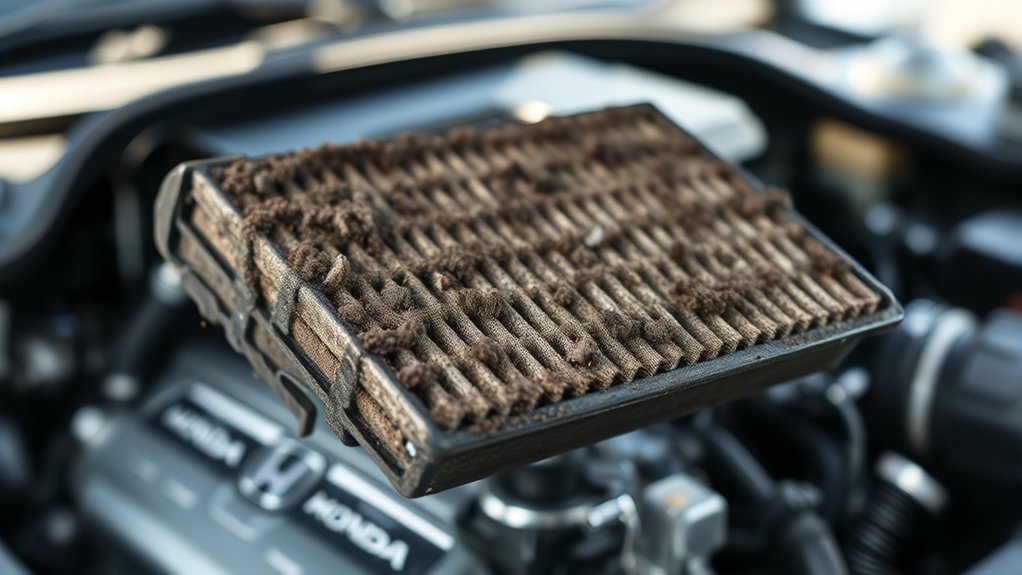
Why does a clogged air filter cause your Honda Accord to hesitate during acceleration? The air filter’s job is to ensure clean airflow to the engine. When it’s clogged, airflow reduces significantly, disrupting the air-fuel mixture crucial for combustion.
Avoid topic drift by focusing strictly on the air filter’s impact, not unrelated focus areas like fuel pump issues.
Here’s why a clogged air filter causes hesitation:
- Reduces oxygen supply, causing incomplete combustion
- Forces the engine control unit to adjust fuel delivery inefficiently
- Increases engine vacuum, affecting throttle response
- Causes a lean air-fuel mixture, leading to power loss during acceleration
Diagnosing and replacing a clogged air filter can restore smooth acceleration and prevent jerking.
Why a Failing Transmission Causes Honda Accord Jerking
While a clogged air filter restricts airflow and disrupts combustion, issues with the transmission can directly impact how power is delivered to your Honda Accord’s wheels. A failing transmission causes jerking by improperly engaging or slipping between gears, interrupting smooth acceleration.
You’ll notice sudden jolts or hesitation as the transmission struggles to maintain consistent torque transfer. Diagnosing this requires focusing on transmission-specific components like worn clutch packs, low fluid levels, or faulty solenoids, avoiding nonessential topics or unrelated mechanics that don’t influence drivetrain performance.
Ignoring these symptoms can lead to further damage and costly repairs. To pinpoint transmission failure, check fluid condition and levels, listen for grinding noises, and monitor shift timing. Addressing transmission issues promptly ensures your Accord accelerates smoothly without jerking.
How a Malfunctioning Throttle Position Sensor Impacts Acceleration
What causes your Honda Accord to jerk unexpectedly during acceleration? A malfunctioning throttle position sensor (TPS) can disrupt acceleration dynamics, causing erratic engine responses. The TPS monitors the throttle position and sends data to the engine control unit (ECU) to regulate fuel injection and air intake.
When faulty, it leads to inconsistent throttle input interpretation, resulting in jerking.
Here’s how a defective TPS impacts acceleration:
Here’s how a defective TPS impacts acceleration, causing delays and erratic engine responses that lead to jerking.
- Delays in throttle response cause uneven power delivery.
- Incorrect sensor signals disrupt fuel-air mixture calibration.
- The ECU receives erratic data, triggering abrupt engine adjustments.
- Sudden changes in acceleration dynamics create noticeable jerks.
Diagnosing TPS issues early ensures a smoother acceleration experience and prevents further drivetrain complications.
How Regular Maintenance Prevents Jerking During Acceleration
Even if your Honda Accord shows no immediate signs of trouble, neglecting regular maintenance can lead to jerking during acceleration over time. Routine checks of the fuel system, spark plugs, and air filters prevent performance degradation that causes hesitation or stuttering.
Skipping scheduled oil changes or ignoring transmission fluid levels can disrupt smooth power delivery. Addressing these elements proactively avoids misfires, clogged injectors, and erratic throttle responses.
When diagnosing acceleration issues, don’t get sidetracked by irrelevant topics or unrelated discussions that don’t connect to your vehicle’s symptoms. Focus on specific maintenance tasks linked to engine and transmission health.
Frequently Asked Questions
Can Cold Weather Cause My Honda Accord to Jerk During Acceleration?
Yes, cold weather can cause your Honda Accord to jerk during acceleration due to delayed coolant temperature readings affecting throttle response.
The engine’s control system adjusts fuel and timing based on temperature, which may cause intermittent jerking until warmed up.
Does Using Lower Octane Fuel Affect Acceleration Smoothness?
You know, “You get what you pay for.” Using low octane fuel can reduce combustion efficiency, causing misfires and jerking.
Poor fuel quality directly impacts acceleration smoothness, so always choose the recommended octane for supreme performance.
Can Software Updates Fix Acceleration Jerking Issues?
Yes, software updates can fix acceleration jerking by recalibrating the accelerator pedal and optimizing engine control parameters.
You should check for available updates that address throttle response and sensor communication issues to improve smoothness.
Is Jerking Related to Honda Accord’s Age or Mileage?
You should know 60% of Hondas show age-related wear by 100,000 miles. Jerking often stems from high mileage symptoms like worn spark plugs or fuel injectors, so age and mileage directly impact acceleration performance.
Could Worn Engine Mounts Cause Acceleration Jerking?
Yes, worn engine mounts can cause jerking during acceleration. They fail to secure the engine properly, transmitting excessive vibrations and jerking.
Inspect engine mounts as a potential jerking cause and replace them if they’re cracked or loose.
Conclusion
If your Honda Accord jerks when you accelerate, don’t ignore it—this issue can feel like your car’s about to launch into orbit! You need to diagnose spark plugs, ignition coils, fuel delivery, air filters, throttle sensors, and transmission health promptly.
Regular maintenance isn’t just recommended; it’s essential to prevent these jerking symptoms from wreaking havoc on your driving experience. Stay proactive, and you’ll keep your Accord running smoothly and reliably every time you hit the gas.
Addressing these potential problems early is key to avoiding costly repairs down the road. If your Honda Accord jerks when you accelerate, taking action quickly will ensure a safer and more comfortable ride.