Did you know that nearly 30% of Honda owners experience a blinking D light on their dashboard, often related to transmission issues?
When the D light starts flashing, it’s a clear sign your vehicle’s onboard system has detected a fault affecting shifting or fuel efficiency.
Ignoring this warning could lead to costly repairs.
However, understanding the underlying causes and knowing how to respond can save you both time and money.
Let’s explore what triggers the blinking D light on your Honda and how to address it effectively.
Key Takeaways
- The blinking D light on a Honda signals a transmission issue detected by the vehicle’s onboard diagnostics system.
- It indicates potential problems like slipping gears, overheating, or faulty transmission sensors.
- Low or dirty transmission fluid can trigger the blinking D light and affect shifting performance.
- Loose or corroded sensor connections may cause incorrect transmission data and activate the warning light.
- An OBD-II scanner can identify specific transmission faults causing the blinking D light for targeted repairs.
What Does the Blinking D Light Mean on Your Honda?
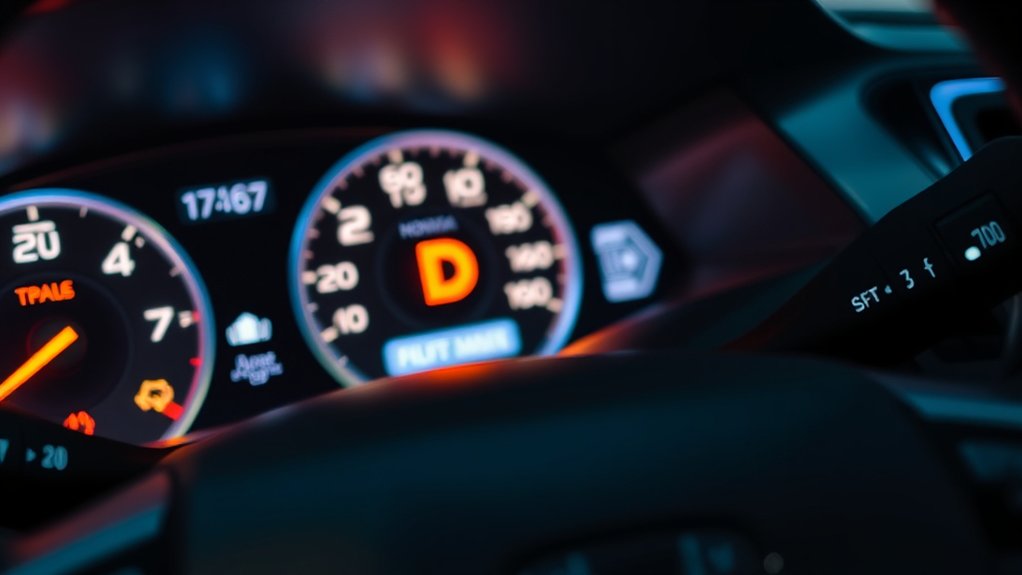
Why does the D light blink on your Honda’s dashboard? The blinking “D” light signals a transmission issue detected by the vehicle’s onboard diagnostics. It’s not just a random alert; it indicates a concern with the transmission control system, which could affect shifting performance or fuel efficiency.
If you’ve done casual research, you might notice forums use a direct speaker tone, emphasizing urgency but avoiding panic. The blinking serves as a warning that the transmission may be slipping, overheating, or experiencing sensor malfunctions.
It’s your Honda’s way of communicating that it’s not operating under normal parameters. Understanding this helps you interpret the signal properly, rather than ignoring it or confusing it with other dashboard alerts.
What to Do When the D Light Starts Blinking
When the D light starts blinking, first check your transmission fluid level and condition to ensure it’s within specifications. Next, inspect the sensor connections for any signs of damage or corrosion that could disrupt signals.
Addressing these areas promptly can help prevent further transmission issues.
Check Transmission Fluid
How does transmission fluid affect the blinking D light on your Honda? Low or dirty transmission fluid can trigger dashboard alerts, including the D light blinking, signaling a need for transmission diagnosis.
Transmission fluid lubricates and cools internal components; insufficient fluid causes overheating and shifting issues, leading to warning signals.
| Condition | Transmission Fluid Level | Impact on Transmission |
|---|---|---|
| Normal | Full | Smooth shifting |
| Low | Below minimum | Overheating, erratic shifts |
| Dirty/Contaminated | Full but degraded | Slipping, delayed shifts |
Always check fluid levels with the engine warm and on level ground. Use the dipstick method specified in your owner’s manual for accurate results.
Address fluid issues promptly to prevent costly repairs.
Inspect Sensor Connections
Where should you look first if the D light on your Honda starts blinking unexpectedly? Inspect sensor connections. This is a critical step in car maintenance, as loose or corroded connections can trigger warning signals.
Begin by checking the transmission range sensor and speed sensor connectors for secure attachment and corrosion. Use a multimeter to test sensor output if you suspect electrical issues. Faulty sensor data can mislead the transmission control module, causing irregular shifting or the blinking D light.
Regularly inspecting these connections helps prevent errors related to driving habits, such as frequent stop-and-go traffic or aggressive acceleration, which can exacerbate sensor wear. Addressing sensor connection issues promptly enhances transmission performance and extends its lifespan, ensuring your Honda operates reliably and efficiently.
Common Causes of a Blinking D Light Warning
When the D light blinks on your Honda, it often signals transmission issues like slipping gears or low fluid levels. Sensor malfunctions, such as faulty speed or pressure sensors, can also trigger this warning.
Understanding these common causes helps you identify the problem quickly and take appropriate action.
Transmission Issues
Why does the D light blink on your Honda’s dashboard during driving? Often, it signals transmission issues. Contrary to common transmission myths, a blinking D light usually indicates your car’s computer detects a fault within the transmission system, such as shifting problems or fluid pressure irregularities.
This warning helps prevent further damage by prompting immediate attention. You shouldn’t confuse this with brake diagnostics, which trigger different alerts. When the D light blinks, the transmission control module runs diagnostics and may limit performance to protect components.
Ignoring this could lead to costly repairs. To address it, have a certified technician perform a thorough transmission system scan, identify error codes, and inspect fluid levels and condition to resolve the underlying fault accurately.
Sensor Malfunctions
How can sensor malfunctions trigger a blinking D light on your Honda’s dashboard? Your vehicle relies on multiple sensors, such as the transmission range sensor and vehicle speed sensor, to monitor and communicate operational status.
When these sensors fail or send erratic data, the onboard computer detects inconsistencies, triggering the blinking D light as a warning. Ignoring this can compromise driving safety by causing improper gear shifts or unexpected transmission behavior.
Additionally, sensor issues often lead to higher insurance costs if they contribute to accidents or require costly repairs. Diagnosing sensor malfunctions promptly with a professional scan tool helps maintain vehicle integrity and prevents further damage.
Addressing these faults ensures optimal performance and safeguards both your safety and financial liability.
How Transmission Problems Cause the Blinking D Light
What triggers the blinking D light on your Honda’s dashboard often lies within the transmission system. Transmission problems such as slipping gears, erratic shifting, or sensor malfunctions can cause the vehicle’s computer to signal an issue by blinking the D light.
Unlike unrelated components like how tires affect traction or radio systems influence cabin experience, transmission faults directly impact drivetrain performance. The onboard diagnostic system monitors transmission sensors and solenoids, detecting abnormalities in hydraulic pressure or gear engagement.
When these parameters fall outside specified ranges, the control module triggers the blinking D light to alert you of potential damage or malfunction. Addressing these issues promptly prevents further transmission wear and costly repairs, ensuring your Honda operates safely and efficiently.
When to Check Transmission Fluid for Blinking D Light Issues
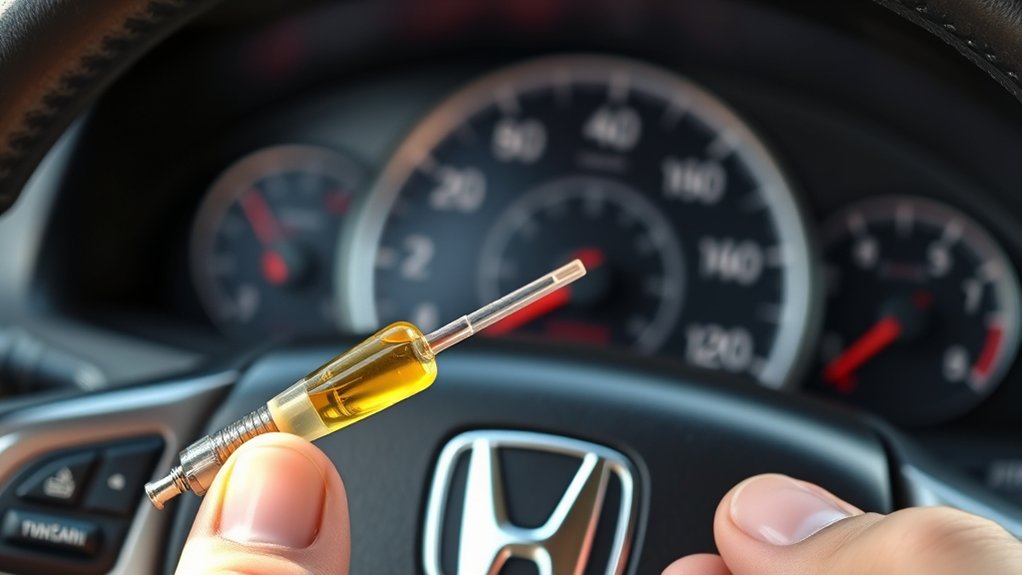
When should you check your transmission fluid if the D light starts blinking on your Honda? You should inspect the fluid as soon as possible, especially if the blinking coincides with shifting issues or unusual drivetrain noises.
Low or contaminated transmission fluid directly affects hydraulic pressure, causing erratic gear changes and triggering the lighting system warning. For accurate diagnosis, perform this check during routine drivetrain maintenance or immediately after noticing the blinking D light.
Ensure the vehicle is on level ground and the engine is warmed up to the manufacturer’s recommended temperature before measuring fluid level and condition. Addressing transmission fluid issues promptly helps prevent further drivetrain damage and resolves many causes behind the blinking D light, maintaining optimal vehicle performance and safety.
Other Vehicle Systems That Cause the Blinking D Light
Checking the transmission fluid often resolves many causes behind the blinking D light, but other vehicle systems can also trigger this warning. For instance, sensors linked to your vehicle’s stability control system may malfunction, especially if debris or damage affects the tire tread sensors.
Worn or uneven tire tread can send inaccurate data, causing the system to activate the D light. Additionally, issues with the electronic throttle control or engine control module may prompt the blinking D light, indicating a communication fault.
Even cosmetic factors like the condition of your vehicle’s glossy paint can indirectly affect sensor performance if dirt or grime obstructs sensor areas. To pinpoint the exact cause, inspect these systems thoroughly, ensuring all sensors and components function correctly to maintain optimal vehicle performance and safety.
Diagnosing the Blinking D Light With OBD-II Tools
How can you accurately identify the root cause of the blinking D light on your Honda? Start by connecting an OBD-II scanner to your vehicle’s diagnostic port, usually located beneath the dashboard. This tool reads stored trouble codes, pinpointing issues such as transmission faults or sensor failures that trigger the blinking D light.
Once you retrieve the codes, cross-reference them with Honda-specific diagnostic manuals for precise interpretation. Some advanced OBD-II tools now integrate AI humor to make error reading less tedious, but don’t let that distract you. Focus on codes affecting transmission and fuel economy.
Addressing these promptly ensures your Honda runs efficiently and prevents further damage. Accurate diagnosis with OBD-II tools is essential for targeted repairs and restoring optimal vehicle performance.
How to Prevent the Blinking D Light From Coming Back
After identifying the root cause of the blinking D light with an OBD-II scanner, you can take specific steps to prevent the issue from recurring. Start by addressing the exact fault codes indicating transmission or sensor malfunctions, as the d light blinking meaning often points to these areas.
Regularly maintain your transmission fluid, ensuring it’s clean and at the proper level, since degraded fluid can trigger the blinking D light. Inspect and replace faulty sensors promptly, as delayed action may cause system errors to reappear.
Additionally, keep your vehicle’s software updated, because transmission control modules rely on accurate programming to manage shifting. By following these targeted maintenance and repair practices, you minimize the risk of the d light blinking meaning future transmission issues, ensuring reliable performance and avoiding costly repairs.
Frequently Asked Questions
Can a Blinking D Light Affect My Honda’s Fuel Efficiency?
A blinking D light can indicate transmission issues that may reduce your Honda’s fuel efficiency. You should diagnose and fix the problem promptly to prevent increased fuel consumption and potential long-term damage to your vehicle’s drivetrain system.
Is It Safe to Drive With the D Light Blinking?
You shouldn’t ignore the blinking D light for driving safety. It signals a potential transmission issue.
Stop driving soon and schedule a maintenance check to prevent further damage and guarantee your Honda operates reliably and safely.
Does the Blinking D Light Impact My Vehicle’s Warranty?
Imagine you skip differential maintenance, triggering drivetrain indicators like the blinking D light. This neglect can void your warranty since manufacturers require timely service to cover drivetrain components.
Can Cold Weather Cause the D Light to Blink?
Yes, cold weather can cause the blinking indicator to activate due to temperature-sensitive sensors or fluid viscosity changes. This may trigger the D light as the system adjusts, but it usually resolves once the vehicle warms up.
Will a Software Update Fix the Blinking D Light Issue?
Software updates sometimes solve blinking concerns by smoothing system software. You’ll want a two-word discussion: “firmware fix.”
However, stubborn signals might signify sensor or wiring issues beyond updates, requiring professional diagnosis for precise problem pinpointing.
Conclusion
When the D light blinks on your Honda, it signals a transmission issue that shouldn’t be ignored. Did you know that nearly 30% of transmission failures stem from neglected fluid maintenance? By regularly checking your transmission fluid and promptly diagnosing sensor faults with an OBD-II scanner, you can prevent costly repairs and maintain optimal performance.
Stay proactive to avoid these common problems and keep your Honda shifting smoothly and efficiently. Understanding why the D light is blinking on your Honda is the first step to ensuring your transmission remains in good condition.