You can use diesel oil in your gas engine only if its viscosity, API rating, and additives precisely match your engine’s requirements.
Diesel oils have higher viscosity and additives designed for soot control, which may not optimize gas engine performance or protect emissions systems.
Using incompatible diesel oil risks increased wear and efficiency loss.
To avoid damage, guarantee the oil meets gas engine specifications and manufacturer approvals.
Exploring the distinctions and precautions further will help you make a technically sound choice.
Key Takeaways
- Diesel oil can be used in gas engines but may not optimize performance or protect long-term engine health.
- Diesel oils have higher viscosity and additives tailored for soot control, which differ from gas engine oil requirements.
- Always verify diesel oil’s API rating and viscosity match gas engine specifications before use.
- Using incompatible diesel oil risks increased engine wear, reduced efficiency, and potential emission system damage.
- After using diesel oil, perform a full oil change and replace the oil filter with appropriate gas engine oil.
Can You Use Diesel Oil in a Gas Engine?
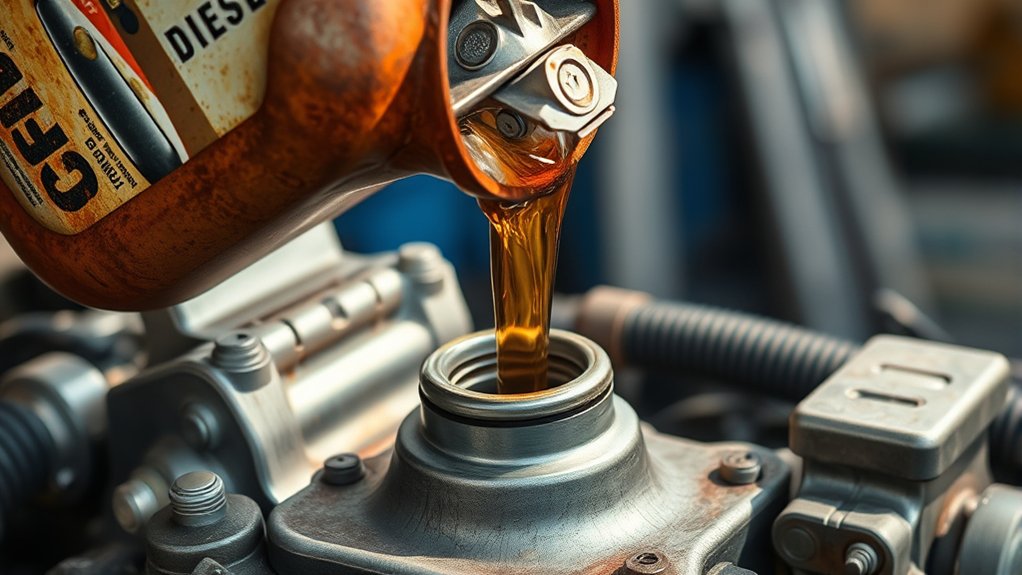
How does diesel oil perform in a gas engine? Diesel oil benefits stem from its formulation, which typically includes higher levels of detergents and additives designed for soot control and higher compression pressures.
When you use diesel oil in a gas engine, engine compatibility becomes the critical factor. Diesel oils have a different additive package tailored to diesel combustion byproducts, which may not align perfectly with the lubrication needs of gasoline engines.
While diesel oil can provide adequate lubrication, it might not optimize performance or emission controls in gas engines. You should consider manufacturer specifications closely because incompatibility can affect engine wear, efficiency, and emission system integrity.
Diesel oil may lubricate gas engines but can compromise performance, emissions, and engine longevity if not specified.
Therefore, although diesel oil can function in a gas engine, it’s not always the ideal choice for ensuring long-term engine health and performance.
How Is Diesel Oil Different From Gas Engine Oil?
Understanding the differences between diesel oil and gas engine oil helps clarify why each is formulated for specific engine types. Diesel oils generally exhibit higher viscosity differences to withstand the elevated pressures and temperatures in diesel engines.
You’ll notice diesel oils contain robust additive formulations, including detergents and anti-wear agents tailored for soot control and acid neutralization. In contrast, gas engine oils prioritize oxidation resistance and friction reduction, with additive packages optimized for lighter combustion byproducts.
These viscosity and additive distinctions guarantee compatibility with the distinct combustion characteristics and mechanical stresses of each engine type. Using diesel oil in a gas engine may alter lubrication performance due to these fundamental formulation differences, impacting engine efficiency and longevity if not properly matched.
Understanding this technical divergence is essential before considering cross-usage.
When Is It Safe to Use Diesel Oil in a Gas Engine?
When can you safely use diesel oil in a gas engine without risking damage or reduced performance? You must first verify engine compatibility and guarantee the oil meets specific performance criteria. Consider these key factors:
- Confirm the diesel oil’s API rating matches or exceeds your gas engine’s requirements.
- Check if the oil’s viscosity grade suits your engine’s operating conditions.
- Ascertain the diesel oil provides adequate detergency and wear protection for gasoline combustion byproducts.
- Verify compatibility with emission control systems to avoid catalyst or sensor damage.
How to Choose the Right Diesel Oil for Your Gas Engine
Although diesel oils are formulated primarily for compression-ignition engines, you can select a suitable product for your gas engine by carefully evaluating key specifications. Focus on oil viscosity to match your engine’s requirements and verify engine compatibility through manufacturer approvals.
Avoid oils with additives that may harm spark plugs or fuel systems.
| Specification | Recommended Range | Notes |
|---|---|---|
| Oil Viscosity | SAE 5W-30 to 10W-40 | Match your gas engine spec |
| API Service Rating | SN or higher | Guarantees gas engine compatibility |
| Additive Package | Low detergent, anti-wear | Prevents spark plug fouling |
| Manufacturer Approval | Must include gas engine | Guarantees proper compatibility |
Tips to Protect Your Gas Engine After Using Diesel Oil

To protect your gas engine after using diesel oil, start by performing a thorough oil change as soon as possible. Diesel oil differs in additive formulation and viscosity, affecting oil compatibility and potentially compromising engine performance.
Follow these steps:
- Drain the diesel oil completely to prevent contamination.
- Replace the oil filter to remove residual diesel oil and particulates.
- Refill with the manufacturer-recommended gas engine oil, ensuring proper viscosity and additive balance.
- Monitor engine performance closely for any irregularities, such as increased noise or reduced power, indicating improper lubrication.
Frequently Asked Questions
Can Diesel Oil Improve Gas Engine Fuel Efficiency?
Diesel oil won’t improve your gas engine’s fuel performance because its lubrication properties differ from gasoline engine oil requirements. Using it can reduce efficiency and cause damage, so stick to oils designed for gas engines to optimize performance.
Does Using Diesel Oil Affect Engine Warranty?
Using diesel oil in your gas engine can void warranty claims due to oil compatibility issues. Manufacturers specify oil types to guarantee proper function, so deviating risks damage and may lead to denied warranty coverage.
What Are the Environmental Impacts of Diesel Oil in Gas Engines?
Using diesel oil in gas engines increases emission levels due to incomplete combustion. You’ll also encounter harmful fuel residues, which degrade engine efficiency and contribute to environmental pollution.
This makes it an unsustainable choice for emissions control.
Can Diesel Oil Cause Engine Overheating in Gas Engines?
Think of your engine as a delicate clockwork garden; using diesel oil disrupts its harmony. Poor oil compatibility impairs engine performance, potentially causing overheating by increasing friction and reducing proper heat dissipation within gas engines.
How Often Should Diesel Oil Be Changed in a Gas Engine?
You should change diesel oil in a gas engine every 3,000 to 5,000 miles, ensuring oil viscosity matches specifications.
Regular changes maintain peak engine performance and prevent viscosity breakdown that could impair lubrication and efficiency.
Conclusion
You shouldn’t regularly use diesel oil in your gas engine, as its formulation differs markedly and can affect engine performance. However, in emergencies, certain diesel oils with compatible specifications might work temporarily. Think of it like using a universal key—it fits, but not perfectly.
To safeguard your engine, always revert to the correct gas engine oil promptly and monitor for any unusual signs. This ensures ideal function and longevity. In conclusion, while diesel oil can be used in a gas engine in rare situations, it is not recommended for regular use.