To remove engine oil from your driveway, act quickly by covering fresh spills with absorbents like cat litter or baking soda and let them sit to soak up the oil. This immediate action helps prevent the stain from setting deep into the surface.
For older stains, assess the depth and texture. Then apply heavy-duty degreasers. Scrub the area with a stiff brush and rinse with hot water, repeating the process as needed until the stain fades.
To prevent future stains, address any leaks promptly and seal your driveway regularly. These steps will help maintain a clean and damage-free surface.
Keep reading for detailed methods and preventive tips for lasting results.
Key Takeaways
- Act quickly by covering fresh oil spills with absorbents like kitty litter to soak up excess oil before it sets.
- For old stains, apply absorbents for several hours, then scrub with a degreasing detergent and rinse with hot water.
- Use heavy-duty degreasers and a stiff brush to effectively break down and remove embedded engine oil stains.
- Consider a poultice made from absorbents and solvents for deeply set or hardened oil stains on the driveway.
- Prevent stains by fixing vehicle leaks, using protective mats, cleaning spills immediately, and sealing the driveway regularly.
Remove Fresh Engine Oil Stains Quickly
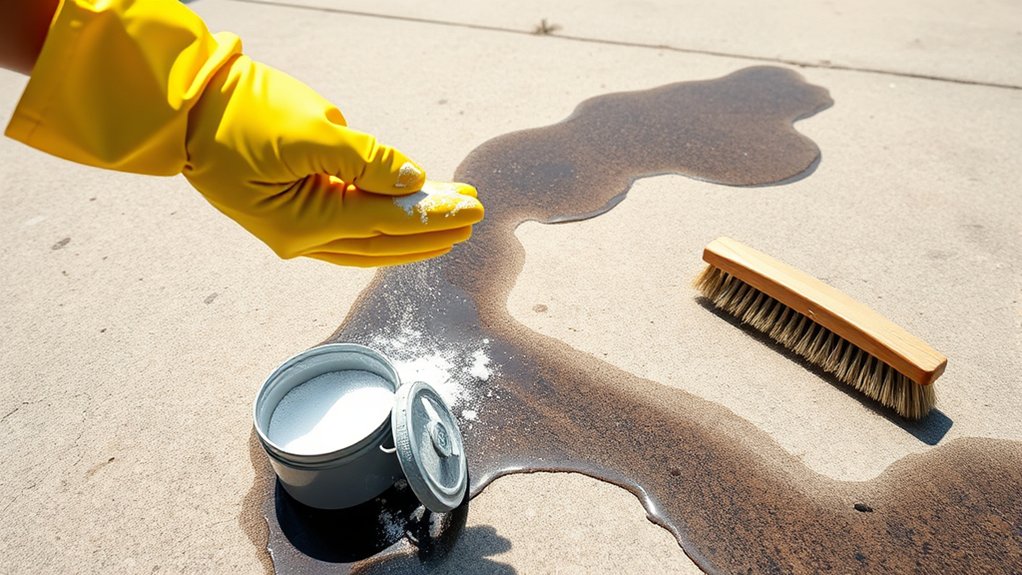
When you spot a fresh engine oil stain on your driveway, act immediately to prevent it from setting. Start by covering the spill with absorbent materials such as kitty litter, sawdust, or baking soda. These materials draw the oil out of the porous driveway surface, making stain removal more effective.
Let the absorbent sit for at least 15 to 30 minutes to soak up the oil thoroughly. Next, sweep up the saturated material and dispose of it properly. For any remaining residue, apply a degreasing cleaner or a specialized driveway stain remover.
Scrub the area with a stiff brush to break down the oil further. Rinse with water and repeat the process if necessary. Prompt action using absorbent materials greatly improves your chances of complete stain removal.
Identify and Assess Old Engine Oil Stains
Acting quickly helps with fresh engine oil stains, but older stains require a different approach. When identifying and evaluating old engine oil stains, start by examining stain characteristics like color, texture, and size. Older stains often darken, embed deeper into porous driveway materials, and may spread irregularly.
Different oil types, such as synthetic, conventional, or blended, affect stain absorption and persistence. Synthetic oils tend to resist weathering longer, making removal more challenging. Determine whether the stain has hardened or become sticky, as this impacts cleaning methods.
Also, check the stain’s penetration depth; deeper stains need more intensive treatment. By accurately identifying oil types and assessing stain characteristics, you can tailor your cleaning strategy effectively, ensuring better results in removing stubborn, aged engine oil from your driveway.
Gather Essential Materials for Cleaning Engine Oil Stains
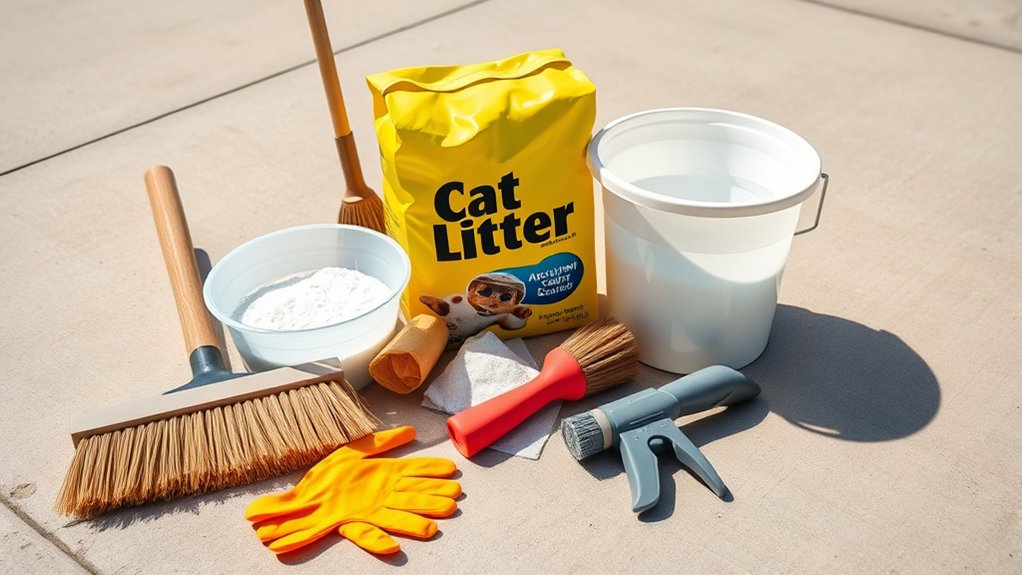
Effective engine oil stain removal starts with assembling the right materials. To tackle stubborn stains efficiently, you’ll need specific cleaning supplies designed for oil extraction and surface safety. Here’s a concise list of essentials:
- Absorbent materials – Cat litter or sawdust quickly soak up excess oil, minimizing spread.
- Degreasing agents – Choose a heavy-duty cleaner formulated for oil stains to break down the hydrocarbons effectively.
- Scrubbing tools – A stiff-bristled brush helps agitate the cleaner, enhancing stain removal without damaging the driveway surface.
Gather these cleaning supplies before you begin to guarantee a systematic approach. Having everything ready lets you focus on precise stain removal techniques, improving results and reducing cleanup time.
Treat Old Engine Oil Stains Effectively
Although old engine oil stains can be stubborn, you can break them down with the right approach and tools. Start by applying oil absorbents such as cat litter or commercial clay-based products directly onto the stain to draw out residual oil. Let the absorbents sit for several hours or overnight for maximum effectiveness.
Next, sweep away the absorbents and scrub the area with a stiff brush and a degreasing detergent formulated for stain removal. Use hot water to rinse thoroughly, repeating the process if necessary.
For deeply set stains, consider applying a poultice made from oil absorbents mixed with a solvent to penetrate and lift the oil. This targeted approach guarantees effective stain removal, restoring your driveway’s surface without damaging it.
Prevent Engine Oil Stains and Maintain Your Driveway
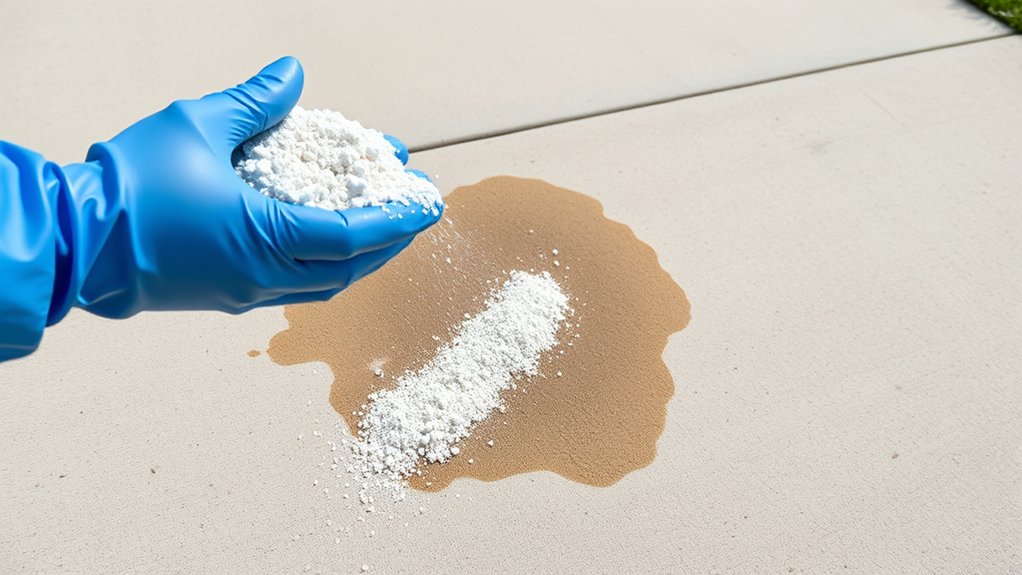
To prevent engine oil stains from forming on your driveway, you need to address leaks promptly and use protective measures. Effective oil spill prevention starts with regular vehicle inspections to identify and fix leaks early. Additionally, you should implement protective barriers or mats under vehicles prone to dripping oil.
For ongoing driveway maintenance, follow these steps:
- Clean spills immediately using absorbent materials like cat litter or specialized pads to prevent seepage.
- Seal your driveway with a high-quality sealant every 2-3 years to create a protective layer that resists oil penetration.
- Inspect your driveway periodically for cracks or deterioration, repairing them promptly to avoid stain absorption.
Frequently Asked Questions
Can Engine Oil Stains Damage My Driveway Permanently?
Yes, engine oil stains can damage your driveway permanently if untreated. You should focus on stain prevention by promptly cleaning spills.
Consider sealant application to protect the surface and minimize long-term damage effectively.
Is It Safe to Use Household Chemicals for Oil Stain Removal?
You can use household alternatives for oil stain removal, but always follow safety precautions. Test on a small area first, wear gloves, and ensure proper ventilation to avoid harmful reactions or damage to your driveway surface.
How Long Does It Take for Engine Oil to Dry on Concrete?
Engine oil can take several hours to days to dry on concrete, depending on temperature and porosity.
You should act quickly with oil absorption materials to prevent permanent staining and improve stain prevention on the surface.
Can Pressure Washing Remove Engine Oil Stains Effectively?
Yes, pressure washing techniques can effectively remove engine oil stains when combined with proper stain removal tips like pre-treating with degreasers and using hot water.
Consistent pressure and correct nozzle choice improve stain elimination.
Are There Eco-Friendly Products for Cleaning Oil Stains?
Like a gentle rain washing away grime, you’ll find biodegradable cleaners and natural alternatives effective for oil stains. They break down oils safely, protect your driveway, and reduce environmental impact without harsh chemicals or damage.
Conclusion
Now that you know how to tackle engine oil stains, don’t let a little mess rain on your parade. Act fast with fresh spills and use the right materials for older stains to keep your driveway in top shape.
Remember, a stitch in time saves nine—addressing stains early prevents bigger problems down the road. Stay proactive, follow these steps, and your driveway will remain clean and damage-free for years to come.
By taking these measures, you can effectively remove engine oil from driveway surfaces and maintain their appearance and durability.