You shouldn’t check your engine oil when the engine is hot because the oil’s lower viscosity can give you inaccurate readings.
Hot oil spreads across engine parts due to heat expansion, which affects the level shown on the dipstick. Plus, hot engine components pose burn risks and increase chances of spills.
For a safe and precise check, wait 5 to 10 minutes after turning off the engine to let the oil settle.
Understanding the proper timing and method can help guarantee your engine stays properly lubricated.
Key Takeaways
- Checking oil on a hot engine can cause burns due to contact with hot surfaces and oil.
- Hot oil’s lower viscosity results in inaccurate dipstick readings and misleading oil levels.
- Engine heat causes oil to spread unevenly, complicating proper level assessment.
- Waiting 5 to 10 minutes after driving allows oil to settle for a more precise reading.
- For safety and accuracy, it is recommended to check oil only when the engine is cool or slightly warm.
How Engine Temperature Affects Oil Level Readings
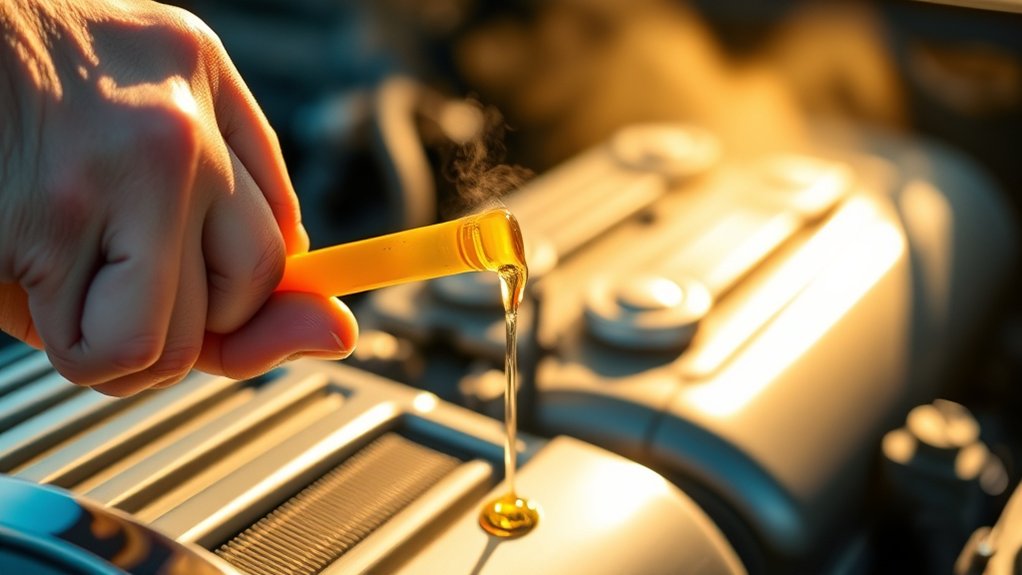
When you check the oil level immediately after running the engine, the temperature can markedly influence the reading. Oil viscosity decreases as temperature rises, causing the oil to become thinner and flow more freely.
This temperature fluctuation affects the oil’s volume and distribution within the engine, often resulting in a lower reading on the dipstick. Additionally, heat expansion can cause the oil to spread across engine parts rather than pool in the oil pan, skewing level measurements.
To obtain an accurate oil level, you must consider these changes in oil viscosity and volume caused by temperature variation. Understanding how engine temperature impacts oil behavior helps you interpret dipstick readings correctly and maintain ideal engine lubrication.
Why Checking Engine Oil When Hot Is Risky
Accurately interpreting oil levels requires understanding temperature effects, but checking the engine oil while it’s hot introduces safety hazards. Hot oil can cause severe burns, and the engine components remain dangerously hot, increasing your risk of injury.
Additionally, oil viscosity decreases with temperature, making it harder to get an accurate reading. This can mislead you about potential engine wear.
| Risk Factor | Description | Impact |
|---|---|---|
| Burns | Hot oil and engine parts | Severe skin injuries |
| Misreading Levels | Reduced oil viscosity | Inaccurate oil level readings |
| Engine Damage | Neglecting wear signs | Increased engine wear |
| Oil Spills | Handling hot oil | Slippery surfaces, contamination |
Avoid these risks to protect yourself and guarantee precise maintenance decisions.
When and How to Safely Check Engine Oil
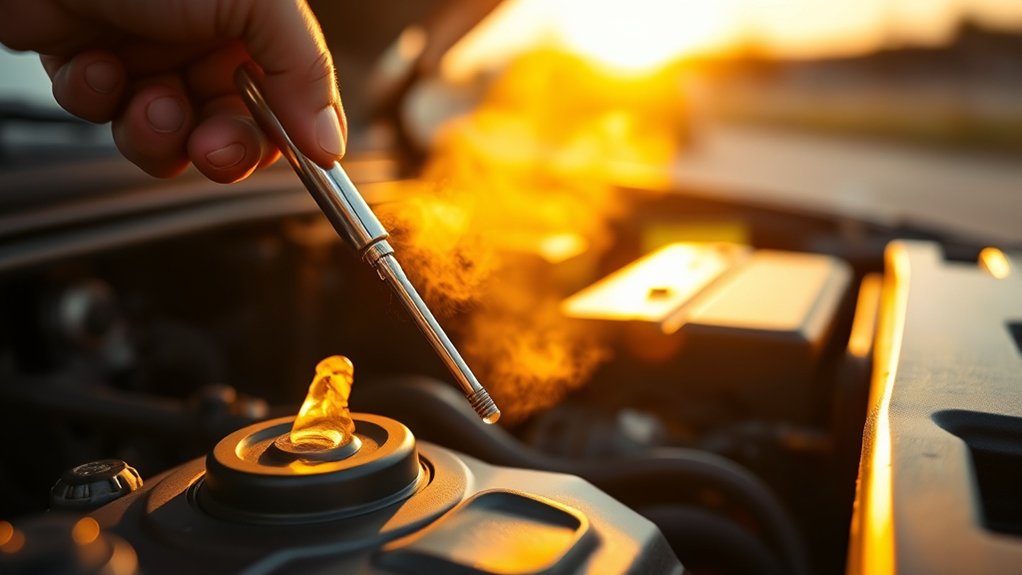
Although checking engine oil might seem straightforward, doing it safely and effectively requires following specific steps and timing. First, confirm the engine is off and has cooled for at least 10 minutes to allow oil viscosity to stabilize, providing an accurate reading.
Before you begin, engage safety precautions: park on a level surface, apply the parking brake, and wear gloves to protect against hot surfaces and contaminants. Locate the dipstick, pull it out, and wipe it clean with a lint-free cloth.
Reinsert it fully, then remove it again to check the oil level and condition. Proper oil viscosity is essential for engine performance, so note if the oil appears too thin or thick, which may indicate a problem requiring professional attention.
How to Check Engine Oil Right After Driving
Since engine oil circulates throughout the system while the engine runs, checking the oil immediately after driving requires careful handling to avoid inaccurate readings and potential burns. First, park your vehicle on a level surface to guarantee an even oil distribution.
Allow the engine to cool slightly for about 5 to 10 minutes; this brief pause lets the oil settle in the sump, stabilizing oil viscosity for a reliable measurement. Use a clean rag to remove the dipstick, wipe it dry, then reinsert it fully before pulling it out again to check the oil level.
Inspect the oil’s color and texture; oil that’s too thin or dark may indicate compromised engine performance. Checking oil right after driving helps detect issues but demands caution due to high temperatures and fluid dynamics.
Tips for Maintaining Accurate Engine Oil Levels
When you monitor your engine oil levels regularly, you guarantee excellent lubrication and prevent potential engine damage. Maintaining accurate oil levels requires attention to detail and routine care. Follow these key tips:
Regularly monitoring engine oil levels ensures proper lubrication and helps avoid costly engine damage.
- Check Oil When Engine is Cool or Warm: For precise readings, wait until the engine has cooled down slightly to avoid oil expansion affecting the dipstick measurement.
- Perform Dipstick Cleaning Before Measurement: Always wipe the dipstick clean before reinserting it to remove residual oil and get an accurate level.
- Adhere to Recommended Oil Change Frequency: Follow your vehicle manufacturer’s specified oil change intervals to maintain peak oil quality and quantity.
Frequently Asked Questions
What Type of Oil Is Best for High-Temperature Engines?
You should choose synthetic oils with high temperature performance, typically 5W-40 or 10W-40 viscosity grades. These oils maintain stability and lubrication under extreme heat, protecting engine components and ensuring consistent operation in demanding conditions.
How Often Should I Change My Engine Oil?
Think of your engine as a beating heart; you should follow the oil change frequency recommended in your manual, usually every 3,000 to 7,500 miles.
Regular oil changes are essential engine maintenance tips to prevent wear and guarantee longevity.
Can Engine Oil Cause Overheating if Not Changed Regularly?
Yes, if you don’t change oil regularly, oil degradation increases and oil viscosity worsens, reducing lubrication efficiency. This causes higher friction and heat buildup, which can lead to engine overheating and potential damage over time.
What Are Signs of Low Engine Oil Besides the Dipstick?
You’ll notice oil pressure drops, warning lights activate, unusual engine noise occurs, and performance issues arise. Smoke emissions or oil leaks also signal low oil.
Ignoring these signs risks severe engine damage and costly repairs.
Does Synthetic Oil Affect Oil Level Readings Differently?
Synthetic oil doesn’t affect oil level readings differently, but its viscosity differences can influence expansion rates. You’ll benefit from synthetic’s stability, ensuring consistent levels during temperature changes.
Always check levels on a cool engine for accuracy.
Conclusion
Checking your engine oil when it’s hot can give you a misleading reading and even pose safety risks. To get accurate measurements, wait until the engine cools down or follow specific warm-engine guidelines.
Remember, maintaining proper oil levels is the backbone of engine health, so don’t cut corners. By checking oil correctly, you’ll keep your engine running smoothly and avoid costly repairs.
After all, knowing when to check oil is essential for engine longevity and performance. Checking your oil when the engine is hot can affect this crucial process.