High mileage engine oil is specially formulated for vehicles with over 75,000 miles. It contains additives that reduce wear and oil consumption while preventing leaks common in older engines.
This type of oil includes enhanced seal conditioners to maintain gasket flexibility and tailored viscosity designed for aging components.
By forming protective films and rejuvenating seals, it minimizes friction and internal damage.
If you want to understand the exact ingredients and when to switch, you’ll find detailed insights ahead.
Key Takeaways
- High mileage engine oil is specially formulated for vehicles with over 75,000 miles to reduce wear and oil consumption.
- It contains additives like seal conditioners that help maintain gasket flexibility and prevent leaks in older engines.
- The oil includes anti-wear agents such as ZDDP to protect metal surfaces and prolong engine life.
- High mileage oils create a protective lubricating film that minimizes friction and internal engine wear.
- Switching to high mileage oil after 75,000 miles helps maintain engine performance and prevents damage from aging components.
What Is High Mileage Engine Oil?
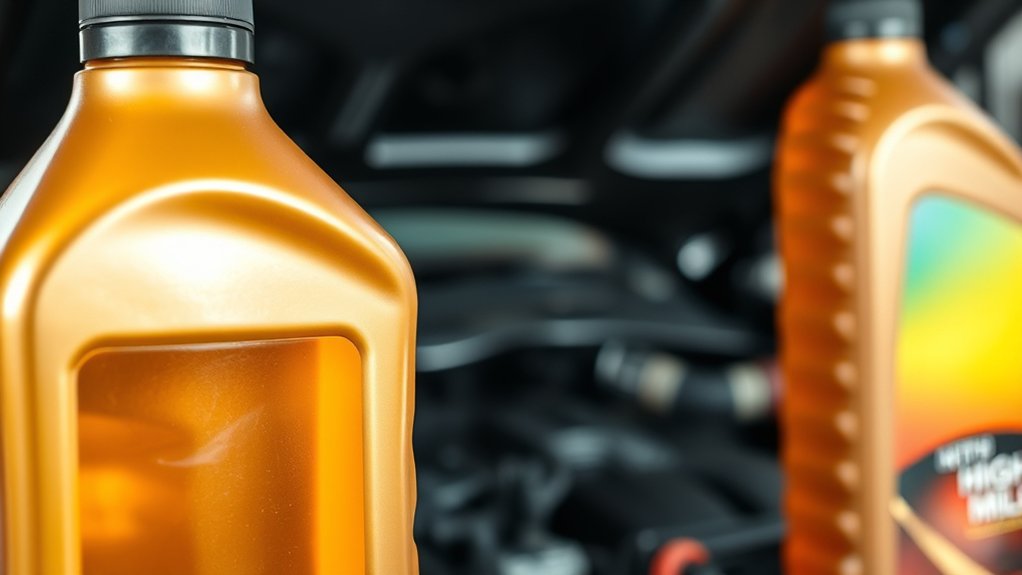
High mileage engine oil is specifically formulated to meet the needs of vehicles with over 75,000 miles on their odometers. You’ll find that these oils contain specialized additives designed to reduce wear, minimize oil consumption, and prevent leaks common in older engines.
The engine oil benefits include enhanced seal conditioners that maintain gasket flexibility, and detergents that clean engine deposits, preserving performance. Additionally, high mileage oils have tailored viscosity ratings to accommodate engine wear without compromising lubrication.
When selecting engine oil, pay close attention to mileage ratings on the label, as they indicate suitability for vehicles with elevated mileage. Using the correct high mileage engine oil can extend engine life by addressing the unique challenges posed by aging components, ensuring maximum protection and efficiency.
When Should You Switch to High Mileage Oil?
Once your vehicle surpasses 75,000 miles, its engine components start experiencing increased wear and tear that standard oils may not adequately address. You should consider switching to high mileage oil during your next oil change to optimize engine care.
This specialized oil contains additives that help maintain older seals and reduce leaks, supporting the integrity of aging engine parts. Waiting beyond this mileage threshold can lead to accelerated wear, decreased efficiency, and potential engine damage.
Ingredients That Protect Older Engines
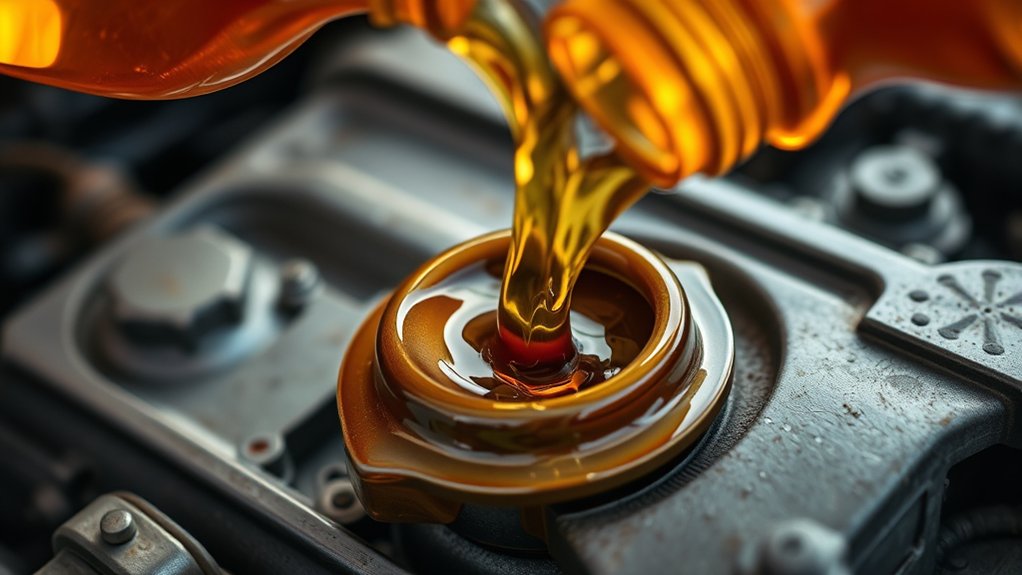
Because engines with significant mileage face increased friction and seal degradation, the oil’s formulation must include specific additives to counteract these issues. High mileage engine oils incorporate advanced oil additives like anti-wear agents, seal conditioners, and detergents.
Anti-wear additives, such as zinc dialkyldithiophosphate (ZDDP), form a protective film on metal surfaces, reducing direct metal-to-metal contact and minimizing engine wear. Seal conditioners help maintain the flexibility and integrity of aging rubber seals, preventing leaks caused by hardening or shrinking.
Detergents and dispersants keep deposits and sludge suspended, ensuring clean engine internals. By carefully balancing these oil additives, high mileage oils provide targeted protection that addresses the unique challenges older engines face, extending engine life and preserving performance without compromising lubrication efficiency.
How High Mileage Oil Prevents Wear and Leaks
When you use engine oil formulated for high mileage vehicles, it actively reduces wear by forming protective barriers on metal surfaces and rejuvenates aging seals to prevent leaks. This oil contains specialized additives that create a durable lubricating film, minimizing direct metal-to-metal contact, which greatly slows engine wear.
Additionally, conditioners in the formulation restore flexibility to rubber and elastomer seals, reducing the risk of oil leaks common in older engines. By maintaining ideal viscosity and reducing friction, the oil enhances engine component longevity and prevents the deterioration that leads to leaks.
This targeted approach guarantees that both internal wear and external oil leaks are addressed, preserving engine integrity and performance as your vehicle accumulates miles.
Choosing the Right High Mileage Oil for Your Vehicle
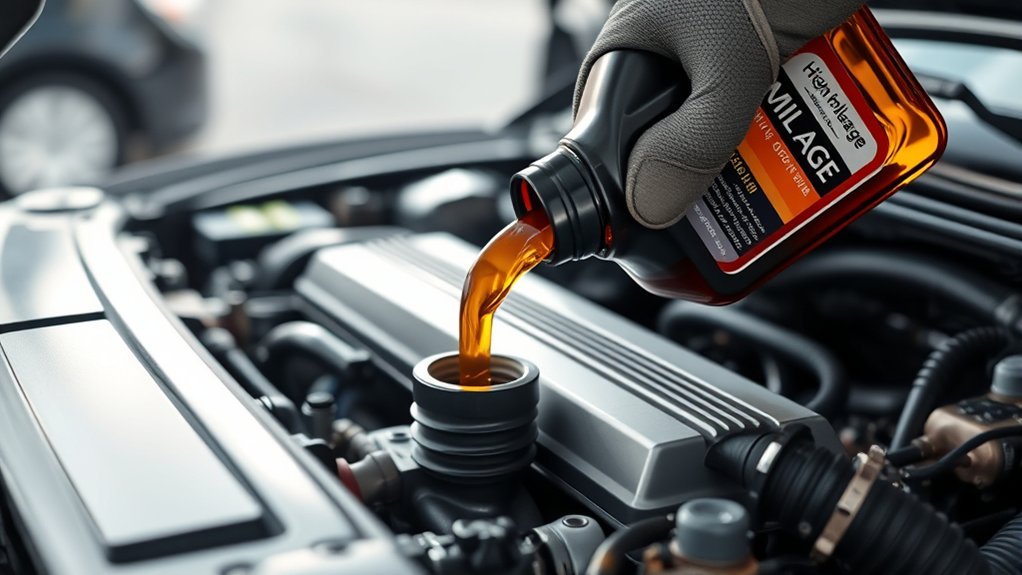
Understanding how high mileage oil protects your engine sets the stage for selecting the right formulation tailored to your vehicle’s specific needs. You should evaluate whether synthetic options or conventional blends suit your engine’s condition and mileage.
Synthetic oils typically offer superior stability and performance under stress. Pay close attention to oil additives that restore seals and reduce wear, essential for engines with higher mileage.
| Oil Type | Key Benefits | Recommended Mileage Range |
|---|---|---|
| Synthetic | Enhanced protection, stability | 75,000+ miles |
| Conventional | Cost-effective, basic protection | 50,000-75,000 miles |
| Synthetic Blend | Balanced performance and cost | 60,000-80,000 miles |
Choose based on your engine’s wear level and manufacturer specs for best protection.
Frequently Asked Questions
Can High Mileage Oil Improve Fuel Efficiency?
Yes, you’ll notice fuel efficiency benefits using high mileage oil because its advanced additives reduce engine wear and friction. These high mileage advantages optimize your engine’s performance, helping maintain fuel economy in older vehicles with worn components.
Is High Mileage Oil Suitable for Diesel Engines?
You can use high mileage oil in diesel engines if it meets diesel specifications and contains appropriate oil additives. Always verify compatibility to protect seals, reduce wear, and maintain engine performance under high-stress conditions.
How Often Should High Mileage Oil Be Changed?
You should follow the oil change frequency specified in your owner’s manual, typically every 3,000 to 5,000 miles. Adjust based on mileage indicators like engine performance and oil condition to optimize high mileage oil effectiveness.
Does High Mileage Oil Affect Engine Performance?
You’ll notice up to 30% less engine wear using high mileage oil because its advanced oil additives reduce friction and seal leaks. These additives enhance engine performance, prolonging your engine’s lifespan with improved lubrication and protection.
Can I Mix High Mileage Oil With Regular Oil?
You can mix high mileage oil with regular oil, but it’s not ideal. The specialized oil additives targeting engine wear may dilute, reducing their effectiveness and potentially compromising your engine’s protection and overall performance.
Conclusion
When your engine’s miles stack up, switching to high mileage oil isn’t just smart—it’s essential. Think of it as a shield, packed with specialized additives that reduce wear, prevent leaks, and restore seals.
If you want your vehicle to run smoothly and extend its life, choosing the right formulation tailored to your engine’s needs is key.
After all, in the world of engines, prevention is the most precise form of performance enhancement, making high mileage engine oil a crucial choice.