If you’re wondering whether the Honda Accord is 4 wheel drive, it’s important to know that this model is strictly front-wheel drive. Honda focuses on efficiency and cost-effectiveness with the Accord, so they don’t offer 4WD or all-wheel drive options here.
However, if you need better traction or handling in slippery conditions, there are alternatives within Honda’s lineup. Understanding these differences can help you make a smarter choice.
Key Takeaways
- Honda Accords do not come with four-wheel drive (4WD) options.
- The Accord is designed primarily with front-wheel drive (FWD) only.
- No all-wheel drive (AWD) is available in the standard Accord lineup.
- The drivetrain focuses on efficiency, handling, and cost-effectiveness over all-terrain capability.
- For AWD or 4WD needs, consider other Honda models like the CR-V or Pilot.
Does the Honda Accord Come With Four-Wheel Drive?
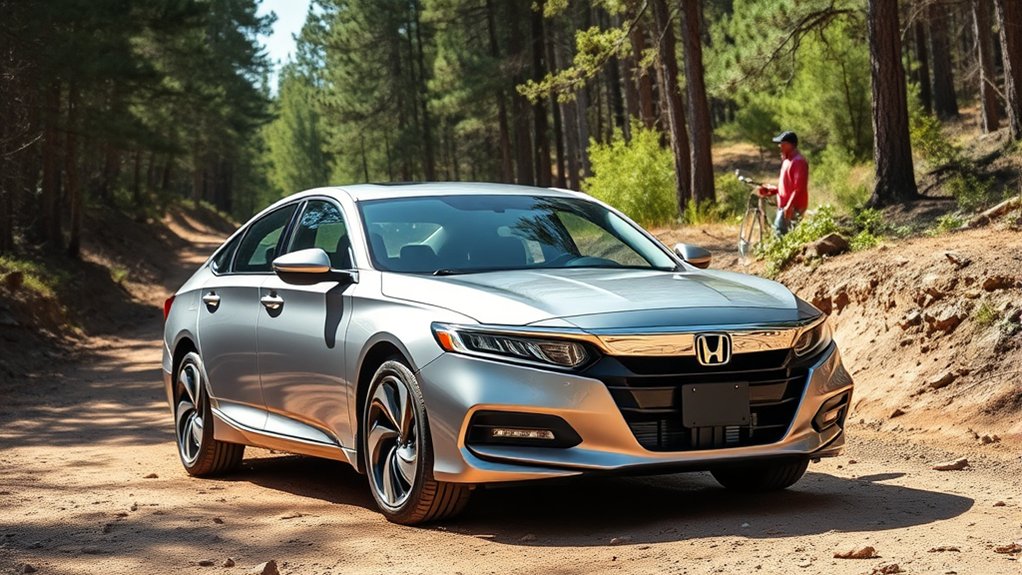
Does the Honda Accord come with four-wheel drive? No, it doesn’t. The Accord is designed primarily with front-wheel drive, meaning it doesn’t offer four wheel traction.
The Honda Accord is primarily front-wheel drive and does not offer four-wheel traction.
If you’re exploring two word discussion ideas about drivetrain options, this detail matters. Four-wheel drive systems distribute power to all four wheels, enhancing traction in slippery conditions. However, the Accord’s setup focuses on efficiency and handling rather than all-terrain capability.
Understanding this helps you choose the right vehicle for your needs. If you require four-wheel drive for off-road or severe weather, the Accord won’t provide that. Instead, look at SUVs or trucks that specialize in four wheel traction.
This distinction is important when comparing drivetrains in various Honda models.
Why the Honda Accord Uses Front-Wheel Drive
Since the Honda Accord doesn’t come with four-wheel drive, it relies on front-wheel drive to meet most drivers’ needs. Front-wheel drive offers a simpler, lighter drivetrain, which improves fuel economy. This is a key advantage for daily commuting and long trips.
You might encounter drivetrain myths suggesting four-wheel drive is always better, but front-wheel drive provides sufficient traction in most conditions, especially on paved roads. It also reduces mechanical complexity, lowering maintenance costs and enhancing reliability.
Does the Honda Accord Offer All-Wheel Drive?
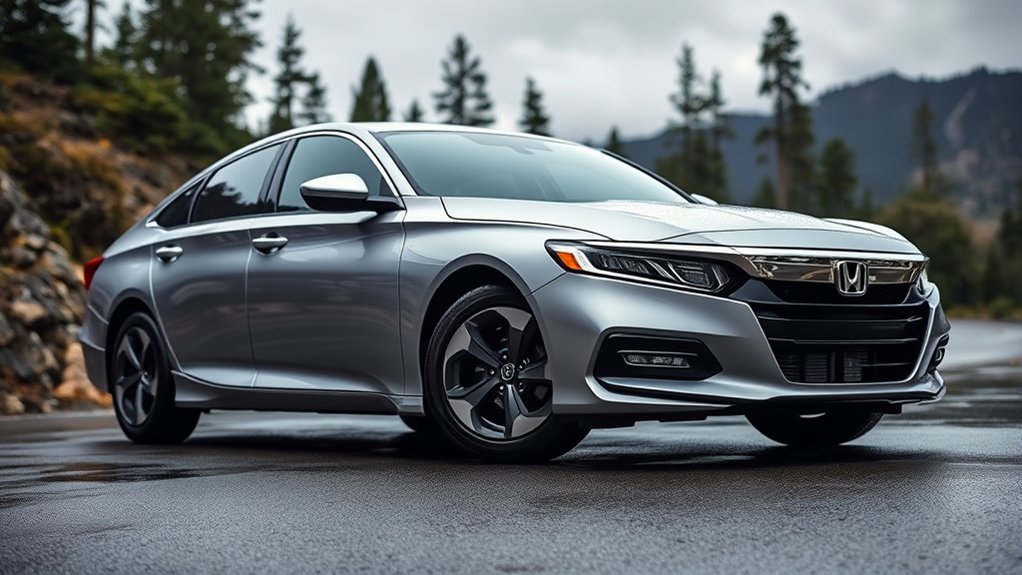
How does the Honda Accord handle traction beyond its standard front-wheel drive setup? The short answer is that the Accord does not offer an all-wheel drive (AWD) option. Honda has designed the Accord strictly with front wheel drive, focusing on efficiency, weight savings, and cost-effectiveness.
While AWD systems improve traction by powering all wheels, the Accord relies solely on its front wheel configuration to deliver grip and control. This setup suits most driving conditions, especially on paved roads and in moderate weather.
However, if you’re looking for a Honda sedan with all-wheel drive, you might consider the Honda Insight or CR-V, which provide AWD options. In summary, the Accord’s lineup currently excludes all wheel drive, sticking firmly with front wheel drive only.
How Front-Wheel Drive and Four-Wheel Drive Differ
What sets front-wheel drive (FWD) and four-wheel drive (4WD) apart is the way they distribute power to a vehicle’s wheels. In FWD systems, power goes exclusively to the front wheels, which typically improves fuel efficiency by reducing drivetrain complexity and weight.
On the other hand, 4WD engages power to all four wheels, usually via a transfer case, enhancing traction in off-road or low-traction conditions. A common drivetrain misconception is that more driven wheels always mean better everyday performance, but 4WD can reduce fuel efficiency due to added mechanical components and weight.
Understanding these differences helps you choose a vehicle suited to your driving needs, whether you prioritize economical commuting or require enhanced traction in challenging environments.
How AWD Cars Handle Better Than the Honda Accord
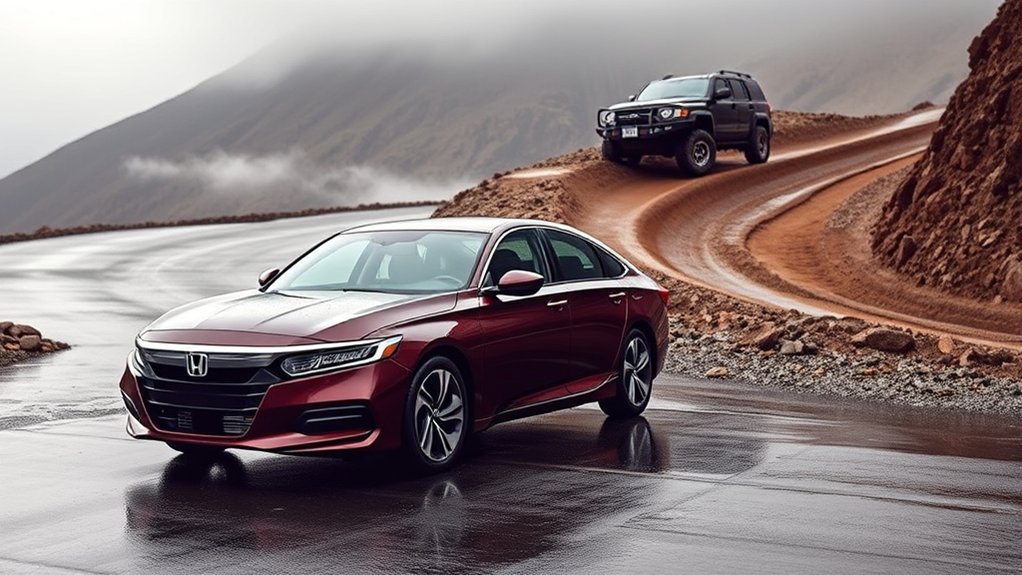
When you drive an AWD car, you benefit from better traction on slopes, which reduces wheel slip and enhances control. AWD systems also provide greater stability during cornering by distributing power to all four wheels.
Additionally, improved acceleration control helps you maintain grip and confidence in various driving conditions compared to the Honda Accord’s front-wheel drive setup.
Traction Advantages On Slopes
Why do all-wheel-drive (AWD) vehicles perform better on slopes compared to the Honda Accord? AWD systems distribute power to all four wheels simultaneously, enhancing traction on uneven or slippery inclines.
When you face steep or wet slopes, AWD helps prevent wheel slip by adjusting torque in real time, giving you more control and confidence. The Honda Accord, being front-wheel drive, sends power only to the front wheels, which can limit grip and increase the chance of losing traction uphill.
While AWD offers clear traction advantages, keep in mind it often comes with higher maintenance costs and reduced fuel economy compared to front-wheel-drive vehicles like the Accord. Still, if you frequently drive on slopes or in challenging conditions, AWD provides a safer and more reliable driving experience.
Stability During Cornering
How does all-wheel drive (AWD) enhance stability during cornering compared to the Honda Accord’s front-wheel-drive system? AWD distributes power to all four wheels, improving cornering stability by reducing understeer and maintaining better grip.
Unlike front-wheel drive, AWD counters common traction myths by providing balanced power delivery, allowing you to navigate turns with increased control and confidence.
| Aspect | AWD Advantage |
|---|---|
| Power Distribution | Sends torque to all wheels |
| Cornering Stability | Reduces understeer, enhances grip |
| Traction Myths | Dispels front-wheel-only limits |
| Handling Precision | Provides balanced, responsive feel |
With AWD, you experience superior cornering stability, especially in slippery or dynamic driving conditions, compared to the Honda Accord’s front-wheel-drive setup.
Improved Acceleration Control
Although the Honda Accord’s front-wheel-drive system offers reliable performance, AWD vehicles provide noticeably better acceleration control by distributing power to all four wheels. This design helps you maintain traction on slippery or uneven surfaces, reducing wheel spin during quick starts.
Many drivetrain myths suggest AWD systems always outperform FWD, but there are performance tradeoffs like added weight and complexity. However, when you accelerate hard, AWD systems balance torque between front and rear wheels, improving grip and control.
In contrast, the Accord’s FWD setup can struggle with power delivery under aggressive acceleration, especially on low-traction roads. Understanding these differences helps you see why AWD enhances acceleration control, offering more confident driving in varied conditions without dismissing the Accord’s efficiency and simplicity.
Alternatives to 4WD for the Honda Accord
If you’re looking for alternatives to 4WD in a Honda Accord, you’ll find that front-wheel drive offers strong traction and fuel efficiency for everyday driving.
While the Accord doesn’t come with 4WD, some models provide all-wheel drive, enhancing stability on slippery roads. Understanding these options helps you choose the setup that best fits your driving needs.
Front Wheel Drive Benefits
Why choose front wheel drive over four-wheel drive for your Honda Accord? Front wheel drive (FWD) offers several benefits, especially when you consider the trade offs involved. FWD systems are lighter and simpler than 4WD, which means your Accord will have better fuel economy, an important factor for daily commuting and long drives.
You also get predictable handling and improved traction in moderate weather conditions since the engine’s weight rests over the driven wheels. However, while FWD performs well on wet or snowy roads, it’s not designed for rugged off-road use like 4WD.
All-Wheel Drive Options
How does Honda provide enhanced traction without offering traditional four-wheel drive in the Accord lineup? Instead, Honda uses an all-wheel drive system in select models, especially the Accord Crosstour variant, which delivers power to all wheels as needed.
This system differs from classic 4WD by automatically adjusting torque distribution, improving grip on slippery roads without driver input. When you consider an all wheel drive comparison, AWD offers better handling than front-wheel drive but may involve slight fuel efficiency tradeoffs due to added drivetrain components.
These tradeoffs are generally minor compared to dedicated 4WD systems, making AWD a practical alternative for everyday driving conditions. Understanding these two word discussion ideas, traction and efficiency, helps you decide if AWD suits your driving needs better than traditional 4WD.
How Weather and Road Conditions Affect the Accord’s Traction
When maneuvering through varying weather and road conditions, you might wonder how your Honda Accord manages traction without four-wheel drive. The Accord relies primarily on its front-wheel-drive system, which offers decent road condition adaptation by directing power to the front wheels.
This setup generally performs well in dry and moderately wet conditions, helping maintain control and stability. However, weather impact such as heavy rain, snow, or ice can reduce traction, making the Accord more prone to slipping compared to all-wheel or four-wheel-drive vehicles.
The car’s traction control system assists by limiting wheel spin, but it can’t fully compensate for challenging surfaces. Understanding these limitations helps you adjust your driving habits accordingly when encountering variable weather and road conditions.
Upgrading Traction: Best Tires and Accessories for the Accord
Looking to enhance your Honda Accord’s grip on the road? Upgrading your tires and accessories can significantly improve traction, especially since the Accord is primarily front-wheel drive. When making a traction comparison, focus on advanced tire technology designed for your driving conditions.
Here are four effective upgrades:
- All-season tires with silica-enhanced tread for balanced wet and dry performance
- Winter tires featuring deeper grooves and softer compounds for icy roads
- Performance tires that improve handling but may sacrifice some comfort
- Tire chains or snow socks for temporary traction boosts in severe winter weather
Pairing the right tires with accessories tailored to your environment ensures your Accord maintains optimal traction, enhancing safety and control without the need for a four-wheel-drive system.
Other Honda Models With AWD or 4WD to Consider
Which Honda models offer all-wheel drive or four-wheel drive options if you need more traction than the Accord provides? For an overview, Honda’s CR-V and Passport are top choices, both equipped with AWD systems designed to enhance grip on varying road conditions.
The CR-V offers a real-time AWD system that adjusts torque between front and rear wheels, improving stability without sacrificing fuel efficiency. Meanwhile, the Passport features a more rugged AWD setup suited for light off-road use.
In comparisons, the Honda Pilot stands out by offering an advanced AWD system with Intelligent Traction Management, which adapts to snow, mud, or sand. If you’re considering alternatives to the Accord, these models provide practical AWD or 4WD options tailored to diverse driving needs and terrains.
Frequently Asked Questions
What Is the Fuel Efficiency Difference Between FWD and AWD Honda Accords?
You’ll notice AWD Honda Accords have slightly lower fuel efficiency due to drivetrain efficiency losses, but they offer better traction.
FWD models generally cost less in maintenance, making them more economical overall for fuel and upkeep.
How Does the Cost of Maintenance Compare for FWD Vs AWD Accords?
When it comes to maintenance costs, AWD Accords usually cost a bit more due to added components. You’ll face some reliability tradeoffs, but if you drive in tough conditions, that extra investment might just be worth its salt.
Are There Any Honda Accord Trims That Come With Optional AWD?
No Honda Accord trims offer optional AWD; they’re strictly front-wheel drive.
To keep your Accord running smoothly, you should regularly replace the air filter and perform tire rotation as part of routine maintenance.
Can You Convert a Honda Accord From FWD to AWD?
Don’t let convertibility myths fool you. Switching a Honda Accord from FWD to AWD isn’t simple.
Its drivetrain quirks mean you’d need extensive modifications, making it impractical and costly rather than a straightforward upgrade.
How Does the Resale Value Vary Between FWD and AWD Accords?
You’ll find AWD Accords often have higher resale value due to better traction appeal, but maintenance costs can be higher.
FWD models usually cost less to maintain, which might balance their slightly lower resale value.
Conclusion
You won’t find four-wheel drive on the Honda Accord, as it relies on front-wheel drive for efficiency, cost savings, and weight reduction. You won’t get all-wheel drive either, but you will get reliable handling in most conditions with proper tires.
You won’t need to compromise fuel economy or maintenance costs. If you want enhanced traction, consider upgrading tires or choosing Honda models like the CR-V, Passport, or Pilot that offer AWD options.
In conclusion, the Honda Accord does not come with four-wheel drive, so if 4 wheel drive is a priority for you, exploring other Honda models might be the better choice.