If you’re considering a Honda Civic, understanding whether Honda Civics are FWD (front-wheel drive) is essential. Most Civics come with front-wheel drive, a design choice that optimizes efficiency and handling for everyday use.
However, you might wonder if all models follow this pattern or if some offer alternative setups. Exploring how this impacts performance, maintenance, and fuel economy can clarify why Honda sticks with this approach—and whether it suits your driving needs.
Key Takeaways
- Honda Civics come standard with front-wheel drive (FWD) across nearly all trims and model years.
- FWD layout in Civics improves fuel efficiency, reduces weight, and optimizes interior space.
- No factory Honda Civic trims offer all-wheel drive (AWD) or rear-wheel drive (RWD) options.
- Performance trims like Civic Si and Type R maintain FWD with enhanced handling and sport-tuned differentials.
- The FWD system provides reliable traction and predictable handling for typical daily driving conditions.
Are Honda Civics Front-Wheel Drive By Default?
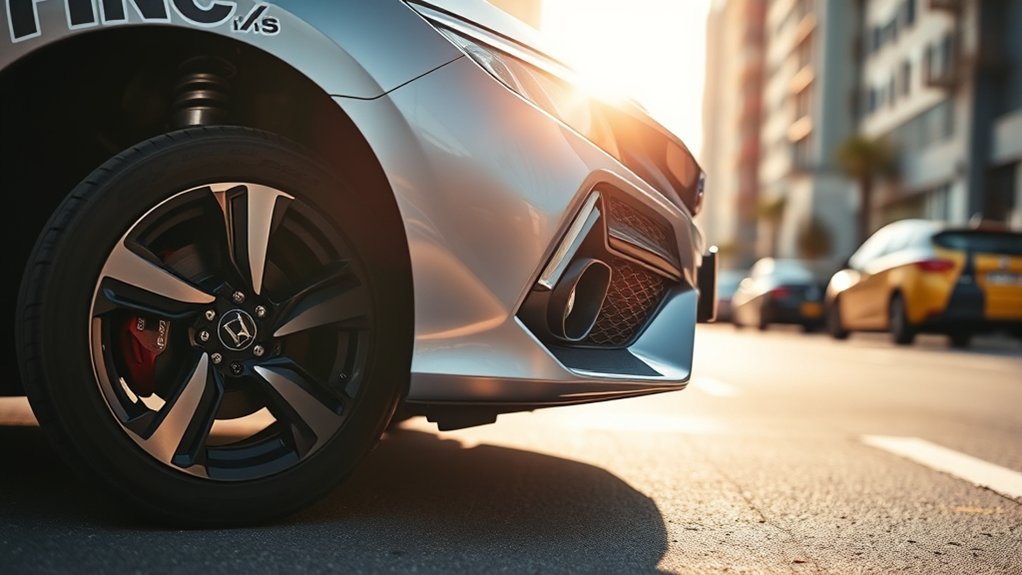
Why do most Honda Civics come equipped with front-wheel drive? The choice centers on efficiency, manufacturing cost, and performance balance. Front-wheel drive optimizes packaging by placing the entire drivetrain upfront, reducing weight and complexity.
This layout improves fuel economy and interior space, crucial for compact cars. Drivetrain myths often suggest rear-wheel drive offers significantly better acceleration, but acceleration charts of Honda Civics show minimal difference in everyday driving scenarios.
Front-wheel drive Civics provide sufficient traction during acceleration due to weight transfer over the front wheels. Additionally, the design simplifies maintenance and lowers production costs.
Which Honda Civic Models or Trims Have Different Drivetrains?
You’ll find that most Honda Civic models come standard with front-wheel drive, but certain trims introduce variations. Some performance-focused versions adjust the drivetrain layout to optimize handling and power delivery.
Understanding which trims offer all-wheel drive or unique configurations helps clarify the Civic’s engineering versatility.
Civic Drivetrain Variations
How do Honda Civics differ in their drivetrain configurations across models and trims? Primarily, Civics have been engineered with front-wheel drive (FWD) systems, optimizing efficiency and handling for everyday use. This uniformity dispels common drivetrain myths suggesting diverse drivetrain layouts within the lineup.
However, variations exist in transmission options and performance tuning rather than fundamental drivetrain changes. It’s important to note that traditional Civic models lack all-wheel drive (AWD) compatibility, limiting drivetrain diversity.
Civic Si and Type R trims focus on enhanced front-wheel drive dynamics with sport-tuned differentials, not AWD systems. Therefore, when analyzing drivetrain variations, you’ll find distinctions in power delivery and mechanical setups within an FWD framework, rather than the presence of multiple drivetrain types.
This precision helps clarify misconceptions about Civic drivetrain versatility.
Trims With All-Wheel Drive
Which Honda Civic trims feature all-wheel drive (AWD) options? In the current lineup, Honda Civics mainly use front wheel drive (FWD) systems, focusing on efficiency and cost-effectiveness. Specifically, Honda does not offer any Civic trims with all wheel drive.
This drivetrain limitation aligns with the Civic’s market positioning as a compact sedan or hatchback aimed at urban and suburban drivers prioritizing fuel economy and handling predictability. While AWD enhances traction in adverse conditions, Honda reserves this system for other models like the CR-V and HR-V.
Consequently, if you’re seeking a Civic with AWD, you won’t find one. All Civics utilize front wheel drive exclusively, emphasizing lightweight construction and responsive front-end dynamics over the complexity and weight of all wheel drive systems.
Performance Models And Layout
Among the Honda Civic lineup, performance models distinguish themselves not only through enhanced powertrains but also by unique drivetrain layouts. While most Civics employ a front-wheel-drive (FWD) system, certain trims like the Civic Type R break this pattern with a performance-tuned FWD setup optimized for handling dynamics, challenging common drivetrain misconceptions.
Notably, no Honda Civic model features all-wheel drive (AWD) or rear-wheel drive (RWD) as factory options. However, model year variations may introduce subtle refinements in differential types or torque vectoring technologies within FWD configurations to enhance traction and cornering performance.
If you’re analyzing drivetrain differences, focus on the Civic Si and Type R trims, which feature sportier tuning and mechanical enhancements but maintain the fundamental FWD layout across all model years.
How Does Honda Civic’s Front-Wheel Drive Benefit Drivers?
You’ll notice the Honda Civic’s front-wheel drive offers improved traction control by directing power to the wheels with the most grip, especially in wet or slippery conditions.
This drivetrain layout also contributes to enhanced fuel efficiency by reducing drivetrain losses compared to all-wheel systems. Understanding these benefits helps you appreciate how the Civic optimizes performance and economy in everyday driving.
Improved Traction Control
How does the Honda Civic’s front-wheel drive system enhance traction control in varied driving conditions? By positioning the engine’s power delivery directly to the front wheels, it optimizes weight distribution over the driven wheels, improving grip on slippery surfaces.
Contrary to common drivetrain myths, front-wheel drive doesn’t inherently compromise traction; instead, it often outperforms rear-wheel setups in wet or icy conditions. Addressing traction myths, the Civic’s integrated traction control system works synergistically with FWD to modulate power output, preventing wheel slip efficiently.
This precise coordination between drivetrain and electronic controls means you experience enhanced stability and control, especially during acceleration or cornering. In essence, the Honda Civic’s FWD layout, combined with advanced traction technology, delivers reliable and predictable handling across diverse road environments.
Enhanced Fuel Efficiency
Beyond improving traction and stability, the Honda Civic’s front-wheel drive layout also plays a key role in enhancing fuel efficiency. By concentrating the drivetrain components at the front, the Civic reduces drivetrain losses typically associated with all-wheel or rear-wheel drive systems.
This configuration lowers mechanical drag, directly improving fuel economy. Additionally, the front-engine, front-wheel setup results in a lighter overall vehicle weight, which further optimizes fuel consumption during urban commuting.
In stop-and-go traffic, a lighter drivetrain demands less energy, reducing fuel use. The compact design also allows for more efficient packaging, minimizing parasitic power losses.
Consequently, you benefit from reduced fuel expenses and lower emissions. The Civic’s front-wheel drive system thus delivers a measurable advantage in fuel economy, especially in city driving scenarios where efficiency matters most.
How the Civic’s Drivetrain Affects Fuel Efficiency and Maintenance
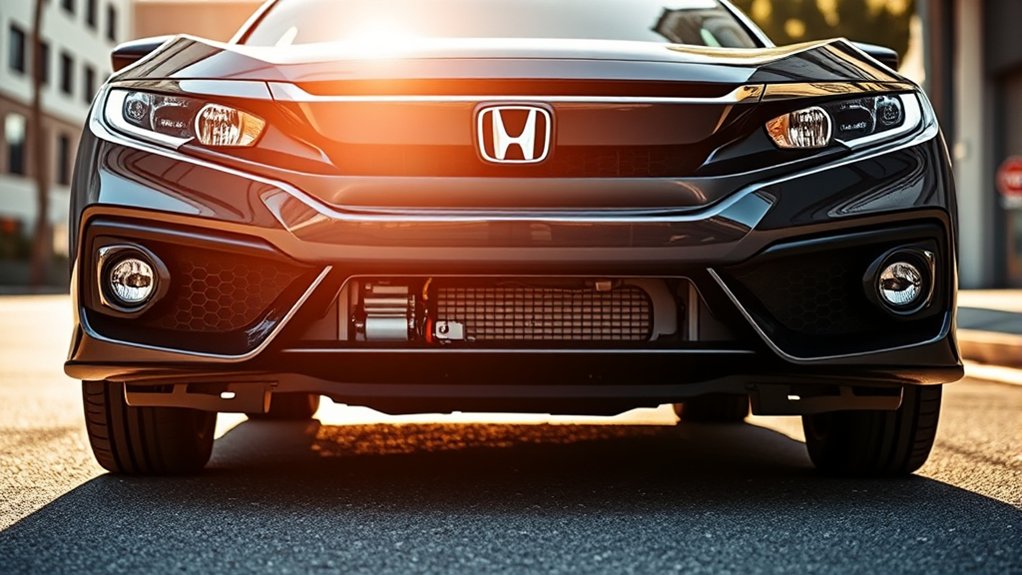
The drivetrain configuration of the Honda Civic directly influences both fuel efficiency and maintenance demands. With a front-wheel-drive (FWD) system, power delivery is more efficient because the drivetrain components are more compact and lighter, reducing energy loss. This layout typically improves fuel economy by minimizing drivetrain drag and weight, so you’ll spend less at the pump.
In contrast, all-wheel-drive (AWD) variants add complexity and weight, which can degrade fuel economy. Regarding maintenance costs, FWD Civics benefit from fewer moving parts compared to AWD systems, leading to lower routine service requirements and reduced repair expenses. You’ll find that FWD configurations simplify tasks like transmission servicing and tire rotations, helping you maintain your Civic more affordably.
Handling Differences Between Honda Civic FWD and AWD Models
Although both FWD and AWD Honda Civics offer reliable handling, their dynamics differ substantially under various driving conditions. When you drive a FWD Civic, torque distribution is primarily focused on the front wheels, which can limit traction on slippery surfaces but provides predictable handling in dry conditions.
In contrast, an AWD Civic incorporates drivetrain redundancy, allowing power to be sent to all four wheels. This improves grip and stability, especially during acceleration and cornering on uneven or low-traction roads. However, AWD systems add complexity and weight, slightly affecting agility and fuel efficiency.
Understanding these handling differences helps you choose the Civic variant that best suits your driving environment and performance expectations, balancing drivetrain redundancy benefits against torque distribution characteristics inherent in each model.
Can You Convert a Honda Civic From FWD to AWD?
How feasible is it to convert a Honda Civic from FWD to AWD? Technically, it’s possible but highly complex. The primary challenge lies in drivetrain compatibility: the Civic’s chassis and transmission are designed specifically for front-wheel drive, lacking the necessary rear differential, driveshaft, and suspension components for AWD.
An aftermarket conversion demands sourcing or fabricating these parts, plus modifying the transmission tunnel and rear subframe to accommodate the drivetrain. Additionally, electronic systems like ABS and stability control require recalibration or replacement to function correctly with AWD.
The cost, time, and technical expertise needed often outweigh the benefits. While aftermarket conversion kits exist, they’re rare and typically intended for performance-focused builds, not practical daily drivers. You should carefully evaluate these factors before pursuing such a conversion.
How Honda’s Drivetrain Compares to Toyota and Mazda
When comparing Honda’s drivetrain to those of Toyota and Mazda, you’ll notice distinct engineering philosophies that influence performance and efficiency. Honda emphasizes a balanced front-wheel-drive system optimized for fuel economy and reliable handling, debunking common drivetrain myths about FWD limitations.
Toyota focuses on versatile all-wheel-drive options with robust torque distribution, enhancing traction. Mazda integrates its SKYACTIV technology to deliver responsive powertrains with efficient torque management.
| Brand | Drivetrain Type |
|---|---|
| Honda | Predominantly FWD |
| Toyota | FWD & AWD options |
| Mazda | FWD with AWD option |
| Honda | Emphasis on balance |
| Toyota | Traction focus |
These brand comparisons clarify that Honda’s drivetrain prioritizes efficiency, Toyota leans toward versatility, and Mazda balances responsiveness.
Frequently Asked Questions
What Years Did Honda Civics Start Using Front-Wheel Drive?
You’ll find Honda Civics adopted front wheel tech starting in 1975 with the second generation, marking a legacy shift from rear-wheel drive. This change enhanced handling, efficiency, and space utilization, setting industry standards for compact cars.
Are There Any Honda Civic Models With Rear-Wheel Drive?
No, Honda Civics have never featured rear-wheel drive. For example, the 1984 Civic marked a pivotal point in Civic drivetrain evolution, firmly establishing front-wheel drive.
This setup offers better packaging and traction compared to rear-wheel drive.
How Does Front-Wheel Drive Impact Tire Wear on a Civic?
Front wheel drive causes your front tires to experience more tire wear due to steering, acceleration, and weight distribution.
You’ll need to rotate tires regularly to ensure even wear and extend overall tire life on your Civic.
Can Front-Wheel Drive Affect a Civic’s Resale Value?
Yes, front wheel drive can influence your Civic’s resale impact. It’s typically favored for efficiency and maintenance, which can enhance value.
However, regional preferences for drivetrain types may cause slight variations in resale price and market demand.
What Are Common Front-Wheel Drive Issues in Older Civics?
You’ll face common transmission issues like slipping or delayed engagement and aging electrical faults causing sensor failures or intermittent power loss.
Regular diagnostics help pinpoint these problems, ensuring timely maintenance and preserving your Civic’s performance and reliability.
Conclusion
You’ll find that nearly 100% of Honda Civics come with front-wheel drive, highlighting Honda’s commitment to efficiency and simplicity. This setup delivers up to 10-15% better fuel economy compared to AWD counterparts, making it ideal for daily driving. While AWD offers traction advantages, Civics prioritize balanced handling and lower maintenance costs.
Understanding this drivetrain choice helps you appreciate how Honda engineers optimize performance without compromising economy or reliability. In conclusion, Honda Civics are predominantly FWD, combining practicality with dependable performance.