If you’re considering a Honda CVT transmission, you’ll want to understand how this type of transmission compares to traditional automatics in terms of reliability and performance.
Honda’s CVTs use a belt-and-pulley system designed for smoother shifts and improved efficiency.
However, these transmissions require strict maintenance to avoid issues like overheating or slippage.
Exploring how Honda addresses these challenges through recalls and updates reveals much about their real-world dependability.
Overall, understanding the strengths and potential concerns of Honda CVT transmissions can help you make a more informed decision when choosing your vehicle.
Key Takeaways
- Honda CVTs offer smooth, quiet rides with improved fuel efficiency and balanced durability compared to other CVT brands.
- Reliability varies; some models experience premature belt and pulley wear causing shuddering and delayed throttle response.
- Regular maintenance, especially timely fluid and filter changes every 30,000-60,000 miles, is crucial for CVT longevity.
- Honda addresses issues through recalls, software updates, and component redesigns to reduce wear and overheating risks.
- Driving habits and conditions significantly impact CVT reliability, with heavy loads increasing the chance of overheating or premature wear.
Honda CVTs Vs. Traditional Automatic Transmissions

How do Honda CVTs compare to traditional automatic transmissions in performance and reliability? When assessing drivetrain weight, Honda CVTs typically weigh less due to their simpler mechanical construction. This reduces overall vehicle mass and can improve fuel efficiency.
In terms of gear ratio complexity, traditional automatics use multiple fixed gears with complex planetary gearsets, while Honda CVTs employ a continuously variable pulley system, offering an infinite range of gear ratios. This reduces mechanical complexity in shifting but introduces reliance on belt or chain durability.
From a reliability standpoint, the fewer moving parts in Honda CVTs decrease wear points, but the belt system requires precise maintenance. Overall, Honda CVTs present a technically efficient alternative with lower drivetrain weight and simplified gear ratio management, though they demand attention to unique wear factors compared to traditional automatics.
Why Drivers Like Honda CVTs
Beyond the mechanical distinctions and maintenance considerations, many drivers appreciate Honda CVTs for the smooth and efficient driving experience they deliver. You’ll notice the CVT’s ability to maintain optimal engine RPM, which improves fuel efficiency and reduces powertrain noise compared to traditional automatics.
This seamless power delivery eliminates the shift shock often felt in gear-based transmissions, enhancing comfort during acceleration and deceleration. While this analysis focuses on relevant technical aspects, it’s important to avoid conflating unrelated concepts, such as comparing CVT reliability to a random topic like infotainment systems, which can obscure objective evaluation.
Ultimately, you benefit from Honda’s CVT design that prioritizes adaptive response to driving conditions, ensuring consistent performance and contributing to why many drivers prefer these transmissions.
Common Honda CVT Problems You Should Know
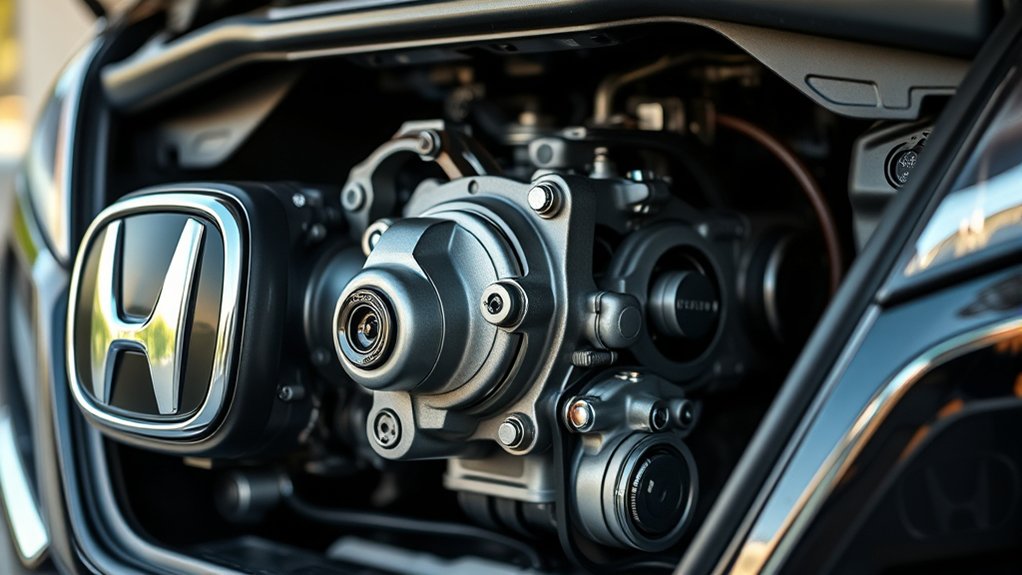
What issues should you watch for when it comes to Honda CVT transmissions? Despite an unreliable reputation in some circles, many reported problems stem from consumer myths rather than widespread mechanical failure. However, you should be aware of certain technical concerns.
Common issues include juddering or shuddering during acceleration, which often signals belt or pulley wear. Some drivers report delayed throttle response, potentially linked to transmission control module software.
Overheating remains a risk under heavy loads or poor maintenance, affecting longevity. Additionally, you might encounter premature fluid degradation, which compromises hydraulic pressure and smooth operation.
Understanding these precise failure modes helps you distinguish between actual mechanical faults and misconceptions, enabling informed maintenance and realistic expectations about Honda CVTs.
How Honda Fixes CVT Problems: Recalls and Updates
When does Honda step in to address CVT issues? Honda initiates recalls and updates once data reveals a pattern of transmission failures or performance degradation linked to design or manufacturing flaws.
They employ precision engineering to redesign problematic components, such as belts, pulleys, or software calibrations, ensuring reliability improvements. These targeted fixes involve exacting tolerances and material enhancements to mitigate wear and overheating.
You’ll find Honda’s updates often include recalibrated transmission control modules to optimize response and durability. However, these remedies come with cost implications, both in terms of parts and labor.
Honda typically covers these expenses under warranty or recall programs to minimize owner burden. Understanding Honda’s methodical approach helps you appreciate their commitment to resolving CVT issues through technical rigor and systematic intervention.
How Reliable Are Honda CVTs in Everyday Driving?

You’ll notice some common CVT issues like shuddering or delayed acceleration in everyday driving. Understanding how these transmissions hold up under normal use is key to evaluating their longevity.
Regular maintenance plays a critical role in sustaining Honda CVT reliability over time.
Common CVT Performance Issues
How do Honda CVT transmissions hold up under daily driving conditions? While generally reliable, some common performance issues can arise. You might notice juddering or shuddering during acceleration, often due to belt tension irregularities or software calibration.
Another issue is overheating, especially in stop-and-go traffic, which can reduce transmission efficiency and trigger limp mode. These problems don’t suggest a fundamental design flaw but highlight areas needing routine maintenance and timely software updates.
It’s important to distinguish genuine CVT concerns from unrelated topics like engine faults or unrelated driveline components, which are not applicable here. Understanding these specific CVT performance issues helps you anticipate potential symptoms and address them proactively, ensuring smoother operation without confusing them with unrelated automotive problems.
Longevity Under Normal Use
Why do Honda CVT transmissions maintain their reliability over extended periods of everyday driving? The answer lies in their design optimized for consistent load distribution and adaptive belt tensioning, which mitigates wear under normal conditions.
When you drive within typical parameters, such as steady speeds and moderate acceleration, the CVT’s components experience balanced stress levels, prolonging functional longevity.
It’s important to avoid conflating this with irrelevant topics like extreme off-road use or high-performance modifications, which skew reliability assessments.
In everyday scenarios, Honda’s CVTs demonstrate stable behavior, resisting premature failure modes common in less refined systems.
Therefore, you can expect a dependable transmission experience in routine driving, supported by Honda’s engineering focus on durability rather than speculative factors that don’t reflect real-world use.
Maintenance Impact on Reliability
Building on the inherent design strengths that support Honda CVT longevity, the role of maintenance markedly influences reliability in everyday driving. You’ll find that adhering to recommended fluid change intervals directly affects the transmission’s hydraulic system and belt durability.
Neglecting these maintenance tasks accelerates wear, leading to reduced efficiency and potential failure. Reliability trends show that vehicles with consistent maintenance demonstrate fewer issues, maintaining smooth operation and extending service life.
Conversely, irregular service schedules correlate with increased instances of slipping, overheating, and premature component fatigue. By monitoring fluid condition and performing timely replacements, you minimize the maintenance impact on performance degradation.
Maintenance Tips to Extend Your Honda CVT’s Life
You need to prioritize regular CVT fluid changes to prevent overheating and maintain optimal transmission performance. Replacing the transmission filter on schedule ensures debris doesn’t impair hydraulic function.
These maintenance steps directly impact the longevity and reliability of your Honda’s CVT system.
Regular Fluid Changes
How often you change the CVT fluid directly impacts the transmission’s performance and longevity. Over time, CVT fluid degrades due to heat and friction, reducing its ability to lubricate and cool critical components.
Regular fluid changes prevent buildup of contaminants that impair belt and pulley function, crucial for maintaining optimal fuel efficiency. Especially if your driving involves frequent urban driving with stop-and-go conditions, fluid degradation accelerates, stressing the CVT system.
Honda recommends specific intervals for fluid replacement, typically every 30,000 to 60,000 miles, but you should adjust based on driving habits and conditions. By adhering to these intervals, you ensure consistent hydraulic pressure and reduce wear, extending transmission life.
Skipping or delaying fluid changes risks overheating and premature failure, undermining reliability and performance.
Timely Filter Replacement
Why does timely filter replacement matter for your Honda CVT? The transmission filter traps contaminants that degrade fluid quality and transmission performance. Neglecting timing filters leads to clogged passages, causing overheating and premature wear.
Replacing filters at recommended intervals maintains optimal fluid flow and protects internal components.
| Maintenance Aspect | Impact on CVT Performance |
|---|---|
| Timely Filter Replacement | Prevents debris buildup, ensuring smooth operation |
| Filter Condition Check | Identifies early contamination, avoiding damage |
| Fuel Efficiency | Clean filters sustain hydraulic pressure, improving fuel efficiency |
How Honda CVTs Compare to Other Brands’ CVTs
When comparing Honda CVTs to those from other manufacturers, what stands out most is their balance between durability and efficiency. Honda’s engineering prioritizes minimizing drivetrain noise, resulting in a smoother, quieter ride compared to many competitors.
You’ll also notice their CVTs consistently deliver competitive fuel efficiency, often surpassing traditional automatics and some rival CVTs in real-world conditions. Technically, Honda employs robust belt and pulley designs that reduce slippage and wear, enhancing longevity under varying driving demands.
While other brands may emphasize aggressive fuel economy or cost-cutting, Honda maintains a focus on long-term reliability without sacrificing power delivery. If you value a CVT that manages noise effectively and sustains fuel efficiency over time, Honda’s transmissions stand out as a well-rounded choice.
Should You Choose a Honda With a CVT Transmission?
Given Honda’s reputation for balancing durability, noise reduction, and fuel efficiency in their CVTs, deciding whether to opt for a Honda equipped with this transmission depends on your driving priorities and conditions. If you value smooth acceleration and improved fuel economy, Honda’s CVTs deliver consistently.
However, you should weigh the disputed reliability reported in some models, as certain users have experienced premature wear and costly repairs. Additionally, drivetrain noise, while reduced compared to earlier CVTs, remains noticeable under heavy acceleration or sustained high loads.
Consider potential reliability issues and noticeable noise during heavy acceleration with some Honda CVT models.
If your driving involves frequent stop-and-go traffic or long highway cruises, the CVT’s benefits may outweigh these concerns. Conversely, if you prioritize long-term mechanical simplicity or lower maintenance risk, a traditional automatic might serve you better.
Analyze your usage patterns carefully before choosing.
Frequently Asked Questions
What Models of Honda Use CVT Transmissions?
You’ll find CVT transmissions in Honda models like the Civic, Accord, CR-V, and HR-V.
For peak CVT durability, you should follow maintenance tips including regular fluid changes and avoiding aggressive driving to extend transmission life.
How Does a CVT Affect Fuel Efficiency?
You’ll see up to a 10-15% fuel economy improvement because CVT design basics optimize engine RPM continuously.
However, fuel economy tradeoffs include occasional higher RPM noise and potential efficiency losses under heavy loads or aggressive driving.
Can I Manually Override a Honda CVT?
You can manually override a Honda CVT using paddle shifters or a manual mode, offering control without a traditional clutch. This system aids weight reduction by eliminating complex mechanical linkages, enhancing efficiency and driving precision.
Are Honda CVTS Covered Under Warranty?
Yes, Honda CVTs are covered under warranty, but you should understand warranty limits. Reliability myths often overshadow this coverage, so review your specific Honda warranty carefully to ensure CVT repairs and maintenance fall within the included protection.
What Noises Are Normal From a Honda CVT?
Like a hummingbird’s wings, gentle whining during acceleration is normal in your Honda CVT. Don’t confuse these sounds with unrelated concerns or maintenance myths. Regular fluid checks prevent issues and keep performance precise and reliable.
Conclusion
When it comes to Honda CVTs, reliability hinges on one essential factor: maintenance. Neglect it, and you risk overheating and slippage. Keep up with fluid changes and updates, and you’ll enjoy smooth, efficient performance that rivals traditional automatics.
But here’s the catch—despite Honda’s engineering and fixes, some models still spark debate.
So, are Honda CVTs truly reliable? The answer depends on how well you commit to their care and upkeep. Ultimately, Honda CVT transmissions can be reliable when properly maintained.