Yes, a bad spark plug can cause misfire by failing to ignite the air-fuel mixture properly in your engine.
When spark plugs are worn or fouled, the gap increases, requiring higher voltage and leading to inconsistent sparks.
This inconsistency results in rough idling, reduced power, poor fuel efficiency, and potential engine strain.
Diagnosing and replacing faulty spark plugs promptly helps restore smooth engine performance.
Understanding the causes and remedies of spark plug issues will help you maintain your engine’s reliability and avoid costly damage.
Key Takeaways
- Yes, a bad spark plug can cause misfires by producing inconsistent or weak sparks needed for combustion.
- Worn or fouled spark plugs increase the gap, requiring more voltage and leading to incomplete ignition.
- Misfires from faulty plugs result in rough idling, reduced acceleration, and decreased fuel efficiency.
- Spark plug issues trigger misfire codes and strain engine components due to erratic combustion.
- Regular inspection and timely replacement of spark plugs prevent misfires and maintain optimal engine performance.
How Spark Plugs Ignite Your Engine’s Fuel
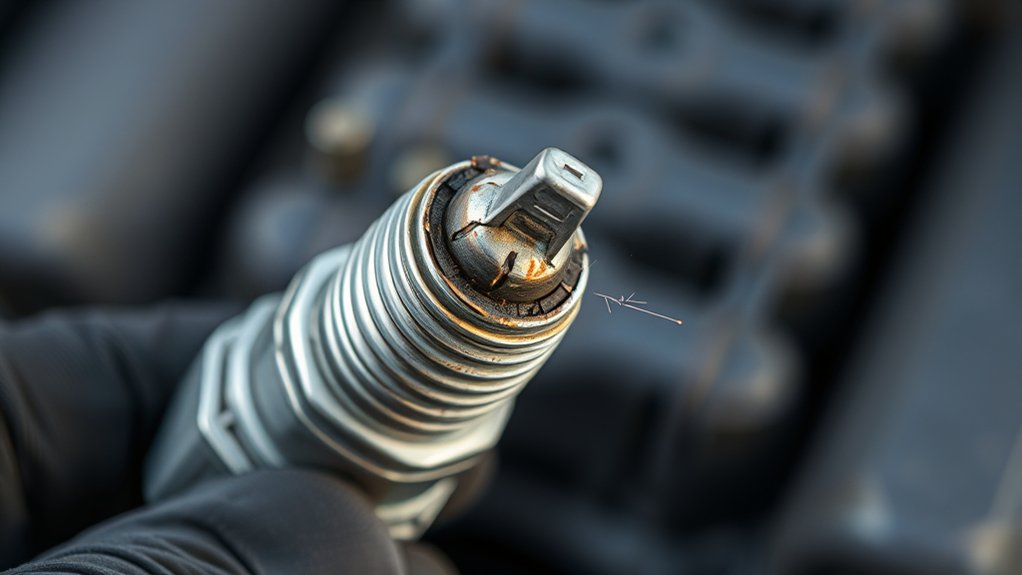
Although you might not see them working, spark plugs play an essential role in igniting the air-fuel mixture inside your engine’s combustion chamber. Your engine relies on precise ignition timing to guarantee the spark plug fires at the exact moment the piston reaches its ideal position.
Different spark plug types, such as copper, platinum, and iridium, offer varying durability and conductivity, impacting how consistently your engine ignites the fuel mixture. The spark plug generates a high-voltage electrical spark that jumps across its gap, igniting the compressed air-fuel blend.
This controlled ignition drives the piston downward, producing power. If ignition timing is off or you use an incompatible spark plug type, combustion efficiency drops, leading to performance issues. Understanding these mechanics helps you maintain ideal engine function.
Signs of Spark Plug Misfires to Watch For
You’ll notice engine performance issues like rough idling or hesitation when a spark plug misfires. Pay attention to unusual exhaust smoke, which can indicate incomplete combustion.
These signs are critical indicators that your spark plugs may need inspection or replacement.
Engine Performance Issues
When a spark plug misfires, your engine’s performance immediately suffers in several measurable ways. You’ll notice rough idling, reduced acceleration, and a decrease in fuel efficiency. Misfires disrupt the combustion process, causing uneven power delivery that impacts engine tuning and overall responsiveness.
If your vehicle has undergone performance upgrades, such as enhanced ignition or fuel systems, a faulty spark plug can negate these improvements, leading to inconsistent engine behavior. Additionally, you might experience hesitation during acceleration or a noticeable drop in horsepower.
These symptoms not only degrade the driving experience but can also strain engine components over time. Addressing spark plug issues promptly guarantees your engine tuning remains ideal, maintaining both power output and fuel economy without compromising the benefits of any performance upgrades you’ve installed.
Unusual Exhaust Smoke
How can you tell if a bad spark plug is causing unusual exhaust smoke? When a spark plug misfires, it disrupts proper combustion, often altering the exhaust color and producing distinct smoke odor.
You might notice gray or white smoke, indicating unburned fuel passing through the cylinder. A sulfur or rotten egg-like smoke odor can also signal incomplete combustion linked to faulty spark plugs. Additionally, black smoke suggests excessive fuel burning due to misfiring.
These changes in exhaust color and smoke odor result from irregular ignition timing or weak sparks failing to ignite the air-fuel mixture properly. Monitoring these signs helps you diagnose spark plug issues early, preventing further engine damage and maintaining peak performance.
Always inspect your spark plugs if you observe unusual exhaust smoke.
Why Bad Spark Plugs Cause Engine Misfires
Although spark plugs are small components, they play an essential role in engine performance by igniting the air-fuel mixture inside the cylinders. When a spark plug reaches the end of its spark plug lifespan, its ability to generate a consistent spark diminishes.
This weak or inconsistent spark leads to incomplete combustion, causing engine misfires. Misfires disrupt the precise timing necessary for peak engine tuning, reducing power output and increasing fuel consumption.
Additionally, worn electrodes or fouling can increase the gap, requiring more voltage that the ignition system may struggle to deliver. As a result, combustion becomes erratic, triggering misfire codes and rough engine operation.
Maintaining spark plugs within their recommended lifespan guarantees consistent ignition, supporting smooth engine tuning and preventing misfire-related performance issues.
How to Diagnose Faulty Spark Plugs at Home
Wondering whether your spark plugs are causing engine trouble? Start by inspecting the spark plugs directly. Remove them using a spark plug socket, then examine the electrodes for wear, carbon buildup, or oil fouling. Any erosion or heavy deposits indicate poor spark plug maintenance.
Next, check the spark plug gap with a feeler gauge; an incorrect gap disrupts the ignition system’s efficiency. You can also perform a spark test by grounding the plug against the engine block and cranking the engine. Observe for a strong, blue spark. Weak or no spark confirms a faulty plug or ignition system issue.
Regularly diagnosing spark plugs at home helps maintain peak engine performance and prevents misfires linked to ignition failures.
How Bad Spark Plug Misfires Affect Engine Performance
When a spark plug misfires, you’ll notice a significant drop in engine power and responsiveness. This disruption causes incomplete combustion, which directly reduces fuel efficiency.
Understanding these symptoms helps you identify how bad spark plugs compromise overall engine performance.
Power Loss Symptoms
If your engine starts to lose power unexpectedly, a bad spark plug misfire could be the culprit. Misfires disrupt the combustion cycle, causing incomplete ignition of the air-fuel mixture.
This leads to noticeable engine hesitation, where the engine stumbles or jerks during operation. You might also experience acceleration delay, meaning the engine responds sluggishly when you press the gas pedal.
These symptoms occur because the spark plug fails to ignite the mixture at the correct time, reducing power output. Over time, repeated misfires strain engine components and degrade overall performance.
Identifying these power loss symptoms early allows you to address spark plug issues before they escalate, ensuring smoother engine function and preventing further mechanical damage.
Fuel Efficiency Impact
Although a bad spark plug misfire might seem like a minor issue, it directly reduces your engine’s fuel efficiency by causing incomplete combustion. When a spark plug fails to ignite the air-fuel mixture properly, unburned fuel passes through the combustion chamber, lowering overall spark plug efficiency.
This inefficiency disrupts the ideal fuel-to-air ratio, forcing your engine to consume more fuel to maintain performance. Consequently, your vehicle’s fuel economy suffers, leading to higher fuel costs and increased emissions.
Monitoring spark plug condition is essential because degraded plugs compromise ignition timing and combustion quality. By ensuring your spark plugs operate at peak efficiency, you maintain proper combustion processes, enhance fuel economy, and prevent unnecessary fuel consumption caused by misfires.
Addressing spark plug issues promptly protects your engine’s performance and efficiency.
When to Replace Spark Plugs to Avoid Misfires
How do you know the right time to replace your spark plugs to prevent engine misfires? Understanding the spark plug lifespan and adhering to your vehicle’s maintenance schedule are essential.
Typically, spark plugs last between 30,000 to 100,000 miles, depending on type and driving conditions. Ignoring replacement intervals can lead to misfires, reduced performance, and increased emissions.
Spark plugs generally last 30,000 to 100,000 miles; neglecting replacement risks misfires and poor engine performance.
Watch for these signs to determine when to replace spark plugs:
- Engine hesitation or rough idling
- Decreased fuel efficiency
- Difficulty starting the engine
- Visible electrode wear or deposits
- Check engine light activation
Regularly consulting your vehicle’s maintenance schedule and inspecting spark plugs help you avoid costly misfire-related damage and keep your engine running smoothly.
How to Choose the Right Spark Plug for Your Car
When selecting the right spark plug for your car, what key factors should you consider to confirm peak engine performance? Focus on spark plug materials, heat range, and compatibility with your engine. Different spark plug brands offer varying designs and quality, so choose reputable ones to guarantee durability and efficiency.
| Spark Plug Material | Durability | Performance |
|---|---|---|
| Copper | Shortest life | Good conductivity |
| Iridium | Longest life | Excellent ignition |
| Platinum | Moderate life | Balanced performance |
Check your vehicle’s manual for the recommended heat range and specifications. Matching spark plug materials and brands to your car’s needs prevents misfires and optimizes combustion.
Fixing Spark Plug Misfires: Step-by-Step Guide
Fixing spark plug misfires involves a systematic approach to diagnose and replace faulty plugs to restore engine performance. Start by inspecting the ignition system and performing spark plug maintenance to identify worn or damaged plugs. Here’s how you should proceed:
Disconnect the battery to guarantee safety before beginning work. Remove the ignition coils or wires connected to the spark plugs. Use a spark plug socket to carefully extract each plug.
Check each plug for wear, carbon buildup, or damage indicating misfire. Replace faulty plugs with the correct type, torque them to manufacturer specifications, and reattach ignition components.
After replacement, test the engine for smooth operation and absence of misfire codes. This methodical process guarantees your ignition system functions efficiently.
Preventive Tips to Keep Spark Plugs Healthy
Maintaining spark plug health starts with regular inspections and timely replacements to prevent misfires and engine inefficiencies. Effective spark plug maintenance involves checking electrode wear, gap size, and deposits.
Employ proper cleaning techniques, such as using a wire brush or specialized cleaner, to remove carbon buildup. Avoid abrasive methods that can damage the electrode.
Additionally, monitor engine performance indicators like rough idling or reduced fuel efficiency, which signal spark plug issues.
| Preventive Measure | Description |
|---|---|
| Inspection Frequency | Every 30,000 miles or per manual |
| Gap Adjustment | Use feeler gauge for precise gap |
| Cleaning Technique | Wire brush, avoid sanding |
| Replacement Timing | Replace when worn or fouled |
| Performance Monitoring | Watch for misfire symptoms |
Adhering to these maintains ideal spark plug function and engine reliability.
Frequently Asked Questions
Can Bad Spark Plugs Affect Fuel Efficiency?
Yes, bad spark plugs increase fuel consumption by causing incomplete combustion. You should prioritize spark plug maintenance to guarantee efficient ignition, reduce misfires, and optimize fuel efficiency.
Ultimately, this saves you money and improves engine performance.
Do Spark Plug Misfires Damage the Catalytic Converter?
If you ignore spark plug maintenance, unburned fuel from misfires can overheat and damage the catalytic converter.
For example, a driver’s neglected misfires led to costly catalytic converter replacement, highlighting the need for catalytic converter protection.
How Often Should Spark Plug Wires Be Replaced?
You should replace spark plug wires every 30,000 to 50,000 miles to guarantee ideal spark plug maintenance. Regularly inspecting your ignition system prevents misfires, improves performance, and protects components from wear or electrical damage.
Are Iridium Spark Plugs Better Than Platinum Ones?
You’ll find iridium spark plugs offer better spark plug longevity and enhanced performance for your ignition system compared to platinum ones. Their fine electrodes reduce wear, ensuring more consistent ignition and improved engine efficiency over time.
Can Weather Conditions Cause Spark Plug Misfires?
Think of your engine as a campfire; weather, like humidity effects, can dampen sparks. Different spark plug types react uniquely. Some resist moisture better, but high humidity can still cause misfires by disrupting ignition consistency.
Conclusion
Think of your spark plugs as the tiny lightning bolts igniting your engine’s heartbeat. When they falter, misfires ripple through your car’s performance like flickering shadows in a steady flame. By recognizing the signs early and choosing the right plugs, you keep that spark strong and consistent.
Regular checks and timely replacements guarantee your engine runs smoothly, transforming potential misfires into a flawless ignition rhythm. This rhythm powers every drive with precision and reliability. Ultimately, a bad spark plug can cause misfire, so maintaining them is key to preventing engine trouble.