Your Jeep Wrangler’s CAN Bus system enables real-time communication between electronic control units, optimizing engine performance, safety systems, and diagnostics.
This essential network allows different vehicle modules to share information seamlessly, enhancing overall functionality.
It uses a multi-master protocol with twisted-pair wiring to reduce interference and guarantee reliable data exchange.
Key components like transceivers and sensors coordinate vehicle functions, from engine control to ABS.
If issues arise, you can troubleshoot faults via diagnostic tools or update software.
Exploring the CAN Bus deeper reveals how upgrades and customizations enhance your Wrangler’s capabilities.
Key Takeaways
- The Jeep Wrangler uses a CAN Bus system to enable real-time communication between its electronic control units (ECUs).
- CAN Bus in the Wrangler supports critical systems like engine management, ABS, and traction control for enhanced safety and performance.
- Twisted-pair wiring and differential signaling in the Wrangler’s CAN Bus minimize interference and ensure reliable data exchange.
- Diagnostic tools access the Wrangler’s CAN Bus to read fault codes and diagnose electronic system issues efficiently.
- Upgrading the Wrangler’s CAN Bus can improve data transmission speeds and add compatibility with aftermarket devices.
What Is the CAN Bus System in the Jeep Wrangler
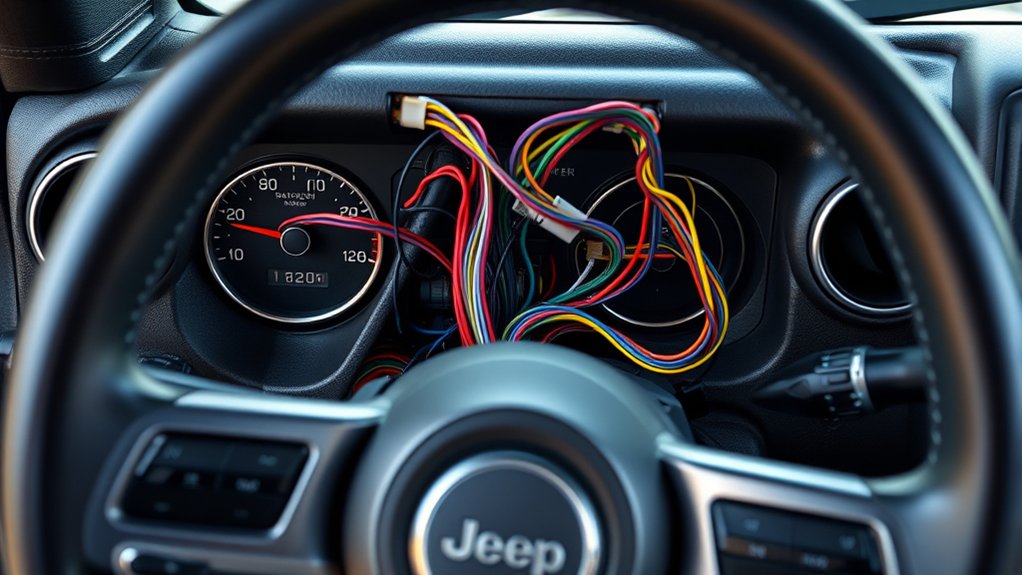
The CAN Bus system in the Jeep Wrangler serves as the vehicle’s central communication network, linking various electronic control units (ECUs) to enable real-time data exchange. Understanding CAN bus basics is essential for diagnosing and optimizing Wrangler electronics.
This network uses a multi-master protocol, allowing multiple ECUs to transmit and receive messages without a host computer. You’ll find that the CAN bus operates on differential signaling to minimize electromagnetic interference, ensuring data integrity across the vehicle’s electronic modules.
Key CAN Bus Components in the Wrangler
Understanding how the CAN Bus system facilitates communication in the Jeep Wrangler leads directly to examining its primary hardware elements. The system relies on a central CAN controller that manages Data Communication between multiple nodes, including Engine Control Units and Body Control Modules.
Wiring Diagrams reveal two twisted-pair CAN Bus lines that reduce electrical interference, ensuring signal integrity. Sensor Integration plays an essential role, with inputs from temperature, speed, and pressure sensors feeding real-time data into the network.
You’ll also find transceivers that convert controller signals into CAN-compatible messages. This infrastructure supports advanced Vehicle Diagnostics by enabling fault codes and system statuses to be communicated efficiently.
Mastering these key CAN Bus components is critical to understanding how Jeep Electronics maintain seamless, synchronized operation throughout the Wrangler.
How the CAN Bus Boosts Wrangler Performance and Safety
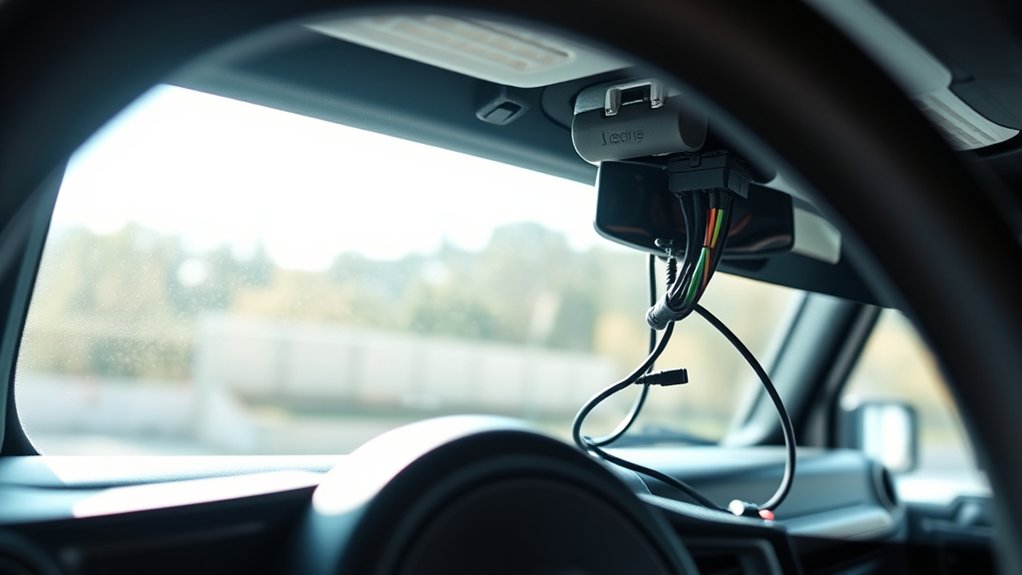
Because the CAN Bus enables rapid, real-time data exchange among critical vehicle systems, it greatly enhances both performance and safety in the Jeep Wrangler. You benefit from performance enhancements as the powertrain control module communicates instantly with the transmission and engine sensors, optimizing fuel injection, ignition timing, and shift patterns. This precise coordination improves engine efficiency and responsiveness under varying conditions.
Simultaneously, safety features activate through the CAN Bus by linking systems like ABS, traction control, and airbags. When sensors detect hazards, the network promptly triggers corrective actions, reducing risk. By integrating these systems via the CAN Bus, your Wrangler maintains superior control and stability.
Ultimately, the CAN Bus’s seamless data flow allows you to experience enhanced vehicle dynamics and advanced safety mechanisms working in unison.
Troubleshooting CAN Bus Issues in Your Jeep
As your Jeep Wrangler relies heavily on the CAN Bus for coordinated system performance and safety, any communication faults can lead to noticeable issues like erratic sensor readings or system malfunctions. Start troubleshooting by using diagnostic tools to scan for error codes, which often reveal common errors such as faulty nodes or bus-off conditions.
Inspect wiring issues closely. Damaged insulation, loose connectors, or corrosion frequently disrupt signal integrity. Consider potential signal interference from aftermarket electronics or environmental factors.
Keep your vehicle’s software updated, as manufacturers release patches that resolve communication glitches and improve bus stability. Apply precise repair techniques, including replacing faulty wires, re-securing connectors, or resetting control modules.
Upgrading and Customizing Your Jeep Wrangler’s CAN Bus

When you decide to upgrade and customize your Jeep Wrangler’s CAN Bus, you enhance its communication capabilities to support advanced features and improved diagnostics. To maximize performance upgrades and customization options, focus on these key areas:
- Bus Speed Adjustment: Increasing the CAN Bus speed improves data transmission rates, essential for integrating modern sensors and modules.
- Node Addition: Adding nodes allows you to incorporate aftermarket devices, expanding diagnostic and control capabilities without compromising network integrity.
- Protocol Compatibility: Ensuring compatibility with higher-layer protocols like CAN FD enables future-proofing and better handling of complex data streams.
Frequently Asked Questions
CAN I Reset the CAN Bus System Myself After Repairs?
You can perform a DIY reset of the CAN bus system after repairs by following precise CAN bus troubleshooting steps. Make certain you disconnect the battery, clear fault codes with a scanner, and verify network communication to confirm success.
Does CAN Bus Affect Fuel Efficiency in the Jeep Wrangler?
Yes, the CAN bus influences your Jeep Wrangler’s fuel system and electronic control by enabling precise data exchange, optimizing fuel injection timing and air-fuel ratios. This enhances efficiency, reduces emissions, and improves overall engine performance consistently and reliably.
Are CAN Bus Diagnostics Covered Under Jeep’s Warranty?
Yes, warranty coverage typically includes CAN bus diagnostics if a related malfunction occurs. Jeep uses advanced diagnostic tools to identify CAN bus issues, ensuring repairs under warranty when faults affect vehicle performance or safety within the coverage period.
How Does CAN Bus Integration Impact Aftermarket Jeep Audio Systems?
When it comes to audio compatibility, CAN bus integration can be a double-edged sword. You’ll face wiring challenges, but proper system upgrades and installation tips guarantee seamless communication. This avoids headaches and optimizes your Jeep’s audio performance efficiently.
CAN a CAN Bus Failure Cause the Jeep Wrangler to Stall?
Yes, a CAN bus failure can cause your Jeep Wrangler to stall. You’ll need thorough CAN bus troubleshooting to identify communication breaks.
CAN bus symptoms like erratic data can disrupt engine control and cause stalling.
Conclusion
Understanding the CAN Bus system in your Jeep Wrangler is like having a finely tuned orchestra coordinating every component seamlessly. You rely on it to enhance performance, safety, and diagnostics. By knowing its key parts and how to troubleshoot issues, you keep your Wrangler running efficiently.
Plus, upgrading this network opens new customization possibilities, letting you push your vehicle’s capabilities further with precision and confidence. Mastering the CAN Bus Jeep Wrangler system ensures you get the most out of your off-road adventures and daily drives.