Engine oil doesn’t freeze like water but thickens considerably under extreme cold, usually below -30°C (-22°F). This slows its flow and reduces lubrication efficiency during cold starts.
This thickening raises engine friction and wear risks, especially if you use conventional oils.
Synthetic and multi-grade oils resist thickening better, maintaining proper viscosity. Choosing the right oil for your climate and monitoring its condition is essential to protect your engine in winter.
Explore further to understand how to optimize oil performance in cold weather.
Key Takeaways
- Engine oil does not freeze like water but thickens significantly at very low temperatures, reducing flow and lubrication efficiency.
- Actual freezing of engine oil may occur below approximately -50°C (-58°F), depending on its formulation and additives.
- Thickened oil at cold temperatures increases viscosity, causing delayed circulation and potential engine wear during cold starts.
- Synthetic and multi-grade oils resist thickening better than conventional oils, maintaining better flow in freezing conditions.
- Proper oil selection and winter-grade oils ensure adequate lubrication and prevent freezing-related engine damage in cold weather.
Can Engine Oil Actually Freeze?

How low does the temperature have to drop for engine oil to freeze? Engine oil doesn’t freeze in the conventional sense like water; instead, it thickens as the temperature drops.
The freezing point of engine oil isn’t a fixed temperature since oil viscosity varies with formulation and additives. As temperature decreases, oil viscosity increases, causing it to become more resistant to flow, which can mimic freezing behavior.
Typical engine oils start to notably thicken below -30°C (-22°F), but “freezing” would occur at much lower temperatures, often below -50°C (-58°F), which are rarely encountered.
Understanding the oil’s viscosity and its freezing point is essential for selecting proper lubricants for extreme environments, ensuring engine performance and preventing damage during cold starts.
How Cold Weather Affects Engine Oil
While engine oil doesn’t freeze like water, its increasing viscosity in cold temperatures can greatly impact engine performance. As temperatures drop, oil molecules slow down, causing oil viscosity to rise.
This thickening reduces the oil’s ability to flow freely and lubricate engine components efficiently. You’ll notice slower oil circulation, particularly during cold starts, which increases engine wear due to insufficient lubrication.
Cold temperatures also delay the oil’s ability to reach critical engine parts, heightening friction and risking damage. Understanding how oil viscosity behaves in cold conditions helps you anticipate potential engine stress and the importance of using oil suited for low temperatures.
Cold temperatures slow oil flow, increasing friction and engine wear—choose oil designed for low-temperature performance.
Managing oil viscosity in cold weather guarantees smoother engine operation and prolongs engine life under harsh environmental conditions.
What Different Engine Oil Types Mean for Freezing
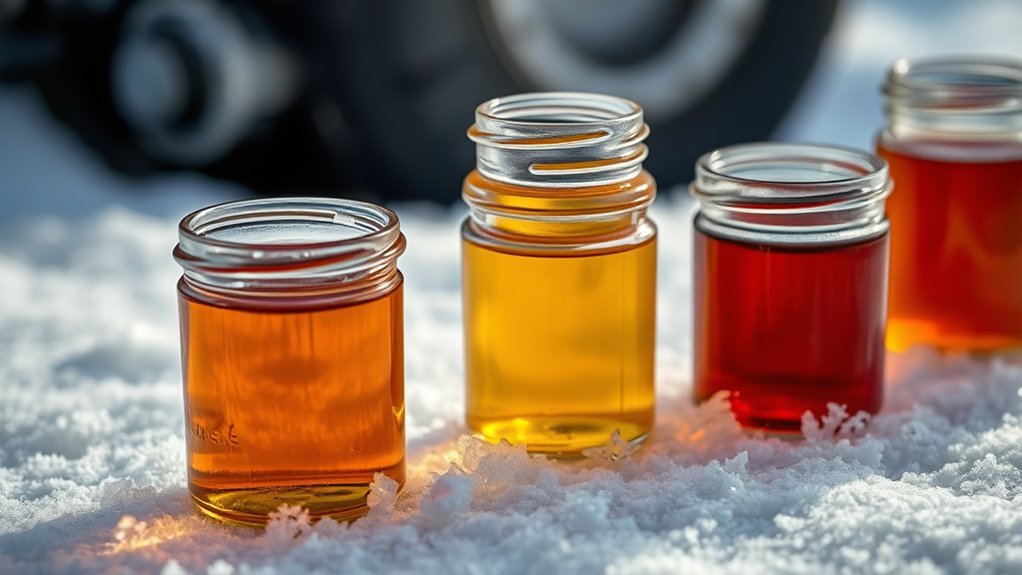
Because engine oils vary in composition and viscosity grades, their behavior in freezing or near-freezing temperatures differs considerably. When you select an engine oil, understanding how oil viscosity and base materials impact freezing resistance is essential. Here’s what you need to take into account:
Conventional oils typically thicken more rapidly as temperatures drop, risking sluggish flow.
Synthetic options maintain more stable viscosity across temperature ranges, reducing freeze risk.
Multi-grade oils contain viscosity modifiers that help sustain fluidity in cold conditions.
High-viscosity oils may approach semi-solid states at extreme cold, impairing lubrication.
Additive packages in oils influence pour points, affecting freezing thresholds.
Why Oil Thickness Matters for Winter Performance
Understanding the variations in oil composition and viscosity sets the stage for recognizing why oil thickness plays a pivotal role in winter performance. You need to focus on viscosity ratings, which indicate how well the oil flows at different temperatures.
Thicker oils with higher viscosity can impede cold resistance, making it harder for the oil to circulate and protect engine components during startup in freezing conditions. Conversely, oils formulated with lower cold viscosity provide better lubrication immediately upon engine start, reducing wear and improving efficiency.
Selecting an oil with appropriate viscosity ratings guarantees peak cold resistance, maintaining fluidity and minimizing internal friction. This balance is critical because excessive thickness can lead to sluggish oil flow, while too thin oil may fail to protect under load.
Hence, oil thickness directly influences winter engine reliability and longevity.
Signs Your Engine Oil Struggles in Cold Weather

You’ll notice engine oil struggling in cold weather when its texture thickens noticeably, causing increased resistance. This thickening leads to slower engine starts as the oil’s viscosity impedes smooth movement.
Additionally, reduced oil flow compromises lubrication, increasing wear risk during startup.
Thickened Oil Texture
When engine oil thickens due to low temperatures, it loses its ability to flow smoothly through the engine’s components. This increase in oil viscosity directly impacts your vehicle’s winter performance, as thickened oil resists circulation, reducing lubrication efficiency.
You’ll notice the oil texture becoming more gel-like, signaling that it struggles under cold conditions. Monitoring these signs helps prevent engine damage from insufficient lubrication.
Signs of thickened oil texture include:
- Increased resistance when turning the engine over
- Oil appearing cloudy or sludgy at low temperatures
- Hesitant oil flow during cold starts
- Unusual engine noise due to poor lubrication
- Noticeable drop in oil pressure readings
Understanding this helps you select oils with appropriate viscosity ratings designed for cold climates.
Slow Engine Start
Although engine oil doesn’t completely freeze, cold temperatures can cause it to thicken considerably, leading to slower engine starts. The increased viscosity of the oil makes it harder for the engine components to move freely, which delays the initial combustion process.
This slow combustion results in extended cranking times and reduced engine responsiveness. Additionally, cold weather impacts battery performance, lowering its ability to deliver sufficient power for ignition.
When combined, thickened oil and diminished battery output create a scenario where your engine struggles to start efficiently. Recognizing these signs early helps you understand that your engine oil is under stress in cold conditions, signaling the need for appropriate oil grades and battery maintenance to guarantee reliable starts in freezing temperatures.
Reduced Oil Flow
Cold temperatures greatly reduce the flow rate of engine oil, impeding its ability to lubricate moving parts effectively. As oil viscosity increases in cold weather, the lubrication efficiency drops, causing inadequate protection for engine components.
You’ll notice your engine oil struggles when the thicker oil flow delays reaching critical areas, increasing wear risks. Watch for these signs indicating reduced oil flow:
- Engine noise or ticking due to insufficient lubrication
- Difficulty maintaining consistent oil pressure
- Longer warm-up times as oil circulation slows
- Increased engine temperature from friction
- Oil filter clogging from thicker oil residue
Understanding these symptoms helps you address oil viscosity issues promptly, ensuring maximum lubrication efficiency and preventing engine damage in cold conditions.
How to Choose the Right Engine Oil for Cold Climates
Since engine oil viscosity directly affects performance at low temperatures, selecting the right oil for cold climates is essential to guarantee proper lubrication and engine protection. You should prioritize oils with low-temperature viscosity ratings, such as 0W or 5W, making sure the oil remains fluid enough for effective circulation during cold starts.
Synthetic oils outperform conventional oils in these conditions because they maintain stable viscosity and resist thickening. Synthetic formulations also offer superior cold-flow properties, reducing startup wear.
When choosing, consult your vehicle manufacturer’s specifications and opt for oils designed for subzero conditions. Avoid oils with high winter viscosity numbers that can impede flow.
Tips to Protect Your Engine Oil During Winter
When temperatures drop, you need to take specific steps to secure your engine oil remains effective throughout winter. Maintaining ideal oil viscosity is essential, as thicker oils can impair flow and lubrication in cold conditions. Implementing proper winter maintenance guarantees your engine operates smoothly and avoids damage caused by sluggish oil performance.
Consider these tips to protect your engine oil during winter:
- Use engine oil with a manufacturer-recommended viscosity grade suited for low temperatures.
- Store your vehicle in a garage or sheltered area to reduce oil thickening.
- Perform regular oil level checks to prevent running on insufficient lubrication.
- Warm up your engine briefly before driving to enhance oil circulation.
- Avoid extended idling, which can lead to oil contamination and viscosity degradation.
These measures help maintain oil integrity and engine reliability in cold environments.
When to Change Engine Oil for Winter Protection
You should change your engine oil before winter sets in, ideally when it nears the end of its service life to guarantee ideal viscosity and protection. Using winter-grade oil helps maintain proper flow and lubrication at low temperatures, reducing engine strain.
Watch for signs like thickening oil or difficulty starting, which indicate it’s time for a fresh oil change.
Ideal Oil Change Timing
Although engine oil doesn’t typically freeze, changing it at the right time before winter secures ideal viscosity and protection in low temperatures. To optimize engine performance and longevity, you need to take into account oil change frequency and seasonal oil considerations.
Adjust your oil change schedule based on temperature trends, driving habits, and manufacturer recommendations.
Key points for ideal oil change timing include:
- Schedule oil changes before the first hard freeze.
- Use manufacturer guidelines adjusted for cold weather.
- Monitor oil condition more frequently in severe climates.
- Take into account shorter oil change intervals during winter.
- Verify oil viscosity matches expected temperature ranges.
Winter-Grade Oil Benefits
Timing your oil change to align with colder seasons sets the stage for selecting winter-grade oil, which offers superior flow characteristics and engine protection at low temperatures. Winter oil formulations feature lower oil viscosity, enabling the lubricant to remain fluid and circulate efficiently during cold starts.
This reduced viscosity minimizes engine wear by ensuring rapid lubrication under freezing conditions. If you delay switching to winter oil, thicker oil may impede flow, increasing friction and risking engine damage.
Signs Oil Needs Changing
When engine oil exhibits signs of degradation, it compromises winter protection by increasing viscosity and reducing lubrication efficiency. You need to monitor specific engine performance indicators and adhere to the recommended oil change frequency to maintain peak function.
Ignoring these signs can lead to poor cold starts and accelerated engine wear.
Watch for these indicators that signal it’s time for an oil change:
- Dark, thick oil with a burnt smell
- Engine noise or knocking during startup
- Reduced fuel efficiency
- Increased exhaust smoke
- Oil change warning light activation
Frequently Asked Questions
Can Synthetic Oil Improve Fuel Efficiency in Winter?
Yes, synthetic oil improves fuel efficiency in winter by maintaining ideal oil viscosity, reducing engine drag. Its superior winter performance guarantees smoother operation, quicker starts, and less energy loss, enhancing overall fuel economy during cold conditions.
Does Engine Oil Affect Car Battery Performance?
When it comes to battery maintenance, engine oil viscosity can indirectly affect performance by influencing engine start-up efficiency in cold weather. If oil’s too thick, your battery may work overtime, making it harder to keep everything running smoothly.
How Often Should I Check Engine Oil Levels in Winter?
You should check your oil level at least once a month during winter maintenance, as colder temperatures can affect viscosity and consumption. Frequent monitoring guarantees ideal lubrication and prevents engine damage caused by low or degraded oil levels.
Can Additives Prevent Engine Oil From Freezing?
Coincidentally, additives can’t stop engine oil from freezing but they do improve oil viscosity at cold temperatures. You’ll find they reduce thickening, ensuring smoother flow and better protection, though freezing prevention remains beyond their technical scope.
Is It Safe to Mix Different Engine Oil Brands?
You can mix different engine oil brands if their oil viscosity grades match and they meet the same specifications. However, brand compatibility varies, so always check manufacturer recommendations to avoid performance issues or chemical incompatibilities in your engine oil.
Conclusion
You can’t completely count on engine oil to freeze, but cold can certainly challenge its consistency and performance. Choosing the correct cold-climate concoction—whether synthetic or multi-grade—prevents problematic thickening and protects pivotal parts.
Pay precise attention to oil thickness and timely changes to keep your engine effortlessly efficient. By proactively protecting your oil, you’ll power through polar plights with precision, preventing potential pitfalls and preserving peak performance in frigid fronts.
In conclusion, while engine oil may not freeze outright, understanding how cold affects it is essential for maintaining your vehicle’s health and efficiency.