You should check your engine oil when the engine is warm but has been off for 5 to 10 minutes. Checking engine oil at this time ensures that the oil has thinned and fully settled, giving a more accurate level than checking when cold.
Cold oil thickens and drains unevenly, which can lead to inaccurate readings. Checking immediately after driving or when the engine is cold can cause false readings, risking under- or over-filling.
Following your manufacturer’s recommended timing guarantees precision and engine health.
Understanding these details helps you maintain proper oil levels and avoid common mistakes.
Key Takeaways
- Engine oil should be checked when the engine is warm but has been off for 5-10 minutes to allow oil to settle.
- Cold engine oil is thicker and may give falsely low readings due to incomplete drainage back to the oil pan.
- Warm oil expands and thins, providing a more accurate level measurement on the dipstick.
- Always follow the vehicle manufacturer’s guidelines on whether to check oil hot or cold for precise results.
- Consistent timing and technique are essential to avoid inaccurate oil level readings and ensure proper engine lubrication.
When Is the Best Time to Check Engine Oil: Hot or Cold?
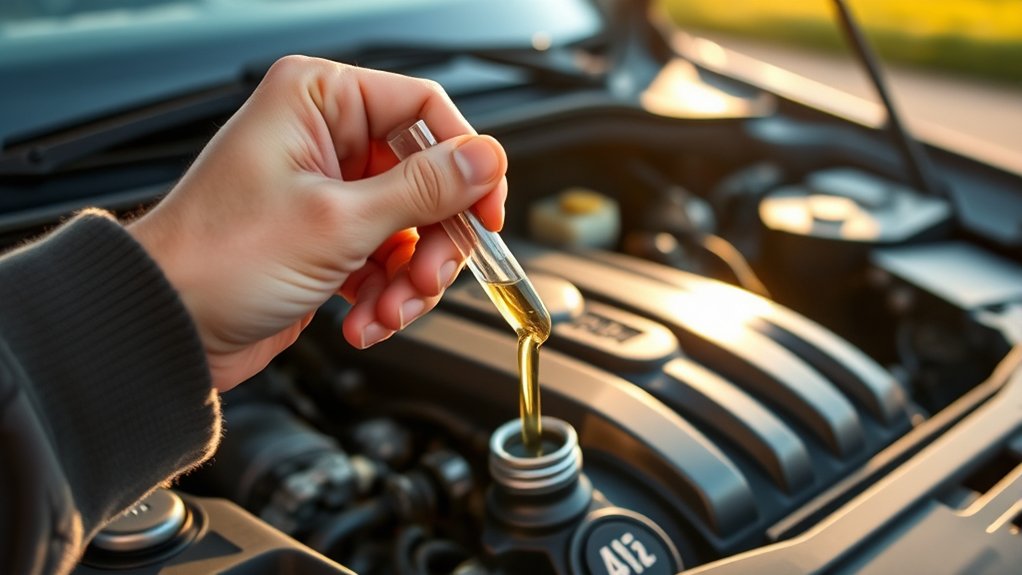
When should you check your engine oil to get the most accurate reading: hot or cold? You should check your engine oil when the engine is warm but turned off for a few minutes.
Oil viscosity changes with temperature; hot oil thins, providing a better flow and a more accurate level reading. Cold oil is thicker and may not have fully drained back into the oil pan, leading to a falsely low reading.
Checking oil at the right temperature guarantees you assess the volume crucial for peak engine performance. Maintaining proper oil levels with accurate readings helps prevent excessive engine wear, supports lubrication efficiency, and preserves the designed oil viscosity important for consistent engine function.
Therefore, timing your oil check is essential for reliable engine maintenance.
How Engine Temperature Affects Engine Oil Level Accuracy
You need to contemplate that engine oil expands as it heats and contracts when it cools, which affects the oil level reading. Checking the oil at the wrong temperature can lead to inaccurate measurements.
To get a precise level, you must time your check based on the engine’s temperature and manufacturer recommendations.
Oil Expansion And Contraction
Because engine oil expands as it heats and contracts when it cools, the oil level you see on the dipstick can vary considerably depending on the engine’s temperature. This expansion and contraction directly relate to oil viscosity and temperature effects.
As oil heats up, its viscosity decreases, causing it to flow more easily and occupy a larger volume. Conversely, when cold, oil thickens, contracting and resulting in a lower dipstick reading. These temperature-dependent volume changes mean that oil level measurements taken at different temperatures won’t be consistent.
Understanding this helps you interpret dipstick readings more accurately, ensuring you don’t overfill or underfill your engine oil. Always consider how temperature influences both oil viscosity and volume to maintain ideal engine lubrication and performance.
Accurate Measurement Timing
Although engine oil levels fluctuate with temperature, measuring at the right time guarantees accuracy and prevents misinterpretation. To guarantee precise oil measurement, you need to take into account specific temperature considerations and apply effective oil measurement techniques.
Follow these steps:
- Warm Engine Measurement: After driving, let your engine cool for about 5-10 minutes. This allows oil to settle, giving a stable level reading rather than the expanded hot level.
- Cold Engine Measurement: Measure oil after the vehicle has been off for several hours or overnight, ensuring oil has fully drained back to the sump.
- Consistent Timing: Always use the same measurement timing to track oil levels accurately and detect true changes over time.
Why Some Car Manufacturers Recommend Checking Engine Oil Hot or Cold
You’ll find that car manufacturers specify whether to check engine oil when hot or cold to guarantee accurate readings based on the oil’s temperature-dependent volume. This guideline accounts for oil expansion as the engine warms, which can affect level measurements.
Following these instructions helps you maintain proper oil levels and engine performance.
Manufacturer Guidelines Explained
When you consult your vehicle’s manual, you’ll notice that manufacturers specify whether to check the engine oil level when the engine is hot or cold, based on the design and behavior of the engine and oil system. These guidelines hinge on factors such as:
- Oil viscosity characteristics: Some oils expand differently at operating temperatures, affecting the measured level.
- Engine calibration: Manufacturers calibrate oil level indicators to reflect accurate readings under specific temperature conditions.
- Oil circulation patterns: Hot or cold states influence oil distribution within the engine, impacting where oil settles during measurement.
Following these manufacturer instructions guarantees you get precise oil level readings, which is critical for maintaining peak lubrication and preventing engine damage. Ignoring these specifications could lead to inaccurate assessments, potentially causing under- or over-filling issues.
Engine Temperature Impact
Because engine oil expands and circulates differently depending on temperature, manufacturers recommend checking oil levels either hot or cold to guarantee accuracy. When the engine is hot, oil viscosity decreases, allowing it to flow freely and settle at a lower level.
Conversely, cold engine oil is thicker, affecting how it clings to internal components and the dipstick reading. Temperature fluctuations impact oil volume and distribution, so checking oil at the specified temperature guarantees you measure the true operating level.
Ignoring these guidelines can lead to inaccurate readings, risking overfilling or underfilling, which affects engine performance and longevity. By following the manufacturer’s advice on engine temperature, you maintain ideal lubrication and protect your engine from wear caused by improper oil levels or viscosity variations.
How to Check Engine Oil When Cold
Although checking engine oil when the engine is cold requires waiting for several hours after driving, this method provides the most accurate reading of the oil level. Cold oil settles evenly in the oil pan, ensuring a reliable dipstick reading.
To check engine oil when cold, follow these steps:
- Park your vehicle on a level surface and turn off the engine. Wait at least 3-4 hours to allow the cold oil to drain completely into the oil pan.
- Pull out the dipstick, wipe it clean with a lint-free cloth, and reinsert it fully to avoid false readings.
- Remove the dipstick again and observe the oil level against the marked indicators. The oil should be between the minimum and maximum marks for a proper cold oil level.
How to Check Engine Oil When Hot

Checking engine oil while it’s hot requires a different approach to confirm accurate measurement despite oil expansion from heat. First, run your engine for 5 to 10 minutes to bring the oil to operating temperature, guaranteeing the oil viscosity reflects normal conditions.
Then, turn off the engine and wait about 5 minutes to allow oil to settle in the oil pan. Use the dipstick to check the oil level, wiping it clean before reinserting fully. This method confirms you assess oil volume correctly, crucial for maintaining engine health.
Checking hot oil helps reveal issues like oil degradation or contamination affecting viscosity, which impacts lubrication efficiency. Regular monitoring under these conditions supports ideal engine performance and prevents damage caused by improper oil levels or degraded oil quality.
Mistakes That Can Mess Up Your Engine Oil Check
If you skip key steps or misunderstand the proper procedure, you risk getting inaccurate oil level readings that can lead to engine damage. Avoid these common checking errors rooted in engine oil misconceptions:
- Checking oil immediately after shutting off the engine: Oil hasn’t settled, giving false high or low readings.
- Not wiping the dipstick before reinserting: Residual oil skews the measurement, causing confusion about actual levels.
- Ignoring the vehicle’s recommended temperature for checking: Some engines require oil checks when cold, others when warm; neglecting this leads to imprecise results.
You must follow the exact process to get reliable data. Missteps in handling or misunderstanding oil behavior affect your engine’s health and performance. Accurate oil level assessment depends on eliminating these common errors and misconceptions.
How to Fix Low or High Engine Oil Levels
When you find your engine oil level outside the recommended range, you need to take immediate corrective action to prevent engine damage. If the oil level is low, add the manufacturer-specified oil gradually, checking the dipstick frequently to avoid overfilling.
Overfilled oil can cause foaming and increased pressure, leading to leaks or seal damage. For high oil levels, drain the excess oil using the drain plug or a siphoning pump. Avoid quick fixes like diluting oil with additives, as improper use can alter oil viscosity and performance.
Instead, use oil additives only as directed in maintenance tips to enhance oil properties. Always consult your vehicle’s manual and prioritize precise oil level adjustments to maintain peak engine function and longevity.
Why Regular Engine Oil Checks Protect Your Engine
Because engine oil lubricates critical components and dissipates heat, maintaining its proper level and condition is essential to prevent wear and overheating. Regular oil checks directly impact engine longevity by ensuring ideal oil quality and volume.
When you routinely monitor your engine oil, you can:
- Detect contamination or degradation early, preventing abrasive wear.
- Identify leaks or consumption issues before they cause severe damage.
- Maintain the oil’s viscosity within specifications, ensuring effective lubrication.
Neglecting these checks risks oil breakdown, leading to increased friction and overheating, which accelerates engine wear. By consistently verifying oil quality and level, you safeguard your engine’s performance and extend its service life.
Ignoring oil checks causes friction and overheating, accelerating wear and reducing engine lifespan.
This proactive approach minimizes repair costs and maintains your vehicle’s reliability.
Frequently Asked Questions
What Type of Engine Oil Is Best for My Vehicle?
You should choose engine oil with the correct oil viscosity and verify oil compatibility based on your vehicle’s manufacturer specifications.
Using the recommended viscosity grade and compatible oil type optimizes performance and protects your engine efficiently.
How Often Should I Change My Engine Oil?
You should follow your vehicle’s maintenance schedules and adhere to recommended oil change intervals, typically every 3,000 to 7,500 miles, depending on your engine oil type and driving conditions. This ensures peak engine performance and longevity.
Can Synthetic Oil Improve Engine Performance?
Yes, synthetic oil improves engine performance by offering superior synthetic benefits like enhanced lubrication and thermal stability.
In a performance comparison, it reduces friction and wear, boosting efficiency and engine longevity compared to conventional oils.
What Are the Signs of Engine Oil Leaks?
You’ll spot oil leaks in about 30% of vehicles during inspections. For effective oil leak detection, watch for puddles, smoke, or low oil levels.
Use prevention methods like regular gasket checks and proper seal maintenance to avoid damage.
How Do Oil Additives Affect Engine Health?
Oil additives improve oil viscosity and temperature stability, enhancing lubrication and reducing wear. You’ll benefit from performance additives that boost engine longevity by preventing deposits and corrosion.
These additives ensure your engine runs smoothly under varying conditions.
Conclusion
Checking your engine oil at the right temperature guarantees an accurate reading and protects your engine. For example, if you check cold after your car’s been parked overnight, you’ll see the true oil level. Conversely, checking hot right after driving can cause oil to be dispersed unevenly, leading to misleading results.
Always follow your manufacturer’s guidelines to avoid errors and maintain peak engine performance. Regular, precise oil checks are essential. Remember, when in doubt, check engine oil cold to ensure accuracy and safeguard your vehicle.