Engine oil doesn’t expire like food but does degrade over time, losing its ability to lubricate and protect your engine effectively. Understanding whether engine oil expires is important for maintaining your vehicle’s performance.
Unopened oil stored in sealed containers remains stable for years if kept cool and away from sunlight. However, used oil breaks down faster due to contaminants and exposure.
You should watch for changes in color, consistency, and performance to know when to replace it.
Understanding proper storage and signs of degradation can help maintain your engine’s health longer.
Key Takeaways
- Engine oil does not have a strict expiration date but degrades in quality over time due to oxidation and contamination.
- Unopened engine oil can remain stable for several years if stored properly in sealed containers.
- Used engine oil degrades faster and should not be reused after extended storage due to contamination and additive breakdown.
- Exposure to air, heat, and moisture accelerates oil degradation, reducing its lubrication effectiveness.
- Regularly checking oil color and consistency helps identify when oil has degraded and needs replacement.
Does Engine Oil Really Expire?
How long does engine oil remain effective? Engine oil doesn’t exactly expire like food, but its properties do degrade over time. You need to understand that oil viscosity is a critical factor; as oil ages, its viscosity can change, reducing its ability to lubricate and protect your engine effectively.
Synthetic benefits include enhanced stability and resistance to breakdown compared to conventional oils, meaning synthetic oils generally maintain their performance longer. However, exposure to air, heat, and contaminants accelerates degradation, affecting oil’s protective qualities.
Engine Oil Shelf Life: Unopened vs. Used
Although unopened engine oil can remain stable for several years when stored in ideal conditions, used oil experiences a considerably shorter shelf life due to contamination and chemical changes. When you compare the two, keep in mind:
Unopened engine oil stays stable for years, but used oil degrades quickly due to contamination and chemical changes.
- Oil Container Types: Unopened oil in sealed metal or plastic containers resists oxidation and moisture ingress, preserving its properties. Used oil, often stored in open or less secure containers, is vulnerable to contaminants.
- Viscosity Changes: Over time, used oil thickens or thins due to thermal breakdown and particulate contamination, affecting lubrication efficiency. Unopened oil maintains consistent viscosity.
- Chemical Stability: Additives in unopened oil remain effective; in used oil, additives degrade, reducing protection against wear and corrosion.
You should never reuse engine oil after extended storage, as its altered properties can compromise engine performance.
How to Store Engine Oil for Longer Freshness
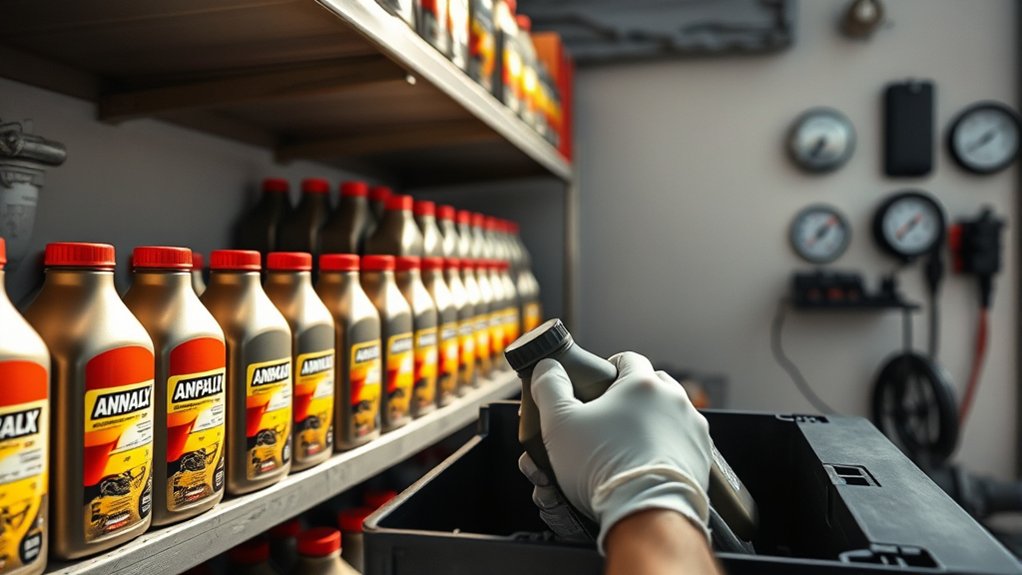
To keep engine oil effective for as long as possible, you need to control storage conditions carefully. Proper oil storage hinges on minimizing exposure to contaminants, moisture, and temperature fluctuations.
Store oil in a sealed, airtight container to prevent oxidation and water ingress. Place the container in a cool, dry location, ideally between 10°C and 25°C, to maintain ideal temperature control.
Avoid direct sunlight or areas near heat sources, which accelerate chemical degradation. Guarantee the storage environment is stable, as frequent temperature changes can cause condensation inside containers, compromising oil quality.
Signs Your Engine Oil Is Bad
Engine oil deteriorates over time due to thermal breakdown, oxidation, and contamination, which compromise its ability to lubricate and protect your engine effectively. Recognizing signs of oil degradation helps you avoid engine damage caused by contaminants such as dirt, fuel, and moisture.
- Color and Consistency Change: Fresh oil is amber and translucent. Dark, thick, or gritty oil indicates contamination and breakdown.
- Engine Noise or Knocking: Degraded oil loses viscosity, reducing lubrication and causing unusual engine sounds due to increased metal-to-metal contact.
- Oil Pressure Drop: Contamination sources clog oil passages, lowering pressure and impairing oil flow.
Monitoring these signs guarantees timely oil changes, preserving engine performance and longevity.
Frequently Asked Questions
Can Expired Engine Oil Damage My Car Engine?
Yes, expired engine oil can damage your engine due to oil degradation, which reduces lubrication efficiency and increases contamination risks. This leads to accelerated wear, corrosion, and potential engine failure if not replaced promptly.
Is Synthetic Oil Better for Long-Term Storage?
Think of synthetic oil as a sealed, high-tech vault, preserving performance longer. Its synthetic advantages include superior oxidation resistance and stability, making it ideal for long-term storage.
Follow storage tips: keep it sealed, cool, and away from sunlight.
How Often Should I Change My Engine Oil?
You should follow your vehicle’s maintenance schedule, typically changing engine oil every 5,000 to 7,500 miles. Adjust oil change frequency based on driving conditions, oil type, and manufacturer recommendations to guarantee ideal engine performance.
Does the Oil Brand Affect Its Shelf Life?
Think of oil brands as different recipes; their oil composition varies, impacting shelf life. You’ll find storage conditions, like temperature and container sealing, play a critical role, often outweighing brand differences in preserving oil quality.
Can Mixing Old and New Engine Oil Cause Issues?
Yes, mixing old and new engine oil can cause issues by altering oil viscosity and increasing oil contamination. This compromises lubrication efficiency, potentially damaging your engine’s performance and lifespan.
Always use consistent, clean oil for best results.
Conclusion
So, does engine oil really expire? Yes, it does—especially once opened or exposed to contaminants. Unopened oil can last up to five years if stored properly, but used oil degrades much faster.
To keep your oil fresh, store it in a cool, dry place, sealed tightly. Regularly check for signs of bad oil, such as changes in color, consistency, or smell. Never risk your engine’s health with expired fluid.
In conclusion, understanding that engine oil does expire is crucial for maintaining your vehicle’s performance. Using fresh, effective lubrication ensures your engine runs smoothly and lasts longer.