You might not realize that your Honda tire rotation pattern isn’t just a routine task but a crucial factor in maintaining balanced wear and optimal performance. Different drivetrains and tire designs mean the way you rotate your tires can directly impact handling, fuel efficiency, and tread life.
Ignoring manufacturer guidelines or mixing rotation methods could lead to uneven wear or compromised safety. Understanding the right approach for your specific Honda model is more important than you think.
Key Takeaways
- Honda tire rotation patterns ensure even tire wear, extending tire life and maintaining vehicle performance.
- Proper rotation pattern depends on tire type, drivetrain, and model specifications to avoid uneven wear.
- Directional and staggered tires require specific rotation methods to preserve tread direction and fit.
- Following Honda-recommended rotation patterns prevents handling issues and maintains warranty coverage.
- Using the correct rotation pattern optimizes safety, fuel efficiency, and driving dynamics.
Why Tire Rotation Patterns Matter for Hondas

Why should you pay close attention to your Honda’s tire rotation pattern? Proper rotation ensures even tire wear, which extends tire life and maintains optimal vehicle performance.
When you track tire rotations using your odometer maintenance schedule, you can accurately time rotations to prevent premature wear. Uneven wear often results from misaligned wheels, so coordinating tire rotation with regular wheel alignment checks is essential.
This synchronization helps maintain consistent contact between tires and the road, preserving handling and safety. Ignoring the tire rotation pattern can lead to uneven tread wear, negatively affecting fuel efficiency and ride comfort.
Common Tire Rotation Patterns for Your Honda
You’ll typically encounter three main tire rotation patterns for your Honda: front-to-rear, cross pattern, and a specific AWD rotation. Each pattern addresses different drivetrain configurations and tire wear characteristics.
Understanding which pattern fits your model ensures balanced tread wear and optimal performance.
Front-To-Rear Rotation
How often should you consider front-to-rear tire rotation for your Honda? Generally, Honda recommends rotating your tires every 5,000 to 7,500 miles to maintain even tire wear.
The front-to-rear rotation pattern involves moving the front tires directly to the rear and vice versa, without crossing sides. This method is most suitable for vehicles with directional tires or staggered wheel sizes, where swapping tires side to side isn’t advisable.
By rotating tires front to rear, you balance the distinct wear patterns caused by the front tires’ steering and drivetrain responsibilities versus the rear tires’. This approach helps extend tire life, ensures consistent handling, and maintains optimal traction.
Always consult your Honda owner’s manual to confirm the recommended rotation interval and pattern specific to your model.
Cross Pattern Rotation
While front-to-rear rotation suits certain Honda models, many benefit from a cross pattern rotation to promote even tire wear. This method involves moving the front tires to the opposite rear positions and the rear tires to the opposite front positions.
The rotation physics behind this pattern address the asymmetric tread wear patterns caused by directional forces during cornering and braking. By swapping tires diagonally, you balance the wear across all four tires, extending their lifespan efficiently.
Cross pattern rotation is especially effective for Hondas with non-directional tires and front-wheel drive configurations, where front tires typically wear faster. Understanding this pattern helps you maintain optimal traction, ride comfort, and safety, ensuring your Honda’s tires wear evenly, maximize performance, and reduce premature replacement costs.
Honda AWD Rotation
Why does tire rotation differ for Honda AWD models compared to front-wheel-drive vehicles? AWD systems distribute power to all four wheels, causing more even tire wear but requiring specific rotation methods. You need to follow a Honda AWD rotation pattern designed to maintain balanced tread wear and maximize tire lifespan.
Typically, this involves the rearward cross pattern, where rear tires move straight forward, and front tires cross to the rear opposite positions. This two word idea 1 ensures uniform wear on all tires, preserving traction and handling.
Unlike front-wheel-drive’s simpler front-to-back rotation, the AWD’s two word idea 2 addresses the complexities of torque distribution. By adhering to this rotation schedule, you protect your drivetrain and maintain optimal vehicle performance.
How Honda Models Change Your Tire Rotation Pattern
Which tire rotation pattern suits your Honda depends largely on the specific model you drive. For example, front-wheel-drive Civics require a different rotation approach than all-wheel-drive CR-Vs due to varying torque distribution and suspension geometry.
Paying attention to your model’s unique tire wear patterns helps optimize rotation schedules, preserving tread life and maintaining balanced traction. Additionally, models with alternate fuel economy features, such as hybrid Accords, demand careful tire management to avoid negatively impacting their efficiency.
Using Directional and Staggered Tire Rotations on Hondas

When dealing with directional tires on your Honda, you’ll need to rotate them front-to-back on the same side to maintain tread direction.
Staggered tire setups, where front and rear tires differ in size, complicate rotation since swapping positions isn’t always possible. Understanding these constraints helps you apply proper rotation techniques to maximize tire life and performance.
Directional Tire Rotation Basics
How should you approach tire rotation when dealing with directional or staggered tires on your Honda? For directional tires, you must maintain their intended rolling direction to preserve tire balance and maximize performance. This means rotating them front-to-back on the same side only.
Any cross-rotation risks disrupting tire tread alignment, leading to uneven rim wear and compromised handling. When handling staggered setups, different tire sizes on front and rear, you can’t swap tires side-to-side, so rotation is often limited or avoided to prevent rim wear and tire imbalance.
Always inspect and rebalance tires after rotation to ensure optimal tire balance and prevent premature wear. Following these guidelines helps maintain your Honda’s handling integrity and prolongs tire life while avoiding damage to rims caused by improper rotation.
Staggered Tire Setup Challenges
Why do staggered tire setups on Hondas present unique rotation challenges? When your Honda uses staggered tires, with wider ones on the rear than the front, you face specific staggered challenges during rotation. Unlike standard tire setups, you can’t simply swap tires front to rear because of different sizes.
Additionally, if your tires are directional, the rotation nuances become more complex: you must maintain the correct tread direction to preserve performance and safety. This limits rotation patterns, often restricting movement to side-to-side swaps on the same axle.
Failing to account for these factors can lead to uneven wear and compromised handling. Understanding these staggered challenges helps you avoid incorrect rotations, ensuring optimal tire longevity and consistent driving dynamics on your Honda.
Rotation Tips for Hondas
Managing tire rotations on Hondas with directional and staggered setups demands attention to their specific constraints. When dealing with directional tires, you must rotate them front-to-back on the same side to maintain tread direction; crossing sides is an irrelevant topic here.
For staggered setups, where front and rear tires differ in size, you can only swap tires side to side on the same axle, as mixing axles is an unrelated concept that risks improper fitment and wear. Always consult your Honda’s manual for manufacturer-recommended patterns to avoid voiding warranties or compromising handling.
Ignoring these nuances can lead to uneven tread wear, reduced performance, and safety issues. Staying precise with these rotation tips ensures your tires wear evenly and your Honda performs optimally throughout its service life.
How Tire Type Affects Your Honda’s Rotation Pattern
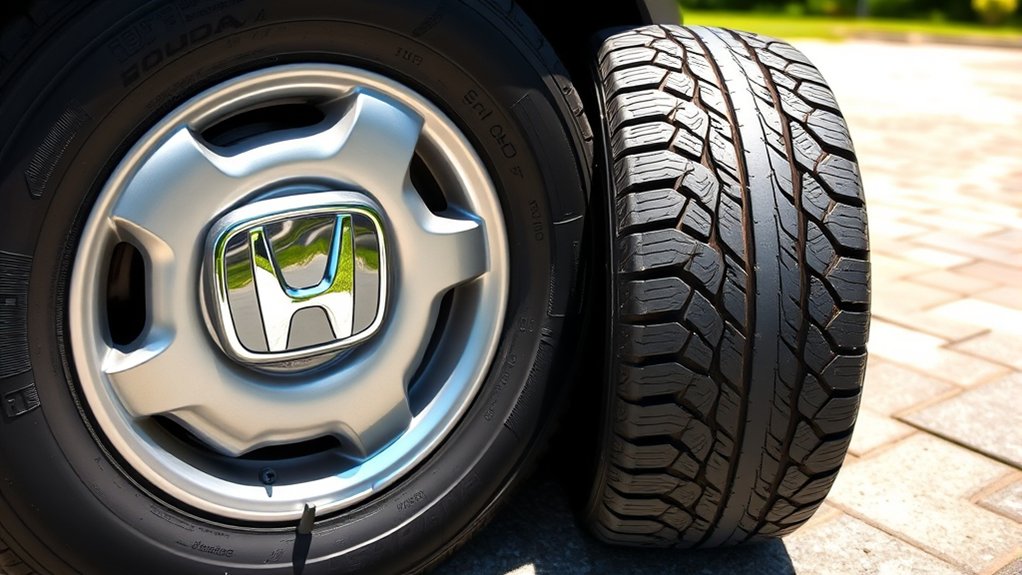
What impact does the type of tire on your Honda have on its rotation pattern? Different tire types demand tailored rotation strategies to maintain optimal performance and longevity. Here’s how your tire type influences rotation:
- Directional tires require rotation front-to-back on the same side to preserve tread direction.
- Asymmetric tires need careful positioning, swapping sides only if tread design allows.
- Non-directional, symmetric tires offer more flexibility, enabling traditional cross-pattern rotation.
- Performance tires prioritize maintaining tire balance and wheel alignment, making precise rotation crucial to prevent uneven wear.
Understanding your tire type helps you avoid unexpected wear patterns and extends tire life. Proper rotation aligned with your tire’s specifications ensures safer handling and preserves your Honda’s driving dynamics.
Signs Your Honda Needs a Tire Rotation
How can you tell when your Honda’s tires need rotation? Look for uneven tread wear, such as excessive wear on the inner or outer edges, which indicates imbalance in tire contact.
If you notice vibration or pulling to one side while driving, it’s another sign your tires require rotation. After using rental tires or switching between different sets, such as seasonal storage tires, rotation becomes vital to ensure even wear and prolong their lifespan.
Additionally, track the mileage since your last rotation; Honda generally recommends rotating every 5,000 to 7,500 miles. Ignoring these signs can lead to compromised handling, reduced fuel efficiency, and premature tire replacement. Act promptly to maintain optimal performance and safety on the road.
Tips for Proper Tire Rotation on Your Honda
When should you rotate your Honda’s tires to guarantee even wear and peak performance? The recommended rotation frequency is typically every 5,000 to 7,500 miles, but always check your owner’s manual for specifics. Proper tire rotation balances tread wear, prolonging tire life and maintaining handling precision.
Follow these tips for effective rotation:
- Maintain consistent tire pressure before and after rotation to ensure uniform contact with the road.
- Use the correct rotation pattern based on your Honda’s drivetrain: front-wheel, rear-wheel, or all-wheel drive.
- Inspect tires for uneven wear, damage, or imbalance during rotation.
- Tighten lug nuts to the manufacturer’s torque specifications to avoid wheel-related issues.
Adhering to these practices optimizes safety, fuel efficiency, and overall driving performance on your Honda.
Frequently Asked Questions
How Often Should I Replace My Honda Tires Completely?
You should replace your Honda tires every 25,000 to 50,000 miles, depending on tire wear patterns.
Regularly follow your maintenance schedule to monitor tread depth and ensure optimal performance and safety.
Can I Rotate Tires on My Honda Myself or Need a Mechanic?
Of course, you could leave tire rotation to mechanics, but if you want to extend your tires’ lifespan, DIY maintenance is doable with the right tools and knowledge. Proper rotation ensures even wear and safety on your Honda.
Does Tire Rotation Improve Honda’s Fuel Efficiency?
Yes, tire rotation improves your Honda’s fuel economy by promoting even tire wear. Uneven wear increases rolling resistance, reducing efficiency.
Regularly rotating tires ensures balanced tread, helping your engine use less fuel and maintain optimal performance.
What Tools Do I Need for Honda Tire Rotation?
Think of tire rotation basics as tuning a musical instrument. You’ll need a jack, lug wrench, torque wrench, and wheel chocks. These essential maintenance tools guarantee precise, safe Honda tire rotation for balanced wear and optimal performance.
Are Tire Rotations Covered Under Honda’s Warranty?
Honda’s warranty typically doesn’t cover tire rotation frequency or maintenance services like tire rotations. You’ll need to handle rotations yourself or via service plans, ensuring you follow recommended intervals to maintain optimal tire performance and safety.
Conclusion
You need to follow Honda’s tire rotation patterns to maintain balance, extend tread life, and ensure safety. Before rotating, consider your model’s drivetrain, tire type, and directionality.
It is important to track mileage, inspect tires for wear, and rotate regularly to prevent uneven wear and preserve performance.
By rotating correctly, you protect handling, optimize fuel efficiency, and maximize tire longevity—keeping your Honda reliable and safe on every drive.
In conclusion, Honda tire rotation pattern matters significantly for maintaining optimal vehicle performance and safety.