You can expect a Jeep Wrangler to get between 17 and 25 miles per gallon, depending on your model and engine choice.
The boxy design and off-road features usually lower fuel efficiency, but newer models improve MPG with lighter materials and turbocharged or diesel engines.
Your transmission choice and driving conditions—like city traffic or highway cruising—also impact fuel economy.
Off-road use and modifications can further reduce MPG.
Stay tuned to find out how these factors shape your overall fuel costs.
Key Takeaways
- Jeep Wrangler’s average MPG ranges between 17 and 25 combined, depending on model and engine type.
- V6 engines generally offer lower fuel economy compared to turbocharged four-cylinder or diesel options.
- Newer Wrangler models with turbocharged engines and mild hybrids provide improved fuel efficiency.
- Real-world MPG varies with driving conditions, such as city versus highway and weather impacts.
- Off-road features, larger tires, and added accessories typically reduce the Wrangler’s fuel economy.
Jeep Wrangler Average MPG
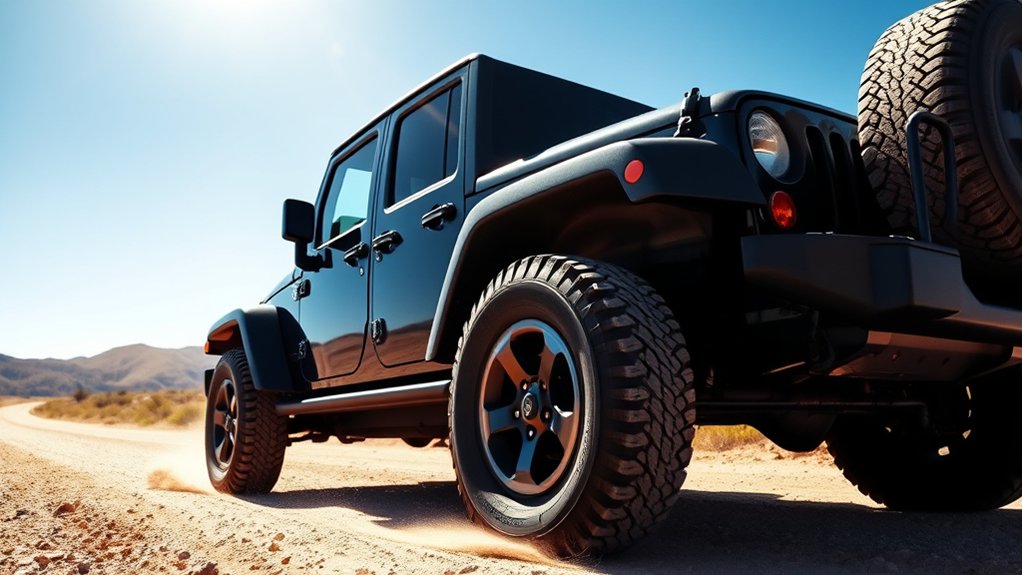
When you look at the Jeep Wrangler’s average miles per gallon (MPG), you’ll notice it varies depending on the model and engine type. Typically, Wrangler fuel economy ranges between 17 to 25 MPG combined, reflecting its design priorities.
While not the most fuel-efficient SUV, the Wrangler balances rugged capability with reasonable Wrangler efficiency for its class. Its boxy shape and off-road features contribute to higher fuel consumption compared to more aerodynamic vehicles.
The Wrangler offers rugged capability with fuel efficiency suited to its off-road design and boxy shape.
However, improvements in newer models, such as lightweight materials and engine tuning, have enhanced overall fuel efficiency. When considering Wrangler fuel costs, you should account for driving conditions and habits, as these also impact real-world MPG.
Understanding these factors helps you gauge what to expect from your Wrangler’s fuel performance.
How Engine Types Affect Jeep Wrangler MPG
The Jeep Wrangler’s fuel efficiency depends heavily on the engine type you choose. Different engines offer varying levels of engine efficiency, directly affecting your miles per gallon.
For instance, the standard V6 engine delivers solid power but compromises slightly on fuel economy. Meanwhile, the turbocharged four-cylinder engines incorporate advanced fuel technology, improving combustion and boosting MPG without sacrificing performance.
You’ll also find diesel options that use fuel technology focused on maximizing energy extraction from diesel fuel, resulting in better fuel economy on highways. When selecting your Wrangler’s engine, consider how these varying technologies balance power and efficiency.
Understanding these differences helps you pick an engine that aligns with your driving needs and fuel economy expectations.
How Transmission Types Affect Jeep Wrangler MPG
Because transmission types influence how efficiently power transfers from the engine to the wheels, they play an essential role in your Jeep Wrangler’s MPG. Manual transmissions often provide better transmission efficiency due to their direct mechanical connection, allowing you to enhance gear selection and improve fuel economy.
Automatic transmissions, while convenient, can sometimes have lower transmission efficiency because of energy losses in the torque converter. However, modern automatics with advanced gear ratios and multiple speeds narrow this gap by keeping the engine in its ideal power range more consistently.
Continuously Variable Transmissions (CVTs), found in some Wranglers, adjust gear ratios seamlessly to maximize fuel efficiency under varying conditions. Understanding these differences helps you choose a transmission that aligns with your priorities for fuel economy and driving experience.
How Driving Conditions Impact Jeep Wrangler MPG
Although the Jeep Wrangler is built for rugged performance, how and where you drive it greatly affects its miles per gallon (MPG). Urban driving often lowers MPG due to frequent stops and idling, while highway driving typically improves fuel efficiency with steady speeds.
Weather conditions also play a significant role; cold temperatures and rain can reduce MPG by increasing engine workload and rolling resistance. Maintaining proper tire pressure is essential. Underinflated tires increase drag and waste fuel.
Additionally, the load weight you carry impacts MPG, as heavier loads demand more energy. Finally, your driving habits, such as aggressive acceleration and braking, can drastically decrease fuel efficiency. By understanding and adjusting to these driving conditions, you can optimize your Jeep Wrangler’s MPG for better fuel economy.
Impact of Off-Roading and Modifications on Jeep Wrangler MPG
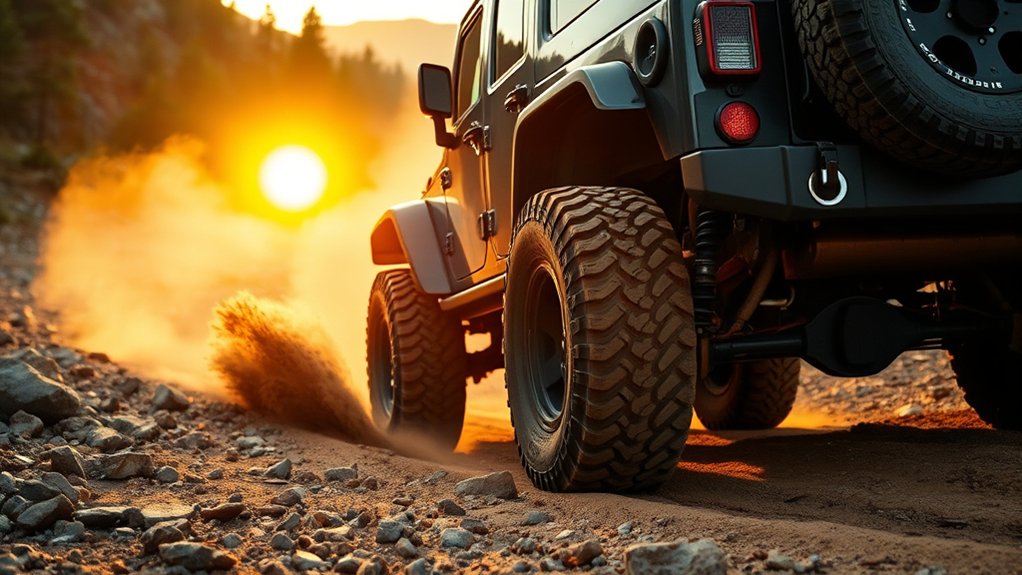
Beyond typical driving conditions, off-roading and vehicle modifications can greatly influence your Jeep Wrangler’s fuel efficiency. When you add off road accessories like winches, roof racks, or heavy bumpers, you increase the vehicle’s weight and aerodynamic drag, which lowers miles per gallon.
Larger tire size, common in off-road setups, also affects MPG by increasing rolling resistance and altering the speedometer’s accuracy, leading to less efficient fuel consumption. Additionally, bigger tires force the engine to work harder, especially on paved roads.
If you frequently tackle rough terrains, your fuel economy will drop due to the increased demand on the drivetrain and engine. To maintain better MPG, you might consider choosing lighter off road accessories and moderating tire size without compromising your Wrangler’s off-road capability.
How Jeep Wrangler MPG Compares to Other Off-Road SUVs
You’ll find the Jeep Wrangler’s fuel efficiency is competitive, but it often trails some rivals in MPG. When comparing it to other off-road SUVs, you’ll notice a trade-off between off-road capability and fuel economy.
Understanding this balance helps you decide if the Wrangler fits your driving priorities.
Jeep Wrangler Fuel Efficiency
How does the Jeep Wrangler’s fuel efficiency measure up against other off-road SUVs? When considering fuel economy, you’ll find the Wrangler balances rugged capability with reasonable gas mileage. Your driving habits, whether city cruising or trailblazing, greatly affect its MPG.
While it’s not the most fuel-efficient in its class, it offers competitive numbers for the power and off-road features you get.
| Model | Average MPG | Off-Road Capability |
|---|---|---|
| Jeep Wrangler | 17-25 | High |
| Toyota 4Runner | 16-19 | Moderate |
| Ford Bronco | 16-23 | High |
The Wrangler’s fuel economy suits drivers who prioritize adventure without sacrificing too much efficiency.
MPG Comparison With Competitors
Although the Jeep Wrangler isn’t the leader in fuel economy among off-road SUVs, it strikes a solid balance between power and mileage that appeals to many drivers. When you compare it to competitive models like the Toyota 4Runner, Ford Bronco, and Land Rover Defender, you’ll notice the Wrangler’s MPG ratings are generally on par or slightly lower.
The 4Runner and Bronco often deliver marginally better fuel economy, especially on highway drives, thanks to their newer engine technologies and aerodynamic designs. However, the Wrangler’s rugged build and off-road capabilities justify its fuel consumption for enthusiasts who prioritize versatility.
If fuel economy is your top concern, some competitive models may offer savings, but the Wrangler remains a strong contender for drivers valuing a mix of efficiency and performance.
Off-Road Performance vs Economy
When balancing off-road performance with fuel economy, the Jeep Wrangler offers a distinctive blend that few SUVs can match. If you prioritize off road capabilities, the Wrangler excels with rugged build and advanced 4×4 systems, enabling you to tackle tough terrain confidently.
However, its fuel efficiency trails some competitors, averaging around 17-25 MPG depending on the model and engine. Compared to other off-road SUVs like the Toyota 4Runner or Land Rover Defender, the Wrangler’s MPG is slightly lower, but its specialized design justifies this trade-off.
You’ll find that while some SUVs offer better fuel economy, they may sacrifice the Wrangler’s unmatched trail prowess. Ultimately, the Wrangler balances off road capabilities and fuel efficiency to suit enthusiasts who want serious adventure without entirely compromising on mileage.
What to Expect for Fuel Costs When Owning a Jeep Wrangler
Anyone considering a Jeep Wrangler should be prepared for fuel costs that tend to be higher than average due to its boxy design and off-road capabilities. When planning your fuel budgeting, expect to spend more on gas compared to smaller, more aerodynamic vehicles.
The Wrangler’s average miles per gallon usually falls between 17 to 25, depending on the model and driving conditions, which directly impacts how often you’ll need to fill up. These fuel expenses become a significant part of your overall ownership expenses.
Factoring in frequent refueling alongside maintenance and insurance helps you get a realistic picture of total costs. Understanding these fuel costs upfront guarantees you’re financially prepared to enjoy your Jeep without surprises at the pump.
Fuel-Saving Tips for Jeep Wrangler Drivers
Saving fuel in your Jeep Wrangler doesn’t have to be complicated. You can improve your mileage by adjusting your driving habits. Avoid rapid acceleration, excessive idling, and maintain steady speeds whenever possible. These simple changes reduce fuel consumption greatly.
Additionally, consider fuel-efficient upgrades like low rolling resistance tires and improved air filters. These enhance engine performance and fuel economy without sacrificing capability.
Regular maintenance, including timely oil changes and tire pressure checks, also plays an essential role. By combining smart driving habits with these practical upgrades, you’ll maximize your Jeep Wrangler’s efficiency on the road.
Taking these steps not only saves you money but also helps reduce your environmental impact while enjoying your Jeep’s adventurous spirit.
Comparing Fuel Economy Across Jeep Wrangler Model Years
Although Jeep Wranglers have always prioritized off-road capability, their fuel economy has evolved noticeably across model years. When comparing fuel efficiency, you’ll notice that improvements in engine performance and design have played a key role.
Earlier models often featured larger, less efficient engines, resulting in lower miles per gallon. Recent model variations, however, incorporate turbocharged engines and mild hybrid systems, boosting fuel economy without sacrificing power.
For instance, the EcoDiesel engine option introduced in some newer Wranglers offers enhanced efficiency compared to traditional V6 or V8 engines. Additionally, advancements in transmission and aerodynamics have contributed to better mileage.
Frequently Asked Questions
What Type of Fuel Is Recommended for the Jeep Wrangler?
You should use regular unleaded fuel with an octane rating of 87 for most Jeep Wrangler models.
Always check your owner’s manual, as some engines may recommend mid-grade or premium fuel for peak performance.
How Often Should I Check My Jeep Wrangler’s Tire Pressure?
You’ll want to give your Jeep’s tire pressure a friendly check at least once a month, especially with seasonal changes, varying driving habits, off-road conditions, and as part of your regular maintenance routines to keep things smooth.
Does the Jeep Wrangler Have a Hybrid or Electric Version?
Yes, Jeep offers an Electric Wrangler and models with Hybrid Technology. You can choose a plug-in hybrid for better efficiency or wait for fully electric versions as Jeep expands its eco-friendly lineup.
What Is the Jeep Wrangler’s Average Lifespan or Mileage?
You can expect your Jeep Wrangler’s mileage longevity to reach 200,000 miles or more with proper care. Jeep durability is impressive, thanks to its rugged build and reliable components, making it a long-lasting off-road companion.
Are There Any Common Maintenance Issues Related to Fuel Efficiency?
Fuel efficiency issues often pop up like weeds if you don’t maintain the fuel system and air filter. Clogged filters or dirty injectors reduce mileage, so you’ll want to check and replace them regularly for peak performance.
Conclusion
Think of your Jeep Wrangler as a rugged explorer traversing varied terrains—each engine, transmission, and modification shaping its journey’s fuel story. Just like a seasoned traveler adjusts pace for different landscapes, your driving habits and conditions influence MPG.
While it may not lead the pack in fuel efficiency, understanding these factors helps you steer smarter, balancing power and economy.
In the end, managing your Wrangler’s fuel use is like mastering a map—precision guides every mile, especially when considering how many miles per gallon does Jeep Wrangler get.