To add coolant to your Jeep Wrangler JL, first make certain the engine is completely cool to avoid burns or pressure release.
Verify you’re using the correct coolant type specified in your owner’s manual.
Open the coolant reservoir cap carefully, then fill the reservoir to the “Full” mark without overfilling.
Secure the cap tightly and check for leaks.
Monitor the coolant level after running the engine.
For detailed steps and safety tips, keep exploring this guide.
Key Takeaways
- Ensure the Jeep Wrangler JL engine is completely cool before opening the coolant reservoir or radiator cap to avoid burns and pressure release.
- Locate the translucent coolant reservoir near the radiator and check the fluid level between the “Low” and “Full” marks.
- Use the manufacturer-recommended coolant type specified in the Jeep owner’s manual to prevent engine damage.
- Slowly open the coolant reservoir cap and pour coolant until it reaches the “Full” mark without overfilling.
- Securely replace the reservoir cap and inspect hoses and radiator for leaks within 24 hours after filling.
How to Check Coolant Levels on Your Jeep Wrangler JL
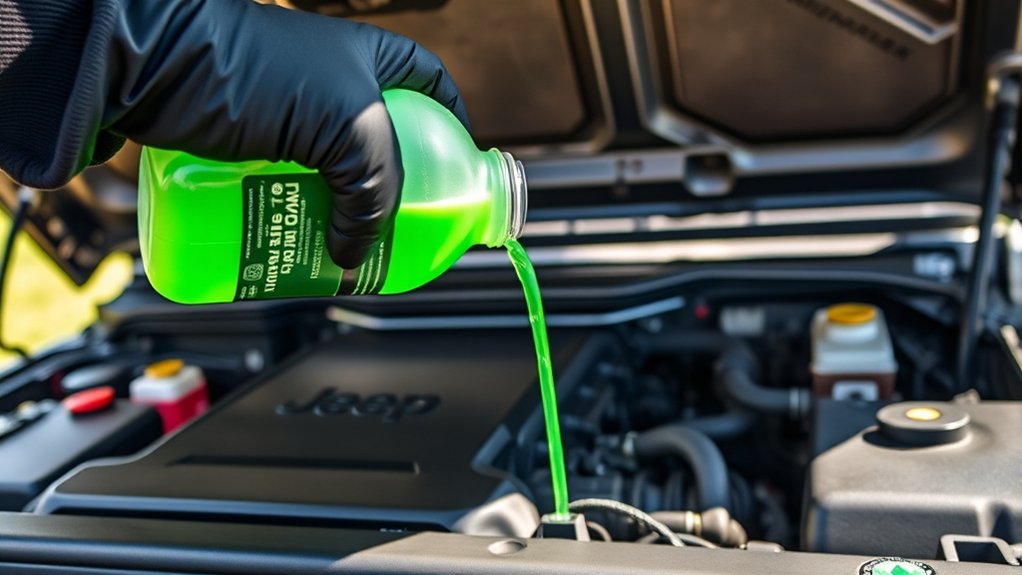
To check the coolant levels on your Jeep Wrangler JL, start by confirming the engine is completely cool to avoid injury. Open the hood and locate the coolant reservoir, a translucent plastic tank near the radiator.
Inspect the reservoir’s side markings labeled “Full” and “Low.” The coolant level should be between these marks for ideal coolant maintenance. If the level is below the “Low” mark, the system requires attention to maintain engine performance.
Avoid opening the radiator cap while the engine is hot to prevent burns. Regularly monitoring coolant levels helps prevent overheating and guarantees the engine runs efficiently.
Use only the recommended coolant type specified in your owner’s manual for accurate readings and system longevity. This routine check supports your Jeep’s reliable operation.
When and Why You Should Add Coolant to Your Jeep Wrangler JL
You should add coolant when you notice signs like engine overheating or low fluid levels on the reservoir. Coolant regulates your engine’s temperature and prevents corrosion, so maintaining proper levels is critical.
Check your coolant every 12,000 miles or annually to guarantee peak performance.
Signs Of Low Coolant
Although Jeep Wrangler JL models are engineered for durability, low coolant levels can compromise engine performance and cause overheating. You need to recognize signs of low coolant promptly to prevent damage. Watch for:
- Coolant leaks under your vehicle, indicating a compromised cooling system.
- Temperature fluctuations on the dashboard gauge, suggesting inconsistent engine cooling.
- Engine overheating, especially during extended drives or in hot weather.
- Steam or a sweet smell from the engine bay, signaling escaping coolant or vapor.
If you notice any of these indicators, inspect the coolant reservoir and radiator immediately. Addressing low coolant early helps maintain peak engine function and avoids costly repairs. Always check for leaks or damaged hoses that might cause depletion.
Coolant’s Role In Engine
Since the engine generates intense heat during operation, maintaining the correct coolant level is critical for your Jeep Wrangler JL’s performance and longevity. The coolant’s composition, a precise blend of water and antifreeze, ensures efficient heat absorption and prevents freezing or boiling under extreme conditions.
When the coolant level drops or its composition degrades, your engine risks overheating, which can cause severe damage to engine components. Adding coolant restores the balance needed to dissipate heat effectively and maintain ideal operating temperature.
You should add coolant whenever you notice low levels or signs of contamination to prevent engine overheating. Proper coolant composition also protects against corrosion and scale buildup inside the cooling system, preserving your Jeep’s engine integrity and preventing costly repairs.
Recommended Coolant Check Intervals
Maintaining the correct coolant level requires regular checks at specific intervals to confirm your Jeep Wrangler JL’s cooling system functions efficiently. Consistent coolant maintenance prevents overheating and engine damage. Follow this schedule for peak performance:
- Monthly visual inspection: Check the coolant reservoir for proper level and clarity.
- Every 6,000 miles: Perform a thorough coolant system inspection, including hoses and radiator.
- Seasonal checks: Before winter and summer, verify coolant concentration and freeze/boil protection.
- At 30,000-mile intervals: Flush and replace coolant to maintain chemical balance and prevent corrosion.
Adhering to these intervals confirms your Jeep’s engine stays within safe operating temperatures, extends component life, and maintains peak performance. Don’t skip these routine checks; they’re critical to effective coolant maintenance.
Choosing the Right Coolant for Your Jeep Wrangler JL
When selecting coolant for your Jeep Wrangler JL, you need to confirm it meets the manufacturer’s specifications to protect the engine and cooling system effectively. Start by identifying the correct coolant types compatible with your vehicle. Usually, Jeep recommends OAT (Organic Acid Technology) or HOAT (Hybrid Organic Acid Technology) coolants.
Avoid mixing different coolant types as it can reduce corrosion protection. Next, choose reputable coolant brands that comply with Chrysler MS-9769 standards to guarantee peak performance. Always consult your owner’s manual or dealership for approved brands and formulations.
Using the right coolant type and brand prevents overheating, corrosion, and degradation of components. Proper coolant selection extends your Jeep’s lifespan and maintains cooling efficiency, so don’t compromise on quality or specifications when making your choice.
Safety Checks Before Adding Coolant to Your Jeep Wrangler JL
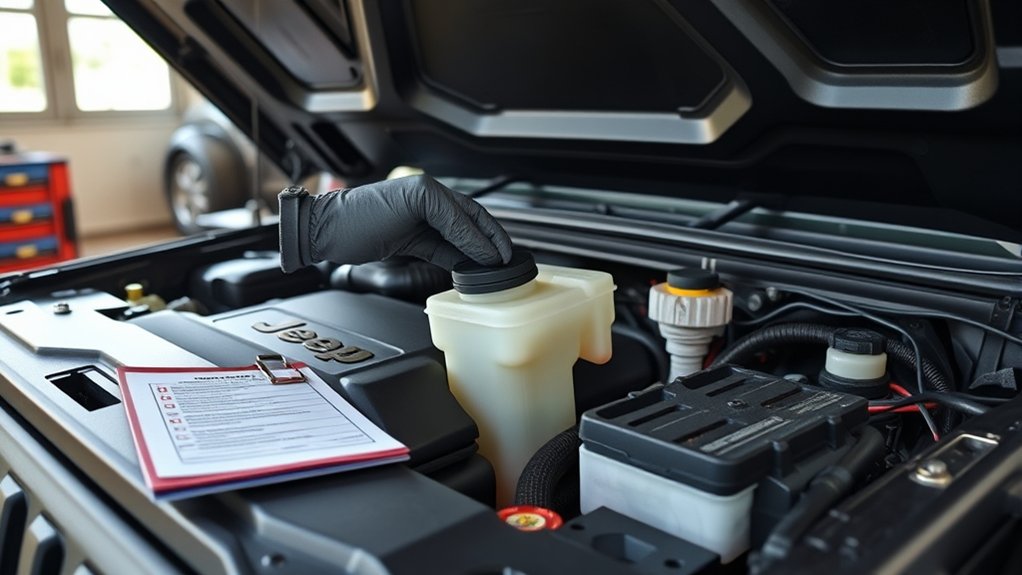
Before adding coolant to your Jeep Wrangler JL, make sure the engine has fully cooled down to prevent burns or pressure release. Confirm the coolant type matches your vehicle’s specifications to avoid chemical incompatibility.
Always release the radiator cap slowly and carefully to avoid sudden pressure discharge.
Engine Cooldown Verification
Although it might be tempting to add coolant immediately, you must guarantee the engine has fully cooled down to avoid injury and equipment damage. High coolant temperature can cause pressurized steam or hot liquid to escape, risking burns and compromising engine stability.
Follow these steps to verify cooldown:
- Check the coolant temperature gauge on the dashboard; it should be in the normal or cold range.
- Wait at least 30 minutes after shutting off the engine before opening the radiator cap or reservoir.
- Carefully touch the radiator or coolant reservoir surface to confirm it’s cool to the touch.
- Inspect for any residual steam or hissing sounds from the engine bay, indicating lingering heat.
Only proceed with adding coolant once all these cooldown criteria are met.
Coolant Type Identification
Since using the wrong coolant can cause corrosion or damage to your Jeep Wrangler JL’s engine and cooling system, you need to identify the correct coolant type before adding any fluid. Check your owner’s manual for the specific coolant specifications recommended by Jeep.
Use coolant compatible with the engine materials and designed for the JL’s cooling system. Avoid mixing different coolant types to maintain coolant compatibility and system integrity.
| Coolant Type | Color | Compatibility |
|---|---|---|
| OAT (Organic Acid) | Orange/Red | Jeep JL OEM specification |
| HOAT (Hybrid OAT) | Yellow/Green | Not recommended |
| IAT (Inorganic) | Green/Blue | Older vehicles only |
| Dex-Cool | Orange | Compatible with Jeep JL OAT |
| Universal Coolant | Varies | Check manufacturer guidelines |
Always verify coolant compatibility before topping off.
Radiator Cap Safety
When your Jeep Wrangler JL’s engine has cooled down completely, you can safely remove the radiator cap to check the coolant level. Proper radiator maintenance is essential to avoid burns or system damage during this process. Follow these steps:
- Wear protective gloves to shield against residual heat and pressure.
- Press down firmly on the radiator cap while turning it counterclockwise to release it slowly.
- Inspect the cap for cracks, corrosion, or damaged seals. Replace it immediately if defects appear.
- Verify the pressure rating on the replacement cap matches your Jeep’s specifications to maintain system integrity.
Neglecting proper cap replacement compromises coolant containment and can lead to overheating or coolant loss. Safety and system efficiency depend on your careful adherence to these radiator cap procedures.
Step-by-Step: Adding Coolant to Your Jeep Wrangler JL
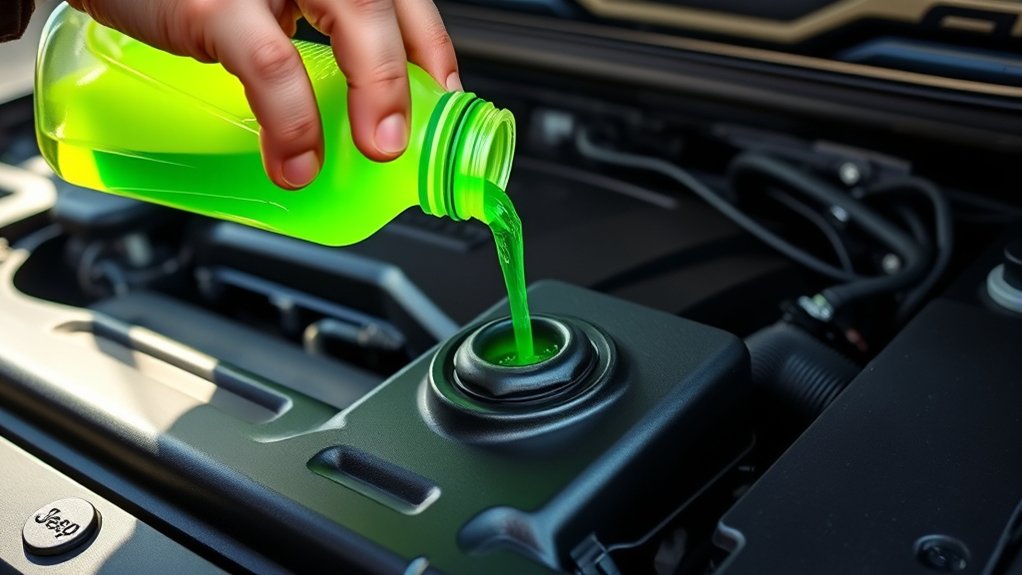
A critical part of maintaining your Jeep Wrangler JL’s cooling system involves adding coolant correctly to confirm peak engine performance and prevent overheating. First, verify the engine is cool before removing the radiator cap to avoid injury.
Identify the appropriate coolant type specified in your owner’s manual, as using the wrong one can impair engine maintenance. Next, open the coolant reservoir cap and slowly pour the coolant mixture until it reaches the “Full” mark. Avoid overfilling, as expansion occurs when the engine heats.
Replace and secure the reservoir cap tightly. Start the engine and let it run for a few minutes, checking for leaks and proper coolant circulation. Finally, recheck the coolant level after the engine cools and top off if necessary to maintain peak performance.
Common Mistakes to Avoid When Adding Coolant to Your Jeep Wrangler JL
Although adding coolant seems straightforward, many Jeep Wrangler JL owners make avoidable errors that compromise engine performance and safety. To guarantee proper coolant maintenance, avoid these common mistakes:
Many Jeep Wrangler JL owners make simple coolant mistakes that risk engine performance and safety—avoid them for proper maintenance.
- Using the wrong coolant type: Always use manufacturer-recommended coolant to prevent chemical incompatibility and potential damage.
- Filling the reservoir when hot: Never add coolant to a hot engine; wait for it to cool to avoid burns and pressure-related coolant leaks.
- Overfilling or underfilling: Maintain coolant level between minimum and maximum marks to prevent overheating or air pockets in the cooling system.
- Ignoring leaks: Inspect hoses and caps for coolant leaks during filling to address issues early and maintain system integrity.
Safe Disposal of Old or Excess Coolant From Your Jeep Wrangler JL
Properly disposing of old or excess coolant from your Jeep Wrangler JL requires careful handling to protect both your vehicle and the environment. First, never pour coolant down drains, onto soil, or into water sources, as its toxic components cause significant environmental impact.
Collect the used coolant in a clean, sealed container to prevent leaks or spills. Next, locate a local automotive service center or recycling facility that accepts coolant for coolant recycling. These centers process the fluid safely, minimizing environmental harm.
Avoid mixing coolant with other automotive fluids to guarantee effective recycling. By following these steps, you not only comply with environmental regulations but also support sustainable vehicle maintenance practices.
Always consult your local disposal guidelines to handle coolant responsibly and reduce ecological risks.
Keeping an Eye on Your Jeep After Adding Coolant
Once you’ve safely disposed of old coolant and refilled your Jeep Wrangler JL’s system, monitor your vehicle closely to verify the coolant is circulating correctly and the engine maintains proper temperature. Follow these steps to guarantee peak performance:
After replacing your Jeep Wrangler JL’s coolant, closely monitor circulation and engine temperature for optimal performance.
- Inspect for coolant leaks around hoses, radiator, and reservoir within the first 24 hours.
- Check the temperature gauge regularly during initial drives to detect any abnormal temperature fluctuations.
- Listen for unusual engine noises indicating potential coolant flow issues.
- Confirm the coolant level remains stable after the engine cools, topping off if necessary.
Frequently Asked Questions
Can I Use Tap Water Instead of Distilled Water for Mixing Coolant?
You shouldn’t use tap water instead of distilled water when mixing coolant. Tap water’s mineral content affects water quality, potentially causing corrosion.
Always use distilled water with the correct coolant type to guarantee peak engine cooling performance.
How Often Should I Flush the Entire Cooling System?
You should flush the entire cooling system every 30,000 miles or every 2 years. Regular coolant maintenance like this guarantees system longevity by preventing corrosion, buildup, and overheating.
This helps keep your Jeep Wrangler JL running efficiently.
What Are the Symptoms of a Failing Thermostat in My Jeep Wrangler JL?
You’ll notice thermostat failure if your Jeep Wrangler JL’s engine overheats quickly, temperature gauge fluctuates erratically, or heater blows cold air. These signs indicate the thermostat isn’t regulating coolant flow properly, risking engine damage.
Is It Necessary to Bleed Air From the Cooling System After Adding Coolant?
Yes, you need to bleed air from the cooling system after adding coolant. Use proper bleeding techniques to remove trapped air, ensuring ideal coolant flow and avoiding overheating.
Match coolant types precisely for system compatibility and performance.
Can Adding Coolant Improve My Jeep’s Heating Performance?
Yes, adding the correct coolant types can improve your Jeep’s heating efficiency by ensuring proper heat transfer within the system. Always use manufacturer-recommended coolant to optimize performance and prevent potential engine overheating or heater core issues.
Conclusion
Adding coolant to your Jeep Wrangler JL is like fine-tuning a precision instrument—every step matters. By checking levels regularly, choosing the right coolant, and following safety protocols, you guarantee your engine runs smoothly and avoids overheating.
Avoid common mistakes, dispose of old coolant responsibly, and monitor your Jeep afterward. With careful attention, you’ll keep your Wrangler’s cooling system in peak condition.
Following these guidelines will ensure that adding coolant to your Jeep Wrangler JL is done correctly, keeping your vehicle ready for any adventure on or off the road.