To add engine oil, first verify your engine is off and cool. This ensures safety and accurate oil level readings.
Select the correct oil viscosity based on your vehicle’s manual.
Remove the oil filler cap carefully, then use a clean funnel to pour oil slowly, avoiding overfilling.
After adding, securely replace the cap and wait a few minutes before checking the oil level with the dipstick.
Proper steps prevent damage and maintain performance.
For detailed guidance on oil types, checks, and disposal, keep exploring key maintenance tips.
Key Takeaways
- Ensure the engine is off and cool before adding oil.
- Select the correct oil viscosity based on your vehicle’s specifications.
- Remove the oil filler cap carefully before pouring oil.
- Use a clean funnel to pour oil slowly, avoiding overfilling.
- Replace the oil cap securely and recheck the oil level after a few minutes.
How to Choose the Right Engine Oil for Your Vehicle
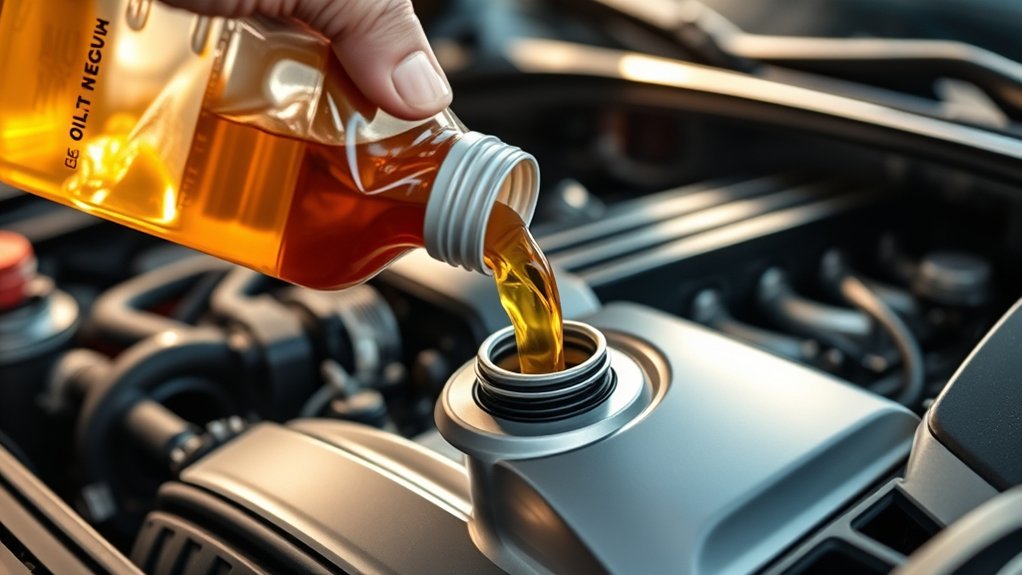
Before adding engine oil, you need to select the correct type for your vehicle. Start by consulting your owner’s manual to identify the recommended oil viscosity, typically indicated by a number like 5W-30. This rating guarantees proper flow and protection at various temperatures.
Next, decide between conventional and synthetic options. Synthetic oils provide superior stability, better performance under extreme temperatures, and longer intervals between changes. They also offer enhanced engine cleanliness and wear protection. However, synthetic oils cost more than conventional ones.
Choose an oil that meets industry standards such as API SN or SP, ensuring compatibility with your engine’s design. Selecting the right oil viscosity and synthetic options tailored to your vehicle maximizes engine efficiency and longevity, preventing premature wear and maintaining peak performance.
When and How to Check Your Engine Oil Level
You should check your engine oil level at least once a month and before long trips to guarantee peak performance. Always measure the oil when the engine is cold and the car is on level ground for accurate readings.
Pull out the dipstick, wipe it clean, reinsert fully, then remove it again to check the oil level against the marked indicators.
Ideal Checking Frequency
Regularly checking your engine oil level guarantees peak performance and prevents costly damage. Follow frequency guidelines by inspecting oil at least once a month and before long trips.
Under ideal conditions, when the engine is cold and the vehicle is parked on a level surface, measurements are most accurate. Extreme temperatures, heavy loads, or frequent short trips may necessitate more frequent checks.
Adhering to these guidelines helps you detect leaks, contamination, or consumption early, maintaining engine efficiency and longevity. Don’t rely solely on dashboard indicators; manual checks remain essential.
Proper Measurement Steps
To accurately check your engine oil level, follow a precise sequence of steps under the right conditions. First, make sure your vehicle is parked on a level surface and the engine is cool or has been off for at least 10 minutes. This allows the oil to settle in the sump for an accurate reading.
Locate the dipstick, remove it, and wipe it clean with a lint-free cloth. Fully reinsert the dipstick, then pull it out again to observe the oil level. Use the marked indicators on the dipstick to determine if the oil is within the recommended range.
Always consult your vehicle manual to understand suitable oil types and measurement tools. Accurate measurement guarantees peak engine performance and prevents overfilling or underfilling.
Step-by-Step: Adding Engine Oil the Right Way
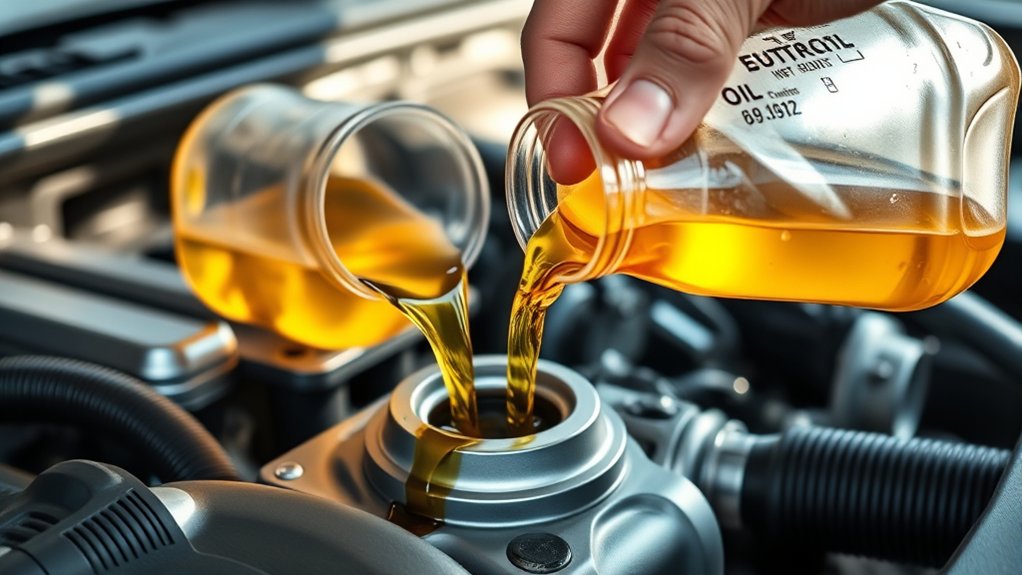
Five critical steps assure you add engine oil correctly and maintain peak engine performance. First, verify the engine is off and cool to prevent inaccurate readings. Second, select the correct oil viscosity based on your vehicle’s specifications to enhance lubrication and protect engine components.
Third, locate and remove the oil filler cap carefully. Fourth, use a clean funnel to pour oil slowly into the engine, avoiding overfilling, which can impair engine performance. Finally, replace the oil cap securely and check the oil level with the dipstick after a few minutes, topping off if necessary.
Following these steps precisely helps maintain ideal oil pressure and engine efficiency, preventing damage caused by improper oil levels or incorrect viscosity.
How to Avoid Common Mistakes When Adding Engine Oil
Before adding oil, make sure you use the correct type specified by your engine manufacturer. Avoid overfilling, as excess oil can cause pressure issues and damage engine components.
Carefully monitor the oil level with the dipstick to maintain peak performance.
Check Oil Type
How do you guarantee you’re using the correct engine oil type? Start by consulting your vehicle’s owner manual to identify the recommended oil viscosity and whether synthetic options are preferred. Using the right oil ensures ideal engine performance and longevity.
Keep these points in mind:
- Verify oil viscosity grade (e.g., 5W-30) compatible with your engine’s specifications.
- Consider synthetic options for better temperature stability and engine protection.
- Avoid mixing different oil types to prevent chemical incompatibility and potential engine damage.
Always select oil that meets or exceeds the manufacturer’s standards. Proper oil type selection prevents premature wear and maintains fuel efficiency. Don’t guess; accurate oil choice is vital for engine health and avoiding costly repairs.
Avoid Overfilling
One critical mistake to avoid when adding engine oil is overfilling, which can cause serious engine damage. To prevent this, always refer to your vehicle’s specified oil capacity before adding oil.
Pour slowly and check the dipstick frequently to monitor the oil level. Stop adding oil as soon as the dipstick indicates the maximum level. Overfilling can lead to increased pressure, oil foaming, and reduced lubrication efficiency.
Watch for overflow signs such as oil leaking from the dipstick tube or unusual engine noises. If you suspect overfilling, drain the excess oil immediately to protect engine components.
Accurate measurement and gradual addition guarantee you maintain the correct oil level, preserving engine performance and longevity.
How to Dispose of Used Engine Oil Responsibly
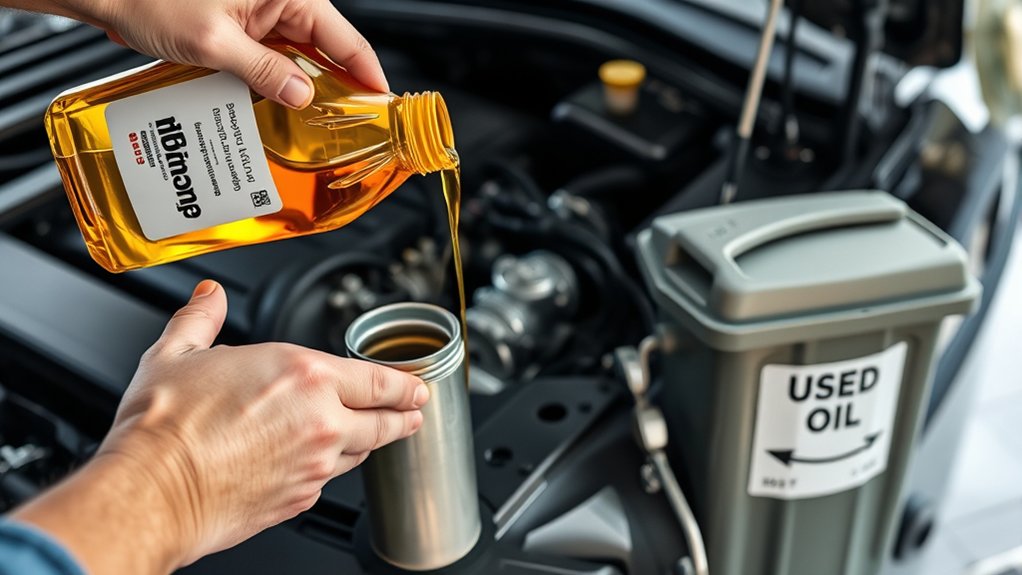
Since used engine oil contains harmful contaminants, you must handle its disposal carefully to prevent environmental damage. Improper disposal can contaminate soil and water, increasing the environmental impact considerably.
Used engine oil contains harmful contaminants that can severely damage soil and water if disposed of improperly.
To dispose of used engine oil responsibly, follow these steps:
- Collect the oil in a clean, leak-proof container without mixing it with other fluids.
- Take the used oil to a certified oil recycling center or automotive service facility.
- Never pour oil down drains, on the ground, or in regular trash bins.
Tips to Monitor and Maintain Engine Oil Levels Between Changes
Proper disposal of used engine oil protects the environment, but maintaining your engine’s performance requires regular attention to oil levels between changes. To monitor effectively, check the oil level indicators frequently, ideally every 1,000 miles or monthly.
Use the dipstick for visual inspections; ascertain the engine is cool, the vehicle on level ground, and the dipstick wiped clean before reinserting. Look for oil between the minimum and maximum marks. If it’s low, add the recommended oil type.
Pay attention to oil color and consistency during inspections. Dark or gritty oil may signal contamination or degradation. Regularly monitoring oil levels helps prevent engine wear and maintains lubrication efficiency, reducing the risk of costly repairs.
Staying proactive with these steps extends your engine’s lifespan and guarantees reliable performance.
Frequently Asked Questions
Can Synthetic Oil Improve My Engine’s Performance?
Yes, synthetic oil types offer superior engine oil benefits by reducing friction, improving thermal stability, and enhancing wear protection. Using synthetic oil can boost your engine’s performance, efficiency, and longevity compared to conventional oils.
How Does Engine Oil Affect Fuel Efficiency?
Engine oil reduces friction, helping your engine run smoothly and improving fuel efficiency. Consistently using the right oil also supports engine longevity by preventing wear and maintaining peak performance, ultimately saving you money on fuel and repairs.
What Are the Signs of Engine Oil Contamination?
When your oil color turns milky or gritty, it’s a red flag. Contamination causes like coolant leaks or dirt intrusion degrade performance.
You’ll notice engine noise, overheating, or sluggish response signaling oil’s compromised state.
Can I Mix Different Brands of Engine Oil?
You can mix different oil brands if their formulations meet your engine’s specifications, but watch for oil brand compatibility and oil viscosity variations to avoid performance issues.
Always prioritize manufacturer recommendations for ideal engine protection.
How Often Should I Replace the Oil Filter?
Think of your oil filter as a fortress guard; replace it every oil change to maintain defense. Depending on oil filter types and oil change frequency, guarantee you swap filters regularly to keep your engine’s health optimized and contamination-free.
Conclusion
By choosing the right oil and adding it carefully, you keep your engine running smoothly and avoid costly damage. Imagine Sarah, who ignored low oil warnings and faced a $3,000 engine repair. Don’t let that be you.
Regularly check and top off your oil as needed. Follow proper disposal methods, and maintain oil levels between changes to ensure optimal engine health.
Staying proactive protects your vehicle’s performance and longevity—saving you time and money in the long run. Properly adding engine oil is essential to keep your car running at its best.