To change your car’s engine oil, start by warming up the engine to thin the oil, making it easier to drain.
Gather the correct oil grade, oil filter, drain pan, wrench, and funnel before beginning the process.
Drain the old oil by removing the drain plug carefully. After the oil has fully drained, replace the oil filter, making sure to lubricate its gasket for a proper seal.
Add new oil that matches your vehicle’s specifications. Tighten the drain plug securely, but avoid over-tightening to prevent damage.
Finally, check for any leaks.
Properly dispose of the used oil at a recycling center.
Continue for detailed steps and tips to guarantee a safe, effective oil change.
Key Takeaways
- Warm the engine, then drain old oil by removing the drain plug and letting oil fully drain into a pan.
- Remove the old oil filter using a wrench and lubricate the new filter’s gasket before installation.
- Choose the correct oil grade from the owner’s manual and avoid mixing different oil types.
- Pour new oil using a clean funnel, then securely tighten the drain plug and replace the oil filler cap.
- Check for leaks, run the engine briefly to circulate oil, and dispose of used oil at a recycling center.
Why an Oil Change Matters and What to Expect
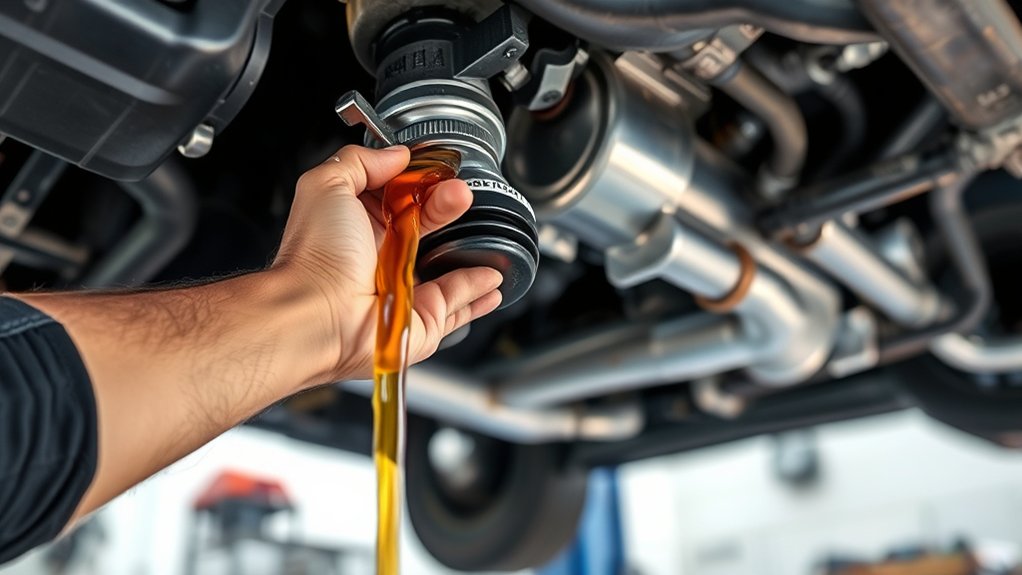
Although it may seem routine, changing your engine oil is essential to maintaining engine performance and longevity. Regular oil changes remove contaminants, reduce friction, and prevent engine wear.
Changing your engine oil regularly is crucial for reducing wear and ensuring optimal engine performance.
Following your vehicle’s maintenance schedule guarantees you replace the oil before it degrades, preserving ideal viscosity and lubrication. Engine oil benefits include improved fuel efficiency, minimized engine heat, and protection against corrosion.
When you perform an oil change, expect to drain the old oil completely, replace the oil filter, and refill with the correct oil type and quantity specified by the manufacturer.
Staying consistent with oil changes helps avoid costly repairs and keeps your engine running smoothly. Adhering to the maintenance schedule is a proactive step in sustaining engine health and maximizing vehicle lifespan.
Gather Your Oil Change Tools and Materials
Before you begin changing your engine oil, gather five essential tools and materials: the correct grade of engine oil, a compatible oil filter, an oil filter wrench, a drain pan, and a wrench or socket set to remove the drain plug. These oil change tools are maintenance essentials for a smooth, efficient process.
Focus on these key items:
- Verify the oil grade and filter compatibility with your vehicle’s specifications.
- Choose an appropriately sized drain pan to catch all used oil without spillage.
- Select a wrench or socket set that fits the drain plug securely to avoid stripping.
Having these items ready guarantees precise, safe handling and prevents interruptions during your oil change procedure.
Drain Old Engine Oil Safely and Replace the Oil Filter
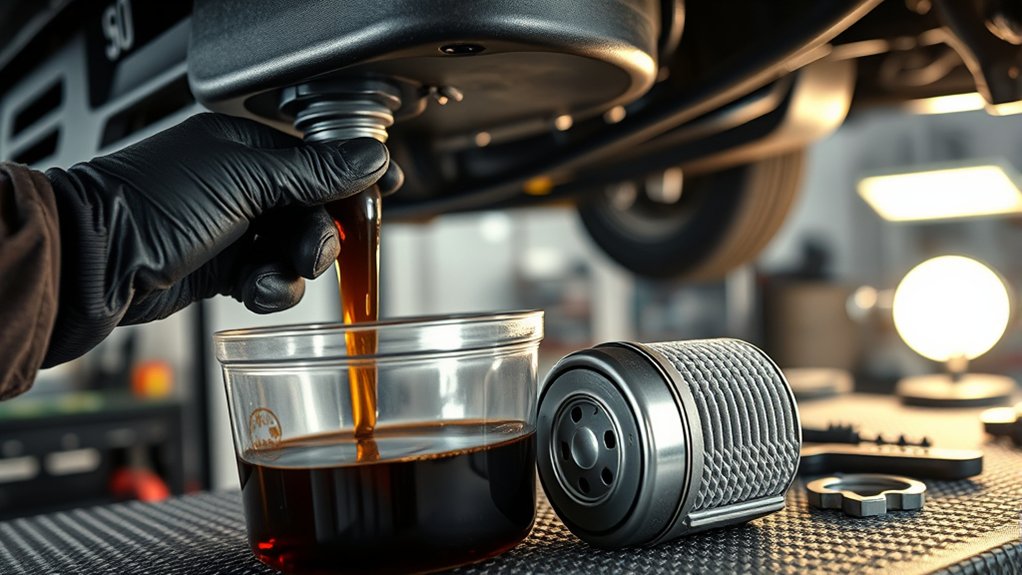
With your tools and materials prepared, you’re ready to safely drain the old engine oil. First, warm the engine slightly to reduce oil viscosity, allowing it to flow out smoothly. Position a drain pan beneath the oil drain plug, then carefully loosen and remove the plug using the appropriate wrench. Allow all oil to drain completely before reinstalling the plug, tightening it to manufacturer specifications.
Next, locate the oil filter, noting the filter type, spin-on or cartridge. Use an oil filter wrench to remove the old filter, being cautious of residual oil. Apply a thin layer of fresh oil to the new filter’s gasket for a proper seal. Install the new filter, tightening it by hand according to the specified torque. This process guarantees effective oil flow and filtration for peak engine performance.
Pick and Add the Right Engine Oil for Your Vehicle
Choose the correct engine oil by consulting your vehicle’s owner manual to identify the recommended oil viscosity and specifications. Using the right oil guarantees peak engine performance and longevity. When selecting and adding oil, remember:
- Verify the oil viscosity grade (e.g., 5W-30) to match your engine’s requirements.
- Consider synthetic options for better temperature stability, reduced engine wear, and longer intervals between oil changes.
- Use a clean funnel to pour oil slowly, preventing spills and allowing accurate measurement.
Avoid mixing different oil types unless specified. Always add the recommended quantity to prevent overfilling or underfilling, which can cause engine damage. Properly matching oil viscosity and quality to your vehicle’s design is critical for efficient lubrication and protection under all operating conditions.
Seal the Drain Plug, Check Your Work, and Dispose of Used Oil Properly
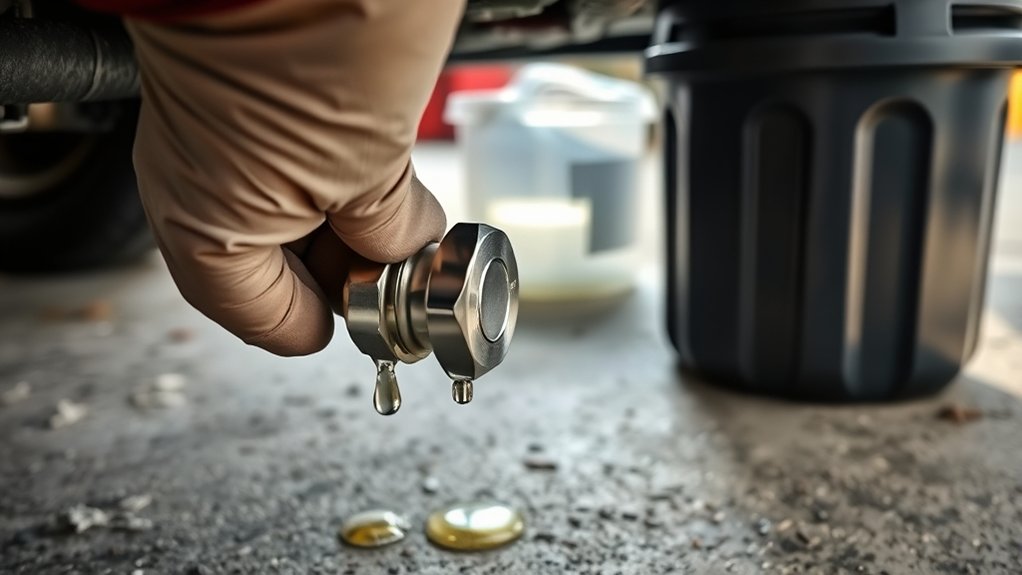
Tighten the drain plug securely using a wrench, ensuring the gasket or washer is properly seated to prevent leaks. Avoid over-tightening, which can strip threads or damage the oil pan.
Once sealed, inspect the area for any signs of leaks by wiping around the drain plug and checking the oil filter connection. Next, replace the oil filler cap and start the engine briefly to circulate the new oil, then shut it off and recheck for leaks.
Finally, focus on oil disposal: collect used oil in a sealed, leak-proof container and transport it to a certified recycling center or automotive shop. Never discard used oil in drains, on the ground, or in trash, as improper oil disposal harms the environment and violates regulations.
Frequently Asked Questions
How Often Should I Change My Engine Oil?
You should follow your vehicle’s recommended oil change intervals, typically every 3,000 to 7,500 miles.
Always replace the oil filter during each oil change to guarantee peak engine performance and longevity.
Can Synthetic Oil Improve Engine Performance?
Yes, synthetic oil offers synthetic benefits like superior lubrication and thermal stability, which reduce engine wear and improve fuel efficiency. Using it leads to measurable performance enhancement, especially under extreme temperatures and demanding driving conditions.
What Are Signs of Engine Oil Problems?
You’ll notice oil leak causes like puddles or burning smells, and oil sludge formation causing engine noise or poor performance.
Check for low oil levels, warning lights, or dark, thick oil to spot problems early and act.
Is It Okay to Mix Different Oil Brands?
You shouldn’t mix different oil brands unless you confirm oil compatibility. Brand differences often mean varying additive packages, which can reduce performance or cause deposits.
Always use oils meeting your engine’s required specifications for ideal protection.
How Does Climate Affect Oil Change Frequency?
You don’t want your engine oil to throw a tropical party, right? Temperature effects speed up oil degradation, while humidity impact causes moisture buildup.
Conclusion
Changing your engine oil guarantees your car runs smoothly, protects engine components, and extends vehicle life. Gather all necessary tools, drain the old oil carefully, and replace the oil filter without skipping steps.
Choose the correct oil type and add it precisely to avoid overfilling. Finally, seal the drain plug tightly, check for leaks, and dispose of used oil responsibly.
Follow these steps consistently, work methodically, and maintain your car’s performance effectively. Regularly changing your engine oil is essential to keep your vehicle running at its best.