To change spark plug wires, first inspect them for cracks or corrosion that indicate the need for replacement. Choosing wires that match your engine’s specifications in length and gauge is essential for optimal performance.
Gather all necessary tools, such as a wire puller, ratchet, and dielectric grease, before starting the process.
Remove the old wires carefully by twisting the boots off one at a time to avoid damaging the wires or spark plugs. When installing new wires, match each wire to its corresponding cylinder and route them along the original paths.
Make sure to secure all connections firmly to prevent misfires and ensure reliable engine performance. Following these steps will help you master spark plug wire replacement techniques with confidence.
Key Takeaways
- Inspect spark plug wires for cracks or corrosion before replacement to ensure necessity.
- Use a spark plug wire puller to safely remove old wires one at a time without damaging insulation.
- Match new spark plug wires to corresponding cylinders by length for accurate installation.
- Route new wires along the original path, avoiding hot engine parts and securing connections firmly.
- Apply dielectric grease to boots and double-check connections to prevent cross-firing and ensure performance.
How to Tell When Spark Plug Wires Need Replacing
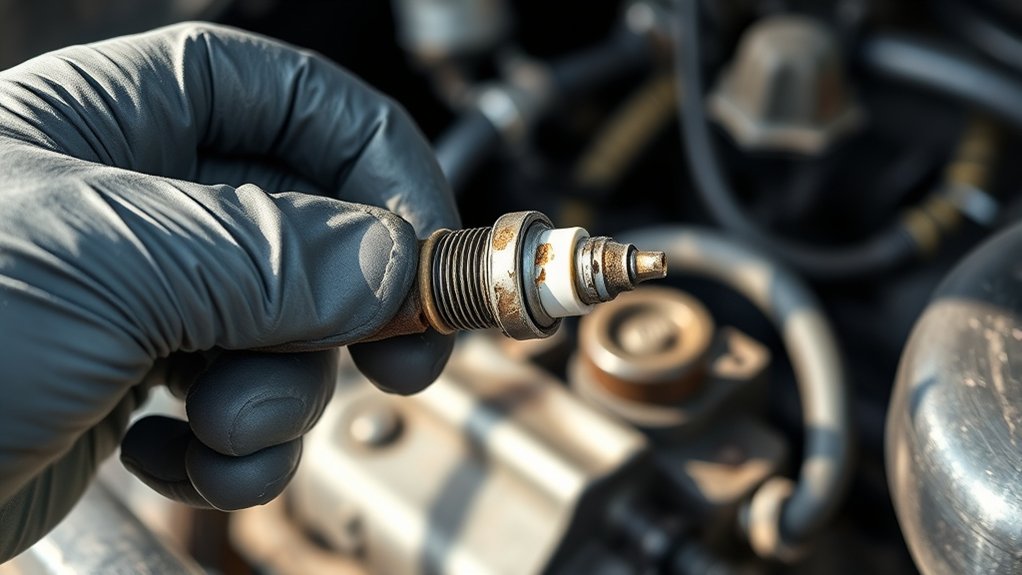
Although spark plug wires often look durable, you’ll need to replace them once you notice signs of wear such as cracks, corrosion, or excessive resistance. These issues interfere with the ignition system’s performance, causing misfires or reduced fuel efficiency.
To check, visually inspect the wires for physical damage and test resistance with a multimeter. Compare readings against manufacturer specifications for your specific spark plug types. High resistance indicates insulation breakdown, leading to weak or inconsistent spark delivery.
Also, listen for engine hesitation during acceleration, which can signal worn wires. By identifying these symptoms early, you guarantee your ignition system operates at peak performance, maintaining engine efficiency and preventing further damage.
Regular inspection aligned with your vehicle’s maintenance schedule is essential to avoid ignition failures linked to deteriorated spark plug wires.
How to Choose the Right Spark Plug Wires for Your Vehicle
Where do you start when selecting spark plug wires for your vehicle? Begin by identifying the correct spark wire types compatible with your engine model. Resistor and non-resistor wires vary in performance and interference suppression.
Next, consider wire gauge differences; thicker gauges generally provide lower resistance and better current flow, improving ignition efficiency. Match the wire gauge to your vehicle’s requirements, as using a thinner gauge can cause voltage loss, while an excessively thick wire might not fit properly in the spark plug boots.
Also, verify the wire length and terminal fit to guarantee proper routing and secure connections. By focusing on these technical aspects—spark wire types, wire gauge differences, and fitment—you’ll select ideal spark plug wires that enhance your engine’s performance and reliability.
What Tools You Need to Change Spark Plug Wires
After selecting the correct spark plug wires for your engine, gather the necessary tools to guarantee a smooth replacement process. Start with a spark plug wire puller, designed to grip wires without damaging the wire materials or connectors.
A ratchet set with appropriate socket sizes is essential for accessing spark plugs, especially with varying spark plug types. Have a dielectric grease tube ready to coat boot interiors, ensuring a secure, moisture-resistant connection.
Use a wire separator or loom if your engine requires organized routing to prevent crossfire. A torque wrench helps tighten spark plugs to manufacturer specifications, preventing over-tightening.
Finally, wear insulated gloves to protect against accidental shocks. These tools streamline the replacement, preserving wire material integrity and matching your vehicle’s spark plug types for peak performance.
How to Remove Old Spark Plug Wires Safely
Grip the spark plug wire firmly at the boot, not the wire itself, and twist slightly to break the seal before pulling it off. Avoid pulling on the wire insulation, as this can damage the internal conductor and compromise spark plug performance.
For effective spark plug maintenance, always handle wires with care to prevent cracks or tears in the insulation. If the boot feels stuck, use a spark plug wire puller or apply a small amount of penetrating oil to help loosen it.
Remove wires one at a time, matching each to its corresponding spark plug to avoid mixing connections. Once removed, inspect the wire insulation for brittleness or damage, which signals the need for replacement to maintain peak engine function.
How to Install New Spark Plug Wires Correctly
Begin by matching each new spark plug wire to its corresponding cylinder based on length and routing. Proper wire routing is essential for ideal spark plug maintenance and engine performance. Follow these steps to install the wires correctly:
- Route each wire along the original path, avoiding contact with hot or moving engine parts.
- Attach the spark plug end securely to the corresponding plug, ensuring a snug fit.
- Connect the distributor or ignition coil end firmly, verifying that clips or boots lock in place.
- Double-check all connections and routing paths to prevent cross-firing and electrical interference.
How to Fix Common Problems After Replacing Spark Plug Wires
If you notice an ignition misfire after replacing spark plug wires, start by checking each wire connection for proper seating and correct routing. Use a multimeter to verify wire continuity and resistance, ensuring no damage or breaks exist.
Finally, optimize engine performance by confirming all wires match the original specifications and are installed in the correct firing order.
Ignition Misfire Troubleshooting
Although replacing spark plug wires often resolves ignition issues, you might still encounter misfires if the wires are improperly installed or damaged. To troubleshoot ignition misfires effectively, check the following:
- Verify correct ignition timing; improper timing can cause inconsistent firing.
- Inspect spark plug wires for cracks, burns, or corrosion that disrupt current flow.
- Test cylinder compression to rule out mechanical faults that mimic misfires.
- Use a spark tester to confirm each wire delivers a strong, consistent spark.
Addressing these areas guarantees you isolate whether the issue is electrical or mechanical. If misfires persist despite good wiring and timing, investigate cylinder compression further. Proper diagnosis prevents unnecessary replacements and optimizes engine performance after changing spark plug wires.
Wire Connection Checks
After confirming that ignition timing and cylinder compression are within specifications, focus on verifying the spark plug wire connections. Begin by inspecting the wire types you installed; validate they match the manufacturer’s specifications for resistance and insulation.
Check that each wire firmly seats on both the spark plug and distributor or coil pack terminals without any looseness. Poor connection quality often causes misfires or weak sparks. Use a wire puller tool to confirm secure fits, avoiding excessive force that could damage terminals.
Look for corrosion, cracks, or exposed conductors along the wires and at connection points. If you find any defects, replace the affected wire immediately. Finally, double-check the routing to prevent wires from rubbing on engine components, which can degrade connection quality over time and cause intermittent failures.
Engine Performance Optimization
Monitor your engine’s performance closely once you’ve replaced the spark plug wires to identify and resolve any common issues promptly. Proper engine tuning is essential to restore peak function and maintain fuel efficiency.
Follow these steps to enhance performance:
- Verify correct wire routing and secure connections to prevent cross-firing or misfires.
- Inspect spark plug gaps and adjust if necessary to guarantee consistent ignition.
- Use an OBD-II scanner to check for error codes related to ignition or fuel delivery.
- Perform a test drive, monitoring engine responsiveness and fuel consumption to confirm improvements.
Frequently Asked Questions
Can Bad Spark Plug Wires Cause Engine Misfires?
Yes, bad spark plug wires can cause engine misfires by disrupting your ignition system’s electrical flow. This directly reduces engine performance, causing rough idling, hesitation, and increased emissions.
Inspect and replace wires promptly to maintain efficiency.
How Often Should Spark Plug Wires Be Replaced?
Though spark plug wire lifespan typically spans 30,000 to 50,000 miles, you shouldn’t wait. Replace them sooner if you spot signs of wear like cracking, corrosion, or engine misfires to maintain peak ignition performance.
Are Aftermarket Spark Plug Wires Better Than OEM?
Aftermarket advantages often include improved wire material like silicone or Kevlar, offering better heat resistance and durability. You’ll find some outperform OEM wires, but always verify compatibility and quality before choosing aftermarket options for your vehicle.
Can I Drive With Damaged Spark Plug Wires?
You shouldn’t drive with damaged spark plug wires, as they impair spark plug maintenance and disrupt the ignition system. This causes misfires, reduced performance, and increased emissions.
Replace wires promptly to maintain engine efficiency and reliability.
Do Spark Plug Wires Affect Fuel Efficiency?
You can lose up to 30% fuel efficiency if your spark plug performance drops. Faulty wires weaken the ignition system, causing incomplete combustion.
Replace them promptly to maintain ideal fuel economy and engine power.
Conclusion
Changing your spark plug wires correctly guarantees peak engine performance and longevity. Remember, “a stitch in time saves nine”—addressing worn wires early prevents costly damage. Always choose the right wires, use proper tools, and follow safe removal and installation steps.
If problems arise, troubleshoot promptly to avoid engine misfires or poor fuel economy. By staying diligent, you’ll keep your vehicle running smoothly and efficiently with minimal hassle. Proper maintenance, including changing your spark plug wires, is essential for optimal engine health.