To check your engine oil, start by parking your vehicle on level ground with a cool engine.
Locate the dipstick and pull it out carefully.
Wipe the dipstick clean using a lint-free cloth, then reinsert it fully back into its tube.
Remove it again to read the oil level against the marked indicators.
Next, assess the oil’s color and texture.
Fresh oil looks amber and smooth, while dark or gritty oil signals the need for maintenance.
Regularly checking your engine oil helps prevent engine wear and keeps your vehicle performing efficiently.
Learn these best practices to ensure your engine runs smoothly.
Key Takeaways
- Park the vehicle on a level surface and ensure the engine is cool before checking the oil.
- Locate the oil dipstick, pull it out, and wipe it clean with a lint-free cloth.
- Reinsert the dipstick fully, then remove it again to check the oil level against the marked indicators.
- Evaluate the oil’s color and consistency; fresh oil is amber and smooth, while dark or gritty oil indicates issues.
- Add recommended oil gradually if the level is low, and refer to the vehicle manual for proper oil type and maintenance intervals.
Why Engine Oil Checks Matter
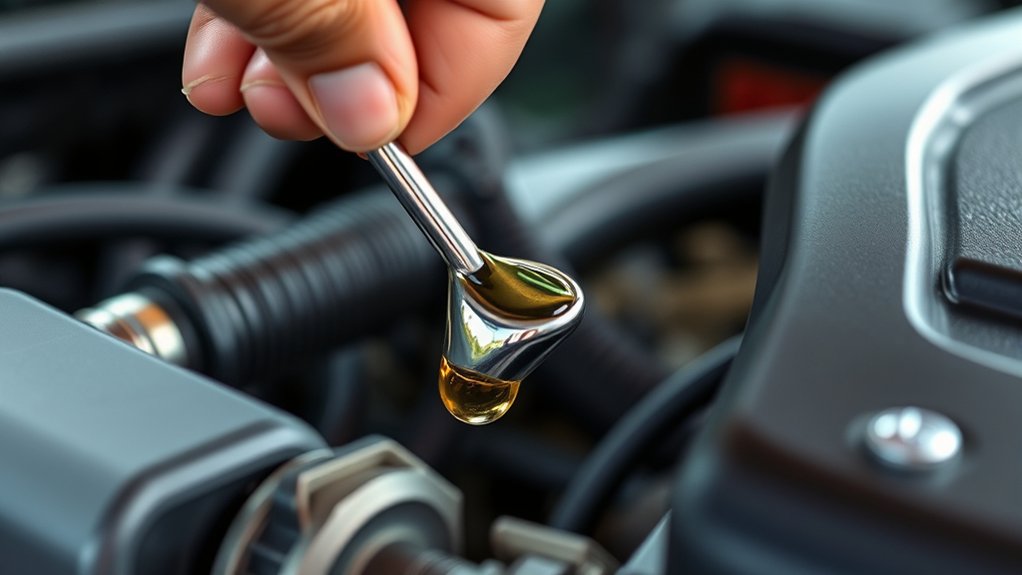
Although it may seem routine, checking your engine oil regularly is essential because it guarantees proper lubrication, prevents engine wear, and helps maintain peak performance. You must adhere to the vehicle’s maintenance schedule to guarantee the oil level and quality remain within ideal parameters.
Low or degraded oil compromises engine performance by increasing friction and heat, potentially causing severe damage. Regular checks enable you to identify leaks, contamination, or oil breakdown early, allowing timely intervention.
By monitoring oil condition and quantity, you ensure that the engine components receive adequate protection, preserving efficiency and prolonging engine life. Incorporate oil inspections into your routine maintenance schedule to avoid costly repairs and maintain consistent engine performance.
This proactive approach directly supports your vehicle’s reliability and operational safety.
Tools You Need to Check Engine Oil
A few essential tools will help you accurately check your engine oil and assess its condition. First, locate the oil dipstick; it’s a metal rod with a brightly colored handle.
Understanding oil dipstick usage is vital: you’ll pull it out, wipe it clean, reinsert it fully, then remove it again to check the oil level and quality. Use a clean, lint-free cloth for wiping.
Additionally, have your vehicle’s manual handy to identify the recommended engine oil types, ensuring compatibility if you plan to add oil. Avoid contamination by keeping tools clean and only using designated containers for oil.
These basic tools and knowledge will allow you to perform precise oil checks and maintain engine health effectively.
How to Check Your Engine Oil Step-by-Step
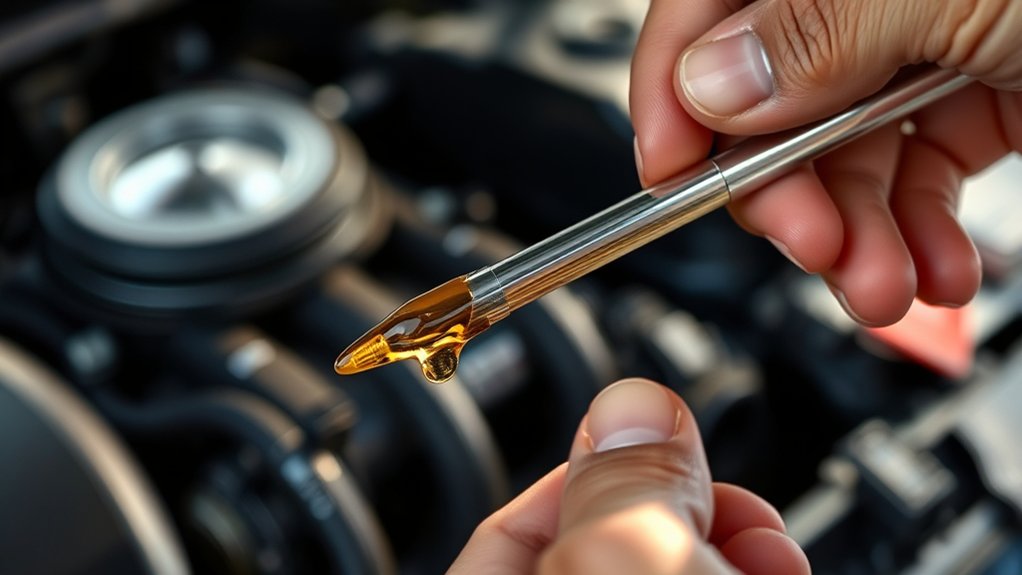
Start by ensuring your vehicle is parked on a level surface and the engine is cool to obtain an accurate oil level reading. Open the hood and locate the dipstick, typically marked with a bright handle.
Pull the dipstick out, wipe it clean with a lint-free cloth, then reinsert it fully. Remove the dipstick again and check the oil level against the marked indicators.
Compare your findings with the recommended oil change frequency and engine oil types for your vehicle.
| Step | Action |
|---|---|
| 1 | Park on level surface |
| 2 | Locate and remove dipstick |
| 3 | Wipe dipstick clean |
| 4 | Reinsert and remove dipstick |
| 5 | Check oil level and compare |
Repeat regularly to maintain peak engine performance.
How to Tell If Your Engine Oil Is in Good Shape
You’ll want to examine the oil’s color and consistency to determine its condition. Fresh oil typically appears amber and smooth, while dark or gritty oil indicates contamination or breakdown.
Always rub a small amount between your fingers to feel for particles or sludge that signal the need for an oil change.
Oil Color Indicators
Three primary oil color indicators help you determine if your engine oil is in good condition: color, transparency, and consistency. Focusing on color significance, fresh engine oil typically appears amber or light brown.
As oil degradation progresses, contaminants and combustion byproducts darken the oil, causing it to turn dark brown or black. This darkening indicates the oil has trapped impurities and lost some lubricating efficiency.
However, color alone isn’t definitive; you must also assess transparency to detect sludge or suspended particles. If the oil looks opaque or cloudy, it signals contamination or degradation beyond normal wear.
Checking Oil Consistency
A crucial aspect of evaluating engine oil health is checking its consistency, which reveals the oil’s viscosity and presence of contaminants. After wiping the dipstick clean and reinserting it, pull it out again and observe the oil’s texture.
Good oil should feel smooth and slightly slippery between your fingers. If the oil appears excessively thick or gritty, it indicates degraded oil viscosity or the presence of oil contaminants, such as dirt or metal particles. Conversely, if the oil feels too thin or watery, it may have lost its lubricating properties.
Always compare the oil’s consistency to manufacturer specifications to guarantee ideal engine protection. If you detect abnormal texture or contamination, replace the oil promptly to prevent engine damage and maintain efficient performance.
When and How Often to Check Your Engine Oil
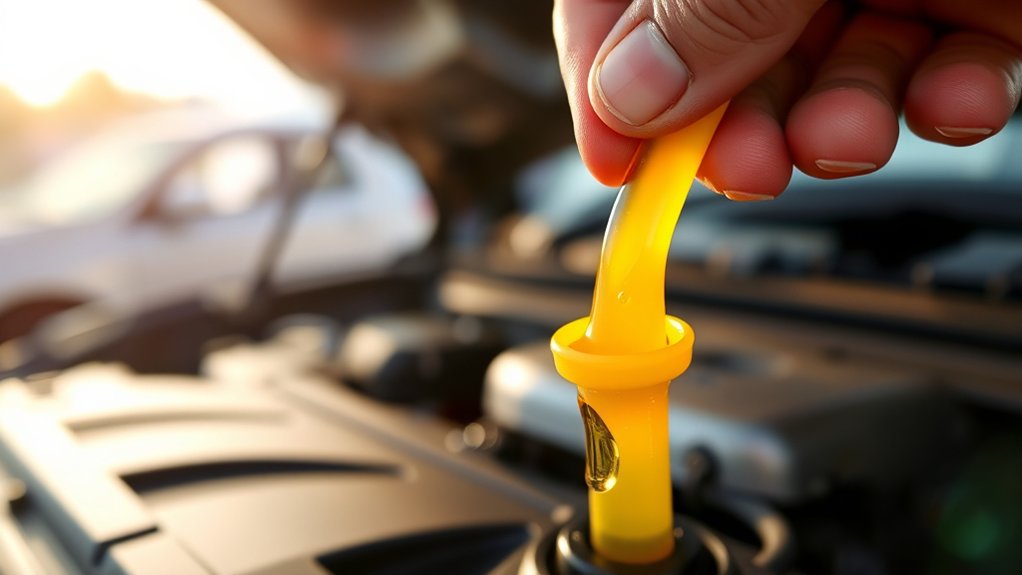
Although many modern vehicles have oil life monitoring systems, it’s essential to manually check your engine oil regularly to guarantee peak engine performance and longevity. Adhere to your vehicle’s maintenance schedule, which typically recommends checking engine oil frequency at least once a month or every 1,000 miles.
For older models or vehicles operating under severe conditions, increase the frequency to every 500 miles. Always check oil levels when the engine is cold or has been off for at least 10 minutes to verify accurate readings. Additionally, consult your owner’s manual for specific guidelines, as some engines require checks more often.
Regular monitoring helps detect leaks or excessive oil consumption early, preventing engine damage and maintaining ideal lubrication at all times.
What to Do If Your Engine Oil Is Low or Dirty
Regularly checking your engine oil levels helps you spot potential issues before they escalate. If you find the oil level low, add the recommended oil type gradually to avoid overfilling, then recheck the dipstick.
Consistently monitoring engine oil levels prevents problems and ensures timely, careful top-ups for optimal performance.
For dirty or dark oil, an immediate oil change is necessary to maintain engine performance and prevent damage. Refer to your vehicle’s maintenance schedule to determine the appropriate interval for oil changes, but adjust based on your oil’s condition.
Avoid delaying the oil change, as degraded oil loses its lubricating properties and can increase engine wear. Always use quality oil and replace the oil filter during the oil change.
After addressing low or dirty oil, monitor levels regularly to guarantee your engine operates smoothly and reliably.
Tips to Maintain Engine Oil Condition Between Checks
You should monitor your engine oil level regularly to catch any drops early and prevent damage. Using quality oil additives can help maintain viscosity and reduce wear between checks.
These simple steps keep your engine oil in excellent condition longer.
Monitor Oil Level Regularly
Because engine oil level directly affects performance and longevity, monitoring it between scheduled checks is essential. To maintain ideal oil level, check the dipstick reading regularly, ideally every 500 miles or before long trips.
Confirm the engine is off and cool, then remove the dipstick, wipe it clean, reinsert fully, and withdraw it again to observe the oil level. The oil should be between the minimum and maximum marks.
If the dipstick reading shows oil below the minimum mark, add the manufacturer-recommended oil type immediately. Avoid overfilling, as excessive oil can cause engine damage.
Consistent monitoring helps detect leaks or oil consumption issues early, allowing timely intervention and preserving engine integrity. Stay proactive with oil level checks to maintain your engine’s reliability and efficiency.
Use Quality Oil Additives
Although maintaining proper oil levels is essential, using quality oil additives can further enhance engine oil performance between checks. You should select additives designed to improve viscosity, reduce friction, and prevent oxidation.
These additive benefits help maintain oil stability under varying temperatures and driving conditions, extending the oil’s functional life. Before adding, verify compatibility with your engine oil type to avoid adverse chemical reactions.
Pour the additive directly into the oil filler neck, ensuring your engine is cool to prevent spills or burns. Regular use of reputable additives supports cleaner engine components by minimizing sludge and deposits, preserving ideal lubrication.
Incorporating this step into your maintenance routine maximizes oil performance, reducing wear and potential engine damage between scheduled oil level inspections.
Frequently Asked Questions
Can Synthetic Oil Improve My Engine’s Performance?
Yes, synthetic oil improves your engine’s performance by reducing friction and wear. With synthetic benefits, you’ll notice better viscosity stability and thermal resistance compared to conventional oils in a performance comparison, enhancing efficiency and longevity.
How Does Engine Oil Affect Fuel Efficiency?
Think of engine oil as the bloodstream; when you use the right oil viscosity, it reduces friction, improving fuel economy. You’ll boost efficiency by maintaining ideal flow, ensuring your engine runs smoother and consumes less fuel overall.
What Are the Signs of Engine Oil Leaks?
You’ll spot oil leak detection by checking for puddles under your car, low oil levels, or burnt oil smell.
Common causes include worn gaskets, damaged seals, or loose drain plugs, so inspect these areas carefully.
Can Using the Wrong Oil Type Damage My Engine?
Using the wrong oil type is like pouring sand into a clock. It disrupts precision. You’ll risk engine wear if oil viscosity mismatches and oil additives aren’t compatible.
This reduces lubrication and impairs performance. Always match specs exactly.
How to Dispose of Used Engine Oil Safely?
You should collect used engine oil in a sealed container and never pour it down drains.
Take it to an oil recycling center to minimize environmental impact and comply with local hazardous waste disposal regulations.
Conclusion
Checking your engine oil is like giving your car a crucial health check—neglect it, and problems can quietly creep in. By routinely using the dipstick as your stethoscope, you guarantee your engine runs smoothly and efficiently.
Keep a close eye on the oil’s color and level, and top up or change it promptly to avoid damage. Treat your engine oil with care, and it’ll keep your vehicle humming like a well-oiled machine for miles to come.
Regularly checking your engine oil ensures your car stays in optimal condition and prevents costly repairs down the road.