To check your engine oil dipstick, first locate the brightly colored handle near the engine. This dipstick is your key tool for monitoring engine oil levels and ensuring your vehicle runs smoothly.
With clean hands, pull the dipstick out straight and wipe it with a lint-free cloth. Reinsert it fully, then withdraw it again to hold horizontally and check the oil level between the minimum and maximum marks.
Also, note the oil’s color and texture for engine health clues. Regular checks guarantee proper lubrication and prevent damage.
Further details will help you master this essential maintenance step.
Key Takeaways
- Locate the dipstick, usually marked with a bright handle near the engine, and ensure your hands are clean and dry before handling it.
- Pull out the dipstick fully, wipe it clean with a lint-free cloth, then reinsert it completely into the tube.
- Withdraw the dipstick again, hold it horizontally, and check if the oil level is between the minimum and maximum marks.
- Assess the oil’s color and texture; fresh oil is amber and smooth, while dark or gritty oil indicates contamination or wear.
- Check the dipstick monthly or before long trips, ensuring the engine is cool and the vehicle is on level ground for accurate readings.
Finding and Getting Your Engine Oil Dipstick Ready
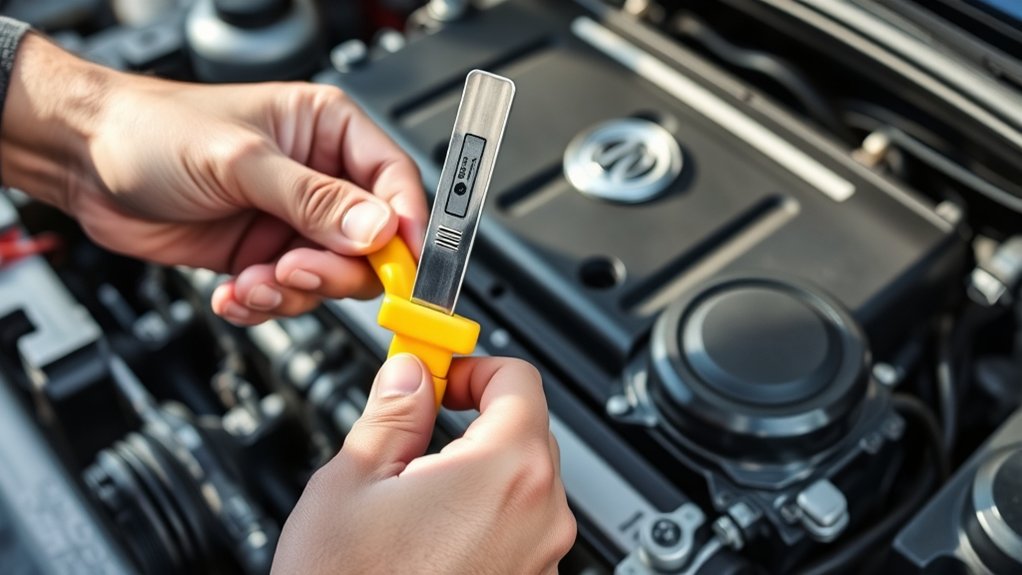
Before you check your engine oil level, you need to locate the dipstick, which is usually marked with a bright handle, often yellow or orange. This dipstick location varies by vehicle model but is typically near the engine block and clearly visible once you open the hood.
Use proper handling by ensuring your hands are clean and dry to avoid contaminating the oil sample. Grasp the dipstick firmly and pull it out straight to prevent bending or damage.
Avoid touching the metal part with greasy or dirty hands, as this can affect the accuracy of your reading. Once removed, prepare to wipe it clean with a lint-free cloth or paper towel before reinserting it fully back into its tube for an accurate oil level measurement.
Step-by-Step Checking Your Engine Oil Dipstick Level
Start by fully withdrawing the dipstick from its tube and laying it flat on a clean surface. This step is vital for accurate oil maintenance and ensuring engine health.
Next, follow these precise steps:
- Wipe the dipstick clean with a lint-free cloth to remove old oil residue.
- Reinsert the dipstick completely into its tube, ensuring it seats fully.
- Withdraw the dipstick again and hold it horizontally to read the oil level.
- Examine the oil film on the dipstick, noting the position relative to the minimum and maximum marks.
Performing these steps methodically guarantees you get a correct oil level reading, essential for monitoring your engine’s lubrication status and maintaining ideal engine health.
What Your Oil Level Reading Tells You About Your Engine

When you check your engine oil level, the reading reveals crucial information about your engine’s lubrication and overall condition. If the oil level is within the recommended range on the dipstick, it confirms adequate lubrication, which is essential for reducing friction and wear.
A low oil level signals potential leaks, consumption issues, or delayed maintenance routines, risking engine damage due to insufficient lubrication. Conversely, an excessively high oil level may indicate overfilling or internal problems like coolant leaks, which can impair engine performance.
Regularly monitoring your oil level helps you address problems early, ensuring peak engine function and longevity. Understanding and acting on your oil level reading is important for maintaining the oil significance in your vehicle’s health and avoiding costly repairs.
How to Interpret Engine Oil Color and Consistency
Checking your engine oil level gives you important data, but the oil’s color and consistency reveal even more about your engine’s condition. When you examine the dipstick, assess these key factors:
Examining oil color and texture on the dipstick reveals vital insights into your engine’s health.
- Color: Fresh oil is amber; dark or black oil may indicate extended use or oil contamination.
- Consistency: Oil should feel smooth; gritty texture signals dirt or metal particles, compromising lubrication quality.
- Viscosity: Oil that’s too thin or thick suggests viscosity issues, affecting engine protection under varying temperatures.
- Unusual Appearance: Milky or foamy oil can indicate coolant mixing, pointing to serious maintenance importance.
When and How Often to Check Your Engine Oil Dipstick
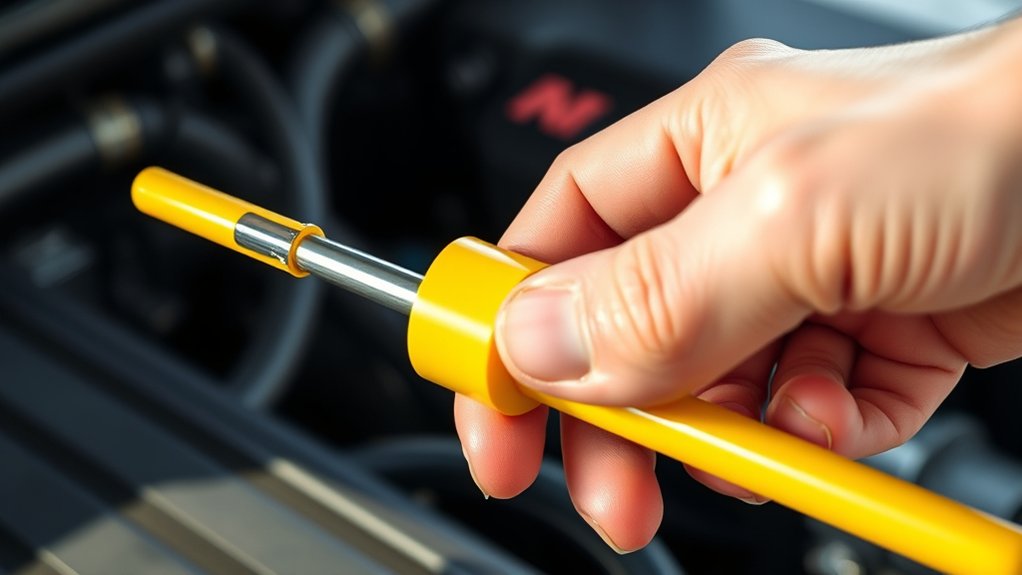
Regularly inspecting your engine oil dipstick is essential for maintaining peak engine performance and preventing damage. You should check the oil level at least once a month or before long trips.
Consistent monitoring helps you catch leaks or oil degradation early, aligning with your oil change frequency. For most vehicles, oil changes occur every 3,000 to 7,500 miles, but verifying oil condition more frequently supports optimal engine health.
When checking, make sure the engine is cool and on level ground for accurate readings. Use engine maintenance tips like wiping the dipstick clean before reinserting it fully, then withdrawing it to assess the level and oil quality.
Staying proactive with dipstick checks complements scheduled oil changes, reducing engine wear and prolonging service intervals.
Frequently Asked Questions
Can I Use Any Type of Oil for My Engine?
You shouldn’t use any oil type; always choose oil viscosity and oil additives specified by your engine manufacturer.
Using incorrect viscosity or additives can reduce lubrication efficiency, cause wear, and potentially damage engine components over time.
What Should I Do if My Oil Level Is Consistently Low?
Since 30% of engine failures stem from low oil, if your oil level’s consistently low, check for an oil leak immediately. Address leaks promptly to prevent engine wear and consult a mechanic for diagnostics and repairs.
How Do Synthetic Oils Compare to Conventional Oils?
Synthetic oils offer synthetic benefits like superior oil longevity, better high-temperature stability, and enhanced engine protection. You’ll experience extended intervals between oil changes and improved performance compared to conventional oils, which degrade faster under stress.
Can a Dirty Dipstick Affect the Accuracy of the Reading?
Don’t judge a book by its cover. Dirty dipstick maintenance hinders accurate readings by introducing oil contamination.
You should always clean the dipstick before checking to guarantee precise oil level and condition assessments for peak engine performance.
Is It Safe to Drive With Low Engine Oil Temporarily?
You shouldn’t drive with low engine oil, even temporarily, because engine oil effects include critical lubrication. Temporary driving risks involve increased wear, overheating, and potential engine damage.
Refill oil promptly to avoid costly repairs and maintain performance.
Conclusion
Checking your engine oil dipstick is like reading your car’s essential signs—simple but important. By regularly inspecting the oil level and quality, you catch potential issues before they snowball into costly repairs.
Remember to check when the engine’s cool and on a level surface for the most accurate reading.
Make this quick routine part of your maintenance schedule to keep your engine running smoothly and efficiently. Regularly checking your engine oil dipstick helps extend its life and performance.