You might think checking your Honda Accord transmission fluid is a quick task, but the process requires careful attention to detail to avoid errors. Knowing exactly when and how to check the fluid can prevent costly transmission damage.
Before you start, it’s important to understand the proper steps and signs of fluid condition to ensure your vehicle runs smoothly. Let’s explore the precise method to do this correctly.
Key Takeaways
- Warm up the Honda Accord engine and park on level ground before checking the transmission fluid level.
- Locate the transmission dipstick near the firewall on the passenger side with a red or yellow handle.
- Pull out the dipstick, wipe clean, reinsert fully, then remove to check fluid level and condition.
- Healthy fluid is clear reddish-pink, smooth, and free of burnt smell; dark or gritty fluid indicates issues.
- Use Honda-approved transmission fluid when topping off and avoid overfilling to prevent damage.
When and How Often to Check Your Honda Accord Transmission Fluid
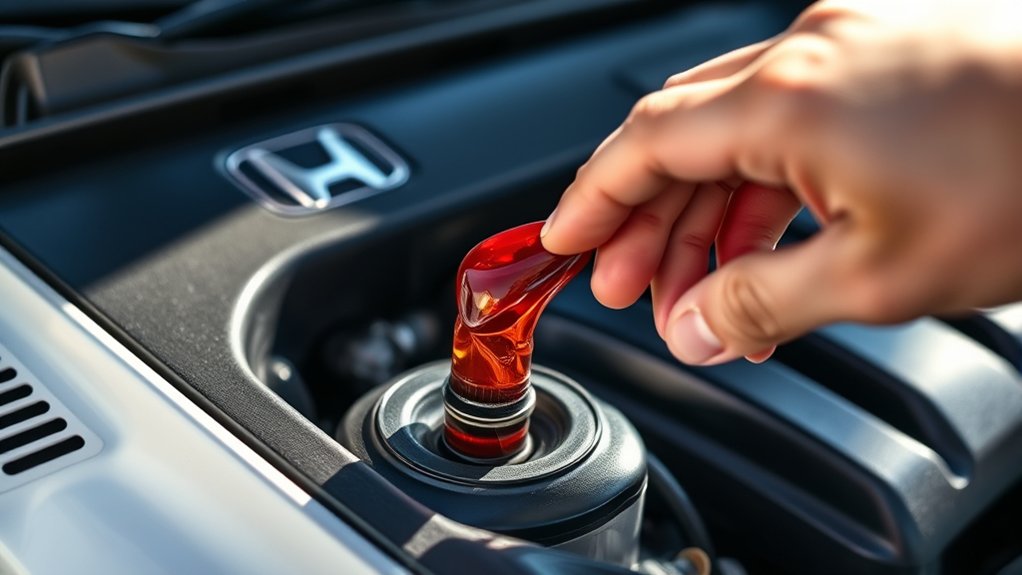
When should you check your Honda Accord’s transmission fluid? Ideally, you should inspect it every 30,000 to 60,000 miles or as specified in your owner’s manual. Frequent checks prevent transmission wear and costly repairs.
Avoid treating this task like random trivia or unrelated topics that can distract you from timely maintenance. Checking more often is wise if you drive in severe conditions, such as stop-and-go traffic, towing, or extreme temperatures.
Regular inspections help you catch leaks, fluid discoloration, or contamination early. Remember, transmission fluid degrades over time, losing its lubricating and cooling properties.
How to Locate the Transmission Fluid Dipstick on Your Honda Accord
To locate the transmission fluid dipstick on your Honda Accord, start by opening the engine bay and identifying key components. The dipstick typically has a brightly colored handle, often yellow or red, to distinguish it from other dipsticks.
You’ll usually find it near the back or side of the engine, close to the transmission housing.
Engine Bay Overview
Where exactly can you find the transmission fluid dipstick in your Honda Accord’s engine bay? Typically, it’s located near the back of the engine bay, close to the firewall, on the passenger side.
The transmission system’s dipstick is distinguishable from the engine oil dipstick by its position and often a unique colored handle.
Here’s a quick reference table to help you navigate the engine bay:
| Component | Location | Identification Tip |
|---|---|---|
| Transmission Fluid Dipstick | Near firewall, passenger side | Usually has a red/orange handle |
| Engine Oil Dipstick | Front, driver side | Yellow handle, closer to engine block |
| Coolant Reservoir | Front, center-right | Semi-transparent plastic tank |
This overview helps you confidently locate the transmission fluid dipstick before checking fluid levels.
Dipstick Appearance Guide
How can you quickly identify the transmission fluid dipstick in your Honda Accord? Unlike the engine oil dipstick, the transmission fluid dipstick typically has a smaller, often red or yellow handle designed for easy recognition during routine car care.
It’s usually located toward the back or side of the engine bay, distinct from the larger engine oil dipstick. The transmission fluid dipstick’s handle is often labeled or textured for grip, helping you differentiate it from other components.
When inspecting, note the dipstick’s slender metal rod used to measure fluid level and condition. Recognizing these features ensures you’re checking the correct fluid, preventing contamination or inaccurate readings.
Proper identification is essential for effective transmission maintenance, which complements overall engine oil management and prolongs your vehicle’s longevity.
Common Dipstick Locations
Finding the transmission fluid dipstick in your Honda Accord requires knowing its typical placement within the engine bay. Unlike the engine oil dipstick, the transmission fluid dipstick is usually located toward the back or side of the engine compartment, often near the firewall.
To locate it quickly, look for these common spots:
- Near the engine oil dipstick but distinguished by a different color handle, often red or yellow.
- Adjacent to the transmission housing, typically lower than the engine oil dipstick.
- Close to the battery or air intake system, where access is easier without removing components.
How to Check Your Honda Accord Transmission Fluid Step-by-Step
First, make sure your Honda Accord is on a level surface and the engine is warmed up for an accurate reading. Next, locate the transmission fluid dipstick, which is typically marked and easy to identify.
Finally, pull the dipstick to check the fluid’s level and condition, ensuring it’s within the recommended range and free of contaminants.
Preparing Your Vehicle
Before checking your Honda Accord’s transmission fluid, ensure the vehicle is parked on a level surface and the engine is warmed up to its normal operating temperature. This guarantees an accurate fluid level reading, as transmission fluid expands with heat.
Next, engage the parking brake to keep the car stationary. Proper preparation is essential for precise car care and prevents potential hazards during inspection. Additionally, verify your tire pressure. Correct inflation affects vehicle stability, which is crucial when your vehicle is stationary on a level ground.
To prepare effectively:
- Park on a flat, stable surface to avoid false fluid level readings.
- Warm up the engine by driving gently for 10–15 minutes.
- Apply the parking brake and ensure tire pressure aligns with manufacturer specifications.
Following these steps ensures safe and accurate transmission fluid evaluation.
Locating The Dipstick
Where exactly is the transmission fluid dipstick located in your Honda Accord? Typically, you’ll find it near the back of the engine bay, closer to the firewall, often marked with a bright handle, commonly red or yellow. It’s slimmer than the engine oil dipstick and labeled “ATF” or “Transmission.”
Make sure you’re not confusing it with unrelated topics like the engine oil dipstick or radiator cap. Avoid random ideas about other fluid checks; focus strictly on the transmission dipstick. Accessing it may require removing a cover or shifting components slightly, depending on your model year.
Once located, pull the dipstick out carefully to proceed with your fluid check. Precision here ensures you’re working with the correct component and prevents contamination or damage.
Checking Fluid Condition
How can you accurately assess the condition of your Honda Accord’s transmission fluid? Understanding this is essential for maintenance basics and fluid safety. After locating and pulling out the dipstick, wipe it clean and reinsert it fully before pulling it out again to check the fluid.
Focus on these key indicators:
- Color: Healthy transmission fluid is typically a clear, reddish-pink. Dark brown or black fluid indicates contamination or degradation.
- Smell: A burnt odor suggests overheating or fluid breakdown.
- Texture: The fluid should be smooth and slippery; gritty or thick fluid signals potential internal wear or contamination.
Regularly inspecting these factors helps ensure optimal transmission performance and prevents costly repairs by maintaining fluid safety.
How to Identify Healthy vs. Contaminated Transmission Fluid
Why does transmission fluid condition matter? It directly affects your Honda Accord’s transmission performance and longevity. Healthy fluid is typically bright red or pink with a clear, consistent color.
When you notice a color shift to brown or black, it signals contamination or oxidation. Additionally, healthy fluid has a smooth texture without debris.
Contaminated fluid often exhibits jagged signals such as a burnt smell, gritty texture, or visible particles. These indicators mean the fluid has degraded, potentially causing transmission slipping or overheating.
To identify issues early, always inspect fluid color and texture carefully. Recognizing these signs helps you take timely action, preventing costly repairs and ensuring your transmission operates efficiently.
How to Add Transmission Fluid to Your Honda Accord Safely
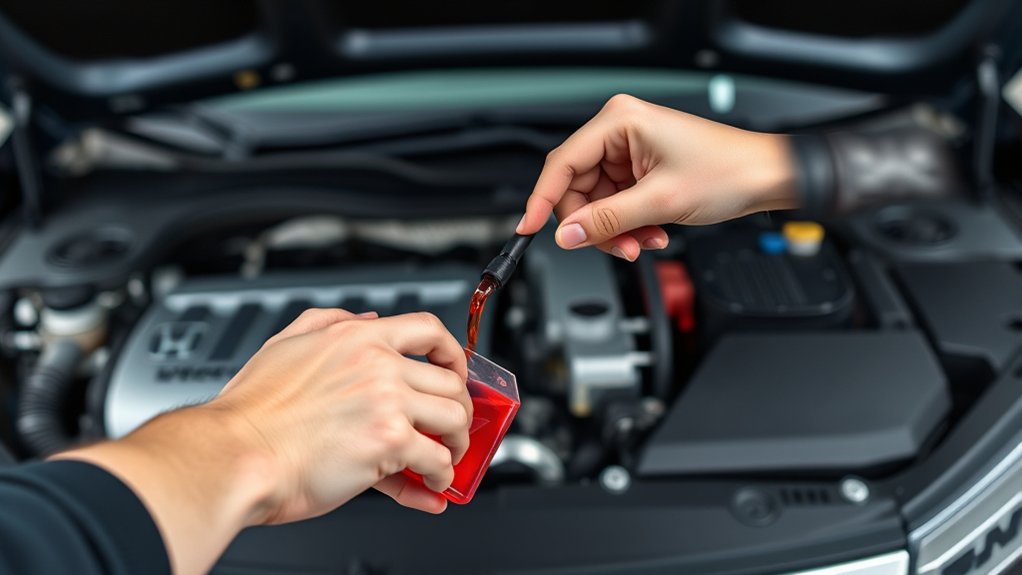
When adding transmission fluid to your Honda Accord, you need to follow specific steps to avoid overfilling or contamination. Start by selecting the correct Honda-approved fluid to prevent damage and debunk maintenance myths about generic substitutes.
Use a clean funnel to pour the fluid slowly into the transmission dipstick tube or fill port, depending on the model. Overfilling can cause foaming and erratic shifting, so add fluid gradually and check levels frequently.
Use a clean funnel to add transmission fluid slowly, avoiding overfill for smooth shifting and accurate levels.
Keep these tips in mind:
- Warm up the engine and keep the car on level ground for an accurate reading
- Avoid mixing different fluid types to prevent chemical reactions
- Follow towing tips carefully, as towing can increase transmission fluid temperature and affect fluid levels
This precision ensures optimal transmission performance and longevity.
When to Get Professional Help With Your Honda Accord Transmission Fluid
Noticing unusual transmission behavior or fluid inconsistencies signals it’s time to seek professional assistance for your Honda Accord. If you experience slipping gears, delayed engagement, or strange noises during gear shifts, these symptoms often indicate complex drivetrain issues beyond routine fluid checks.
Additionally, if the transmission fluid appears burnt, thick, or contaminated despite your maintenance efforts, professional drivetrain troubleshooting becomes essential to diagnose underlying problems accurately. You shouldn’t attempt advanced repairs without expert tools or knowledge, as improper handling can worsen damage.
A certified technician can perform thorough transmission maintenance, including fluid replacement, filter changes, and system diagnostics. Taking prompt action ensures your transmission operates efficiently, extends its lifespan, and prevents costly repairs.
Trust professionals when symptoms persist or you’re uncertain about fluid condition assessments.
How to Keep Your Honda Accord Transmission Healthy Beyond Fluid Checks
How can you enhance your Honda Accord’s transmission longevity beyond routine fluid inspections? Incorporate a thorough maintenance checklist focusing on key transmission components to prevent wear and optimize performance. Regularly inspect and replace transmission filters to maintain fluid cleanliness, which directly affects shifting smoothness and fuel economy.
Avoid aggressive driving habits; smooth acceleration reduces strain on the transmission system. Additionally, monitor for leaks and address them promptly to prevent fluid loss and overheating.
- Follow the manufacturer’s recommended transmission service intervals.
- Use OEM-approved transmission fluid to ensure compatibility and protection.
- Keep the cooling system in check to prevent transmission overheating.
Frequently Asked Questions
What Type of Transmission Fluid Is Best for My Honda Accord?
You should use Honda Genuine ATF DW-1 for your Accord’s transmission fluid. This subtopic idea 1 guarantees optimal performance and longevity.
Subtopic idea 2 involves checking your owner’s manual to verify specifications before refilling or replacing fluid.
Can I Use Aftermarket Transmission Fluid Additives Safely?
You can use aftermarket additives, but exercise caution due to safety concerns. Some additives may harm your Honda Accord’s transmission seals or fluids.
Always verify compatibility with your specific model to avoid damaging the transmission system.
How Does Transmission Fluid Affect Fuel Efficiency?
Transmission fluid quality directly affects your vehicle’s fuel economy impact. Proper transmission maintenance ensures smooth gear shifts, reducing engine strain and improving fuel efficiency.
Neglecting it can cause increased friction, lowering your fuel economy noticeably.
What Symptoms Indicate a Failing Transmission Apart From Fluid Issues?
You’ll notice misfire symptoms, unusual noise indicators like grinding or whining, delayed gear engagement, slipping gears, or rough shifting. These technical signs precisely signal a failing transmission that needs immediate inspection and repair.
Does Temperature Affect How Often I Should Check Transmission Fluid?
You should check transmission fluid more often in extreme temperatures; studies show heat can accelerate fluid degradation by up to 50%.
The temperature impact on maintenance frequency is significant, as climate influences fluid breakdown and overall transmission health.
Conclusion
Checking your Honda Accord’s transmission fluid is like giving your engine an essential health check. By regularly inspecting the fluid level and quality—clear, reddish-pink, and slippery—you ensure smooth shifting and prevent costly damage. Remember to check on a level surface with the engine warmed and running.
If the fluid looks dark or gritty, it’s time for service. Staying vigilant keeps your transmission running efficiently, extending your Accord’s lifespan and performance. Proper maintenance through how to check Honda Accord transmission fluid is key to avoiding transmission problems and costly repairs.