To check spark plug cables, start with a visual inspection for cracks, burns, or corrosion. Look closely at the cables for any signs of physical damage that could affect performance.
Flex the cables gently to identify stiffness or brittleness, which indicates aging or wear.
Next, use a multimeter set to ohms to measure resistance from end to end. Low resistance confirms good insulation, while high resistance suggests damage or internal breaks.
You can also use a spark tester to verify spark strength by observing the spark pattern during engine cranking.
Following these steps, you’ll understand how to identify wear and replace faulty cables efficiently. Regular checks help maintain engine performance and prevent misfires.
Key Takeaways
- Visually inspect spark plug cables for cracks, burns, corrosion, or discoloration along the entire length.
- Flex cables to detect brittleness, stiffness, or soft spots indicating cable wear.
- Use a multimeter set to ohms to measure cable resistance and compare with manufacturer specs.
- Attach a spark tester to the cable and observe spark strength during engine cranking for cable health.
- Regularly clean connectors and ensure secure attachments to maintain cable performance and prevent issues.
How to Quickly Test Spark Plug Cables at Home
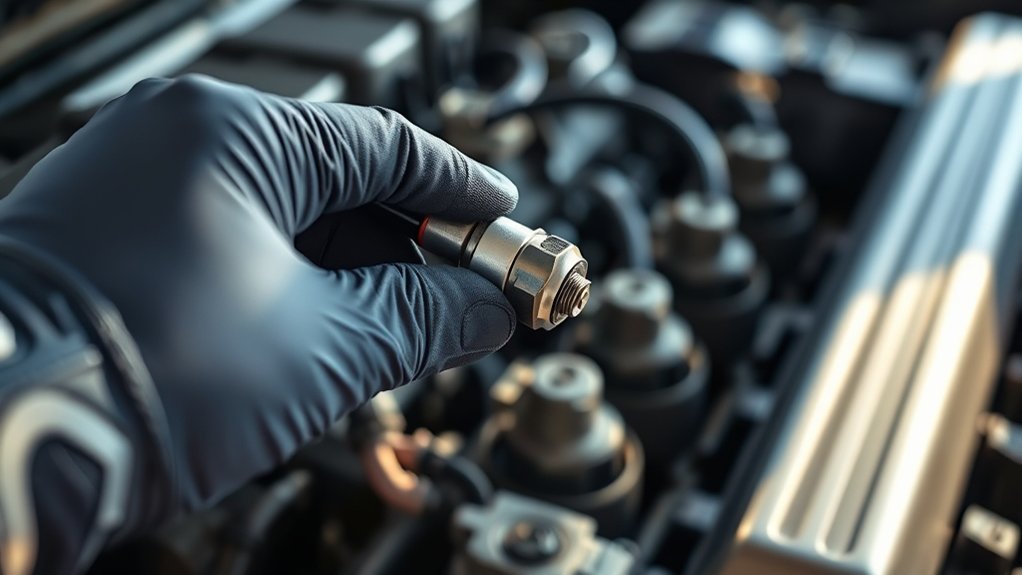
To quickly test spark plug cables at home, start by visually inspecting each cable for cracks, burns, or corrosion. These physical defects can disrupt electrical conductivity, which is essential in spark plug basics.
Next, gently flex the cables along their length to detect stiffness or brittleness, signs of aging or damage. Use a multimeter to measure resistance; disconnect the cable, set the meter to the ohms setting, and place probes on each end of the cable.
A healthy cable typically shows low resistance, indicating proper insulation and conductivity. High resistance suggests internal damage or deterioration.
Regular cable maintenance includes cleaning connectors and ensuring secure attachments to prevent misfires. Following these precise steps helps maintain peak engine performance and prevents ignition issues caused by faulty spark plug cables.
How to Spot Signs of Worn Spark Plug Cables
Although spark plug cables may appear intact at first glance, worn cables often exhibit subtle signs that indicate impending failure. Start by closely inspecting the cable insulation for cracks, brittleness, or discoloration. These are primary indicators of deterioration.
Pay attention to common symptoms such as engine misfires, rough idling, and decreased fuel efficiency, which frequently signal compromised cable performance. Additionally, feel along the cable length for soft spots or stiffness, as these can suggest internal damage.
Check the cable ends for corrosion or burn marks, which reduce conductivity. By methodically identifying these signs, you can pinpoint cables that need replacement before they cause engine issues. Vigilance in spotting these symptoms guarantees reliable ignition system function and prevents costly repairs.
How to Gather Tools to Test Spark Plug Cables
Three essential tools will help you accurately test spark plug cables: a multimeter, a spark tester, and insulated gloves. Before you start, assemble a tools checklist to guarantee you have everything needed for different cable types, including silicone and copper core cables. This preparation streamlines the testing process and enhances safety.
| Tool | Purpose |
|---|---|
| Multimeter | Measures cable resistance |
| Spark Tester | Detects cable spark output |
| Insulated Gloves | Protects against electric shock |
Gather tools suited for the cable types you’re inspecting. Insulated gloves are critical for safety, especially when working near the ignition system. Having the right tools ready minimizes errors and helps you perform a precise evaluation of your spark plug cables.
Using a Multimeter to Test Spark Plug Cables
Start by setting your multimeter to the ohms (Ω) scale to measure resistance accurately. Next, connect the probes to each end of the spark plug cable to record its resistance value.
Finally, compare the reading to the manufacturer’s specifications to determine if the cable is functioning properly or needs replacement.
Preparing Multimeter Settings
Before testing spark plug cables, you’ll need to configure your multimeter correctly to secure accurate resistance readings. Start by selecting the appropriate multimeter type. Digital multimeters offer precise, stable readings, while analog types require careful interpretation.
Set your multimeter to the ohms (Ω) setting to measure resistance. Consult the cable specifications to determine the expected resistance range; this guarantees your device’s scale matches the cable’s characteristics. Use the lowest resistance range that covers the expected values for increased accuracy.
If your multimeter has an auto-ranging feature, enable it for convenience. Verify the device is functioning properly by testing a known resistor or short circuit before proceeding. Properly prepared multimeter settings are essential for reliable spark plug cable analysis and diagnosing potential faults.
Measuring Cable Resistance
With your multimeter properly set, you can now measure the resistance of the spark plug cables to identify any internal faults. First, verify the cable insulation is intact to avoid inaccurate readings.
Connect the multimeter probes to each end of the cable, maintaining firm contact. Note the resistance values displayed, as they indicate cable integrity.
| Cable Length (inches) | Typical Resistance Range (ohms) |
|---|---|
| 6 | 3,000 – 5,000 |
| 12 | 6,000 – 10,000 |
| 18 | 9,000 – 15,000 |
Record these values methodically for each cable. Consistent resistance values within these ranges generally imply sound cables with intact insulation.
Interpreting Test Results
Although measuring spark plug cable resistance is straightforward, interpreting the values accurately requires understanding the acceptable ranges and what deviations signify. Typically, good spark plug cables exhibit resistance between 1,000 to 15,000 ohms per foot.
You should perform a resistance comparison between cables of identical length to detect anomalies in cable conductivity. If one cable shows considerably higher resistance, it indicates compromised conductivity and potential failure. Conversely, nearly zero resistance suggests a short circuit.
How to Use a Spark Tester to Diagnose Spark Plug Cables
Connect a spark tester to the spark plug cable to accurately diagnose its condition. First, select the appropriate spark tester type. Inline testers are common for visual spark checks, while inductive testers offer non-contact diagnostics.
Use proper cable connection techniques: detach the spark plug boot, attach the tester firmly to the cable end, and guarantee a secure connection to the spark plug or engine ground. Crank the engine and observe the tester’s spark pattern.
A consistent, strong spark indicates a healthy cable; a weak or intermittent spark signals cable degradation or internal breaks. Always follow manufacturer specifications for tester use and safety precautions. This methodical approach guarantees precise identification of cable faults without guesswork, streamlining further maintenance steps.
When to Replace Faulty Spark Plug Cables
If you notice symptoms like engine misfires, rough idling, or decreased fuel efficiency, it’s time to contemplate replacing your spark plug cables. These replacement indicators signal deteriorating cable performance that can compromise ignition reliability.
To determine when to replace faulty cables, assess:
- Visible damage such as cracks, burns, or corrosion on cable insulation.
- Excessive resistance measured with a multimeter exceeding manufacturer specifications.
- Signs of arcing or sparking around the cables during engine operation.
- Consistent failure in spark tester diagnostics.
Replacing cables promptly maintains peak ignition timing and engine performance. Neglecting these indicators can lead to misfires, increased emissions, and poor fuel economy.
Always follow manufacturer guidelines and replace cables as a set to guarantee balanced cable performance.
Frequently Asked Questions
What Types of Spark Plug Cables Are Best for Performance Cars?
You’ll want spark plug cables made from high-quality materials like silicone or Kevlar for durability and heat resistance. These materials enhance ignition performance by ensuring consistent electrical conductivity and minimizing interference, essential for your performance car’s ideal engine function.
How Do Spark Plug Cables Affect Fuel Efficiency?
Imagine your engine’s rhythm disrupted by faulty spark plug materials; poor cables delay ignition timing, causing incomplete combustion. You’ll see reduced fuel efficiency as energy wastes, so maintaining ideal cable quality guarantees precise sparks and better mileage.
Can Bad Spark Plug Cables Cause Engine Misfires?
Yes, bad spark plug cables can cause engine misfires by disrupting the ignition system’s electrical flow. You’ll experience spark plug failures when cables degrade, leading to incomplete combustion and reduced engine performance.
Check cables regularly.
Are There Any Safety Precautions When Handling Spark Plug Cables?
You should always disconnect the battery before spark plug maintenance to avoid shocks. Inspect cable insulation carefully for cracks or wear. Never pull cables by the wire; grip the boot firmly to prevent damage and guarantee safety.
How Often Should Spark Plug Cables Be Inspected Routinely?
Think of spark plug cables like arteries; you should inspect them every 12,000 miles or annually.
Regular spark plug maintenance prevents cable wear, ensuring peak engine performance and avoiding misfires caused by degraded cables.
Conclusion
Now that you know how to test spark plug cables with a multimeter or spark tester, you can quickly spot signs of wear and decide when to replace them. Remember, “a stitch in time saves nine”—addressing faulty cables early prevents bigger engine issues.
By gathering the right tools and following precise steps, you’ll guarantee your ignition system performs reliably, maintaining peak engine function and fuel efficiency.
Stay methodical and proactive for best results when checking spark plug cables.