To check your spark plug gap, use a feeler gauge or gap tool to measure the distance between the center and ground electrodes. This measurement is essential to ensure proper ignition and engine performance.
Insert the gauge gently, feeling slight resistance for accuracy.
Compare this measurement to your vehicle’s specified gap found in the manual or under-the-hood decal. If the gap is not within the recommended range, carefully adjust it by tapping the ground electrode to close or bending it outward to widen.
Maintaining the proper spark plug gap guarantees efficient ignition and optimal engine operation. Understanding this process can help you keep your vehicle running smoothly.
Key Takeaways
- Use a feeler gauge to measure the gap between the center and ground electrodes with slight resistance.
- Refer to your vehicle owner’s manual or under-hood decal for the correct spark plug gap specification.
- Insert the gauge carefully to avoid damaging the electrodes while checking the gap size.
- Adjust the gap by gently tapping the ground electrode to close or bending it outward to widen.
- Regularly inspect spark plugs for wear, carbon buildup, or corrosion that can affect the gap and engine performance.
Why Spark Plug Gap Matters for Your Engine
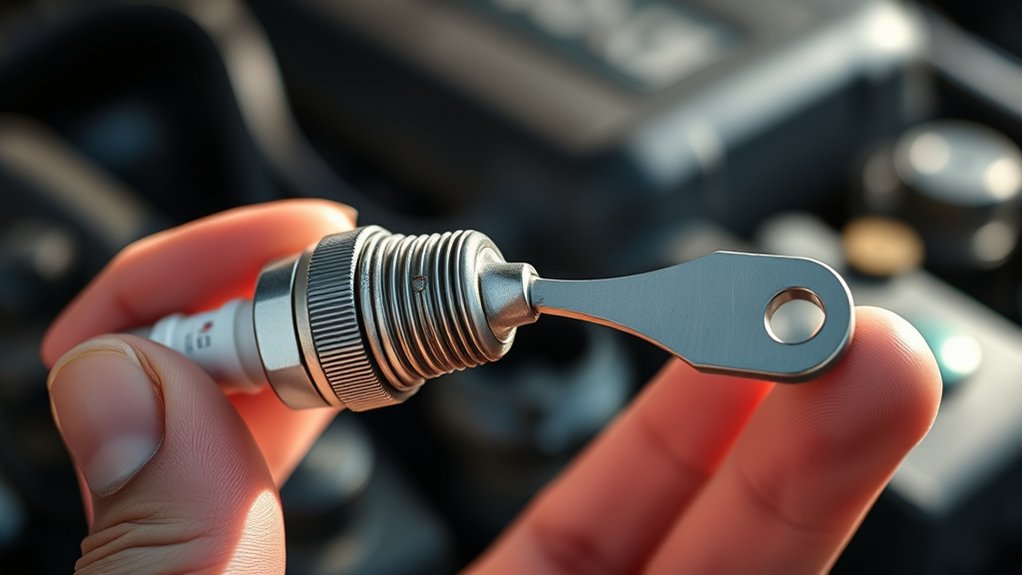
Understanding the importance of spark plug gap is crucial for maintaining your engine’s performance. The gap directly influences ignition timing and combustion quality, which are critical for peak engine function.
If the gap is too wide or too narrow, it disrupts the spark intensity, leading to incomplete combustion. This inefficiency reduces fuel efficiency and compromises engine power output.
Properly gapped spark plugs guarantee the spark occurs precisely when needed, promoting efficient fuel-air mixture ignition. This precise ignition timing maintains consistent engine performance, prevents misfires, and reduces emissions.
Tools You’ll Need to Check Spark Plug Gap
Maintaining the correct spark plug gap requires accurate measurement tools to secure precision. Using proper gapping tools and measurement techniques guarantees your engine runs efficiently and prevents misfires.
Accurate spark plug gap measurement ensures engine efficiency and prevents costly misfires.
Here are the essential tools you’ll need:
1. Feeler Gauge
Measures the gap with precise thickness blades, ideal for exact readings.
2. Spark Plug Gap Tool
A specialized tool designed for adjusting and measuring spark plug gaps quickly.
3. Wire Gap Gauge
Uses a calibrated wire to verify the gap size, useful for non-metallic plugs.
4. Digital Gap Gauge
Provides an electronic readout for highly accurate measurement.
Each tool supports distinct measurement techniques, so choose the one that matches your spark plug type and desired precision level. Proper use of these gapping tools guarantees your spark plug gap is consistent and optimized.
How to Find the Right Spark Plug Gap for Your Vehicle
Before you check or adjust your spark plug gap, you need to determine the exact specification required for your vehicle. Consult your vehicle’s owner manual or service guide to find the recommended spark plug specifications, including the precise gap measurement.
Using the correct gap is critical; an incorrect gap can impair ignition efficiency and reduce engine performance. You can also find this information on a decal under the hood or from the manufacturer’s website. If you’re replacing spark plugs, confirm the new plugs match these specifications.
Keep in mind that different engines and fuel types demand specific spark plug gaps to maximize combustion. Following the exact spark plug specifications guarantees consistent ignition, improves fuel efficiency, and maintains peak engine performance.
How to Measure and Adjust Spark Plug Gap Safely
Once you’ve identified the correct spark plug gap for your vehicle, the next step is to measure and adjust the gap with accuracy and care. Different spark plug types require precise gap adjustments to guarantee peak performance.
Accurately measuring and adjusting your spark plug gap ensures optimal performance for every spark plug type.
- Use a feeler gauge specific to your spark plug type to measure the existing gap.
- Insert the gauge between the center and ground electrode; it should slide in with slight resistance.
- If the gap is too wide, gently tap the ground electrode on a hard surface or use a gap tool to close it.
- If the gap is too narrow, carefully bend the ground electrode outward using the gap tool.
Always handle spark plugs delicately to avoid damaging electrodes, which could compromise ignition efficiency.
Signs Your Spark Plug Gap Needs Checking or Replacement
If your engine is misfiring, running rough, or experiencing reduced fuel efficiency, you should check the spark plug gap immediately. These symptoms often indicate compromised spark plug performance due to an incorrect gap.
A gap that’s too wide or too narrow disrupts the spark’s ability to ignite the air-fuel mixture efficiently, impacting engine function. Using proper gap measurement techniques, such as a feeler gauge or a gap tool, helps you identify whether the gap deviates from manufacturer specifications.
Additionally, visible signs like electrode wear, carbon buildup, or corrosion warrant checking or replacing the spark plug. Addressing these issues promptly guarantees ideal combustion, maintains engine power, and prevents further damage.
Regular inspection based on these signs is crucial for sustained vehicle performance.
Frequently Asked Questions
Can Using the Wrong Spark Plug Gap Damage My Catalytic Converter?
Yes, using the wrong spark plug gap can damage your catalytic converter. Incorrect gap alters spark plug design efficiency, leading to poor combustion and unburned fuel.
This harms engine performance and causes excessive emissions, stressing the converter.
How Often Should I Replace Spark Plugs Regardless of the Gap?
You should replace spark plugs every 30,000 to 100,000 miles, depending on their lifespan. Watch for signs of misfire or rough idling, as these indicate worn plugs needing replacement. This helps maintain engine efficiency.
Do Spark Plug Gaps Affect Fuel Efficiency Significantly?
Yes, spark plug efficiency relies heavily on accurate gap measurement. If the gap’s off, combustion weakens, reducing fuel efficiency.
You should regularly check and adjust the gap to maintain ideal engine performance and fuel economy.
Can Weather Conditions Impact Spark Plug Gap Performance?
Like a silent conductor, weather conditions subtly influence spark plug gap performance. You’ll find spark plug materials react differently to environmental effects, which can alter gap efficiency.
This impact can affect ignition and engine performance over time.
Are There Spark Plugs Designed to Self-Adjust Their Gap?
Yes, some spark plug designs feature self adjusting technology that maintains ideal gap spacing during use. This innovation improves performance consistency by compensating for electrode wear, reducing maintenance needs and enhancing combustion efficiency over time.
Conclusion
Checking your spark plug gap is essential since even a 0.002-inch deviation can reduce engine efficiency by up to 15%. Using the right tools and following precise measurements guarantees ideal combustion and prevents misfires.
Regularly inspecting and adjusting the gap based on your vehicle’s specifications maintains peak performance and fuel economy. Don’t overlook signs like rough idling or poor acceleration—they often signal it’s time to check your spark plug gap.
By staying attentive to these details and performing routine maintenance, you ensure your engine runs smoothly and efficiently. Always remember, knowing how to check spark plug gap is key to optimal engine health.